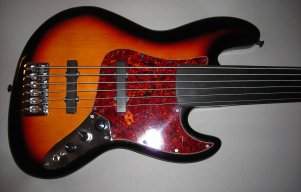
A lot of bass manufacturers design basses with lightweight tuners and heavy bridges. Light tuners are supposed to prevent neck dive. Heavy bridges are supposed to promote sustain.
But it seems like mass at both ends of the string would be desirable for sustain because the string vibrates between two points. If you had a string anchored by a block of lead at one end and a block of styrofoam at the other, you wouldn't get much sustain. They make gizmos like Fat Fingers to increase the mass at the head, so it seems like heavier tuners would be good for sustain.
Fender replaced the cast Shaller tuners on the first American Standard Basses with lightweigt tuners in later models because everyone was complaining about the weight of the cast Shaller tuners causing neck dive. The cast Shallers have more metal at the back of the headstock, but the actual tuning posts are narrower and lighter than the posts on an old Fullerton-made Fender, and no one ever complained about neck dive on those. Maybe the cast Shallers only look heavier.
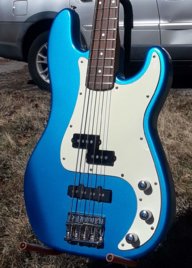
So, I did an experiment I balanced my old heavy ash Fullerton 70's P-bass on my finger. The balancing point was in the middle of the neck plate. Then I balanced an early alder American Standard Jazz bass with cast Shallers across my finger, and the balancing point was at the same place, give or take a quarter of an inch. You would think the jazz would be neck heavy with the lighter alder wood and cast tuners. Two different types of bass, but I was only concerned with overall balance relating to neck dive.
To be more accurate, I could have removed the tuners from each bass and weighed them to see whether the Shallers are heavier, but I don't have a good scale and don't feel like taking apart my basses. Has anyone else compared the weight of old Fender tuners and the cast Shallers with the "F" on the back?
But it seems like mass at both ends of the string would be desirable for sustain because the string vibrates between two points. If you had a string anchored by a block of lead at one end and a block of styrofoam at the other, you wouldn't get much sustain. They make gizmos like Fat Fingers to increase the mass at the head, so it seems like heavier tuners would be good for sustain.
Fender replaced the cast Shaller tuners on the first American Standard Basses with lightweigt tuners in later models because everyone was complaining about the weight of the cast Shaller tuners causing neck dive. The cast Shallers have more metal at the back of the headstock, but the actual tuning posts are narrower and lighter than the posts on an old Fullerton-made Fender, and no one ever complained about neck dive on those. Maybe the cast Shallers only look heavier.
So, I did an experiment I balanced my old heavy ash Fullerton 70's P-bass on my finger. The balancing point was in the middle of the neck plate. Then I balanced an early alder American Standard Jazz bass with cast Shallers across my finger, and the balancing point was at the same place, give or take a quarter of an inch. You would think the jazz would be neck heavy with the lighter alder wood and cast tuners. Two different types of bass, but I was only concerned with overall balance relating to neck dive.
To be more accurate, I could have removed the tuners from each bass and weighed them to see whether the Shallers are heavier, but I don't have a good scale and don't feel like taking apart my basses. Has anyone else compared the weight of old Fender tuners and the cast Shallers with the "F" on the back?


 ) in sustain.