Hey cdef,
You do not own that Oakland bass, do you?
Best,
Alper
You do not own that Oakland bass, do you?
Best,
Alper
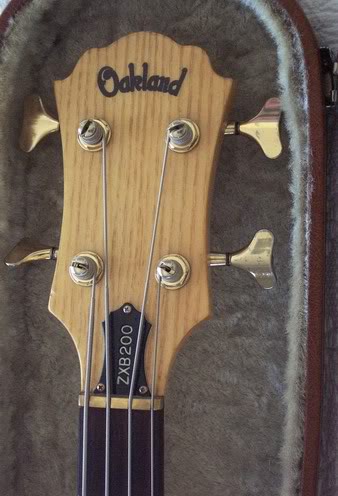
This is an Oakland ZXB200 by Matsumoku:


TalkBass has been independent since 1998. Add your voice.
Create a free account to reply to discussions, view embedded media, and browse with fewer display ads.
Join free Log in
Want zero display ads or expanded classifieds tools? Compare plans.
This is an Oakland ZXB200 by Matsumoku:
...You do not own that Oakland bass, do you?
hmmm. It's crazy how they produced so many very similar instruments with so many different names.This is an Oakland ZXB200 by Matsumoku:

 ) it has not arrived yet but it looks like it has just the right spot for my lonely seymore duncan MM pickup to live. *ARIRANG* I hope it's not garbage
@DanAdams: I was looking at some Westone Thunders on the interwebs over the weekend, and I noticed that they were almost identical to the Vantage neck-throughs. Apart from the body wing shapes, perhaps the top cutout on the headstock, and the pickups (P/P v. P/J), I don't think you could tell them apart. Couple more picks of my Vantage attached.
View attachment 864206
View attachment 864207
View attachment 864208
-Alex

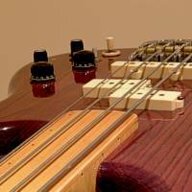
Wow! That is some looker! What are the controls for that? Especially the toggles. Do they let you select either side of the split pickups or both?I think (IIRC) the Tiesco Spectrum guitars did that. Three split pups where you could use half of one pickup and half of another if you wanted.
I had this same exact guitar about 15 years ago. Nothing on the headstock, no serial, no markings, Never knew what it was. Played awesome. SOld it for $350Here's something interesting. There's an old listing of a bass that's virtually identical to mine except it's got a decal on the headstock (the logo on mine is silk screened) that says: Lincoln.
Anybody ever heard of a Lincoln bass?
Here's the link:
Invalid Link Removed
In the meantime, this site has a write-up on this bass's guitar sister. There was one of those hanging next to my bass when I bought it. I almost bought the guitar too but didn't. Went back two weeks later and it was gone. I've always regretted not buying both that first day. It would have been really cool to have the matching set.
Looks like one of the owners added a decal or some artwork to the body. And I have no idea what those two glossy areas on the lower bout are. But here she is.

Link to article here:
Guitar Blog: Memphis MG-300. Made in Japan neck-through guitar from 1979
I've never heard p pickup with serial / parallel switching. is the unusual setting useful at all? same question with the phase? I imagine it may be useful only if both pickups are in parralel mode.Thanks. As for the controls, nothing really complicated: typical pickup selector on the upper horn; three knobs are (from front to back) volume, passive tone, and active tone — it is a tilt eq preamp, turn it counterclockwise, and the bass increases as the treble is decreased, turn it clockwise past the center detent and the bass decreases while the treble increases (may not seem terribly useful, but it actually is, and has a wide range of sounds); three lower switches are series/parallel (switches the two halves of each pickup to series or parallel, switches both pickups at the same time), a phase switch for the bridge pickup, and the eq/active on/off (can be run passive without batteries). Oh, and there's a red LED next to the output jack, turns on when batteries are low.
-Alex
I've never heard p pickup with serial / parallel switching. is the unusual setting useful at all? same question with the phase? I imagine it may be useful only if both pickups are in parralel mode.
I've never heard p pickup with serial / parallel switching. is the unusual setting useful at all? same question with the phase? I imagine it may be useful only if both pickups are in parralel mode.
There is a Matsumoku forum out there--I haven't been on it for a while--but there are people there who know their stuff and can help sort out what is, what isn't & maybe what might be Matsumoku made.
If you do a search you should be able to find i--I forget the name

@DanAdams: I was looking at some Westone Thunders on the interwebs over the weekend, and I noticed that they were almost identical to the Vantage neck-throughs. Apart from the body wing shapes, perhaps the top cutout on the headstock, and the pickups (P/P v. P/J), I don't think you could tell them apart. Couple more pics of my Vantage attached.
-Alex
What is the nut width of that bass? I don't care for the 1.75" nut width Matsumoku made Aria TSB and SB basses I have from the early days, and always wonder about other brands Matsumoku made from that time period.
Vantage VA-900B (1981) – 1.59” (40.5mm)
Vantage VA-900B/FL (1981) – 1.59” (40.5mm)



Whoever made them, they're pretty darned great.Daion is not Matsumoku. Nor Fugi-gen nor Dyna-gen, but it's late and I'm too tired to track down the maker.