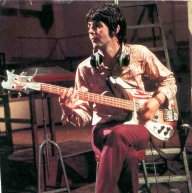
Ive been focusing on Paul McCartneys Beatle work lately and am developing a theory about the limits of recording in the 60s
in particular, disc cutting. Id really like to hear from some people who know their stuff about techniques in those days. I know little or less!
My theory/question: Before Paperback, is it POSSIBLE that Paul was told by the engineers at EMI (NOT George Martin) not to play on the E string because it would make a record player needle jump? It is true that Paul rarely plays below A before Paperback. (With Paperback came a new cutting technique right??.) Im thinking in particular of Taxman, in key of D. Paul plays the pattern for the D and C chords, but doesnt drop to the low G on the G chord. Its picky, but a natural musician like Paul had a reason. Was he, and his contemporaries- at EMI- forced to chose notes based on this. Why not in the USA. My God!! Listen to the Steppenwolf of that period!!!!
We go from there to the big, juicy, fat E string stuff like Dear Prudence, Abbey Road. etc..
My theory/question: Before Paperback, is it POSSIBLE that Paul was told by the engineers at EMI (NOT George Martin) not to play on the E string because it would make a record player needle jump? It is true that Paul rarely plays below A before Paperback. (With Paperback came a new cutting technique right??.) Im thinking in particular of Taxman, in key of D. Paul plays the pattern for the D and C chords, but doesnt drop to the low G on the G chord. Its picky, but a natural musician like Paul had a reason. Was he, and his contemporaries- at EMI- forced to chose notes based on this. Why not in the USA. My God!! Listen to the Steppenwolf of that period!!!!
We go from there to the big, juicy, fat E string stuff like Dear Prudence, Abbey Road. etc..