How much "room" can a 1x12 handle? I've been running a 2x10 and 1x15 SWR rig for over a decade and I'm ready to go mini! These 1x12 little monsters look so awesome but I'm afraid it wouldn't be able to handle weekend bar gigs with a full band. Would a 2x10 be better?

Enjoy the benefits of a premium membership!
Upgrade Account
-
TalkBass has been independent since 1998. Add your voice.
Create a free account to reply to discussions, view embedded media, and browse with fewer display ads.
Join free Log in
Want zero display ads or expanded classifieds tools? Compare plans.
You are using an out of date browser. It may not display this or other websites correctly.
You should upgrade or use an alternative browser.
You should upgrade or use an alternative browser.
Mini Rigs of Doom Four
- Thread starter Chef
- Start date
More options
Who Replied?
If you're not running through the PA, I'm thinking a 1x12 wouldn't be enough for a rock band.How much "room" can a 1x12 handle? I've been running a 2x10 and 1x15 SWR rig for over a decade and I'm ready to go mini! These 1x12 little monsters look so awesome but I'm afraid it wouldn't be able to handle weekend bar gigs with a full band. Would a 2x10 be better?
About a month ago I played an outdoor gig with a three/four guitar band with a LittleMark III head and a NY121 (1x12) cabinet. I went through the PA and it was adequate for stage monitoring. It was fine for indoor rehearsals at lower band volumes.
However, two little 1x12s would probably work just fine for just about any bar.


Hi BlackCat. If only it were that simple. Each speaker and cabinet design has a different SPL (the amount of volume produced per watt). They also vary in the range of frequencies produced. Therefore not all 12s are the same. Check the SPL specifications before parting with your cash. A small difference in SPL makes a lot of difference to the volume heard. And make sure it'll reproduce the low frequencies that you need (5 string low B is 31Hz). Some (inexpensive) small bass cabs sound a bit thin. Also make sure the cab will handle the maximum power your amp can cleanly produce, at the impedance of the speaker. Distortion from an over-driven amp (especially valve amps) will fry even the most expensive high wattage speaker. Finally you have to take into account the placement of the cabinet. You get the most projected (bass frequency) volume if the cabinet is on a solid floor, in a corner. Less if it's back's against a wall. Less still if it's away from the rear wall. And a lot less if it's not on the floor. The only draw-back I've found with my 1x12 is that if I stand too close to it, although the audience can hear it, I can't. In really big rooms with my 18 piece band I angle the cab up towards my head so I can hear it, and DI through the PA and fold-back for the audience and band.

Well I went back to the DIY 10's.
I built the box, wanted real wood and I took the speaker from the 2010 to the 2510. Then I made the box for the Fender 500 and added stainless grilles.
Most of the time I use one cabinet, but have two.
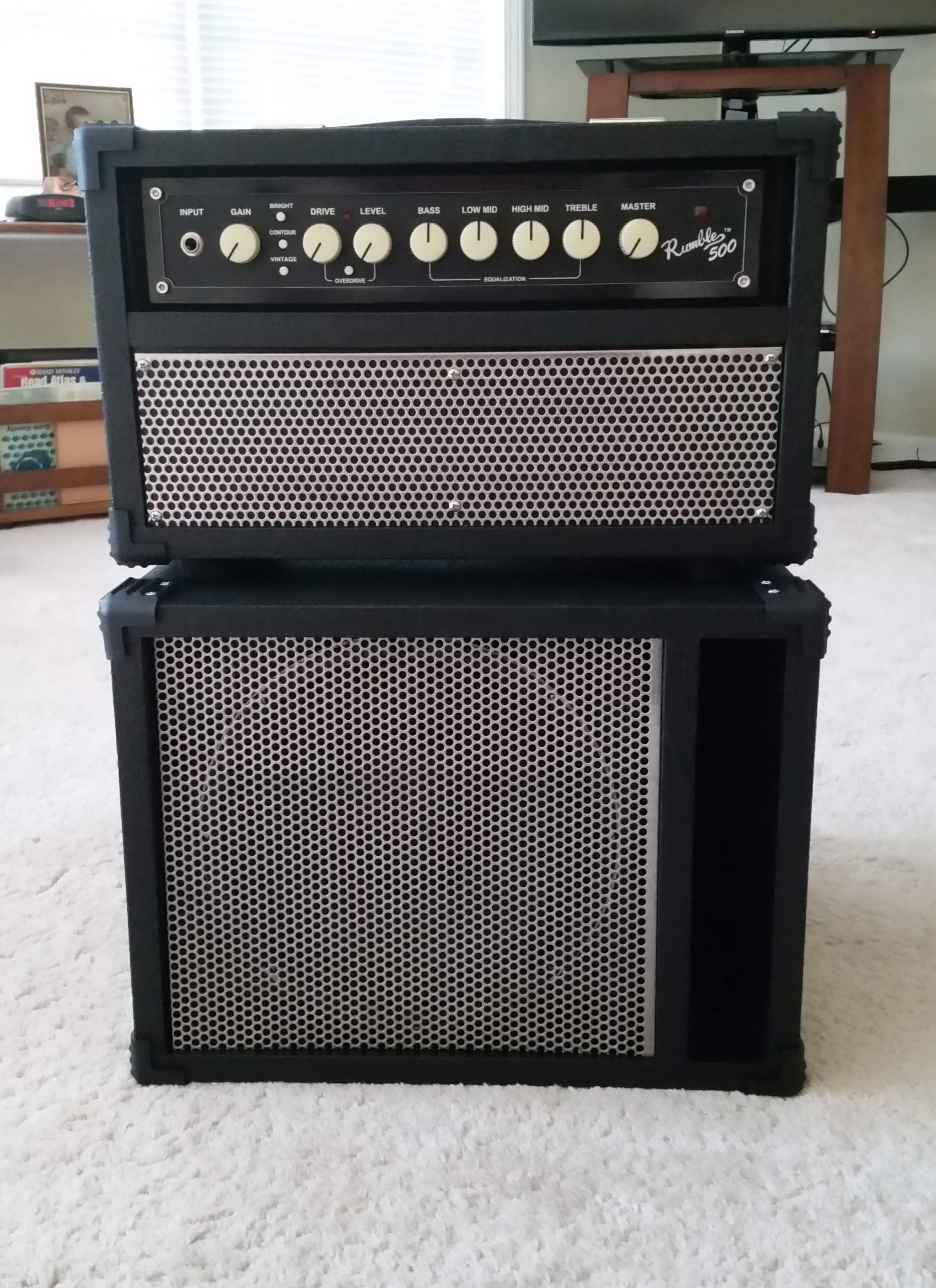
I built the box, wanted real wood and I took the speaker from the 2010 to the 2510. Then I made the box for the Fender 500 and added stainless grilles.
Most of the time I use one cabinet, but have two.

A few comments on this:Hi BlackCat. If only it were that simple. Each speaker and cabinet design has a different SPL (the amount of volume produced per watt). They also vary in the range of frequencies produced. Therefore not all 12s are the same. Check the SPL specifications before parting with your cash. A small difference in SPL makes a lot of difference to the volume heard. And make sure it'll reproduce the low frequencies that you need (5 string low B is 31Hz). Some (inexpensive) small bass cabs sound a bit thin. Also make sure the cab will handle the maximum power your amp can cleanly produce, at the impedance of the speaker. Distortion from an over-driven amp (especially valve amps) will fry even the most expensive high wattage speaker. Finally you have to take into account the placement of the cabinet. You get the most projected (bass frequency) volume if the cabinet is on a solid floor, in a corner. Less if it's back's against a wall. Less still if it's away from the rear wall. And a lot less if it's not on the floor. The only draw-back I've found with my 1x12 is that if I stand too close to it, although the audience can hear it, I can't. In really big rooms with my 18 piece band I angle the cab up towards my head so I can hear it, and DI through the PA and fold-back for the audience and band.
Not all driver or cabinet manufacturers specs are reliable & quite a few are overly vague about details behind the specs (especially, cab manufacturers).
For most people (& a lot of venues - i.e. boomy rooms or stages), if the cab will mostly reproduce an octave above the fundamental, the human brain fills in the fundamental. Some people do like to really get the lowest fundamental, but that can wreck havoc in a lot of situations with not-so-great acoustics. Then you get a lot of boom & mud.
There's a thread in the FAQ of this forum that indicates there's very little difference between which type of amps are more likely to blow speakers, but most tube amps more naturally compress when overdriven, but with SS amps it depends on how they're designed.
Which blows up more speakers TUBE or SOLID STATE?

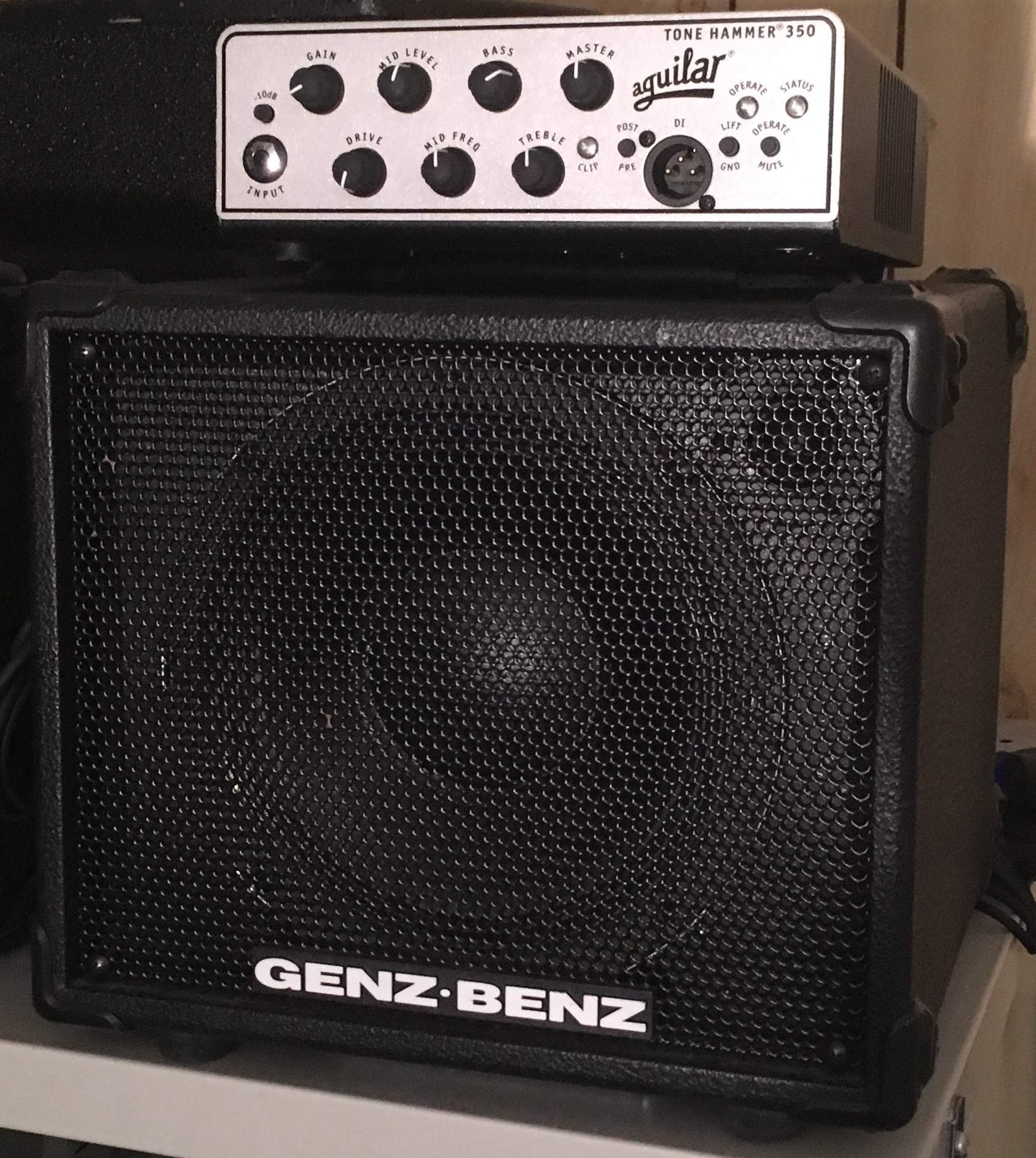
Since when did a 1x12 become "mini"? My Bergantino EX112 easily cuts 90% of the blues/roots rock work I do in small/medium sized rooms. By today's standards a 1x12 is more a compact mid sized rig. A small class D head into single 6, 8 or 10 like this TH350/Genz Benz STL-8T is mini.
Thank Lo-freq (great name!). You're right of course. I'm often playing below E and although my (fearless112) cab isn't rated below 45Hz, I still have to roll off a little of the Puma's (30Hz) Bass control to tighten up the bottom-end due to room acoustics. Might be different if I was playing Reggae/Dub .
.
.I guess when you're used to carting a valve amp and fridge (eg 8x10), a 1x15 is mini.Since when did a 1x12 become "mini"? My Bergantino EX112 easily cuts 90% of the blues/roots rock work I do in small/medium sized rooms. By today's standards a 1x12 is more a compact mid sized rig. A small class D head into single 6, 8 or 10 like this TH350/Genz Benz STL-8T is mini.
View attachment 933775

Since always. To me, anything less than a single 15"? Mini.Since when did a 1x12 become "mini"?
How small does something have to be to be "mini," then, in your opinion?Ha! I guess when you've convinced yerself you need this
View attachment 933790
this seems compact!
View attachment 933789
Because to me, it's honestly only in the last several years, that out in the real world, I've seen single 12"s and smaller capable of being more than practice amps (for bass, of course; a single 12" for guitar is more than capable of getting painfully loud if you're close enough to it or the room is small enough).
Well opinion is all any of this is but since you ask in terms of the spirit of this particular thread it'd be a class D head that fits in the pocket of a gig bag with a cab you could comfortably mount on a mic stand.How small does something have to be to be "mini," then, in your opinion?
Because to me, it's honestly only in the last several years, that out in the real world, I've seen single 12"s and smaller capable of being more than practice amps.
No argument there but since the technology is changing so are the definitions.

- Apr 18, 2008
- 16,007
- 1
- 31,702
- Disclosures
- I'm highly opinionated and extremely self-assured
A couple comments, both of which I'm sure have already been mentioned, but perhaps bear repeating:
1. Wall-loading will make any cab seem to have more low-frequency capability. It doesn't, of course, not by itself, but the cabinet then becomes part of a "system" with the room, in which they're working together to throw low frequencies out towards your audience. Cab placement up against a wall effectively gives you free SPL for the same cab/wattage.
2. Forget about 31Hz. Forget about 42Hz. You don't want those frequencies. Most of the bass' energy is in the first harmonic, as @lo-freq (and others) has mentioned. This is not a sacrifice, this is desirable. A HPF set at 45Hz or 50Hz keeps your driver from wasting power trying to reproduce those useless lowest frequencies, which leaves more juice where it really counts. If you don't have a proper HPF, then roll off your "Bass" EQ and add some low-mids. You'll cut through the mix better with more apparent volume.
1. Wall-loading will make any cab seem to have more low-frequency capability. It doesn't, of course, not by itself, but the cabinet then becomes part of a "system" with the room, in which they're working together to throw low frequencies out towards your audience. Cab placement up against a wall effectively gives you free SPL for the same cab/wattage.
2. Forget about 31Hz. Forget about 42Hz. You don't want those frequencies. Most of the bass' energy is in the first harmonic, as @lo-freq (and others) has mentioned. This is not a sacrifice, this is desirable. A HPF set at 45Hz or 50Hz keeps your driver from wasting power trying to reproduce those useless lowest frequencies, which leaves more juice where it really counts. If you don't have a proper HPF, then roll off your "Bass" EQ and add some low-mids. You'll cut through the mix better with more apparent volume.

As for 12's... my fEARful 12/6 that I got off @LennyJ a few months back handles more than you'd think a 12 could..
I bridge 650 watts into it with a Carvin DCM1000L with a Noble pre and it's absolutely blissful.. or use a Mesa D800, and as @ctmullins mentioned pull back the Bass, bump the Mid bass and again, perfection..
Frequencies or not, best thing, for me at least, is usage of ears
I bridge 650 watts into it with a Carvin DCM1000L with a Noble pre and it's absolutely blissful.. or use a Mesa D800, and as @ctmullins mentioned pull back the Bass, bump the Mid bass and again, perfection..
Frequencies or not, best thing, for me at least, is usage of ears
Well I went back to the DIY 10's.
I built the box, wanted real wood and I took the speaker from the 2010 to the 2510. Then I made the box for the Fender 500 and added stainless grilles.
Most of the time I use one cabinet, but have two.
View attachment 933740
This is great Lenny! Where'd you get the grills?
This is great Lenny! Where'd you get the grills?
From a Iron works company on Atlanta Ave in Marietta. I think the name is "Ornamental Iron". I do have the address if you need it.
Thanks again LJ

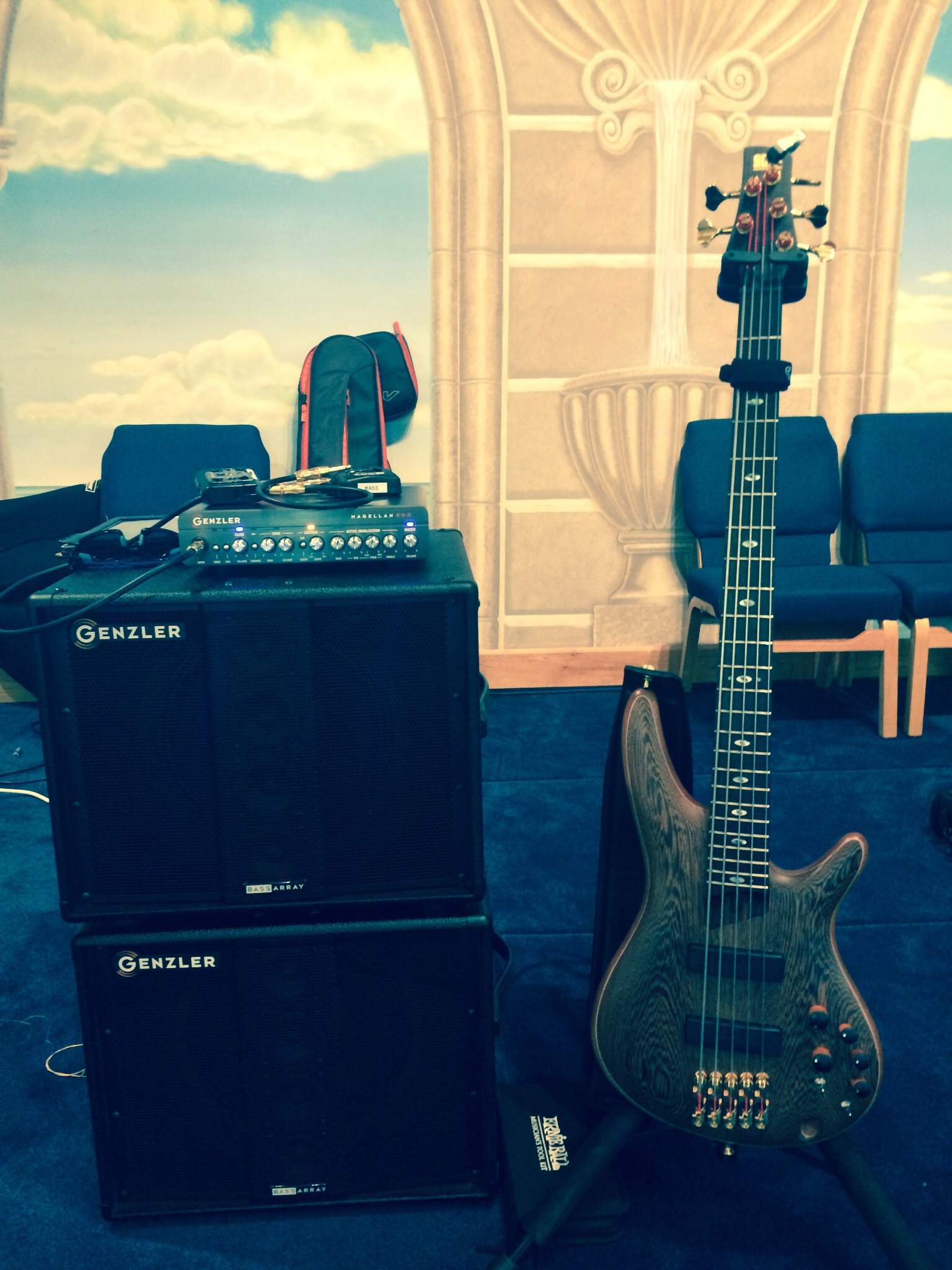
Here is mine. I'm using the Genzler 800 and 1 or both of my Genzler 112 Arrrays at 34lbs a piece. This setup will give me everything I will ever need. I have the 3rd one on hold to make a huge Array stack. It will be overkill but it's the best tone I've ever had.
From a Iron works company on Atlanta Ave in Marietta. I think the name is "Ornamental Iron". I do have the address if you need it.
Thanks again LJ
Yes! That'd be great.. if you still have my #, just text it to me.. if not you can PM me here.. THANKS!

1210 out, 112 in. Love this rig. More than enough BOOM from those "little" cabs.
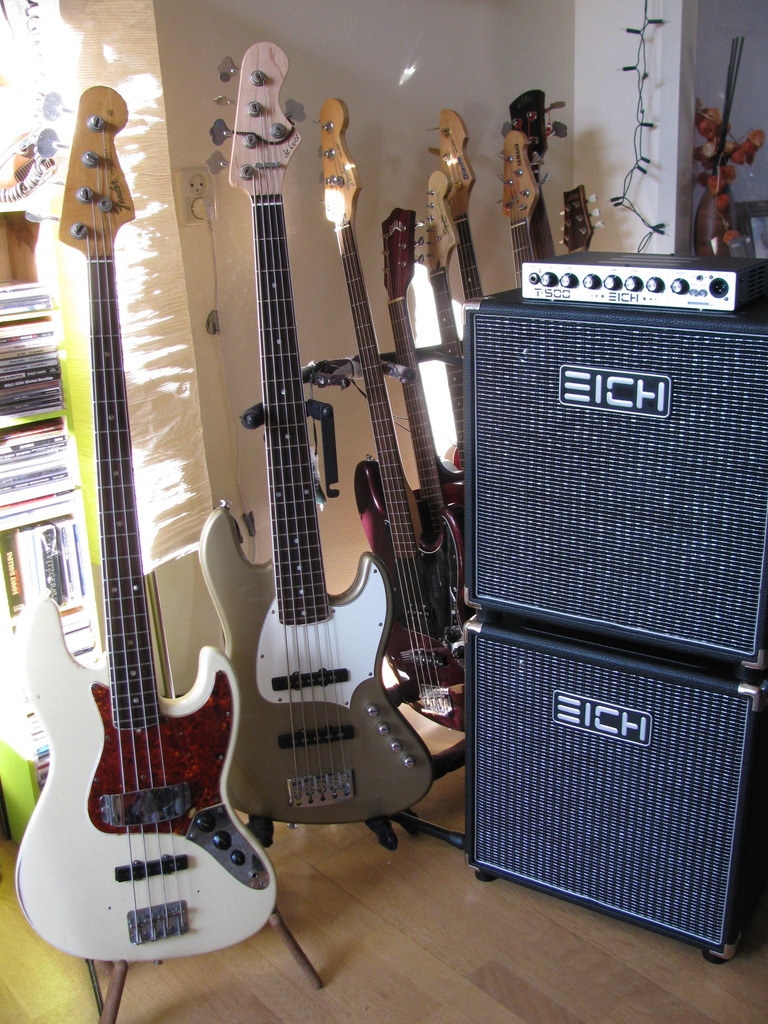

I replaced the LM head unit with an 800 tube,most of the time i don't even use the 2nd cab.
Removed the garish plastic Markbass emblems,the orange speaker cones let you know what it is without the brand!


