Hi,
I wanted to share my latest build, in case someone else is looking for a similar solution. I've been using In-Ear monitoring for a few years now, but none of the ready-made solutions that I know of have exactly the features I need. The optimal solution IMO is:
- Only a single cable between myself and the pedalboard
- The bass should be heard in the IEM even when she signal is tuner-muted (allows for last minute practice between songs...)
- Belt mixer with separate controls for my bass and the main monitor feed
- No batteries
Now, I built a first version of this system a couple of years ago, but it wasn't perfect, and I'm not going to share that here. But this second version turned out pretty good, so maybe it can be of value for someone else as well.
Instead of building the system ground-up, I chose to mod an existing belt pack this time. This way you don't have to design the mixer circuit, and you get some built in features like a protective limiter and the ability to drive low impedance headphones. I chose the Behringer Powerplay P1 for this purpose because it's cheap and has easily accessible innards.
The setup looks like this:

So, to the point, opening up the Behringer. Looks promising, standard connectors, lots of space inside:

Replaced the connectors to XLR/plug combo and a 5-pin XLR. The combo connector allows for accepting a standard XLR monitor feed if I should want to use this for something other than bass playing at some point.

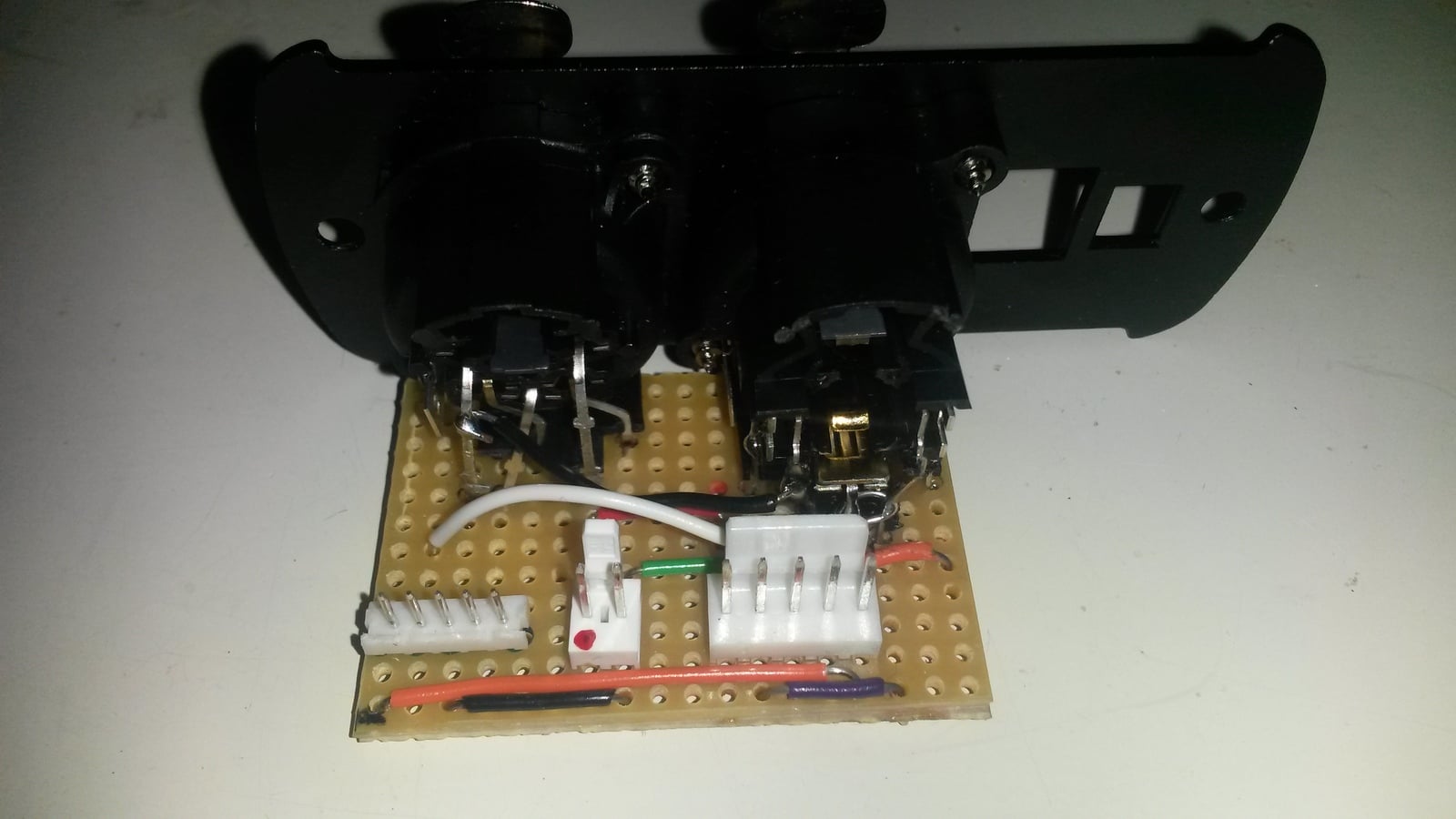
The connector board with molex connectors to plug in the Behringer's board, power cables and my buffer-splitter board:
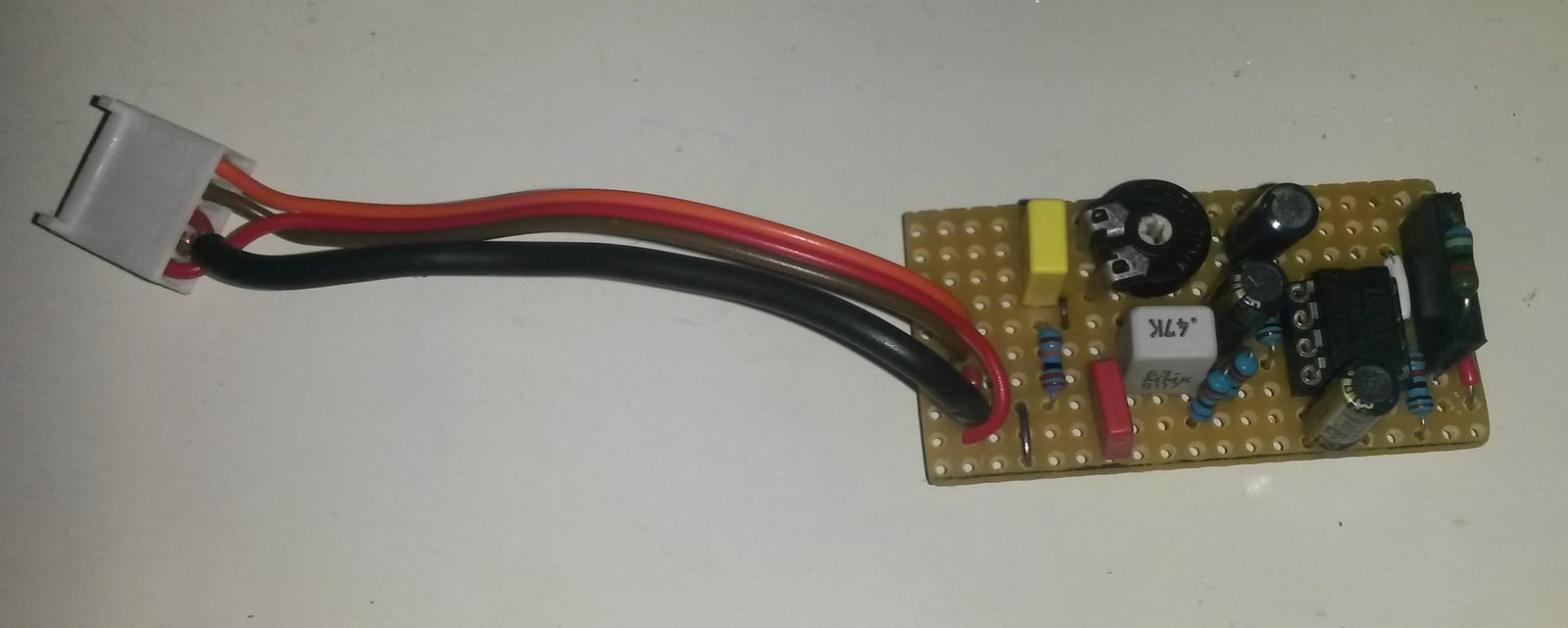
The main circuit's job is to split the bass signal so that a dry (but buffered) signal goes to the pedalboard, and an amplified signal goes to one channel of the belt pack. The buffer is needed to prevent crosstalk, a passive Hi-Z signal will not keep its integrity when led through the same cable as the main monitor feed.
The circuit is designed around op amp OPA2134. The trimpot controls a Lo-cut filter, I don't like boomy bass in my ears. The gain resistor (far right) is socketed until I'm sure about the correct value.
The board is made to fit in the battery compartment:

Connections:
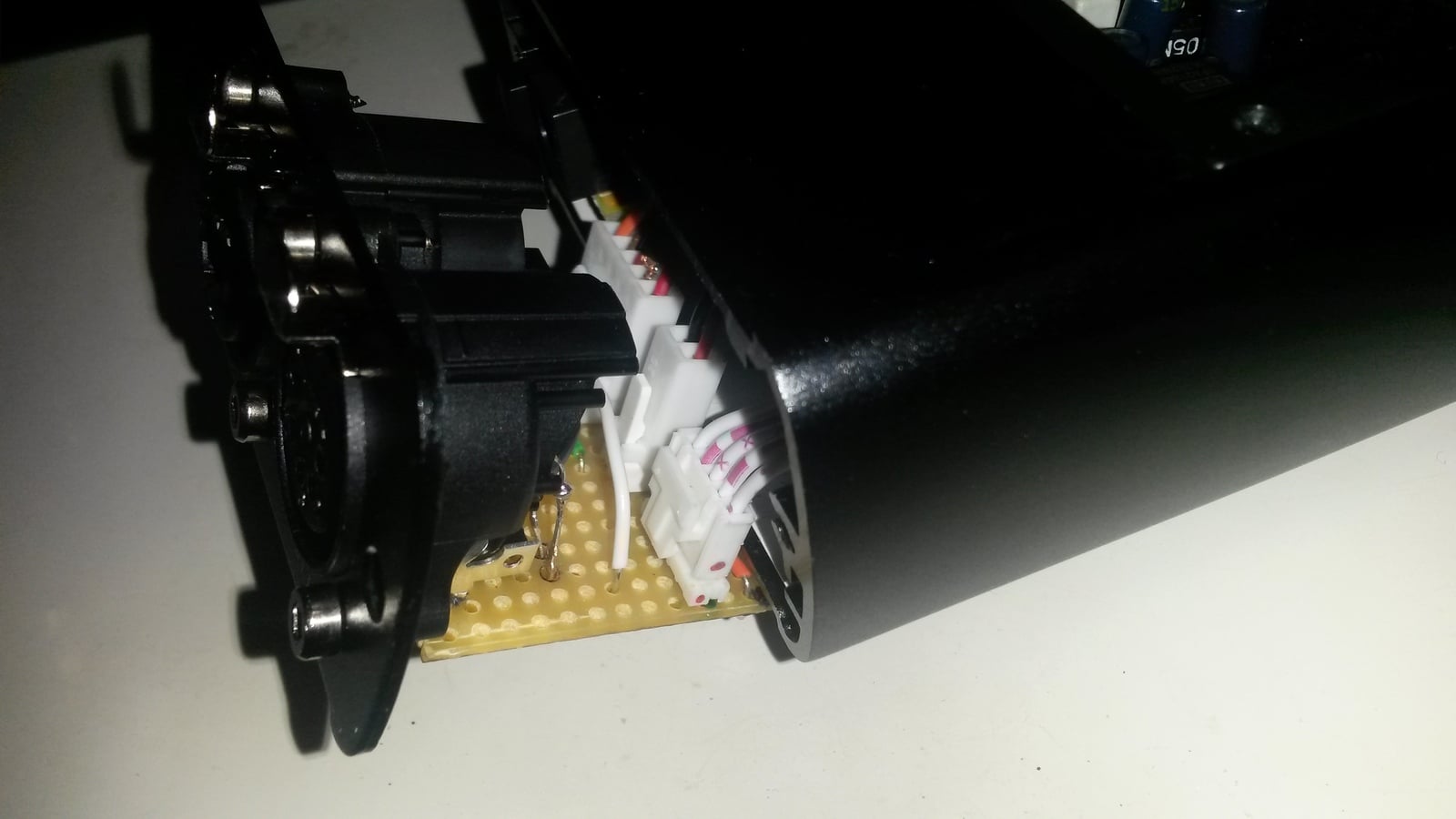
Done:

The connection box on the pedalboard receives and distributes signal and power. It also has ground lift and phase revers switches to deal with common problems. (The phase reverse is needed in case you also have the bass (post effects and amp) in the main monitor feed. If its phase is reversed somewhere along the way, the two bass signals might cancel each other out.)
5-pin XLR-male to the belt pack, XLR-female to receive the main monitor feed.
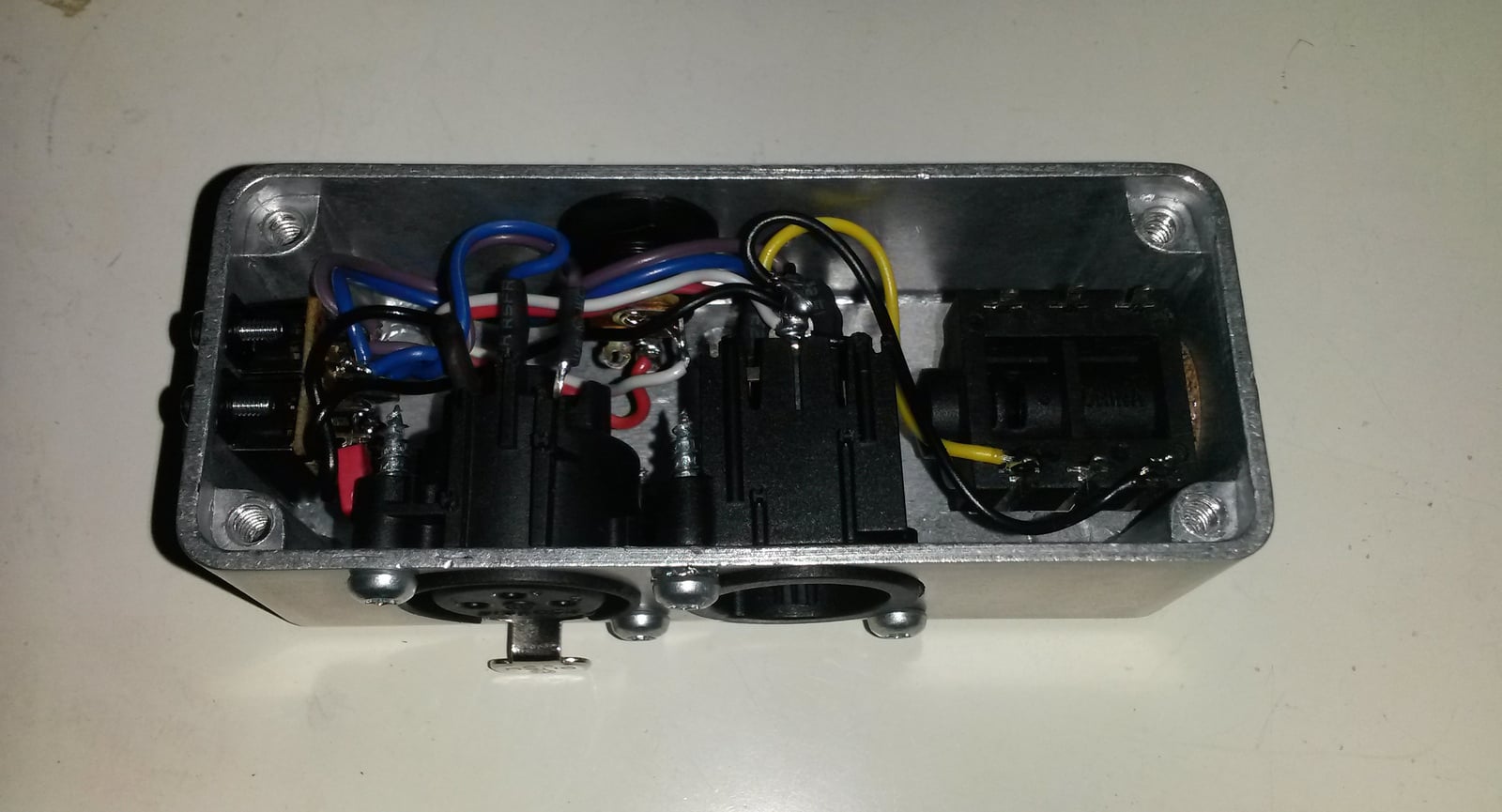
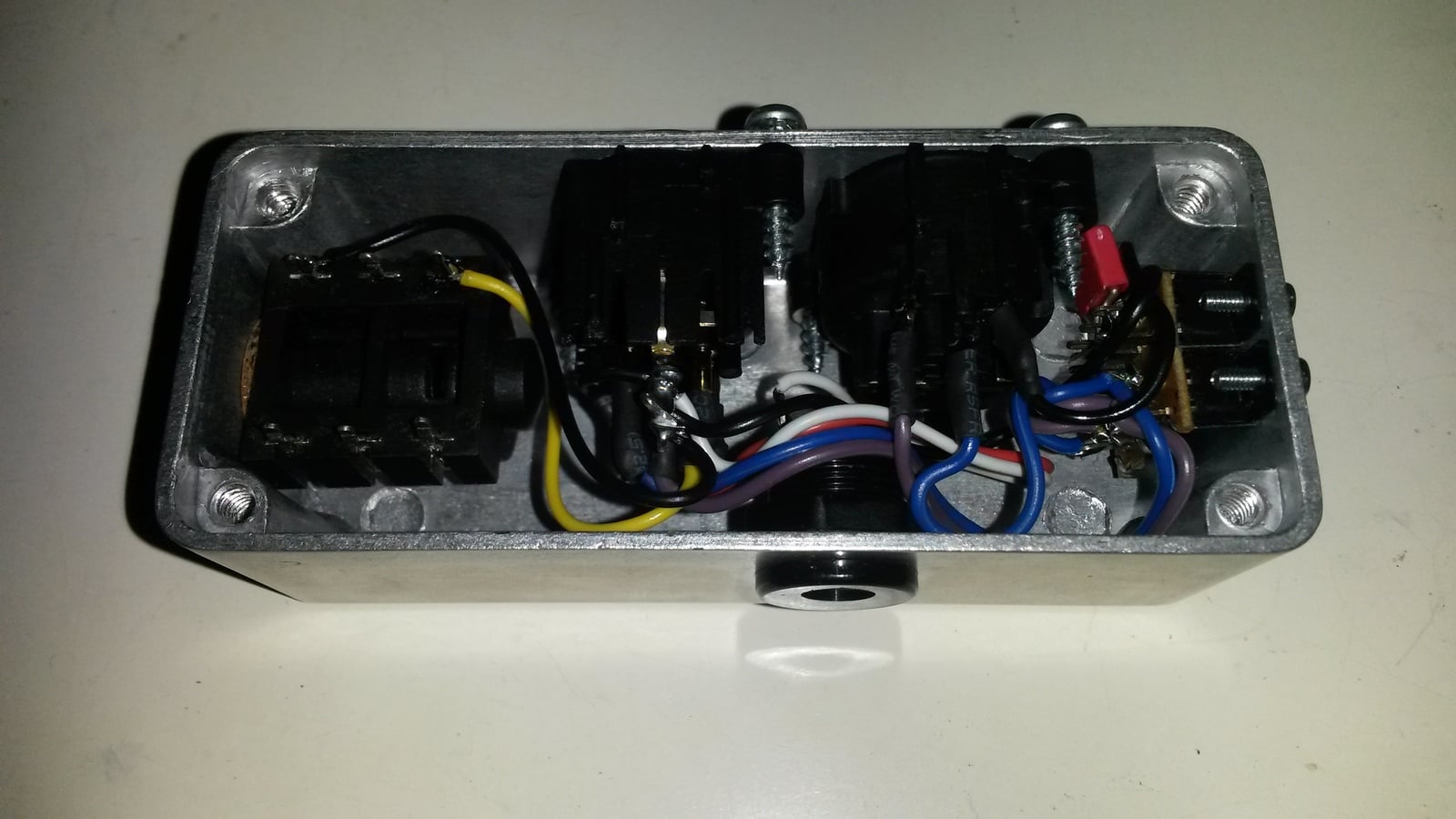
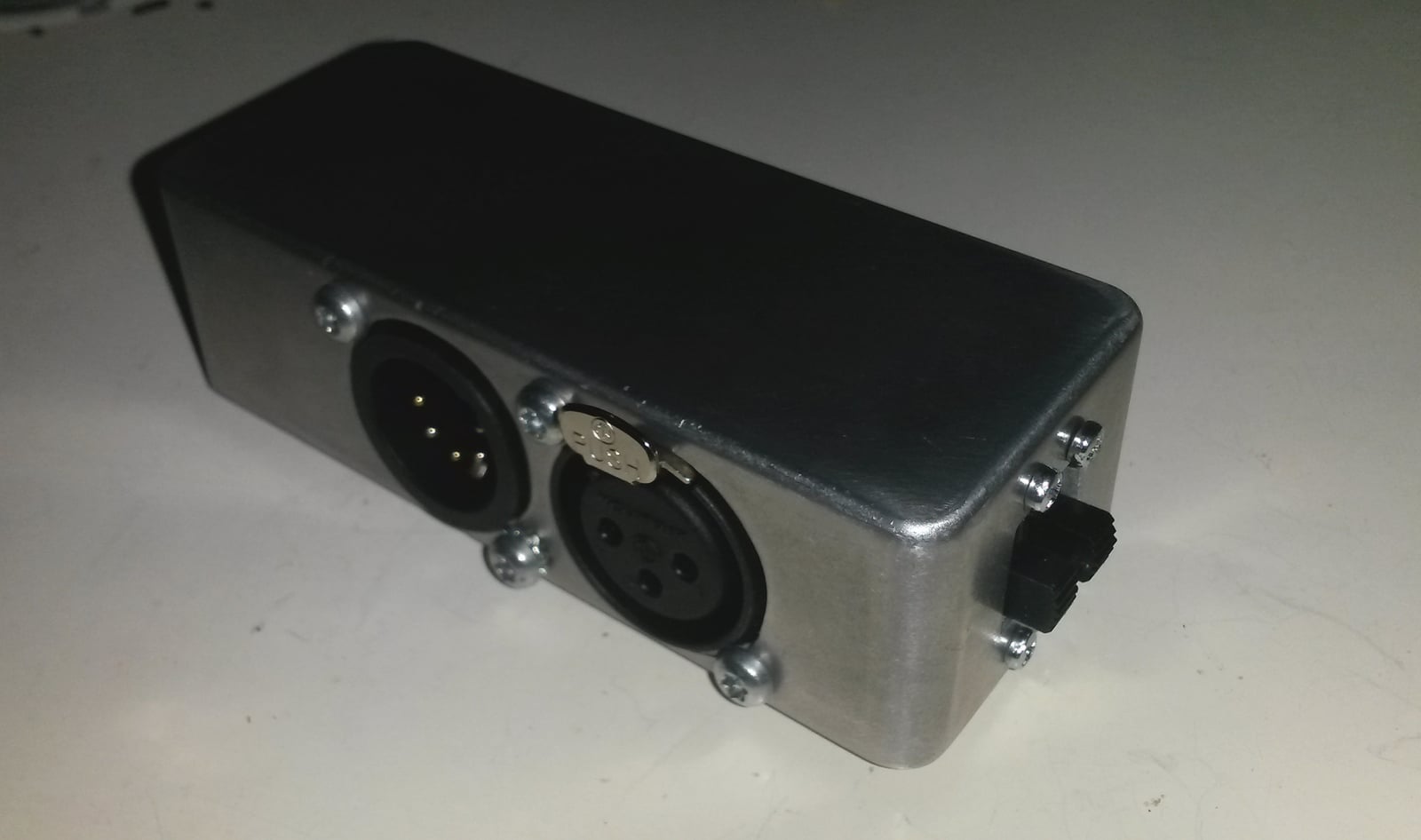
Installed on the pedalboard:
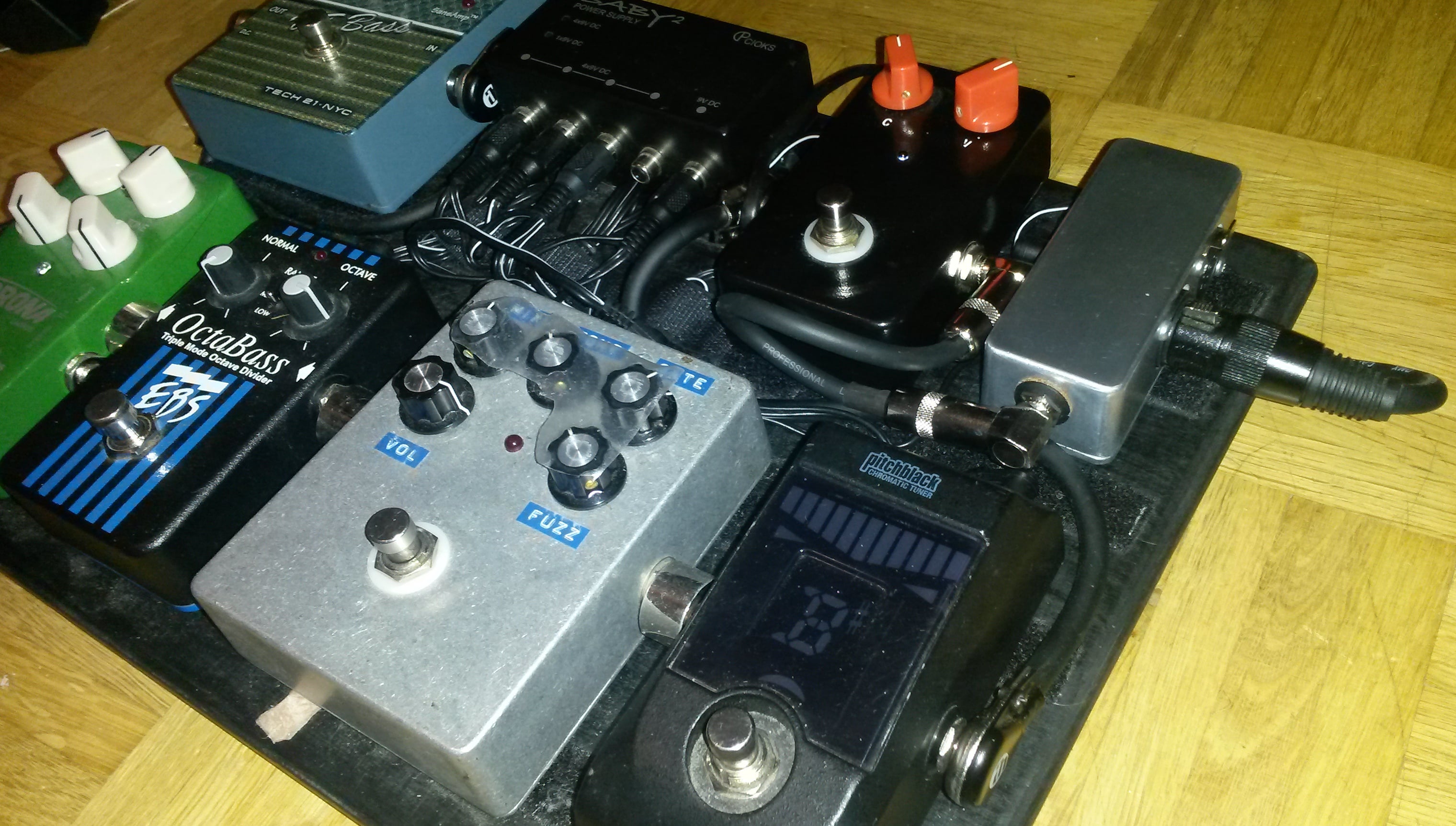
I haven't tested this one on stage yet, but everything works great at home. The design is very silent (at least with my power supply), hiss and hum are negligible. The only change I might need to do would be the gain resistor for the amplifying stage, to match the levels of the main monitor feed and keep the gain as small as possible.
The thing is, as the volume is controlled after this circuit, the op amp stage will always amplify everything, including possible supply noise, up to set gain first (in a normal application, you would put the volume pot before the amplifying stage). The 68k used here is probably a bit much, 47k should be enough. But this depends on the output level of your bass and the impedance of you headphones. Still, I can only hear a slight hiss/hum with the 68k, and that's with the levels cranked. Also, filtering caps are used pretty sparingly to save circuit board real estate, maybe there's room for improvement here.
I anyone want's to build this, och just steal some ideas, feel free! Here's the schematics:


EDIT: Add pull down resistor 1M
I wanted to share my latest build, in case someone else is looking for a similar solution. I've been using In-Ear monitoring for a few years now, but none of the ready-made solutions that I know of have exactly the features I need. The optimal solution IMO is:
- Only a single cable between myself and the pedalboard
- The bass should be heard in the IEM even when she signal is tuner-muted (allows for last minute practice between songs...)
- Belt mixer with separate controls for my bass and the main monitor feed
- No batteries
Now, I built a first version of this system a couple of years ago, but it wasn't perfect, and I'm not going to share that here. But this second version turned out pretty good, so maybe it can be of value for someone else as well.
Instead of building the system ground-up, I chose to mod an existing belt pack this time. This way you don't have to design the mixer circuit, and you get some built in features like a protective limiter and the ability to drive low impedance headphones. I chose the Behringer Powerplay P1 for this purpose because it's cheap and has easily accessible innards.
The setup looks like this:
So, to the point, opening up the Behringer. Looks promising, standard connectors, lots of space inside:
Replaced the connectors to XLR/plug combo and a 5-pin XLR. The combo connector allows for accepting a standard XLR monitor feed if I should want to use this for something other than bass playing at some point.
The connector board with molex connectors to plug in the Behringer's board, power cables and my buffer-splitter board:
The main circuit's job is to split the bass signal so that a dry (but buffered) signal goes to the pedalboard, and an amplified signal goes to one channel of the belt pack. The buffer is needed to prevent crosstalk, a passive Hi-Z signal will not keep its integrity when led through the same cable as the main monitor feed.
The circuit is designed around op amp OPA2134. The trimpot controls a Lo-cut filter, I don't like boomy bass in my ears. The gain resistor (far right) is socketed until I'm sure about the correct value.
The board is made to fit in the battery compartment:
Connections:
Done:
The connection box on the pedalboard receives and distributes signal and power. It also has ground lift and phase revers switches to deal with common problems. (The phase reverse is needed in case you also have the bass (post effects and amp) in the main monitor feed. If its phase is reversed somewhere along the way, the two bass signals might cancel each other out.)
5-pin XLR-male to the belt pack, XLR-female to receive the main monitor feed.
Installed on the pedalboard:
I haven't tested this one on stage yet, but everything works great at home. The design is very silent (at least with my power supply), hiss and hum are negligible. The only change I might need to do would be the gain resistor for the amplifying stage, to match the levels of the main monitor feed and keep the gain as small as possible.
The thing is, as the volume is controlled after this circuit, the op amp stage will always amplify everything, including possible supply noise, up to set gain first (in a normal application, you would put the volume pot before the amplifying stage). The 68k used here is probably a bit much, 47k should be enough. But this depends on the output level of your bass and the impedance of you headphones. Still, I can only hear a slight hiss/hum with the 68k, and that's with the levels cranked. Also, filtering caps are used pretty sparingly to save circuit board real estate, maybe there's room for improvement here.
I anyone want's to build this, och just steal some ideas, feel free! Here's the schematics:
EDIT: Add pull down resistor 1M
Last edited: