And I was disappointed by your post, as well. We obviously have different opinions. That's life.I am so disappointed in your reply man, I can't even begin to respond.

TalkBass has been independent since 1998. Add your voice.
Create a free account to reply to discussions, view embedded media, and browse with fewer display ads.
Join free Log in
Want zero display ads or expanded classifieds tools? Compare plans.
And I was disappointed by your post, as well. We obviously have different opinions. That's life.I am so disappointed in your reply man, I can't even begin to respond.
Thanks for the additional information.In New Orleans there was an active black middle class. Many of them were "Creoles of color" who had French ancestors. (While the white ruling class categorized them all as black ("Negro" or "colored" in the terminology of the day), Creoles-of-color considered themselves distinct from those who did not have that French culture. Sidney Bechet, for example, considered himself a Frenchman to some extent, as did Jelly Roll Morton.) Members of the black middle class had their children instructed in European music. Those children then encountered the lower-social-class musicians who were playing with minimal formal training. There were a very few white musicians who crossed the color line, but the two cultures that were in collision were the black middle class and the black underclass.
This means you have to consider the individual musician. For example,
Bechet's father was a tailor; Jelly Roll Morton's a bricklayer who took occasional contracting jobs. When boys, they would have been considered "middle class". Louis Armstrong, by contrast, grew up in terrible poverty. But make no mistake - Louis was not a "feral" musician - he could sightread expertly and he knew music theory.

Mozart's Requiem is fantastic, yet I would not say it conveys 'a good feeling' nor that 'it is fun'.isn't the point of any music to convey a good feeling to the audience and how is that not fun it itself?
but it does convey an emotion.Mozart's Requiem is fantastic, yet I would not say it conveys 'a good feeling' nor that 'it is fun'.

I'm sure we've all had our own experiences with graduates of various music schools. I've played with a number of Berklee grads, and have had the opposite experience. Now, I've noticed the difference between brand-new graduates and more seasoned veterans, but that's just part of normal human development. Also, it is true of any education program in any subject, that more people are admitted and graduate, than have a hope of being successful beyond the classroom.Yep, as I though. I don't know that I've ever played with a Jullian grad, but all the Berkley grads I've played with have awesome technique, but the soul has been beat out of them. And I will agree that jazz is not party music unless it is that brackground stuff at Sunday brunch, but isn't the point of any music to convey a good feeling to the audience and how is that not fun it itself?
I don't really listen to modern classical, so I don't know about that. I do know I missed a point and was corrected. Not all music intends to convey good thoughts. There are some that evoke other emotions.I'm sure we've all had our own experiences with graduates of various music schools. I've played with a number of Berklee grads, and have had the opposite experience. Now, I've noticed the difference between brand-new graduates and more seasoned veterans, but that's just part of normal human development. Also, it is true of any education program in any subject, that more people are admitted and graduate, than have a hope of being successful beyond the classroom.
One thing I've observed is that the musicians I've known who were heavily engaged in jazz composition, are exclusively graduates of college music programs. And composition is where material comes from, that's not in the Real Book, to exaggerate just a bit.
About the point of music, it's really anything you want. I'm not sure modern "classical" composers intend to convey good feelings in all of their works.
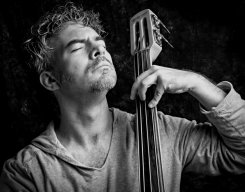
But, my main point is why the hell play music if it isn't fun to do?

Fun is a motivation, say, when playing entertaining music. There are other reasons : put your brain in a flow state, express emotions, transcend yourself... I suspect what you call "fun" is a big mixture of all that (which is fine actually, experiencing it is more important than naming it !).But, my main point is why the hell play music if it isn't fun to do?
This post has no point.

It begs the question of music schools:
Do they exist to make players, or music teachers?
A lot of upper education is designed as a perpetual motion machine - their only product is more teachers.
Yes, we actually agree. When it comes to music, those words are all included in what I refer to as fun.Fun is a motivation, say, when playing entertaining music. There are other reasons : put your brain in a flow state, express emotions, transcend yourself... I suspect what you call "fun" is a big mixture of all that (which is fine actually, experiencing it is more important than naming it !).
I'll add that putting your brain in a flow state is a strong motivation for studying dry and difficult subject like harmony.
well, da chicks aren't going for old 76 year old bald men.Fer da chicks?

I bet 70 year old chicks wouldwell, da chicks aren't going for old 76 year old bald men.
better not playing anything too funky though, the hip prosthesis have limits...
The 70 year old chicks are home sitting on their heating pads.I bet 70 year old chicks would
But, my main point is why the hell play music if it isn't fun to do?
Good post, but FYI, I am not aspiring. My first gig was 1964. Yes, practice, rehearsal, and putting up with musicians can be time consuming, tiring, and frustrating. But, to me, it is worth it. I am no longer full time, but I still gig 2 to four times a month and volunteer for a P&W service at the United Gospel Mission, and I'm working on a new acoustic duo project. That doesn't include the frequent jam sessions with friends. I consider myself a musician that supplements his income by being a software developer.If your still in the phase where you are an aspiring artist, I think you are motivated by a sense of creation and self actualization. My earlier point is that, pretty much like any profession, being a musician is work and it can take a very heavy toll on your intrinsic motivation process. Lot's of musicians wind up becoming extremely disillusioned and hating what they do, because they can't reconcile their internal goals and motivations with the reality entailed by being a professional musician. If you want to enjoy music for the duration of your life, IMHO, your best bet is to avoid doing it for a living.
I really enjoyed being a pro for 15-20 years, partly because I had to spend a lot of that time catching up to my peers, who mostly held bachelors and higher degrees. I was more of a raw talent, as I exited my music major after the third semester. The work was great as long as I was working hard and growing as a musician. But at some point I felt like we had a huge talent exodus, and the also the leadership lost motivation, which caused the difficulty and quality to decline sharply. Then I begun to understand all the frustration I had seen expressed over the years by the most talented players in the various bands I was in.
The funny thing is I became an audio tech in the same organization, and greatly enjoyed the work again. Most of the quality decline was in rehearsal efficiency, and being an audio tech freed me from participating in most rehearsals. The performances were still at a very high quality level. It is true that the difficulty of the music was lower on average, but this didn't effect me as an audio tech. In some ways, I had a great deal more creative freedom as an audio, given that my goal was to make our acoustic ensembles sound as authentic as possible.
Good post, but FYI, I am not aspiring. My first gig was 1964. Yes, practice, rehearsal, and putting up with musicians can be time consuming, tiring, and frustrating. But, to me, it is worth it. I am no longer full time, but I still gig 2 to four times a month and volunteer for a P&W service at the United Gospel Mission, and I'm working on a new acoustic duo project. That doesn't include the frequent jam sessions with friends. I consider myself a musician that supplements his income by being a software developer.
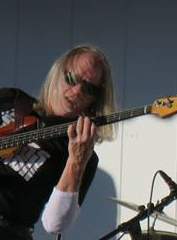
I think that SP and Glasper are in similar categories.
I have to ask what you mean when you say “modern?” Strictly, the term refers to architecture and fashion of the first half of the twentieth century. Through common usage it was applied to music and art and has come to mean contemporary which means “at the same time.” Duke Ellington, Lester Young, Miles Davis, Dave Brubeck and Charles Mingus are modern, Chick Corea, Herbie Hancock, Joe Zawinul, Stanley Clark and Mike Stern are not, if you want to be clear about categorizing the music of a period. …..

Holy necrothread, Batman!
As when this thread was started, there's lots of great jazz being made today. You can't like everything. But you can listen to a lot and decide which modern jazz is for you, and which isn't.
2022 jazz records I've liked:
Gonzalo Bergara - 9
Adrien Moignard - Zaiti
Charlie Hunter/Bobby Previte - Avant Blues
Vega Trails - Tremors in the Static
Shabaka Hutchings - Afrikan Culture
Mary Halvorson - Amaryllis, Belladonna
Bireli Lagrene - Solo Suites
John Scofield - John Scofield
Delvon Lamarr Trio - Cold as Weiss, Live in Loveland