

After doing more research, Osmo is off the table for the same reason that Rubio Monocoat is off the table. I have worked the neck beyond 150 or 220 grit.
This is the neck under natural light after I burnished it earlier this week:
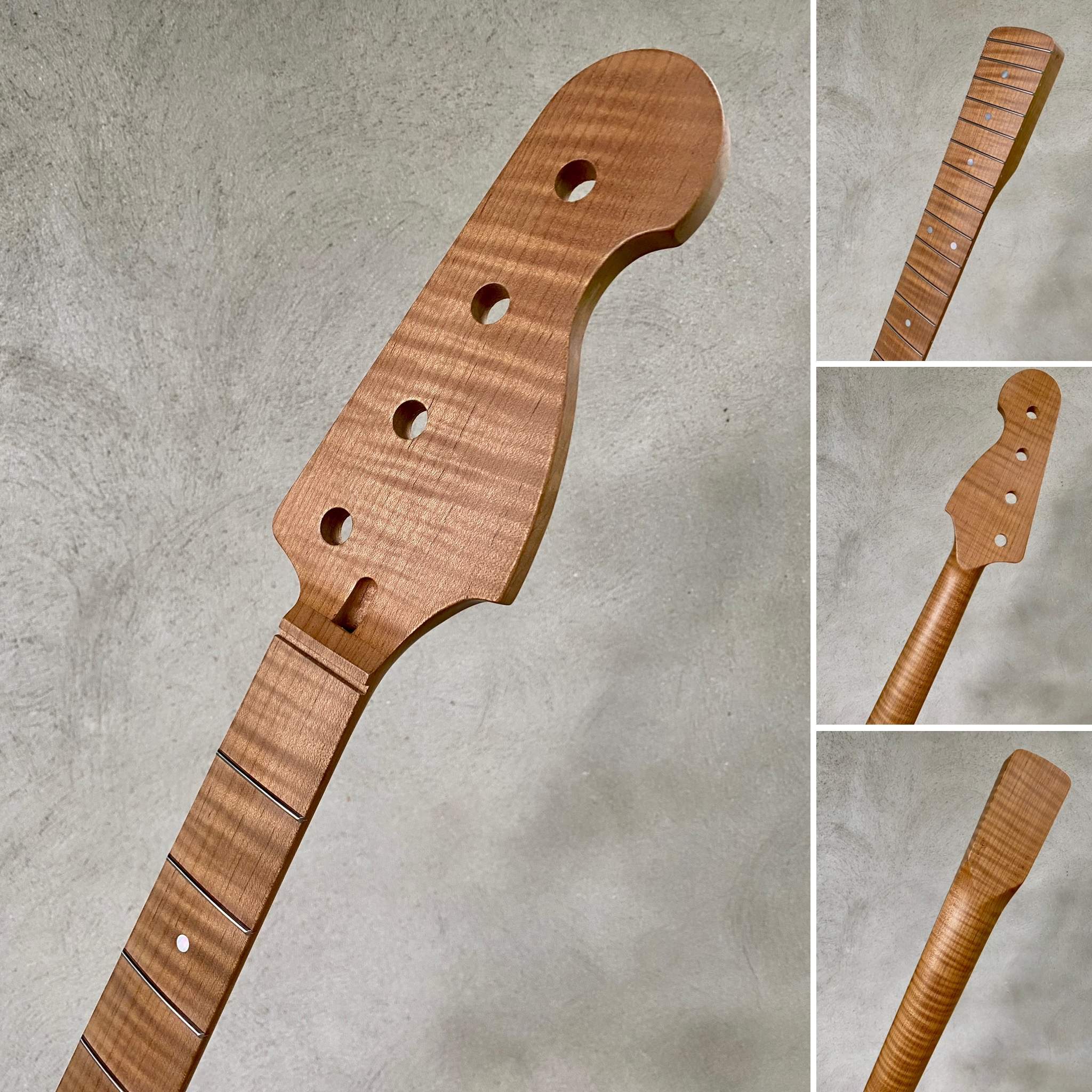
Based on my test swatches, I am comfortable putting oil, varnish or schellac on the neck. I can open the grain and those finishes will penetrate the wood to some extent. There’s some precedent on the different instrument finishing forums for applying these types of finishes to a burnished neck.
That’s not the case with these modern oil finishes. The manufacturer’s instructions for Osmo or RMC are very specific about the raw wood prep. I’d rather not take the sanding backwards at this point.
I’ll try a couple different test swatches over the weekend, including Tung oil and garnet shellac.
This is the neck under natural light after I burnished it earlier this week:
Based on my test swatches, I am comfortable putting oil, varnish or schellac on the neck. I can open the grain and those finishes will penetrate the wood to some extent. There’s some precedent on the different instrument finishing forums for applying these types of finishes to a burnished neck.
That’s not the case with these modern oil finishes. The manufacturer’s instructions for Osmo or RMC are very specific about the raw wood prep. I’d rather not take the sanding backwards at this point.
I’ll try a couple different test swatches over the weekend, including Tung oil and garnet shellac.



 That stuff is everywhere around me here in boat-owning-building-and-repairing land. What are the other two parts you mix with it?


