How often do you experience something in life that brings an immediate smile to your face. Not enough. When it comes to gear, sometimes there are those pieces that surprise you in a good way. That's the case for me with this little DI called the Motor City Big Block. After just a couple of minutes, I had a smile on my face with this one.

This isn't just another DI box. There are no tubes inside. It does not require phantom power. In fact, it doesn't require any power at all. What's inside is a custom designed transformer. If you must know the specs, go here: https://www.werespondwereact.com/motorcitybigblockdi
Suffice it to say, the Big Block DI allows you to select different inputs on the transformer which is quite unlike anything else on the market. At least to this degree. The four different user selectable inputs present different impedances to the instrument or source. The transformer itself is the attenuator. Why does this matter or what's the big deal? You get four different frequency responses and they all are all quite different.
What you get is a substantial amount of tone shaping. It is not transparent. In other words, it is easy to hear distinct tonality differences including some harmonic content.
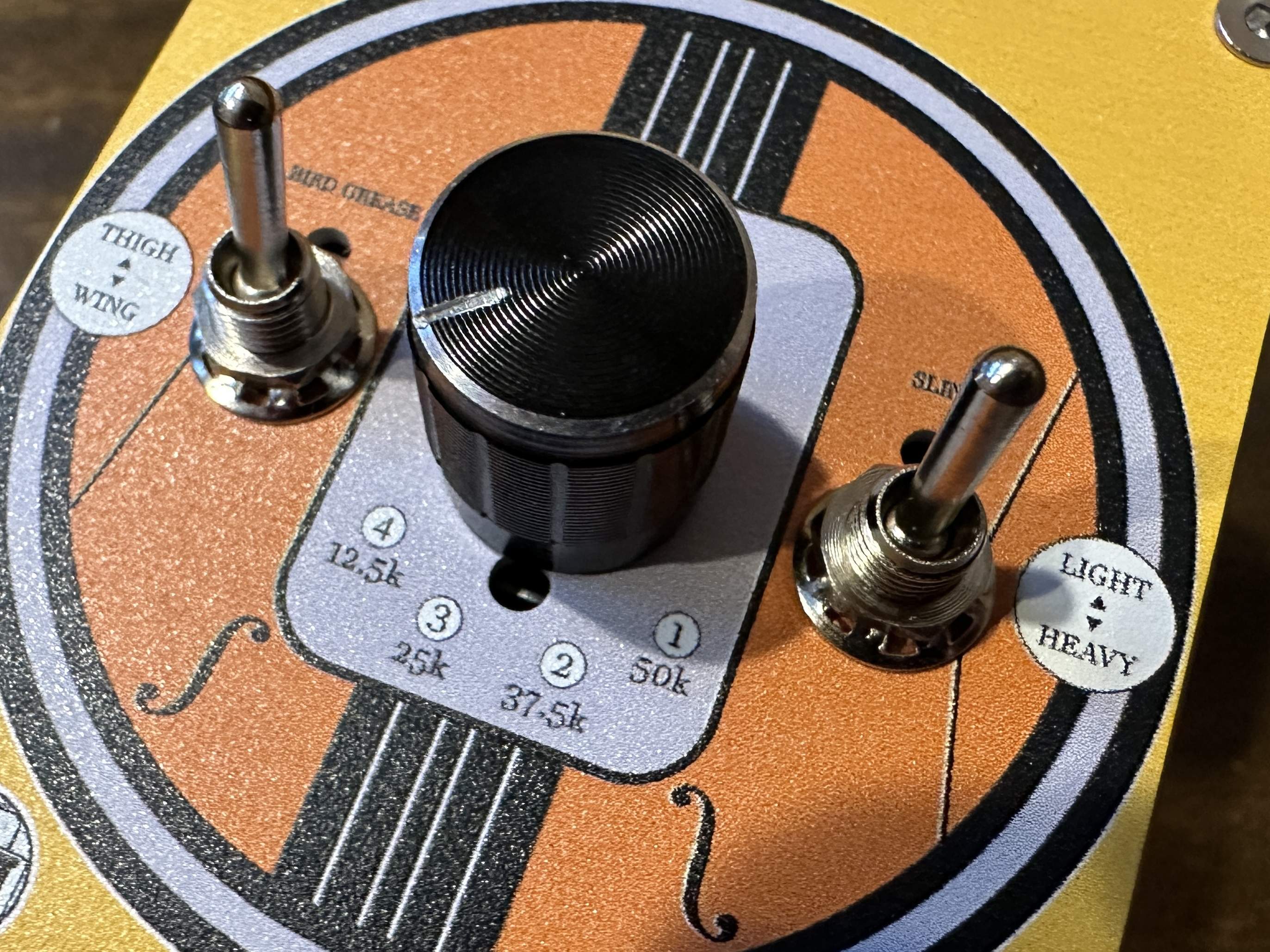
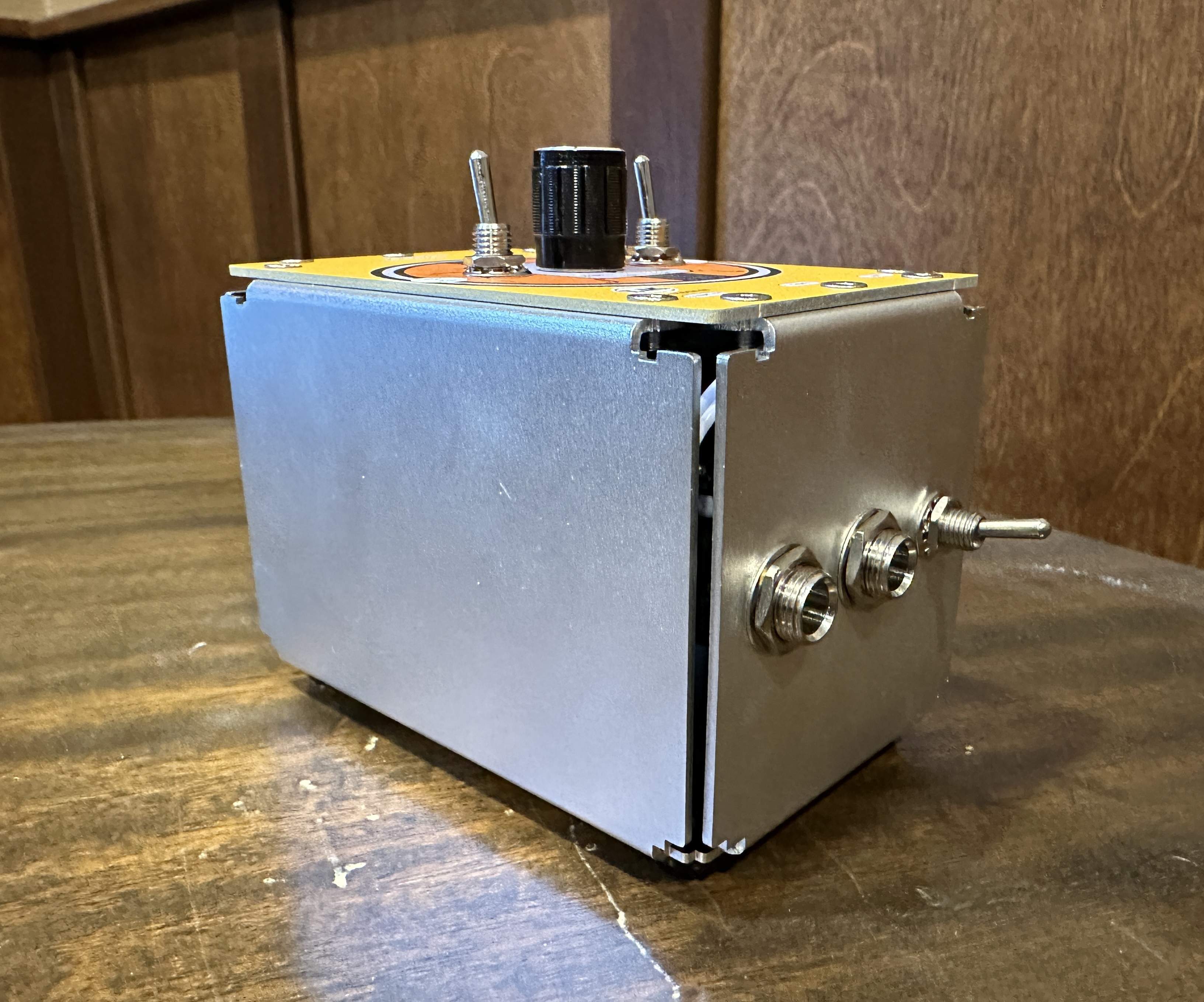
So there are 3 controls on the top:
1. The GoGo dial which allows you to select one of four different impedances. 50k (the most flat); 37.5K; 25K and 12.k5. You will get more attenuation at 50K and increasing less as you rotate to the left.
2. The Slink switch which allows you to toggle between 600 ohms and 300 ohms for the output impedance. Switched up to the Light position provides more output and a bit more clarity. Switched down to the Heavy position rolls off some highs with less output. Again, it is quite easy to hear distinct differences.
3. The Bird Grease switch controls an impedance that affects the top end and and bass response. Switched up to the Thigh position and the tone feels more open. Switched down to Wing you get a bit of drop in output but something more going on in the mids.
I have spent a lot of time with this thing and I honestly don't know which positions of dial and switches I like best. It doesn't sound bad in any configuration. It's all different flavors of sonic goodness. With a passive bass, you will want to keep the GoGo switch at 12.5K most likely for the most output volume. My favorite position with my Sadowsky basses with onboard preamp is the 25K position. I think I like it best with the Slink switch to Light and the Bird Grease switch to Wing which seems to introduce a little more color.
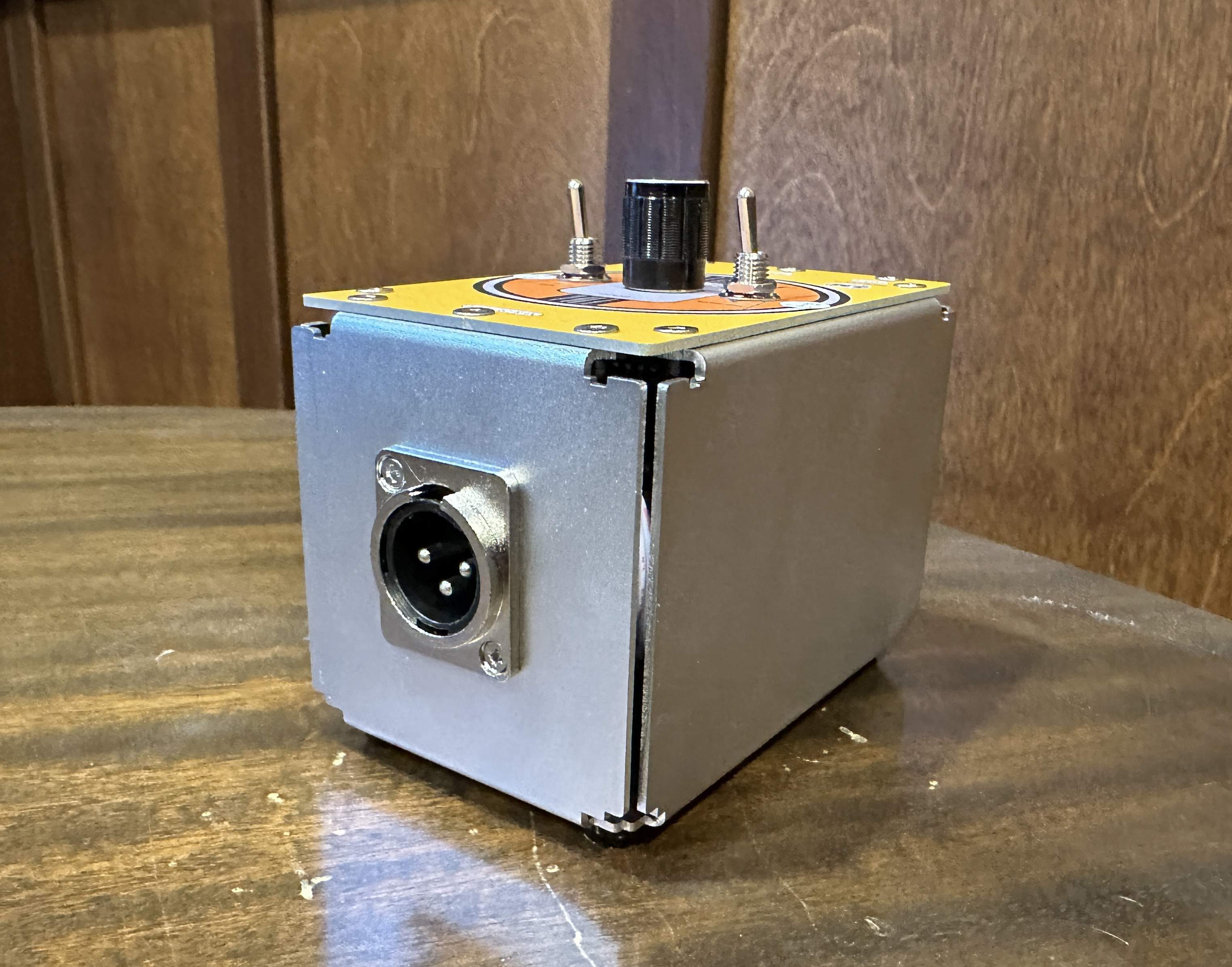
You can goose it by driving it with a boost pedal ahead of it in your chain and the Big Block responds real well to that.
A few notes on how to run this thing:
1. The Thru connection is to pass a replica of your dry signal. It is unaffected.
2. The Input is for a standard instrument cable or line/level TRS
3. XLR is balanced out to connect to a microphone preamp or mixing console
It does not work well to try and connect a XLR to balanced 1/4 conversion cable to something like another DI or instrument input on a preamp. It does work lovely by using XLR cable out to microphone in on a preamp. It also works lovely to serve as the DI at the end of your chain with XLR out to console. In other words, don't think of the Motor City Big Block as some sort of preamp. It isn't. It is a DI box. Be sure to provide enough gain to drive it well too.
There is a ground/lift switch which is nice.
Honestly, it is remarkable at how much tonal variety this thing delivers. It's all about adding warmth and girth. It might be the closest thing I've found to a "magic box". Why? Well, again, it requires no power. You can't really make it sound bad. It makes what goes into it come out sounding better. It isn't complicated. It definitely adds color but in a way that never sounds harsh, abrasive, overly EQ'd, muddy, or lacking definition.
The Motor City Big Block website says the Big Block DI is inspired by classic bass and guitar sounds of the 60's Soul Music and early funk to classic Rock n Roll and Dub. I can see that, at least to some degree. It does inherently have that retro vibe but overall I think it just makes everything bigger and deeper and more exciting. Certainly useful in studio and on stage. Energetic, full, and lively would be three words I'd use to describe it.
And for $250 I think it is affordable — at least relative to so many other DI boxes out there today.
There are a couple of inconveniences to be aware of. The first being that there is attenuation of output going on. This can mean adding gain somewhere else in your chain which does have the potential to add noise. That noise isn't going to come from the DI though. But it is something to be aware of. It is much less of an issue with the GoGo dial at 12.5K.
Secondly, I found that the box is susceptible to introducing a slight amount of hum when placed in close proximity to some devices. For example, if I had the DI box too close to my Millenia preamp I noticed a bit of hum introduced. I also noticed hum introduced when I set the Big Block DI on top of one of my other tube DI boxes. I'm just saying that it is possible that proximity to some of your gear might introduce a bit of hum. It's not enough that it would be a problem in a live band scenario by any means but in the studio, you might need to be careful where it is placed. Maybe this is to be expected in that it is after all a transformer.
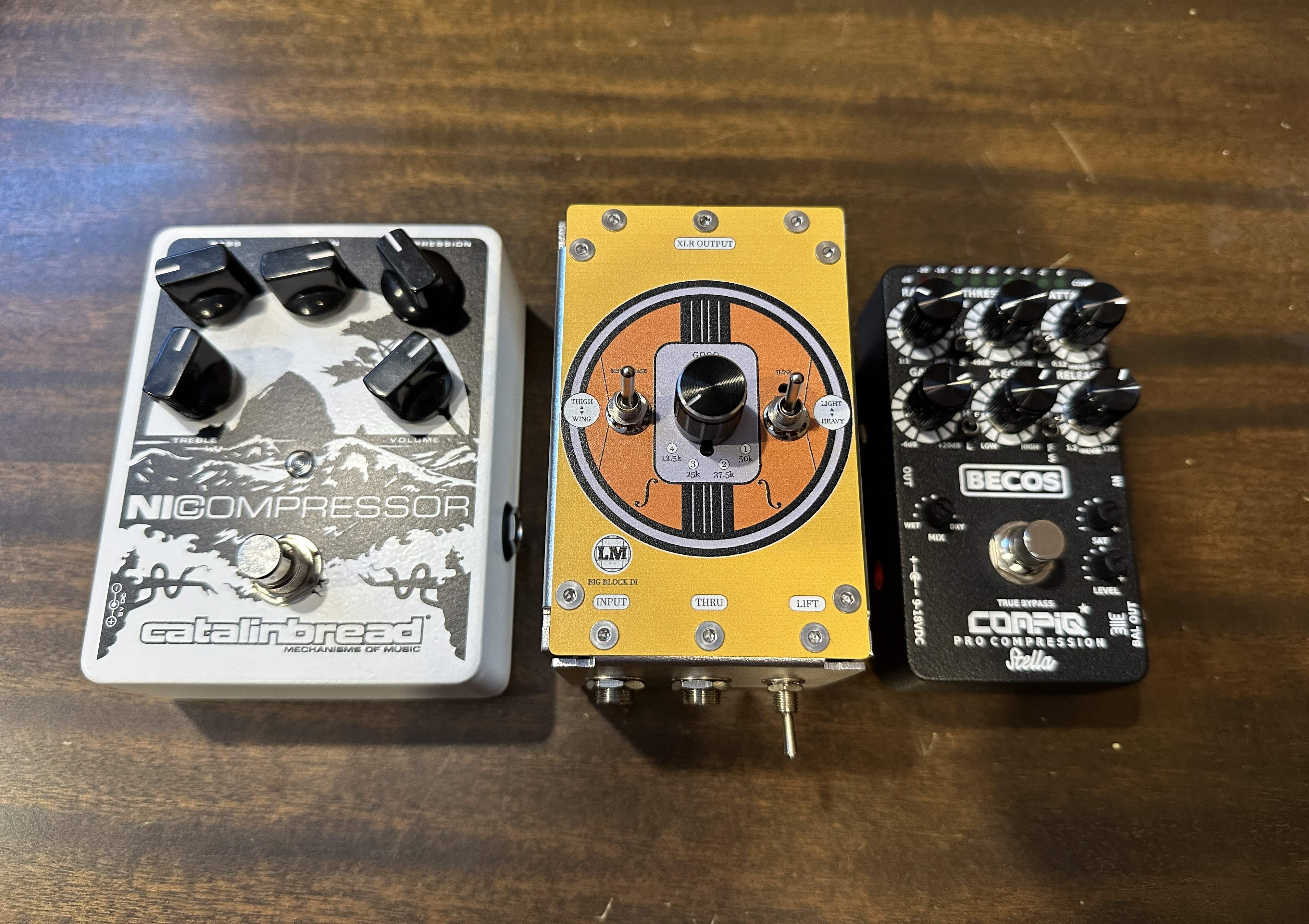
Oh, the Big Block is also quite small. Here's a couple of pictures of it beside compressors for size comparison.

One way I really like running it is bass into the Big Block and then XLR out of the Big Block to mic input on my Millenia TD-1 preamp. It adds girth and there is something about the feel of it while playing. Very, very nice. Even though the Millenia has a transformer out, it is also fun running the balanced out of the Millenia to the input of the Big Block and then XLR out to console. It's not necessarily better, but different and more punchy.
Coming full circle on this thing, I'm pleased. It does put a smile on my face. It's one of those devices that isn't subtle. You will easily hear its nuances. And that is another aspect of what I think might make others agree this thing is a little magic box.
This isn't just another DI box. There are no tubes inside. It does not require phantom power. In fact, it doesn't require any power at all. What's inside is a custom designed transformer. If you must know the specs, go here: https://www.werespondwereact.com/motorcitybigblockdi
Suffice it to say, the Big Block DI allows you to select different inputs on the transformer which is quite unlike anything else on the market. At least to this degree. The four different user selectable inputs present different impedances to the instrument or source. The transformer itself is the attenuator. Why does this matter or what's the big deal? You get four different frequency responses and they all are all quite different.
What you get is a substantial amount of tone shaping. It is not transparent. In other words, it is easy to hear distinct tonality differences including some harmonic content.
So there are 3 controls on the top:
1. The GoGo dial which allows you to select one of four different impedances. 50k (the most flat); 37.5K; 25K and 12.k5. You will get more attenuation at 50K and increasing less as you rotate to the left.
2. The Slink switch which allows you to toggle between 600 ohms and 300 ohms for the output impedance. Switched up to the Light position provides more output and a bit more clarity. Switched down to the Heavy position rolls off some highs with less output. Again, it is quite easy to hear distinct differences.
3. The Bird Grease switch controls an impedance that affects the top end and and bass response. Switched up to the Thigh position and the tone feels more open. Switched down to Wing you get a bit of drop in output but something more going on in the mids.
I have spent a lot of time with this thing and I honestly don't know which positions of dial and switches I like best. It doesn't sound bad in any configuration. It's all different flavors of sonic goodness. With a passive bass, you will want to keep the GoGo switch at 12.5K most likely for the most output volume. My favorite position with my Sadowsky basses with onboard preamp is the 25K position. I think I like it best with the Slink switch to Light and the Bird Grease switch to Wing which seems to introduce a little more color.
You can goose it by driving it with a boost pedal ahead of it in your chain and the Big Block responds real well to that.
A few notes on how to run this thing:
1. The Thru connection is to pass a replica of your dry signal. It is unaffected.
2. The Input is for a standard instrument cable or line/level TRS
3. XLR is balanced out to connect to a microphone preamp or mixing console
It does not work well to try and connect a XLR to balanced 1/4 conversion cable to something like another DI or instrument input on a preamp. It does work lovely by using XLR cable out to microphone in on a preamp. It also works lovely to serve as the DI at the end of your chain with XLR out to console. In other words, don't think of the Motor City Big Block as some sort of preamp. It isn't. It is a DI box. Be sure to provide enough gain to drive it well too.
There is a ground/lift switch which is nice.
Honestly, it is remarkable at how much tonal variety this thing delivers. It's all about adding warmth and girth. It might be the closest thing I've found to a "magic box". Why? Well, again, it requires no power. You can't really make it sound bad. It makes what goes into it come out sounding better. It isn't complicated. It definitely adds color but in a way that never sounds harsh, abrasive, overly EQ'd, muddy, or lacking definition.
The Motor City Big Block website says the Big Block DI is inspired by classic bass and guitar sounds of the 60's Soul Music and early funk to classic Rock n Roll and Dub. I can see that, at least to some degree. It does inherently have that retro vibe but overall I think it just makes everything bigger and deeper and more exciting. Certainly useful in studio and on stage. Energetic, full, and lively would be three words I'd use to describe it.
And for $250 I think it is affordable — at least relative to so many other DI boxes out there today.
There are a couple of inconveniences to be aware of. The first being that there is attenuation of output going on. This can mean adding gain somewhere else in your chain which does have the potential to add noise. That noise isn't going to come from the DI though. But it is something to be aware of. It is much less of an issue with the GoGo dial at 12.5K.
Secondly, I found that the box is susceptible to introducing a slight amount of hum when placed in close proximity to some devices. For example, if I had the DI box too close to my Millenia preamp I noticed a bit of hum introduced. I also noticed hum introduced when I set the Big Block DI on top of one of my other tube DI boxes. I'm just saying that it is possible that proximity to some of your gear might introduce a bit of hum. It's not enough that it would be a problem in a live band scenario by any means but in the studio, you might need to be careful where it is placed. Maybe this is to be expected in that it is after all a transformer.
Oh, the Big Block is also quite small. Here's a couple of pictures of it beside compressors for size comparison.
One way I really like running it is bass into the Big Block and then XLR out of the Big Block to mic input on my Millenia TD-1 preamp. It adds girth and there is something about the feel of it while playing. Very, very nice. Even though the Millenia has a transformer out, it is also fun running the balanced out of the Millenia to the input of the Big Block and then XLR out to console. It's not necessarily better, but different and more punchy.
Coming full circle on this thing, I'm pleased. It does put a smile on my face. It's one of those devices that isn't subtle. You will easily hear its nuances. And that is another aspect of what I think might make others agree this thing is a little magic box.