
Enjoy the benefits of a premium membership!
Upgrade Account
-
TalkBass has been independent since 1998. Add your voice.
Create a free account to reply to discussions, view embedded media, and browse with fewer display ads.
Join free Log in
Want zero display ads or expanded classifieds tools? Compare plans.
You are using an out of date browser. It may not display this or other websites correctly.
You should upgrade or use an alternative browser.
You should upgrade or use an alternative browser.
Mudbucker in a P-bass
- Thread starter the art guy
- Start date
More options
Who Replied?

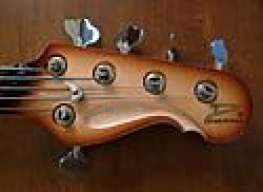
FrednBass said:Mine
Not a Fender, but still...
And NO, i DON'T like Billy Sheehan.
THUMP CITY!!
These were done by a player on the Last Bass Outpost...
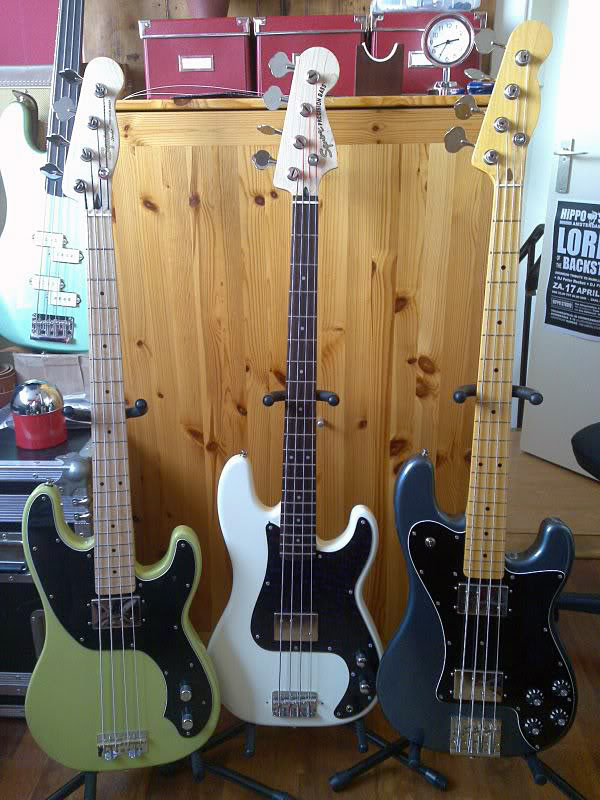
Hey, my basses! (two of them, green and white). The green one is a standard Squier TB, it only had a refin. The white one has the same pick up as the TB, but on the P-spot. They both sound great. But these pick ups are NOT mudbuckers, they're totally different animals.
SvenB said:Hey, my basses! (two of them, green and white). The green one is a standard Squier TB, it only had a refin. The white one has the same pick up as the TB, but on the P-spot. They both sound great. But these pick ups are NOT mudbuckers, they're totally different animals.
NICE!!

Mine
[Invalid or Expired Link Removed]
Not a Fender, but still...
And NO, i DON'T like Billy Sheehan.
Extremely beautiful bass you got there!!...can you share a wiring diagram?
I have a Dimarzio WillPower and a set of Dimarzio DP122 waiting to be installed on a DIY project I have, all passive.
If you can share that info I´ll truly appreciate it!!
Thanks
As someone who has electronic schooling back ground I have to disagree. DC resistance relates to number of winds and strength of magnets. Mudbuckers have two coils each in series with two huge magnets. Mudbuckers should alway be hotter than reg pickups.DC resistance is unrelated to output.
AFAIK, mudbuckers are not particularly high output pickups.
I would use 500k pots. Perhaps a 0.1uF cap.

Old threads never die! Thinking of putting one on my Jazz Bass (Squire), but haven't quite decided where to put it or how to wire it. Right now, I have the two stock pickups wired with a Freeway 6-way toggle with a single volume, a single tone, and a custom voiced 'varitone'. The 6-way gives me several unique combinations, but the one I rely on most is both pickups in series, which, with an appropriate varitone adjustment, gets me close to a fat acoustic bass tone. I've considered replacing the JB neck pu, or maybe adding it right up by the fingerboard. Would definitely have to add another volume control. If I did that, I would add another 3-way so I can switch between the mudbucker only, the original combination just as it is now, or both. I have retro 'ashtray' covers on the pickup and bridge, so would be way cool if the mudbucker could be totally hidden under the cover - have to get some measurements!

- Apr 18, 2008
- 16,002
- 1
- 31,688
- Disclosures
- I'm highly opinionated and extremely self-assured
Memo to TB membership: When using the term “mudbucker”, please specify whether referring to the Gibson sidewinder variety, the Fender WRHB variety, the DiMarzio Model One variety, or something else. All are different, and all will yield different results.
Thank you for your attention to this matter.
Thank you for your attention to this matter.

Glad you're on the case with this ToddThank you for your attention to this matter.

The term 'mudbucker' is thrown about on TB yet rarely in the correct context, won't get a great deal of mud sticking a Gibson sidewinder down by the bridge.

Mmmm, I don’t quite understand why humbuckers are called “mudbuckers” the double standard p bass pickup is muddy. Every humbucker bass I own “Sterling, LTD, have clean sound. Every p bass I own(ed) are muddy.
- Apr 18, 2008
- 16,002
- 1
- 31,688
- Disclosures
- I'm highly opinionated and extremely self-assured
Mmmm, I don’t quite understand why humbuckers are called “mudbuckers” the double standard p bass pickup is muddy. Every humbucker bass I own “Sterling, LTD, have clean sound. Every p bass I own(ed) are muddy.
“Mudbucker” is not a synonym for “humbucker”.
“Mudbucker” refers to the Gibson sidewinder pickup used in the 1960s and 1970s, mostly associated with the EB-0 and EB-3. Placed right up against the fretboard, and boasting a 30kOhm DC resistance, it produced a very thick, grunty sound.
But because the Gibson mudbucker is visually distinctive, with its large chrome cover, others mistakenly label any other pickup with a large chrome cover (like the Fender WRHB) a “mudbucker”, even if they’re electromagnetically nothing like one.
And the DiMarzio Model One, designed as a drop-in replacement for the Gibson mudbucker, isn’t a true mudbucker either. It’s just a normal dual-coil humbucker.
Thank you very much !!! I never knew that.“Mudbucker” is not a synonym for “humbucker”.
“Mudbucker” refers to the Gibson sidewinder pickup used in the 1960s and 1970s, mostly associated with the EB-0 and EB-3. Placed right up against the fretboard, and boasting a 30kOhm DC resistance, it produced a very thick, grunty sound.
But because the Gibson mudbucker is visually distinctive, with its large chrome cover, others mistakenly label any other pickup with a large chrome cover (like the Fender WRHB) a “mudbucker”, even if they’re electromagnetically nothing like one.
And the DiMarzio Model One, designed as a drop-in replacement for the Gibson mudbucker, isn’t a true mudbucker either. It’s just a normal dual-coil humbucker.

[This invalid link has been removed]
Late, great Rick Laird modded his P-Bass with a Sidewinder/Mudbucker long before Billy Sheehan came along...but hey, the man had to compete with McLaughlin's Marshall stacks at the time...
"Improvising Jazz Bass" was the book that had changed my life as a bass player, and I wish I had the opportunity to personally thank Mr. Laird for writing it.
Late, great Rick Laird modded his P-Bass with a Sidewinder/Mudbucker long before Billy Sheehan came along...but hey, the man had to compete with McLaughlin's Marshall stacks at the time...
"Improvising Jazz Bass" was the book that had changed my life as a bass player, and I wish I had the opportunity to personally thank Mr. Laird for writing it.

It's uncommon for anyone to find a split coil P not thick enough, but a Gibby humbucker right by the neck should cure that in a hurry. 

- Jun 30, 2010
- 49,582
- 221,922
- Disclosures
- musician/artist/owner - Gildaxe
Created one years ago (long ago sold) Any bass with a pu close to the neck-heal will always bring the mud.
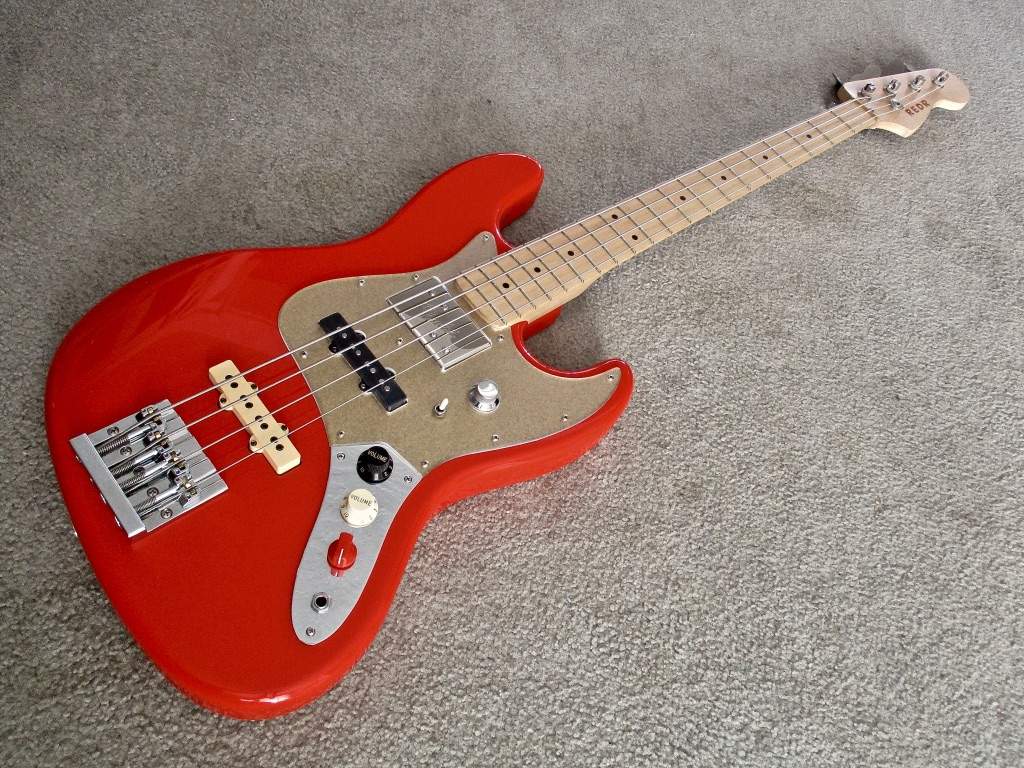
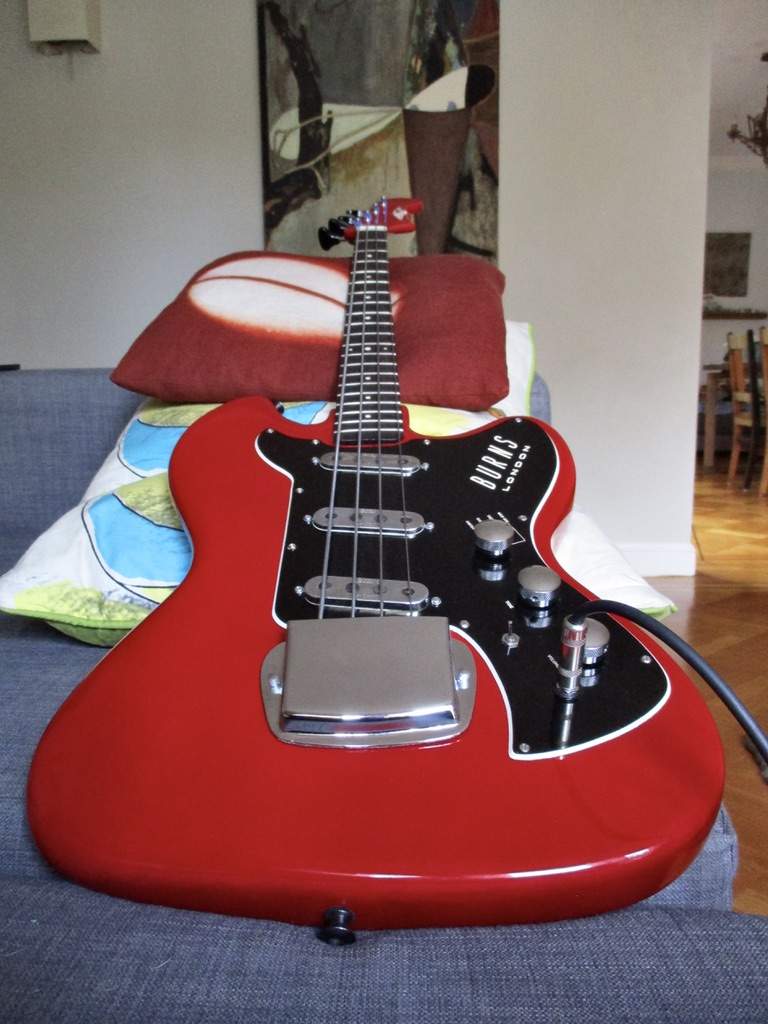
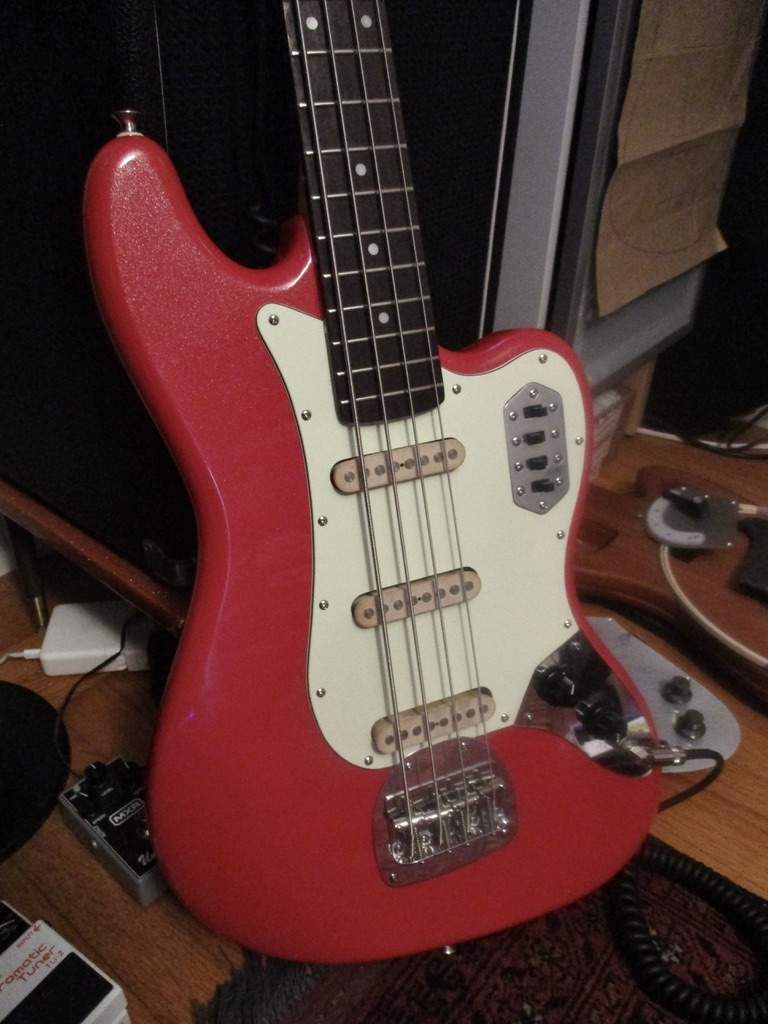
- Jun 30, 2010
- 49,582
- 221,922
- Disclosures
- musician/artist/owner - Gildaxe
“Mudbucker” is not a synonym for “humbucker”.
“Mudbucker” refers to the Gibson sidewinder pickup used in the 1960s and 1970s, mostly associated with the EB-0 and EB-3. Placed right up against the fretboard, and boasting a 30kOhm DC resistance, it produced a very thick, grunty sound.
But because the Gibson mudbucker is visually distinctive, with its large chrome cover, others mistakenly label any other pickup with a large chrome cover (like the Fender WRHB) a “mudbucker”, even if they’re electromagnetically nothing like one.
And the DiMarzio Model One, designed as a drop-in replacement for the Gibson mudbucker, isn’t a true mudbucker either. It’s just a normal dual-coil humbucker.
yep... Gibson loaded sidewinder pu's in the '70s Thunderbirds. A different sounding T-bird, at least from the early '60s Gen I & later '60s Gen II.

Okay, so I'm 14 years late to this thread, but hey, I was busy. I did a fretless rosewood neck white P bass with a mudbucker years--swapped out the split pickup and at about the time of this thread--and while the tonal range was cool, it was very narrow. Definitely a one trick pony. I now have a black P fretless that I'm going to stick a Dimarzio One and swap out the neck for a fretted just for old time's sake. I love the mudbuckers and should have never sold that white bass.


