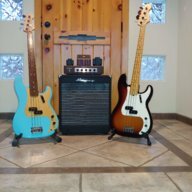
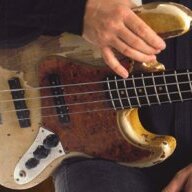
Hello all!
I've been loving Jazz Basses ever since I got a '97 model back in '98. I always been a one Bass man for many years using my '78 Fender Precision I bought new when I was a teenager. After using a Jazz Bass for a while, I found I love the versatile tones and look of the Jazz Basses but certain features of the newer Jazz Basses I don't care for aesthetically. Mainly it's the smaller head stocks and tuners used on modern Fender Basses. IMHO, I think the smaller headstock has a dopey look to it! While all this lightens the neck and and may ease neck diving, I never had a problem with neck diving. I just like the classic look of the older Fenders with vintage tuners on a bigger head stock and I've been wanting one ever since but not used.
I did look into going the Warmoth route for a custom built Jazz Bass the way I want it, but I knew I would rather have a genuine Fender. I also looked into and priced a Fender Custom shop built to my spec's but the cost was rather exorbitant and I didn't want to wait 6 months to a year for it.
So, I thought it would be best to build my own using as many genuine Fender parts as possible right down to using screws sold in Fender packaging. Some after market parts and customization's were done so I can have these Basses just the way I want them.
I ended up building two Jazz Basses for a couple grand less than the Custom shop build. While these Basses aren't true Fender models or true Custom shops, I wouldn't call them "Franken-Basses" either. Maybe they can be called "parts" or assemblage Basses but like I said, I did use as many Fender parts where I could so is it any different then taking any Fender model off the rack and customizing it?
To me, these are Fender Jazz Basses and their limited resale value as is means little to me as I have no intention of selling them. These two Basses represent everything I like in vintage Jazz Basses and each one of these is unique. That's what is important to me!
Enjoy the pics and I look forward to all of your comments!
First up is my custom 1960 style Jazz Bass with some modern features.

Genuine Fender parts:
Fender American Professional Jazz body
Fender American Original 60's Jazz Bass neck purchased with Tuners/string retainer/strap button.
Fender Custom Shop Custom ’60s Jazz Bass pickups
Fender Vintage style concentric knob set
Fender American Vintage '62 Jazz Bass control plate 3-hole
Fender Hi-Mass Vintage bridge
Fender Vintage style string-thru ferrules
Fender Security Strap Locks and button set
Fender Vintage style tug bar
Fender 4-bolt 70's vintage-style F-Logo neck plate
Fender genuine packaged screws used throughout
This Bass replicates in appearance the 1960 Fender Jazz with concentric knobs. I went with a string thru high mass bridge because I like the neat appearance and slight tone improvement over the lighter standard one. The '60s Custom shop Jazz pickups are excellent with good output from the Alnico 5 magnets and offer great tone. Playability is exceptional for me with the C shaped neck. I tried a U-neck once and found it rather uncomfortable. I like the 70's style F plate over just a Vintage plain one but I did have a serial number stamped on it with the same kind of vintage stamp machine Fender used which looks just like the real thing! The tug bar completes the look.
Non Fender parts:
1-CTS concentric pot 500k(push-pull) 1- CTS concentric pot 500k
PureTone output jack
Cloth wire for extra the wiring
Bone nut
Mother of pearl dot inlays and side dots
Custom made 1960 Fender style decal
Vintage style 10-hole Tortoise shell pickguard
La Bella Nickel strings
Because this is my first Bass I assembled and I wanted that vintage first generation Fender look for this one, I went with an after market Tortoise shell pickguard because Fender no longer makes a true vintage looking one. The ones made today are brown and I don't particularly care for that color. The one you see in the pic has a reddish look with some yellow spec's which looks more reminiscent of the vintage ones. Notice the near perfect fit where the pickguard meets the control plate. My other Bass has a genuine Fender pickguard and control plate and doesn't line up that well!
I had Pimentel Guitars here in Albuquerque replace the original dark clay(fake) fret dots and side markers with mother of pearl because I just can't see the dark ones too well. They also made and installed the bone nut and did the final setup job too.
I went with a custom decal to complete the 1960 look, not to fool anyone which this wouldn't.
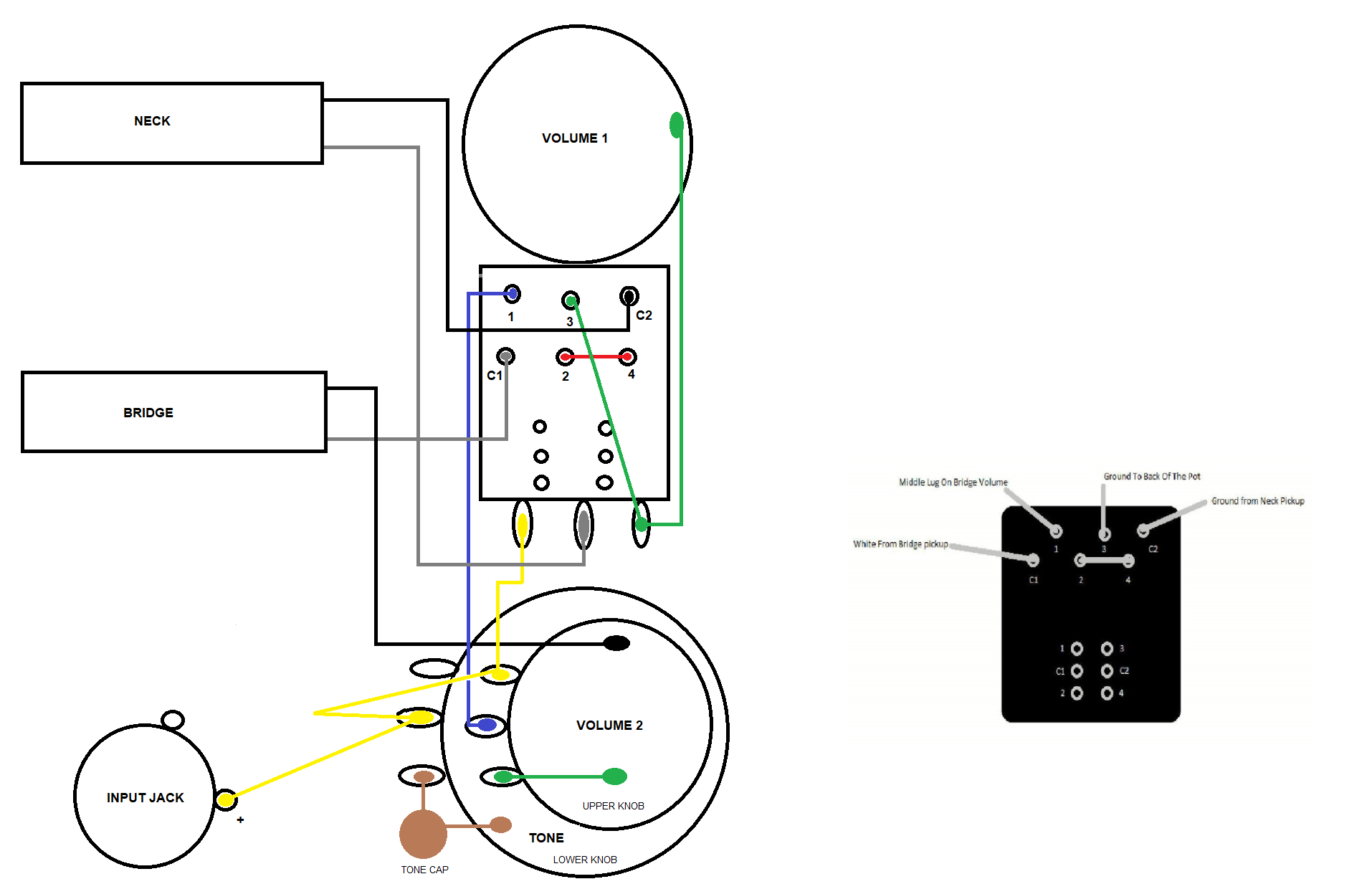
The reasoning for the CTS push pull pot is because I like the series/parallel mod but I didn't want exposed switches so I came up with my own design. Knob 1 is the push pull pot. I drilled out both the lower and upper concentric knobs to fit. Knob 2 is a standard concentric pot but only wired as volume for the bridge pickup and master tone. This gives the illusion of concentric pots while hiding the series/parallel mod. Clever? I used 500k pots to brighten up the tone a bit when playing in series which is like using a darker sounding humbucker.
This is how I wired it. Notice this is wired for series with the knob in the down position because I prefer the series mode. I use the PureTone output jack because I believe this is a real improvement over Switchcrafts and others. All pots are securely tightened down to the metal control plate so no additional ground wires between pots are used lessening the chance for ground loops.
![20210723_085307[1].jpg](https://www.talkbass.com/attachments/20210723_085307-1-jpg.4458607/ "20210723_085307[1].jpg")
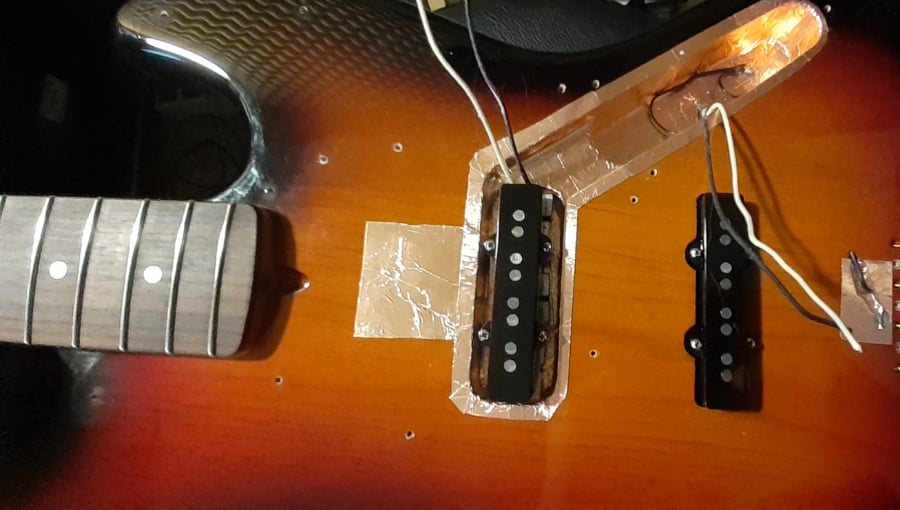
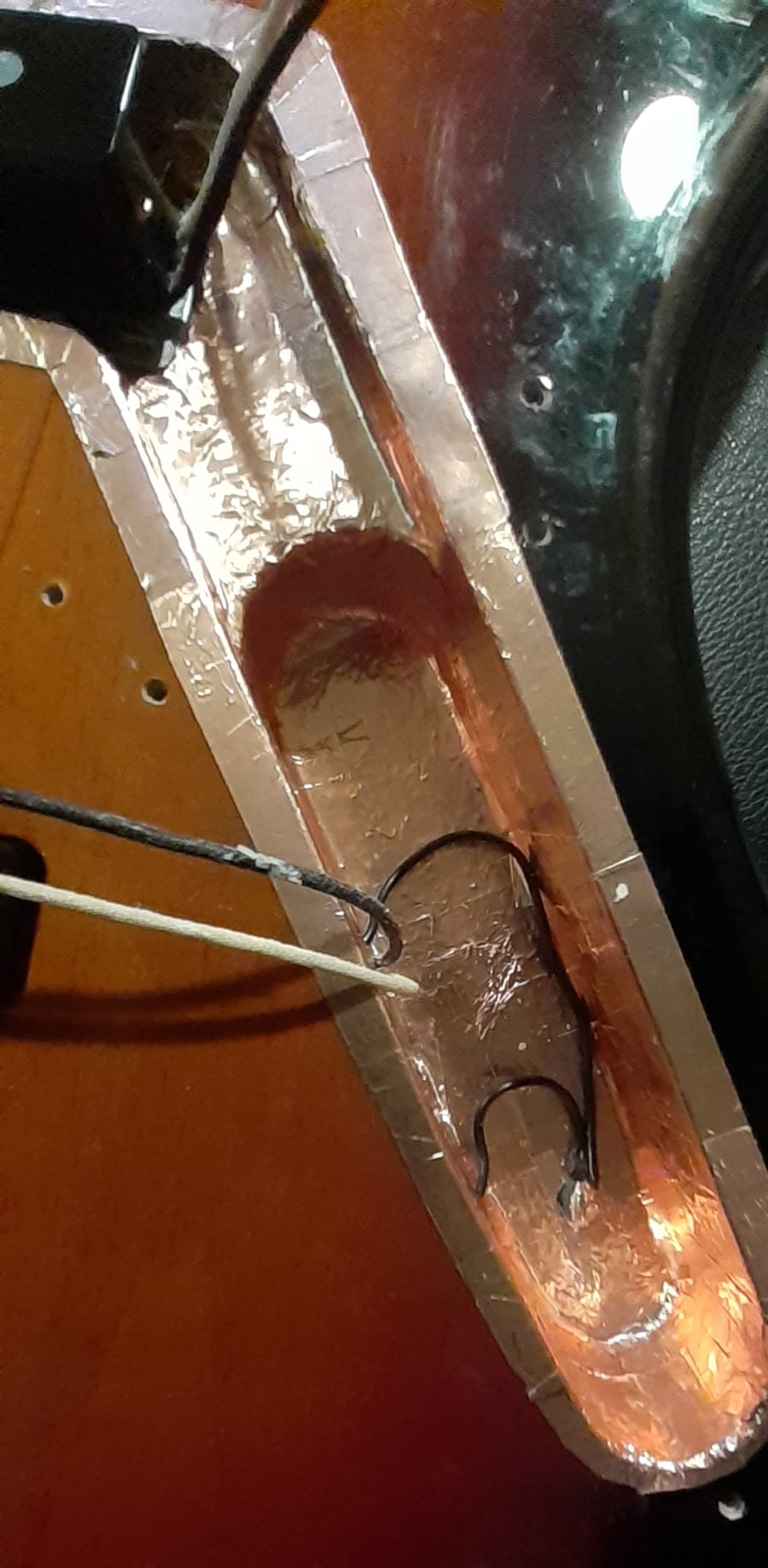
Here's the shielding job I do on all of my Basses. I shield a large portion underneath the pickguard on my P-Bass and just shield the small front portion near and around the neck pickup and on the Jazz Basses. I put a large strip in front of the neck pickup as shown to tie it all in. Ground wires from bridge and bridge pickup cavity are soldered to shield tape. No Buzz here!!!
More pics for you...


Here you can see the upper neck volume knob pulled up. This puts the Bass in parallel mode for those classic Jazz Bass tones. I prefer series mode and this knob is wired for series in down position. It's nice to have a choice!
Now on to my other custom build Jazz Bass!
This one here represents many different aspects of Fender Basses I like throughout the years and it isn't all era correct in appearance. That truly makes it "my" custom Bass!

Genuine Fender parts:
Fender American Professional Jazz body
Fender American Original 60's Jazz Bass neck
Fender Pure Vintage American Bass Tuning Machines
Fender Pure Vintage Nickel Bass String Guide
Fender Pure Vintage '74 Jazz Bass pickups
Fender S-1 pot and knob set
Fender Volume and Tone knobs
Fender 4-Hole Control Plate
Fender American Standard 10-Hole Pickguard
Fender Hi-Mass Vintage bridge
Fender Vintage style string-thru ferrules
Fender Security Strap Locks and button set
Fender 4-bolt 70's vintage-style F-Logo neck plate
Fender genuine packaged screws used throughout
This Bass here has many genuine Fender parts and is a cross between the 60's and 70's era Jazz Basses. The neck is another 60's Jazz neck with Vintage style reverse tuners and a darker vintage tint on the back. The '74 Jazz pickups are also Alnico 5 magnets for a balanced output level between my other Jazz Bass. The tone is very similar to the '60s pickups but maybe slightly more brighter and edgier. I use the Fender S-1 switching for series/parallel wired for parallel mode with the button switched down.
Like my other Jazz Bass, I prefer the string thru bridge and 70's style F stamp neck plate and also have the serial number stamped on it.
Non Fender parts:
Ebony Fretboard
Mother of Pearl dot inlays and side markers
CTS Volume pot 500k
CTS No-Load Tone pot 500k
Pure Tone output jack
Bone Nut
70's style custom made decal
Cloth wire for extra wiring
La Bella Nickel strings
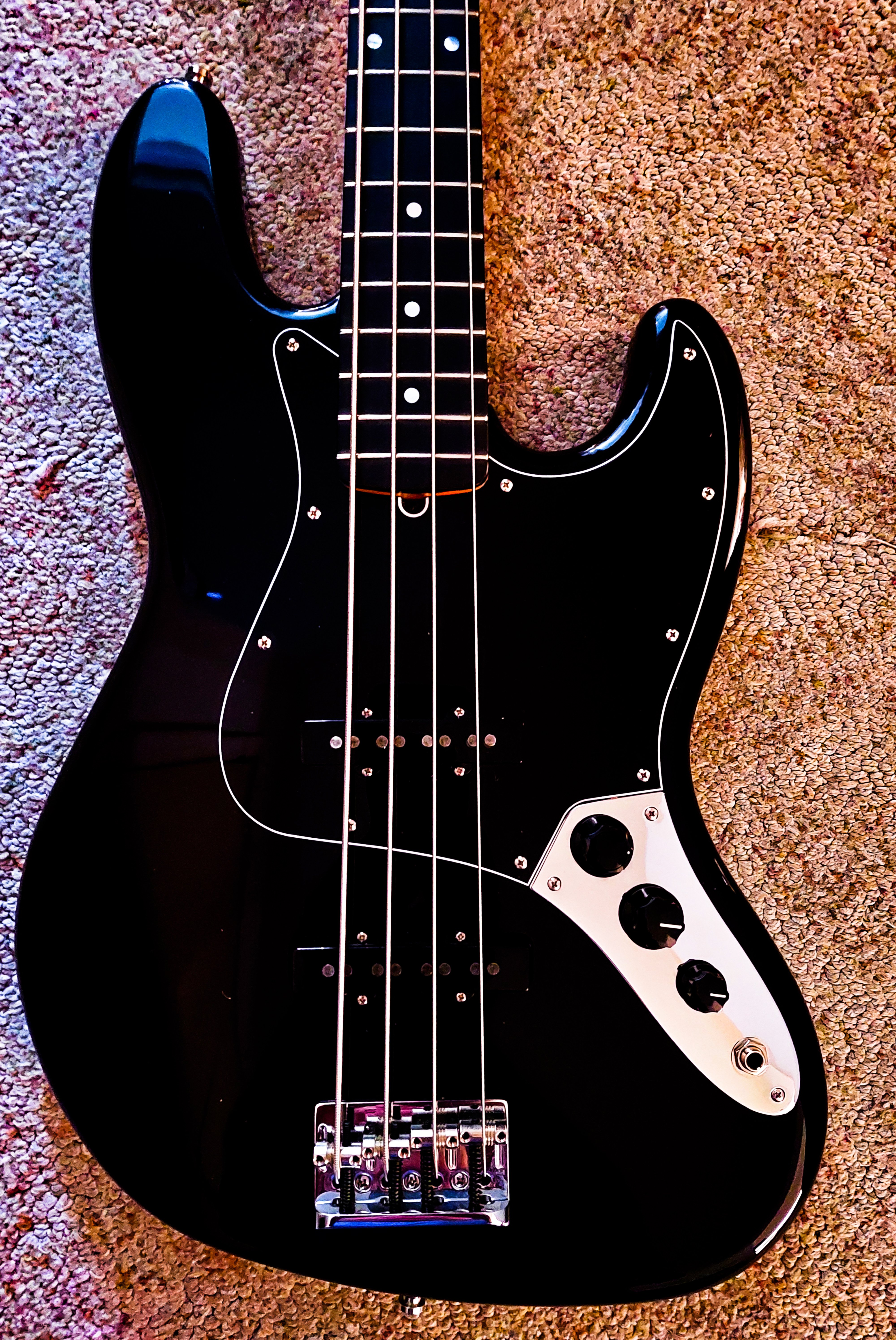
I wanted this Bass to have the best looks! I always like the look of a Black and chrome Bass and this went to 11!
Again, Pimentel guitars did some fine work and had the the daunting task of removing the original rosewood fretboard and replacing it with Ebony. Mother of Pearl dot markers on the fretboard and top side adorn the beauty of the Ebony fretboard. They also installed the Bone nut, Painted the Headstock, and did the final setup as well.
I went with a custom made 70's style Fender decal because I think it stands out better on the black headstock especially with all gold lettering.
The S-1 series/parallel give the Bass a modern touch and the PureTone output jack ensures a solid electrical and snug connection. I also have a no-load tone pot for an optional tone control bypass.
Here are some more pics...

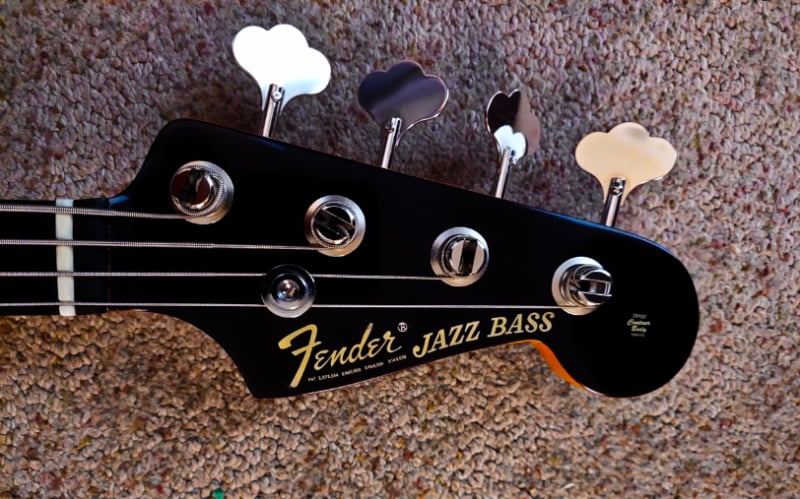

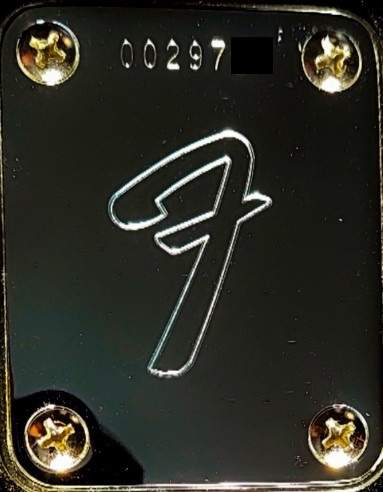
Here is a pic to show the F plate with the serial number stamped on. I think these look great!
Both these Basses play exceptionally well and have great tone. I can't say I have a favorite, They were both worth the time and expense and besides, it was fun putting them together!
Thanks for looking!
I've been loving Jazz Basses ever since I got a '97 model back in '98. I always been a one Bass man for many years using my '78 Fender Precision I bought new when I was a teenager. After using a Jazz Bass for a while, I found I love the versatile tones and look of the Jazz Basses but certain features of the newer Jazz Basses I don't care for aesthetically. Mainly it's the smaller head stocks and tuners used on modern Fender Basses. IMHO, I think the smaller headstock has a dopey look to it! While all this lightens the neck and and may ease neck diving, I never had a problem with neck diving. I just like the classic look of the older Fenders with vintage tuners on a bigger head stock and I've been wanting one ever since but not used.
I did look into going the Warmoth route for a custom built Jazz Bass the way I want it, but I knew I would rather have a genuine Fender. I also looked into and priced a Fender Custom shop built to my spec's but the cost was rather exorbitant and I didn't want to wait 6 months to a year for it.
So, I thought it would be best to build my own using as many genuine Fender parts as possible right down to using screws sold in Fender packaging. Some after market parts and customization's were done so I can have these Basses just the way I want them.
I ended up building two Jazz Basses for a couple grand less than the Custom shop build. While these Basses aren't true Fender models or true Custom shops, I wouldn't call them "Franken-Basses" either. Maybe they can be called "parts" or assemblage Basses but like I said, I did use as many Fender parts where I could so is it any different then taking any Fender model off the rack and customizing it?
To me, these are Fender Jazz Basses and their limited resale value as is means little to me as I have no intention of selling them. These two Basses represent everything I like in vintage Jazz Basses and each one of these is unique. That's what is important to me!
Enjoy the pics and I look forward to all of your comments!
First up is my custom 1960 style Jazz Bass with some modern features.
Genuine Fender parts:
Fender American Professional Jazz body
Fender American Original 60's Jazz Bass neck purchased with Tuners/string retainer/strap button.
Fender Custom Shop Custom ’60s Jazz Bass pickups
Fender Vintage style concentric knob set
Fender American Vintage '62 Jazz Bass control plate 3-hole
Fender Hi-Mass Vintage bridge
Fender Vintage style string-thru ferrules
Fender Security Strap Locks and button set
Fender Vintage style tug bar
Fender 4-bolt 70's vintage-style F-Logo neck plate
Fender genuine packaged screws used throughout
This Bass replicates in appearance the 1960 Fender Jazz with concentric knobs. I went with a string thru high mass bridge because I like the neat appearance and slight tone improvement over the lighter standard one. The '60s Custom shop Jazz pickups are excellent with good output from the Alnico 5 magnets and offer great tone. Playability is exceptional for me with the C shaped neck. I tried a U-neck once and found it rather uncomfortable. I like the 70's style F plate over just a Vintage plain one but I did have a serial number stamped on it with the same kind of vintage stamp machine Fender used which looks just like the real thing! The tug bar completes the look.
Non Fender parts:
1-CTS concentric pot 500k(push-pull) 1- CTS concentric pot 500k
PureTone output jack
Cloth wire for extra the wiring
Bone nut
Mother of pearl dot inlays and side dots
Custom made 1960 Fender style decal
Vintage style 10-hole Tortoise shell pickguard
La Bella Nickel strings
Because this is my first Bass I assembled and I wanted that vintage first generation Fender look for this one, I went with an after market Tortoise shell pickguard because Fender no longer makes a true vintage looking one. The ones made today are brown and I don't particularly care for that color. The one you see in the pic has a reddish look with some yellow spec's which looks more reminiscent of the vintage ones. Notice the near perfect fit where the pickguard meets the control plate. My other Bass has a genuine Fender pickguard and control plate and doesn't line up that well!
I had Pimentel Guitars here in Albuquerque replace the original dark clay(fake) fret dots and side markers with mother of pearl because I just can't see the dark ones too well. They also made and installed the bone nut and did the final setup job too.
I went with a custom decal to complete the 1960 look, not to fool anyone which this wouldn't.
The reasoning for the CTS push pull pot is because I like the series/parallel mod but I didn't want exposed switches so I came up with my own design. Knob 1 is the push pull pot. I drilled out both the lower and upper concentric knobs to fit. Knob 2 is a standard concentric pot but only wired as volume for the bridge pickup and master tone. This gives the illusion of concentric pots while hiding the series/parallel mod. Clever? I used 500k pots to brighten up the tone a bit when playing in series which is like using a darker sounding humbucker.
This is how I wired it. Notice this is wired for series with the knob in the down position because I prefer the series mode. I use the PureTone output jack because I believe this is a real improvement over Switchcrafts and others. All pots are securely tightened down to the metal control plate so no additional ground wires between pots are used lessening the chance for ground loops.
Here's the shielding job I do on all of my Basses. I shield a large portion underneath the pickguard on my P-Bass and just shield the small front portion near and around the neck pickup and on the Jazz Basses. I put a large strip in front of the neck pickup as shown to tie it all in. Ground wires from bridge and bridge pickup cavity are soldered to shield tape. No Buzz here!!!
More pics for you...
Here you can see the upper neck volume knob pulled up. This puts the Bass in parallel mode for those classic Jazz Bass tones. I prefer series mode and this knob is wired for series in down position. It's nice to have a choice!
Now on to my other custom build Jazz Bass!
This one here represents many different aspects of Fender Basses I like throughout the years and it isn't all era correct in appearance. That truly makes it "my" custom Bass!
Genuine Fender parts:
Fender American Professional Jazz body
Fender American Original 60's Jazz Bass neck
Fender Pure Vintage American Bass Tuning Machines
Fender Pure Vintage Nickel Bass String Guide
Fender Pure Vintage '74 Jazz Bass pickups
Fender S-1 pot and knob set
Fender Volume and Tone knobs
Fender 4-Hole Control Plate
Fender American Standard 10-Hole Pickguard
Fender Hi-Mass Vintage bridge
Fender Vintage style string-thru ferrules
Fender Security Strap Locks and button set
Fender 4-bolt 70's vintage-style F-Logo neck plate
Fender genuine packaged screws used throughout
This Bass here has many genuine Fender parts and is a cross between the 60's and 70's era Jazz Basses. The neck is another 60's Jazz neck with Vintage style reverse tuners and a darker vintage tint on the back. The '74 Jazz pickups are also Alnico 5 magnets for a balanced output level between my other Jazz Bass. The tone is very similar to the '60s pickups but maybe slightly more brighter and edgier. I use the Fender S-1 switching for series/parallel wired for parallel mode with the button switched down.
Like my other Jazz Bass, I prefer the string thru bridge and 70's style F stamp neck plate and also have the serial number stamped on it.
Non Fender parts:
Ebony Fretboard
Mother of Pearl dot inlays and side markers
CTS Volume pot 500k
CTS No-Load Tone pot 500k
Pure Tone output jack
Bone Nut
70's style custom made decal
Cloth wire for extra wiring
La Bella Nickel strings
I wanted this Bass to have the best looks! I always like the look of a Black and chrome Bass and this went to 11!
Again, Pimentel guitars did some fine work and had the the daunting task of removing the original rosewood fretboard and replacing it with Ebony. Mother of Pearl dot markers on the fretboard and top side adorn the beauty of the Ebony fretboard. They also installed the Bone nut, Painted the Headstock, and did the final setup as well.
I went with a custom made 70's style Fender decal because I think it stands out better on the black headstock especially with all gold lettering.
The S-1 series/parallel give the Bass a modern touch and the PureTone output jack ensures a solid electrical and snug connection. I also have a no-load tone pot for an optional tone control bypass.
Here are some more pics...
Here is a pic to show the F plate with the serial number stamped on. I think these look great!
Both these Basses play exceptionally well and have great tone. I can't say I have a favorite, They were both worth the time and expense and besides, it was fun putting them together!
Thanks for looking!
Attachments

Last edited: