As someone who still owns his first bass, and also did a thread on resto-modding it, I'll be watching this!

TalkBass has been independent since 1998. Add your voice.
Create a free account to reply to discussions, view embedded media, and browse with fewer display ads.
Join free Log in
Want zero display ads or expanded classifieds tools? Compare plans.
? ... not sure how to resolve this...

One observation about the pickup. My first bass was similar to this one, only short-scale, and I have had several similar (log-scale P knockoffs) since. I do not believe those magnets in the pickup were ever glued down; they were held in place by adherence to the metal "core" with the pole-pieces inside it. But the pic does strongly suggest that, cover aside, this is the same pickup as the gold-foil pickup which the earlier basses had.
Also, stringing may prove quite an adventure. The tuners of most of these basses did not have pilot holes to anchor the strings, and the capstans are so short that any thoughts of getting more than two wraps around them should be abandoned.
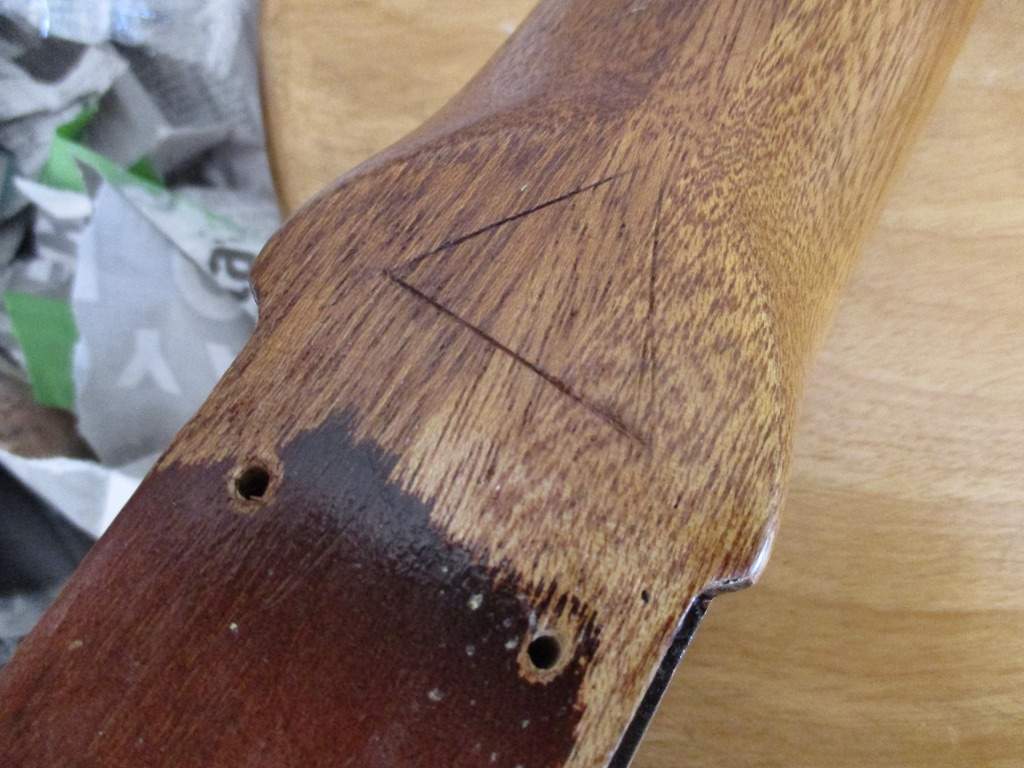
Triangular inlay? Something pyramid themed? Hazard triangle of choice? Or plane it off and glue on a veneer...Or a big semicircular inlay.
I still own my first bass, but it's only 10 years in my care, and I waffle between letting it be (Factory mist purple with a few major dents/scars as purchased) or going to the effort of stripping it only to find paint-grade alder. Since I mostly play the bass I don't own, it's not that urgent, though.
I did sell my first trombone down the river, though. No regrets - it was a crummy student model, and the Blessing is not.



yah.., no.For the triangle, you could always slap an image of the food pyramid on there.

One observation about the pickup. My first bass was similar to this one, only short-scale, and I have had several similar (log-scale P knockoffs) since. I do not believe those magnets in the pickup were ever glued down; they were held in place by adherence to the metal "core" with the pole-pieces inside it. But the pic does strongly suggest that, cover aside, this is the same pickup as the gold-foil pickup which the earlier basses had.
Also, stringing may prove quite an adventure. The tuners of most of these basses did not have pilot holes to anchor the strings, and the capstans are so short that any thoughts of getting more than two wraps around them should be abandoned.
Man, I remember that era. Arlan's department store for me, plus the Sears catalog. I was mostly interested in the guitars then. I figured the ones with 4 pickups must be the best.
Look forward to seeing your treatment of this.
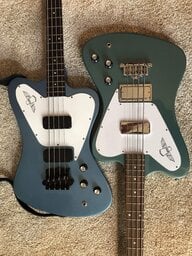
Or this:For the triangle, you could always slap an image of the food pyramid on there.
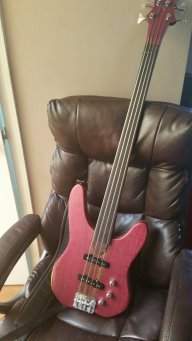
Awesome. I love your guitarchaeological expeditions @JIO
That's awesome. I just found out my original bass started gigging again in the hands of my oldest friend's son who is a freshman in college. Good to hear the old MIJ Jazz is back in action.

Yep, I remember seeing the Silvertone guitar/amp case at Sears and thought it was so cool! The '60s R&R era was all about selling guitars/basses etc to young people and the Japanese did it like nobodies business!
The major brands had 3 pu's - so we'll do 4!
View attachment 5039542 View attachment 5039543 View attachment 5039544 View attachment 5039545 View attachment 5039546 View attachment 5039547 View attachment 5039548 View attachment 5039549 View attachment 5039551 View attachment 5039552 View attachment 5039553 View attachment 5039554 View attachment 5039555 View attachment 5039556
Yeah. But intonation was a crapshoot with the mostly two saddle bridges. I used a tuning fork to help tune up. E on the D string.Rocker switches, slide switches, and wafer control knobs. I mean, how much more cool can you get? If only back then we had known about truss rods, set up, and intonation. Most of us just assumed the instrument as we got it from the store was set up like it was supposed to be.