
Enjoy the benefits of a premium membership!
Upgrade Account
-
TalkBass has been independent since 1998. Add your voice.
Create a free account to reply to discussions, view embedded media, and browse with fewer display ads.
Join free Log in
Want zero display ads or expanded classifieds tools? Compare plans.
You are using an out of date browser. It may not display this or other websites correctly.
You should upgrade or use an alternative browser.
You should upgrade or use an alternative browser.
My new Ampeg SVT4Pro says: K O R E A ! ! ! !
- Thread starter Theo-cantor-
- Start date
More options
Who Replied?

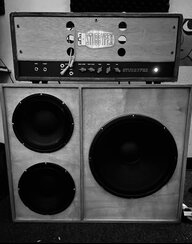
DO a TB search of SVT-4PRO overheating. YOU CANNOT JUST BOLT THAT INTO A BOX AND NOT KILL IT. I have discussed this way too many times.
BTW I own 2 USA, 2 Vietnam & 2 Korean SVT-4PRO's the only ones I have ever had any trouble with are the USA ones. However, All fixed now.
BOB
Aren't your six SVT-4Pros bolted into a box in that pic in your profile?

That Kim Jong-il is one crafty, little bastard.
Glad to hear it, a step up from Vietnam I suppose.
Wrong Korea!

Wrong Kim Jong "ILL"
I suppose there is no south Norway??? LOL
Still I dig this South Korean (Far eastcoast America) amp....!!!
I suppose there is no south Norway??? LOL
Still I dig this South Korean (Far eastcoast America) amp....!!!

Them rural chineses sho is unedumacated. Living on a farm sho do must makes you stoopids. 
What a load.
I think those companies know that you can train people to do simple electronics assembly, the assembly workers don't need to know how the products work. They just need to follow instructions.
IMO, it really is a matter of proactive QC, not where your workers used to live.
What a load.
I think those companies know that you can train people to do simple electronics assembly, the assembly workers don't need to know how the products work. They just need to follow instructions.
IMO, it really is a matter of proactive QC, not where your workers used to live.

Why do people keep repeating this nonsense? Korean manufacturing is just like manufacturing anywhere else--tell them to build to a high standard, and pay for it, and they'll build to a high standard. Tell them to build as cheaply as possible, and they will.
I also agree that "build quality" on an item like this is not something easy to determine right after purchasing. Talk to us again after a year of steady use, let us know if you had any issues.
yeah, it's clearly a matter of what the company ordering the build tells them, rather than who makes it.
if you pay for good builders, you'll get good builders in any country.

Exhibit A - Hartke 3500 "Transient Attack" head, circa 1994, Made in Korea - still playing it, works great after a recent clean-up.
Exhibit B - Hartke 3500 head, circa 2008, Made in China - came out of the box with the Compressor circuit non-functioning and graphic EQ all wack. Sent it back after playing it 5 mins.
My experience only, YMMV.
Exhibit B - Hartke 3500 head, circa 2008, Made in China - came out of the box with the Compressor circuit non-functioning and graphic EQ all wack. Sent it back after playing it 5 mins.
My experience only, YMMV.
Aren't your six SVT-4Pros bolted into a box in that pic in your profile?
BOB has a super-ultra cooling arrangment in his box. plus he can only turn his amps on for about 10 minutes anyway or else the Earth stops rotating.
This seems to be a fairly subjective thread in which many have had different experiences on which to base their opinions. Fair enough, I suppose, but just to contribute from my own experience and a different perspective:
Exhibit A: original SWR SM400 purchased new and played regularly for about 18 years without a single glitch, ever.
Exhibit B: post Fender buyout SWR SM900, purchased new and spent most of its time back in the shop under repair - dry joints, faulty components, you name it. Totally unreliable and sold after 18 months at a huge loss.
So what does this show? I don't know....perhaps that it is not so much the country of origin but the care and pride (and expense) that the company and manufacturer want to put into it. I think QC must be a huge part of it all. You do get what you pay for and if instant profit is the main consideration.... And I have read on this forum that someone's Vietnam Ampeg is more reliable than the later USA ones. I suppose there are good and bad everywhere and all we really want is a bit of consistency (QC) so that most, if not all, are good and it is not a lottery. And I will say it again, I could not be happier with my Vietnam VR - by a country mile the best amp I have ever owned.
Exhibit A: original SWR SM400 purchased new and played regularly for about 18 years without a single glitch, ever.
Exhibit B: post Fender buyout SWR SM900, purchased new and spent most of its time back in the shop under repair - dry joints, faulty components, you name it. Totally unreliable and sold after 18 months at a huge loss.
So what does this show? I don't know....perhaps that it is not so much the country of origin but the care and pride (and expense) that the company and manufacturer want to put into it. I think QC must be a huge part of it all. You do get what you pay for and if instant profit is the main consideration.... And I have read on this forum that someone's Vietnam Ampeg is more reliable than the later USA ones. I suppose there are good and bad everywhere and all we really want is a bit of consistency (QC) so that most, if not all, are good and it is not a lottery. And I will say it again, I could not be happier with my Vietnam VR - by a country mile the best amp I have ever owned.
vietnam svt4 owner here. i've only owned it for a year but it's been fantastic. then again i've yet to turn the volume even halfway up...
i had planned on housing my 400+ in an ata shock mount 4
spacer......good,bad,indifferent ??????????????????
I've had my SVT-4 Pro in a 4U SKB rack case with a Korg tuner and it never once came close to overheating or it conking out on me in the 3 years I've had it. I've heard the stories about it doing this to other people but mine has always held it's own through shows and rehearsals so I'm just giving you my personal experience.
What I don't understand is, if overheating was the case with SVT-4's so that people say don't rack it, then why would Ampeg make a rackmount amp in the first place that couldn't standup to residing in a typical rack case.

I have no questions regarding an OEM's ability to manufacture in China or Vietnam.... and as mentioned, it's possible to build great quality products there. In fact, there are some real nice mfg'ing facilities there, with processes, systems, team members and technology that are considered absolute world class. The problems I have are in the supply chain with rampant counterfieting issues, especially in the electronics sector (the last estimates I saw had it up to 75%) and raw materials sector. We have a hard enough time controlling our supply chains in the US.... what makes you think we can do it any better across an ocean and a language barrier to hurdle? I've posted about this in other threads. My company just recently finished up an issue where steel coils from China were supplied as one grade of steel, but were in fact a completely different and much of a lower grade. Mix ups happen, even in the US, but this was supplied with a lab "certification" indicating it was correct with matching "serial" numbers (part and heat) and all. Okay, I undersand.... crap happens..... but this last time was not the first time ...... We're in the process of finding this supplier a source of steel from outside of China. And while I'm not at liberty to disclose what vehicle this steel ended up on, I can tell you this, there are some rich folks out there with shiny new sports cars that are going to have some problems (nothing more than a nasty cosmetic issue).
The last band I played in used an entirely counterfiet pa.... incorrect spelling on faceplates and all......the guitarist bought it while doing a 20 year stint in China doing program management work. He also has a phony Sony DVD player.... he has to keep it, because it's the only thing that will play all the pirated DVD's he bought while he was there.
There are OEM's that will not allow Chinese raw materials to be used in their products because of fakes. Folks, it's still the industrial wild west in the east..... I deal with it everyday.
The last band I played in used an entirely counterfiet pa.... incorrect spelling on faceplates and all......the guitarist bought it while doing a 20 year stint in China doing program management work. He also has a phony Sony DVD player.... he has to keep it, because it's the only thing that will play all the pirated DVD's he bought while he was there.
There are OEM's that will not allow Chinese raw materials to be used in their products because of fakes. Folks, it's still the industrial wild west in the east..... I deal with it everyday.

bongomania
Commercial User
That's certainly true. I wonder, is that particular aspect less of a problem in Korea? (Sincere question)

I have no questions regarding an OEM's ability to manufacture in China or Vietnam.... and as mentioned, it's possible to build great quality products there. In fact, there are some real nice mfg'ing facilities there, with processes, systems, team members and technology that are considered absolute world class. The problems I have are in the supply chain with rampant counterfieting issues, especially in the electronics sector (the last estimates I saw had it up to 75%) and raw materials sector. We have a hard enough time controlling our supply chains in the US.... what makes you think we can do it any better across an ocean and a language barrier to hurdle? I've posted about this in other threads. My company just recently finished up an issue where steel coils from China were supplied as one grade of steel, but were in fact a completely different and much of a lower grade. Mix ups happen, even in the US, but this was supplied with a lab "certification" indicating it was correct with matching "serial" numbers (part and heat) and all. Okay, I undersand.... crap happens..... but this last time was not the first time ...... We're in the process of finding this supplier a source of steel from outside of China. And while I'm not at liberty to disclose what vehicle this steel ended up on, I can tell you this, there are some rich folks out there with shiny new sports cars that are going to have some problems (nothing more than a nasty cosmetic issue).
The last band I played in used an entirely counterfiet pa.... incorrect spelling on faceplates and all......the guitarist bought it while doing a 20 year stint in China doing program management work. He also has a phony Sony DVD player.... he has to keep it, because it's the only thing that will play all the pirated DVD's he bought while he was there.
There are OEM's that will not allow Chinese raw materials to be used in their products because of fakes. Folks, it's still the industrial wild west in the east..... I deal with it everyday.
Wow just saw where you are from. Cool. Used to go to the Tri State Karate Nationals up there on occasion.

Yes, yes. But do you remember Jerrold's earlier explanation of why the Vietnamese Ampegs DO have problems and are inferior to the previous Yellville (US) production?I have no questions regarding an OEM's ability to manufacture in China or Vietnam.... and as mentioned, it's possible to build great quality products there. In fact, there are some real nice mfg'ing facilities there, with processes, systems, team members and technology that are considered absolute world class.
There weren't competent bassists testing the final audible QC.
No, I don't.... but I will offer up this.....
Whenever you move production to a new facility you have issues..... ALWAYS!
9 times out of 10, it has to do with processes that are not very explicit....... we Americans excel at failing to make tacit knowledge explicit. We just kinda figure out how to do it a little bit better on our own, and fail to document it properly. Our mfg processes don't translate well when moving..... no matter where you move it..... it could be right down the street, and you could end up with even more problems than Vietnamese built Ampegs. I sincerly doubt the issues with the Ampegs came down to anyone thing.
We just moved an entire assembly operation from Indiana to Texas, and have had a horrible time. And this was a process that had world class levels of quality and efficiency. Last year, I had a supplier move production next door and had a horrible time..... and they are a Japanese owned company. Process/Product moves are hard no matter where you're from.
But when you add the difficulties associated with the supply chains in the east (but not all of the east), you only complicate the move.
Whenever you move production to a new facility you have issues..... ALWAYS!
9 times out of 10, it has to do with processes that are not very explicit....... we Americans excel at failing to make tacit knowledge explicit. We just kinda figure out how to do it a little bit better on our own, and fail to document it properly. Our mfg processes don't translate well when moving..... no matter where you move it..... it could be right down the street, and you could end up with even more problems than Vietnamese built Ampegs. I sincerly doubt the issues with the Ampegs came down to anyone thing.
We just moved an entire assembly operation from Indiana to Texas, and have had a horrible time. And this was a process that had world class levels of quality and efficiency. Last year, I had a supplier move production next door and had a horrible time..... and they are a Japanese owned company. Process/Product moves are hard no matter where you're from.
But when you add the difficulties associated with the supply chains in the east (but not all of the east), you only complicate the move.
I've had very little dealings with Korea, but from what I've read, they are on a mission to surpass the Japanese...... so that's a good thing! The few dealings I've had have all been first rate.
Edit...... Just wanted to add that a mfg'r is only as good as the supply chain. If I'm the amp mfg'r, and I'm doing better than anyone, no matter where, it just doesn't mean a thing if my suppliers aren't supplying me with the materials, components and subs that I've spec'd and ordered. The best mfg'rs have total control over their supply chains, have world class levels of quality (not just to customers, but also your internal quality.... scrap, rework, repair, etc.) and efficiency.
Edit...... Just wanted to add that a mfg'r is only as good as the supply chain. If I'm the amp mfg'r, and I'm doing better than anyone, no matter where, it just doesn't mean a thing if my suppliers aren't supplying me with the materials, components and subs that I've spec'd and ordered. The best mfg'rs have total control over their supply chains, have world class levels of quality (not just to customers, but also your internal quality.... scrap, rework, repair, etc.) and efficiency.
Aren't your six SVT-4Pros bolted into a box in that pic in your profile?
Wise guy eh? You have to actually read what I said, not speed read it without feeling my intent.
You can't JUST BOLT THEM INTO A BOX meaning any box without taking into consideration all the parameters involved.
AMPEG requires 3" of side clearance stated right in the manuals. It is almost impossible to get this clearance except with an isolated inner rack type of shock rack.
I have 1" of clearance on either side of my amps in that rack and I have utilized four rather powerful fans in my system that push air into the rack on the bottom and suck it out at the top. The rack is closed up so the air is forced to follow the flow direction I have implemented.
Physics PhD, used to work for a computer manufacturer back in the late 70's and early 80's and one of my duties for them was chassis design. A very important task to cool the machines. This was even before the IBM-PC was invented.
Now if I really wanted to science out the thing, I'd mount about 20 temp sensors in the rack and monitor the temps in every spot in the unit. But frankly my dear I don't give a Da**.
The thing hasn't appeared to get hot and it's just amplifier round one anyway. This may be growing to 24 amps over the next year or so. That will require a more involved cooling and power strategy.
BOB
Invalid Link Removed
In Germany they are offering a SVT4Pro with a SVT410HLF for €999,00 ($1385)from the end of june.
I think they are trying to get rid of some overstock!!
What about USA prices? Any offers yet???
Bye
Theo
In Germany they are offering a SVT4Pro with a SVT410HLF for €999,00 ($1385)from the end of june.
I think they are trying to get rid of some overstock!!
What about USA prices? Any offers yet???
Bye
Theo


