Properly set up for slap? I suppose Larry Graham was thinking about that when he pioneered the technique? I can get a fat slap note out of practically any bass and I'm not even a proficient slapper. The thumbed note needs to be played (slightly) across the string; not directly at the fretboard (not like you're trying to hammer frets in with your thumb). This helps keep your thumb out of the way of the vibrating string. You don't need to hit the string hard, either.Bass "drop-out" in a slap context often has more to do with the instrument than it does with technique. I spent years being frustrated because I couldn't get a good slap sound out of my bass. I thought the problem was me.

Enjoy the benefits of a premium membership!
Upgrade Account
-
TalkBass has been independent since 1998. Add your voice.
Create a free account to reply to discussions, view embedded media, and browse with fewer display ads.
Join free Log in
Want zero display ads or expanded classifieds tools? Compare plans.
You are using an out of date browser. It may not display this or other websites correctly.
You should upgrade or use an alternative browser.
You should upgrade or use an alternative browser.
My slapping gets buried
- Thread starter martskre
- Start date
More options
Who Replied?
You're throwing in a second issue that's irrelevant. Of course Marcus would sound a little different on Mark King's bass, but do you really think he wouldn't be able to get a strong slap out of it? Or vice versa? Let's get real here. Maybe it wouldn't be what each other likes, but they can most certainly play each other's basses no problem. Besides, this is a Fender Jazz we're talking about...it's the most slapped bass on earth.
How am I "throwing in a second issue"? The issue is bass frequency drop-out in slap situations. The fact is, some basses lose more bass than others when they are slapped. You suggested that it isn't the bass, but rather the technique. If that was the case, then Marcus would sound the same on Mark's bass and vice-versa. My point is that different basses will give you different sounds and that some have a more noticeable drop-out in the bass than do others when a switch is made from fingers to thumb. Yes, good technique is important (as I've already pointed out), but to suggest that it's all about technique is a little naïve. It's not a question of getting a "strong" slap sound out of the bass - it's a question of consistency between the plucked sound and the slapped sound.

I will disagree. I'll guarantee that my basic slap technique is as good as that of anyone here
Well now.....aren't we impressed with ourselves today?
Properly set up for slap? I suppose Larry Graham was thinking about that when he pioneered the technique? I can get a fat slap note out of practically any bass and I'm not even a proficient slapper. The thumbed note needs to be played (slightly) across the string; not directly at the fretboard (not like you're trying to hammer frets in with your thumb). This helps keep your thumb out of the way of the vibrating string. You don't need to hit the string hard, either.
Larry probably didn't have to. Most guys I know who slap a lot like low action, and they don't play flats. Not everyone's preferences are going to be the same when it comes to set up, but I can't imagine that most slappers would be into Jamerson-type action. Oh, and if you can make any bass sound fat slapped, then congratulations - you are the man with the Golden Thumb!

Well now.....aren't we impressed with ourselves today?
Not really - I mean, good slap technique isn't very difficult to acquire, is it? Besides, I didn't say that what I did with that technique was any good!

If it's not difficult to acquire, then you shouldn't have any problems playing and adjusting to any bass. And if you can't, then you shouldn't bother slapping. How much low end a bass puts out is a completely moot point.Not really - I mean, good slap technique isn't very difficult to acquire, is it? Besides, I didn't say that what I did with that technique was any good!
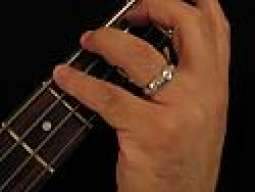
This reminds me of that nerdy show on the TV where the guys set up a computer model of a grizzly bear and a computer model of a shark and have a computer simulated battle to see "who would win". What is this? An episode of Myth Busters?! I'm not try to be an a-hole, but with all due respect those types are agruments are pointless because they are hypothetical....Do you really think that Marcus Miller would sound the same playing one of Mark King's basses and vice-versa? If we are to follow your line of thinking, then the answer would have to be "yes" because, after all, it's "all in how you come down on a string"...
How do you know that Miller and King would sound "different"? How does anyone know that Miller and King would NOT sound different? The only way to know this is to actually conduct that test. Assumptions and guessing are not scientific. Bass frequency (or volume) changes are scientific because they are something that can be measured (in the case of volume, with a decible meter). String vibrations are something that can be measured. Force applied to those strings is something that can be measured.
The point is that while we aren't going to step into a lab and measure all of those things with each other, we can't just toss all reason out the window with crazy hypotheticals.
Would Miller and King sound different? My guess is...MAYBE. They could sound different because they play differently; however, they are both skilled enough to probably be able to imitate each other's style and technique too. On a recording, they could probably fool us if they wanted to. So they may be able to sound the same. It's a silly argument and a useless hypothetical example. I don't think it strengthens the discussion on one side or the other.

This reminds me of that nerdy show on the TV where the guys set up a computer model of a grizzly bear and a computer model of a shark and have a computer simulated battle to see "who would win". What is this? An episode of Myth Busters?! I'm not try to be an a-hole, but with all due respect those types are agruments are pointless because they are hypothetical.
How do you know that Miller and King would sound "different"? How does anyone know that Miller and King would NOT sound different? The only way to know this is to actually conduct that test. Assumptions and guessing are not scientific. Bass frequency (or volume) changes are scientific because they are something that can be measured (in the case of volume, with a decible meter). String vibrations are something that can be measured. Force applied to those strings is something that can be measured.
The point is that while we aren't going to step into a lab and measure all of those things with each other, we can't just toss all reason out the window with crazy hypotheticals.
Would Miller and King sound different? My guess is...MAYBE. They could sound different because they play differently; however, they are both skilled enough to probably be able to imitate each other's style and technique too. On a recording, they could probably fool us if they wanted to. So they may be able to sound the same. It's a silly argument and a useless hypothetical example. I don't think it strengthens the discussion on one side or the other.
It's not a useless hypothetical example at all. It's simply meant to demonstrate how different Marcus Miller's and Mark King's sounds are and that a lot of that difference has to do with the basses they choose to play. You don't need to go into a lab to determine that you cannot get a '77 Fender Jazz sound from a Status Graphite bass and vice-versa. The basis of my argument is simple: basses don't all sound the same, so to argue that it is only a matter of technique when it comes to producing consistent sounds when switching from fingerstyle to slapping is ridiculous. I'm just telling you what I know from experience: some basses have less consistency in sound when I switch from fingers to thumb. It has nothing to do with technique.
If it's not difficult to acquire, then you shouldn't have any problems playing and adjusting to any bass. And if you can't, then you shouldn't bother slapping. How much low end a bass puts out is a completely moot point.
Huh? Adjusting to any bass? If I can't I shouldn't bother slapping? What are you talking about? What does ease of acquisition regarding technique have to do with adjusting to different instruments? You're talking about two different things. Anyway, I've said what I have to say regarding the initial question. I hope it was helpful. Bye.
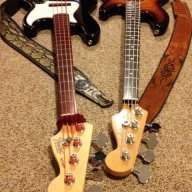
For 99% of bassists I have heard, there is a certain time when it is best they avoid slapping. This time would be:
When playing in a band, especially in front of people.
If you fall in the other 1%, OK then, have a blast.
lol
When playing in a band, especially in front of people.
If you fall in the other 1%, OK then, have a blast.
lol
Mmmmmm...OK.It's not a useless hypothetical example at all. It's simply meant to demonstrate how different Marcus Miller's and Mark King's sounds are and that a lot of that difference has to do with the basses they choose to play. You don't need to go into a lab to determine that you cannot get a '77 Fender Jazz sound from a Status Graphite bass and vice-versa. The basis of my argument is simple: basses don't all sound the same, so to argue that it is only a matter of technique when it comes to producing consistent sounds when switching from fingerstyle to slapping is ridiculous. I'm just telling you what I know from experience: some basses have less consistency in sound when I switch from fingers to thumb. It has nothing to do with technique.
I see your point.
I think the issue some other folks might have had with your angle is that the OP already said that he's using a Fender "Geddy Lee" Jazz.
Earlier on, I had mentioned that he might have wanted to make an EQ adjustment for slapping. I don't know that a different instrument is needed.
I think that parting from the original post, the issue here is that when playing live (or not) the slap sound diminishes dramatically... I guess this could be regulated by having a EQ pedal or a volume pedal OR simply by hitting the string accurately with your thumb on that specific place on your bass that you already know it works and sounds great. So I think it is a mixture of technique and sound settings. I have read that when playing live guitars should have on the MID RANGE set up high on the mixer board but low on the bass and on the effects pedals or pedal boards... This will increase the ATTACK which I think is the cause of the absent slaping sound.
I played a gig yesterday and on almost every song there is a part I have to slap the bass... I was getting frustrated because our sound dude was a young kid who did not know much about what he was doing, so in the middle of the concert I stepped down and told him to please turn up the mid range and to turn the volume up (which I also did manually on my bass) whenever I was slapping the strings! This helped a lot, but still I had to play the slap very tight and with a lot of precision. So i guess it is a mix between technique and sound settings!!
As far as the bass is concerned...well I always say: "means to an end" if you are a good bass player (I always say there are no bad or good musicians, there are just people with more or less practice and experience, so it´s a time thing) then the bass you play, hardly will make a difference... with technique and getting really connected with your instrument and your musicality (like every artist should do) you should be able to pull off amazing stuff!!
Keep practicing and experimenting with the settings on your bass, on the sound mixer, on your monitors and on your effects until you reach a configuration that works for everything you do, but also for everything you CAN play!
Cheers and remember that in order to create great art you have to take it to the limits, as far as almost being willing to die!
I played a gig yesterday and on almost every song there is a part I have to slap the bass... I was getting frustrated because our sound dude was a young kid who did not know much about what he was doing, so in the middle of the concert I stepped down and told him to please turn up the mid range and to turn the volume up (which I also did manually on my bass) whenever I was slapping the strings! This helped a lot, but still I had to play the slap very tight and with a lot of precision. So i guess it is a mix between technique and sound settings!!
As far as the bass is concerned...well I always say: "means to an end" if you are a good bass player (I always say there are no bad or good musicians, there are just people with more or less practice and experience, so it´s a time thing) then the bass you play, hardly will make a difference... with technique and getting really connected with your instrument and your musicality (like every artist should do) you should be able to pull off amazing stuff!!
Keep practicing and experimenting with the settings on your bass, on the sound mixer, on your monitors and on your effects until you reach a configuration that works for everything you do, but also for everything you CAN play!
Cheers and remember that in order to create great art you have to take it to the limits, as far as almost being willing to die!
I guess I'm too old and outdated. Bass players from my time who slapped always used technique to balance out the volumes of their slap sounds and their normal fingerstyle. Once in a while someone would step on a pedal, but that was more to get a specific tone rather than balance out the volumes. I wouldn't have been caught dead telling the soundman to boost me or step on a pedal that adds EQ if I couldn't do it with my fingers.
I guess it's time to retire...sigh...
I guess it's time to retire...sigh...
Well Mr. Jimmy I am no junior as well. I have been playing for more than 20 years and NEVER have used a pedal or something of the sort and also believe that you can do everything just with technique. I replied to this threat because I am a good slapper and every time I am on stage the sound vanishes a bit when I slap. But I never said to completely rely on effects or the settings, but I know, as anyone knows, that the sound settings on the bass, on the mixer and on the monitors are important too. I have friend that work on sound engineering and they always tell me it is definitely a mixture where technique predominates -off course- but also a good sound setting can help you out a lot!
PEace
PEace
If you put it that way, it doesn't sound so bad to me. But I still think it's time to retireWell Mr. Jimmy I am no junior as well. I have been playing for more than 20 years and NEVER have used a pedal or something of the sort and also believe that you can do everything just with technique. I replied to this threat because I am a good slapper and every time I am on stage the sound vanishes a bit when I slap. But I never said to completely rely on effects or the settings, but I know, as anyone knows, that the sound settings on the bass, on the mixer and on the monitors are important too. I have friend that work on sound engineering and they always tell me it is definitely a mixture where technique predominates -off course- but also a good sound setting can help you out a lot!
PEace

If your slap technique is good from the beginning,a little compression will only enhance it.I like to use compression,when I'm recording,just to even things out,...I find that it sits better,in the mix.However,as I've previously stated,hand position is ultra-important,...getting a great tone,even before you add any kind of compression,or effects.Someone mentioned Marcus(great example)!He plays a Jazz Bass!If you watch WHERE he slaps,you'll then understand WHY his tone is so big,fat,round,and authorative,...he slaps at the end of the fingerboard,...using the fingerboard,to get the most out of the string.But even bigger than that,before he dressed his bass up with active electronics,he first, started with a great tone,while the bass was still passive,...and it certainly didn't hurt him,as he was playing it through an SVT!Furthermore,for the record,...Marcus DOES use a little compression,...especially when he records!As I've previously stated,to the OP,you're playing a Jazz Bass,...the ORIGINAL"slap bass",so that sound is there.Try some of the suggestions,I've posted earlier,...I feel that this may answer many questions,for you! Peace!
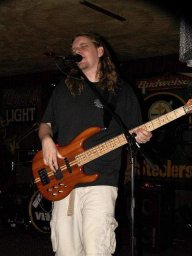
This is just like the arguement in racing about drivers vs. cars. Is it 50% driver 50% car? or is it 60/40 or 30/70?
My answer has always been its 100% / 100%.
If your technique or your technology isn't up to par, you're not going to perform good as you could. Racing or playing...
I've also noticed in my time playing:
Those who spent a lot of time on technique, tend to say technique.
Those who spent a lot of money on technology, tend to say technology.
Take whatever path you need to get you to where you want. Everyone is different. Arguing about it is only wasting everyone's time.
My answer has always been its 100% / 100%.
If your technique or your technology isn't up to par, you're not going to perform good as you could. Racing or playing...
I've also noticed in my time playing:
Those who spent a lot of time on technique, tend to say technique.
Those who spent a lot of money on technology, tend to say technology.
Take whatever path you need to get you to where you want. Everyone is different. Arguing about it is only wasting everyone's time.
Larry probably didn't have to. Most guys I know who slap a lot like low action, and they don't play flats. Not everyone's preferences are going to be the same when it comes to set up, but I can't imagine that most slappers would be into Jamerson-type action. Oh, and if you can make any bass sound fat slapped, then congratulations - you are the man with the Golden Thumb!
 I'm not sure how to take that. No golden thumb, here. I just don't have an issue getting a note out. All my basses are set up to "Fender specs"; nothing special going on. I think a lot of players slap directly at the fretboard. IMO, that's going about it incorrectly.
P.S. Brick House was slapped on flats.
Generally, when your slap has less gain than your pizzicato the action on your bass is too low or you need more mids.
I've been through it and it has nothing to do with technique.
I've been through it and it has nothing to do with technique.
Theres some good points being made on this subject but Bass Rig vs. Technique..... hmmmmm. I say 50-50, because I'm getting a good fat slap sound out of a Fender Precision, but it action is set low and I'm playing just below the fretboard with Blue Steels Round wounds. I do play with the Bass controls all the way up, but I leave about 1/4 turn left on the volume knob just in case.


