
Enjoy the benefits of a premium membership!
Upgrade Account
-
TalkBass has been independent since 1998. Add your voice.
Create a free account to reply to discussions, view embedded media, and browse with fewer display ads.
Join free Log in
Want zero display ads or expanded classifieds tools? Compare plans.
You are using an out of date browser. It may not display this or other websites correctly.
You should upgrade or use an alternative browser.
You should upgrade or use an alternative browser.
My thoughts....
- Thread starter Low town
- Start date
More options
Who Replied?
Well, the basses people use are about the same now as then - wood, pickups, and strings. Darwin seems to be winning here, and in this case, "natural selection" serves to keep the instrument from evolving. The lightwave optical pickup, piezo pickups, fanned frets, graphite necks, composite bodies, etc. are more like mutants than the next step in the evolution of the instrument.
IMO, there is one "evolutionary" step in the electric bass since the 60's: active electronics.
IMO, there is one "evolutionary" step in the electric bass since the 60's: active electronics.

On another note...those poos DB guys! Their instrument was pretty well established in all the major details (and many minor ones) way before the 60's.
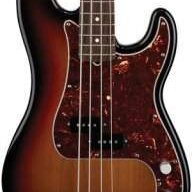
I tend to agree, whilst no design changes, the better quality hardware available now has improved, but not the inherent design of the bass.

Well, the basses people use are about the same now as then - wood, pickups, and strings. Darwin seems to be winning here, and in this case, "natural selection" serves to keep the instrument from evolving. The lightwave optical pickup, piezo pickups, fanned frets, graphite necks, composite bodies, etc. are more like mutants than the next step in the evolution of the instrument.
IMO, there is one "evolutionary" step in the electric bass since the 60's: active electronics.
I don't see the evolution of the bass as being any slower than the evolution of the automobile, the drill, the toaster, or the coffee maker. Probably the only things really zooming through stages these days are computers, TVs, phones, and all the other hand-held digital devices (and the batteries that power them). Everything else is progressing at just the speed we like it to......... slowly. And, honestly, I'm fine with that.
If suddenly an affordable flying car that would do 350 mph on land and Mach 2 in the air came along, it would be a disaster.
If suddenly a "must have" affordable breakthrough in bass design came along it would force many out of the market at worst, and at best would create an "us against them" mentality (which is almost already here on just about every bass "issue" out there).
Honestly, you are going to think I'm nuts, but I think the lack of market for optical pickups has more to do with ergonomics than anything else. Many of us prop our thumbs on pickups. Those basses that had/have virtually nothing on the front of the body are somewhat off-putting to those of us who first look for a place to prop our thumbs before we ever pluck a note. I never even considered plugging one up to hear what it sounded like for that very reason. So, the technology is there, but the overall ergonomic design is an unfinished symphony to me. It's when tech guys and artists get together to form a complete design that you really make leaps. Find an attractive and practical way to put a thumb rest of some sort on the front of those basses with lightwave pickups and I'll be the first to plug one in.
Lost of great new designs out there. Lots of legendary old designs that are great to play/hear too. If you can't find something to like, you aren't looking or listening hard enough. Put a Roscoe or a Parker or an active Dingwall beside a '51 P bass and then tell me how far we haven't come. The best designs to me do both. They give a nod to the old, while showing off a few new tricks at the same time. Never mind that players like Victor and Stanley wouldn't even be themselves holding a '51 P bass. Sure, they could make notes and play songs. But they couldn't really do what they do with that old technology. Likewise, Jamerson probably would have sounded horrible to many of us playing an Alembic with the bridge pickup soloed. So the players have as much to do with it as the equipment.
Then there's the simple fact that we, as humans, like what we like. Songs become hits because they touch millions of people. The sound of the bass touches us at a deep level. And what touches many many people (musicians and non-musicians alike) is the same kind of tone we have heard over and over again. So, if it ain't broke.......
Stop trying to analyse a problem that doesn't exist. (Heck, you even get me doing it.) The guys at Roscoe and Leo Fender (just as examples) are chapters apart in the book of bass. Different tools for different times. Each complimenting the other. Each worlds apart in design and function. Each amazing in their own ways.
Then there's the other theory. Find a bass you like, then grip it and rip it.

Well, given there is debate as to whether actives are worth, and many people don't use activesWell, the basses people use are about the same now as then - wood, pickups, and strings. Darwin seems to be winning here, and in this case, "natural selection" serves to keep the instrument from evolving. The lightwave optical pickup, piezo pickups, fanned frets, graphite necks, composite bodies, etc. are more like mutants than the next step in the evolution of the instrument.
IMO, there is one "evolutionary" step in the electric bass since the 60's: active electronics.
I don't see the evolution of the bass as being any slower than the evolution of the automobile, the drill, the toaster, or the coffee maker. Probably the only things really zooming through stages these days are computers, TVs, phones, and all the other hand-held digital devices (and the batteries that power them). Everything else is progressing at just the speed we like it to......... slowly. And, honestly, I'm fine with that.
If suddenly an affordable flying car that would do 350 mph on land and Mach 2 in the air came along, it would be a disaster.
If suddenly a "must have" affordable breakthrough in bass design came along it would force many out of the market at worst, and at best would create an "us against them" mentality (which is almost already here on just about every bass "issue" out there).
Honestly, you are going to think I'm nuts, but I think the lack of market for optical pickups has more to do with ergonomics than anything else. Many of us prop our thumbs on pickups. Those basses that had/have virtually nothing on the front of the body are somewhat off-putting to those of us who first look for a place to prop our thumbs before we ever pluck a note. I never even considered plugging one up to hear what it sounded like for that very reason. So, the technology is there, but the overall ergonomic design is an unfinished symphony to me. It's when tech guys and artists get together to form a complete design that you really make leaps. Find an attractive and practical way to put a thumb rest of some sort on the front of those basses with lightwave pickups and I'll be the first to plug one in.
Lost of great new designs out there. Lots of legendary old designs that are great to play/hear too. If you can't find something to like, you aren't looking or listening hard enough. Put a Roscoe or a Parker or an active Dingwall beside a '51 P bass and then tell me how far we haven't come. The best designs to me do both. They give a nod to the old, while showing off a few new tricks at the same time. Never mind that players like Victor and Stanley wouldn't even be themselves holding a '51 P bass. Sure, they could make notes and play songs. But they couldn't really do what they do with that old technology. Likewise, Jamerson probably would have sounded horrible to many of us playing an Alembic with the bridge pickup soloed. So the players have as much to do with it as the equipment.
Then there's the simple fact that we, as humans, like what we like. Songs become hits because they touch millions of people. The sound of the bass touches us at a deep level. And what touches many many people (musicians and non-musicians alike) is the same kind of tone we have heard over and over again. So, if it ain't broke.......
Stop trying to analyse a problem that doesn't exist. (Heck, you even get me doing it.) The guys at Roscoe and Leo Fender (just as examples) are chapters apart in the book of bass. Different tools for different times. Each complimenting the other. Each worlds apart in design and function. Each amazing in their own ways.
Then there's the other theory. Find a bass you like, then grip it and rip it.
Ummm...........ok.

there has been practically no MATERIAL evolution in basses since about the 60's.
I'm sorry, but could you repeat that? I didn't quite catch that over the racket from those raucous, graphite-bodied Steinberger/Status instruments, the churn-churn of the 3D printers fabricating Atom guitars and the dulcit tones emanating from someone's Lightwave bass.

Last edited:
Yeah that guy came looking for an argument. I can't believe I got trolled again. 
Well, given there is debate as to whether actives are worth, and many people don't use actives
Put down the beer and walk away from the computer.


There have been numerous improvements on bass guitar. They just haven't been accepted into mainstream because you have to look for them. As mentioned, active electronics are here, as opposed to passive, which gives MUCH more tone shaping possibilities. Graphite necks and bodies? Much more stable than any wood out there. Lets not even talk about pickups! That one we could be here for months on, and the same goes for hardware, but lets talk about HUMBUCKERS. I think that was a HUGE step forward in the world of basses. Granted, it wasn't intended for use in basses, originally, but the addition of them in so many instruments is hard to ignore.
The Lightwave basses? Those things have more tonal possibilities than most basses out there! Granted, they could use some ramps, but that seems to be their only fault (outside of needing a 6-string version) for the little bit of research I can do from a computer since I've never actually tried one out.
There have been so MANY improvements out there, it's near impossible to keep up.
The Lightwave basses? Those things have more tonal possibilities than most basses out there! Granted, they could use some ramps, but that seems to be their only fault (outside of needing a 6-string version) for the little bit of research I can do from a computer since I've never actually tried one out.
There have been so MANY improvements out there, it's near impossible to keep up.


I think there's been a de-evolution in basses, particularly in the electronics. Active preamps and such are just more stuff that can go wrong. Whenever somebody tells me there's a 2nd hand active bass for sale I always ask, "What's wrong with it?".
Sure actives boost highs and lows, but the added equalization sounds like it came from a Casio keyboard. The only thing I can think of that has improved are the tuners. Those little Schaller's stay in pitch 3 times longer than the old style/elephant ear-type. The rest of the "upgrades" are only distractions that don't even work well for me, at least.
Sure actives boost highs and lows, but the added equalization sounds like it came from a Casio keyboard. The only thing I can think of that has improved are the tuners. Those little Schaller's stay in pitch 3 times longer than the old style/elephant ear-type. The rest of the "upgrades" are only distractions that don't even work well for me, at least.
........and yet, some of the most experienced bass players are playing 1969 Fender Jazz basses and the "go to" bass is a Fender American Standard (alder, passives - simple, simple, simple)There have been numerous improvements on bass guitar. They just haven't been accepted into mainstream because you have to look for them. As mentioned, active electronics are here, as opposed to passive, which gives MUCH more tone shaping possibilities. Graphite necks and bodies? Much more stable than any wood out there. Lets not even talk about pickups! That one we could be here for months on, and the same goes for hardware, but lets talk about HUMBUCKERS. I think that was a HUGE step forward in the world of basses. Granted, it wasn't intended for use in basses, originally, but the addition of them in so many instruments is hard to ignore.
The Lightwave basses? Those things have more tonal possibilities than most basses out there! Granted, they could use some ramps, but that seems to be their only fault (outside of needing a 6-string version) for the little bit of research I can do from a computer since I've never actually tried one out.
There have been so MANY improvements out there, it's near impossible to keep up.
I can build a coffee cup that brews a coffee and contains a weather radar: if it isn't used, then it doesn't matter.
.....
I can build a coffee cup that brews a coffee and contains a weather radar: if it isn't used, then it doesn't matter.
I'd buy one ! have you got a pic?

Bryan R. Tyler
TalkBass: Usurping My Practice Time Since 2002
Staff member
Administrator
Gold Supporting Member
Supporting Member
- May 3, 2002
- 28,948
- 20,932
- Disclosures
- Reviewer: Bass Player Magazine
I think there's been a de-evolution in basses, particularly in the electronics. Active preamps and such are just more stuff that can go wrong. Whenever somebody tells me there's a 2nd hand active bass for sale I always ask, "What's wrong with it?".
Sure actives boost highs and lows, but the added equalization sounds like it came from a Casio keyboard. The only thing I can think of that has improved are the tuners. Those little Schaller's stay in pitch 3 times longer than the old style/elephant ear-type. The rest of the "upgrades" are only distractions that don't even work well for me, at least.
You've probably got a better chance of getting hit crossing the road to your gig than your active electronics malfunctioning during it. The "I don't want it because it's just something else that can go wrong" stuff is just silliness- you're not going to avoid using every other bit of electronics involved in and out of your gig because of it, so writing off an active preamp makes no sense. "Guys- don't use stage lights! They could malfunction!" "You want a picture of us? Don't use your phone camera- it could break. We'll just stand here while you draw us"

If you don't like active electronics, that's fine- but it's poor logic to not use them because they could fail. Anything can fail. If you take care of your gear, the likelihood of your active electronics failing is incredibly small. You can however take excellent care of yourself, and you will still, without exception, die. I'm not going to cancel my next gig because I might have a heart attack during it

And if you think that onboard EQs sounds like a Casio, you're probably listening to some pretty cheap EQs or basses. A lot of preamps are built and sound better than the EQs in certain amps- the EQ being inside of an amp rather than in a pedal or preamp doesn't make it better.
It's all a matter of preference, really. The tech is out there.
Personally, I'd take a Babicz bridge over most of what's out there today or in decades past, but if I were to have something built from the ground up, you can bet I'd take that Babicz, some Hipshot Ultralites, humbuckers, active electronics, and a piezo bridge, just to name a couple things that you won't find on anything pre-1970's. I'd say those few things I've mentioned are pretty material.
Would I play a 69 Jazz? Hell yeah, I would! I'd love to get vintage Jazz! Do I think bass guitars have been improved since then? Most definitely! Leo Fender also created the StingRay, after all...that was in 1976, which featured *GASP* a SOAPBAR HUMBUCKER!!!
The thing is, Leo created something timeless with the Jazz and Precision. Those two will never go out of style, but here's the kicker...Yes, I'd easily take a vintage Jazz. A Precision? Maybe not so much (you all can stone me later). But the thing is, I don't only play one type of music. I can ramble with jazz cats all day long. I play some mean blues. I can play highly technical solo stuff. I can get my funk on, or I can pound out roots, 5th's or whatever in a metal band. I can play anything else in between. I may or may not exactly care for some styles of music, like country, but hey, this is just an example.
For all those applications, different basses are needed, and much of it would be from tech from the 80's onward. I love my Jazz...make no mistake about that. It's a solid instrument. But if I showed up to play, say a death metal show with a passive Jazz, or even at best, a passive Precision, I'd be buried pretty quick. If I showed up with a StingRay? Bring it on!
Personally, I'd take a Babicz bridge over most of what's out there today or in decades past, but if I were to have something built from the ground up, you can bet I'd take that Babicz, some Hipshot Ultralites, humbuckers, active electronics, and a piezo bridge, just to name a couple things that you won't find on anything pre-1970's. I'd say those few things I've mentioned are pretty material.
Would I play a 69 Jazz? Hell yeah, I would! I'd love to get vintage Jazz! Do I think bass guitars have been improved since then? Most definitely! Leo Fender also created the StingRay, after all...that was in 1976, which featured *GASP* a SOAPBAR HUMBUCKER!!!
The thing is, Leo created something timeless with the Jazz and Precision. Those two will never go out of style, but here's the kicker...Yes, I'd easily take a vintage Jazz. A Precision? Maybe not so much (you all can stone me later). But the thing is, I don't only play one type of music. I can ramble with jazz cats all day long. I play some mean blues. I can play highly technical solo stuff. I can get my funk on, or I can pound out roots, 5th's or whatever in a metal band. I can play anything else in between. I may or may not exactly care for some styles of music, like country, but hey, this is just an example.
For all those applications, different basses are needed, and much of it would be from tech from the 80's onward. I love my Jazz...make no mistake about that. It's a solid instrument. But if I showed up to play, say a death metal show with a passive Jazz, or even at best, a passive Precision, I'd be buried pretty quick. If I showed up with a StingRay? Bring it on!
Last edited:
Bryan R. Tyler
TalkBass: Usurping My Practice Time Since 2002
Staff member
Administrator
Gold Supporting Member
Supporting Member
- May 3, 2002
- 28,948
- 20,932
- Disclosures
- Reviewer: Bass Player Magazine
Well geezy I praised the tuners. Give me some kudos would ya?
Tuners have in fact evolved leaps and bounds due to the availability of lighter materials and better machining. You can get tuners noticeably more accurate, stable, and lighter these days.
As far as the evolution of the rest of the instrument goes, that will depend on how popular music changes. If music changes in ways that require more from a bass, then we will see more change. Until then, most alterations are based on preference rather than need; graphite necks are, generally speaking, superior to wood necks in as far as stability and avoiding dead spots. But the differences are not so great as to graphite becoming a need rather than a preference. Demand drives evolution in consumerism- when the demand changes, then the basses will.
Last edited:

SirMjac28
Patiently Waiting For The Next British Invasion

Basses are awesome. They always were, and always will be.
So, you're right... no material evolution.
So, you're right... no material evolution.

