

Enjoy the benefits of a premium membership!
Upgrade Account
-
TalkBass has been independent since 1998. Add your voice.
Create a free account to reply to discussions, view embedded media, and browse with fewer display ads.
Join free Log in
Want zero display ads or expanded classifieds tools? Compare plans.
You are using an out of date browser. It may not display this or other websites correctly.
You should upgrade or use an alternative browser.
You should upgrade or use an alternative browser.
My thoughts....
- Thread starter Low town
- Start date
More options
Who Replied?
plenty of material evolution thats happened. I dont care for some of them, but you cant deny that evolution happened. I mean a stienburger is so looking that I dont see myself ever playing one much less caught dead wearing one (yes, I know they are probably a fine instrument and I shouldnt be so shallow) the rest of most of the bass buying public rejects them based on that same complaint, but it was a evolution in materials none the less, If you worry about your actives failing, you may want to be building a bomb shelter and also investing in tin foil hats and check out the chem trails too...so yeah, just because you dont like it and/or the public didnt buy it, dosnt mean its not a material evolutional change
Last edited by a moderator:
Considering the entire system, from strings to PUs to electronics to wires to amps to speakers and more, there have been huge improvements. Compare to say, trumpets, which are essentially unchanged for century's, we got it pretty damn good.
I disagree with this, but you do need to go pretty high-end before you see anything very radical. There are some smaller boutique builders trying different approaches, but these are usually along the lines of optimization and can be subtle. I would give some examples, but I've been away from it for a few years and am probably out of date by now.

Uhhh if it ain't broke dont fix it, the design may not have changed but manufacturing absolutely has. Electronics can be produced with a consistency and precision that in the 60's they were incapable of. We no longer hand route bodies or necks, we use CNC's. Glues are more advanced, wood can be precision weighed and its density measured. Sooo how bout that.
Also lets talk amp technology, cable technology, effects, pickup manufacturing, all of which are done much differently from even 20 years ago let alone since the 60's. For a 70 year old invention, the electric bass has come a long way
Also lets talk amp technology, cable technology, effects, pickup manufacturing, all of which are done much differently from even 20 years ago let alone since the 60's. For a 70 year old invention, the electric bass has come a long way

Meh, the piano hasn't changed much in 300 years. If people wanted change they'd buy the new and improved stuff. But they don't; they like it just the way it is. The market is ultimately dictated by the consumer.

Seriously?Having watched this forum, and other forums, I have come to the following conclusion:
- there has been practically no MATERIAL evolution in basses since about the 60's.
The depth of conversations over the internet support this proposal.
The 5 (and 6) string is effectively a development of the late 70s and perfected in the 90s.
Active electronics came out in the 70s and really didn't "happen" until the 80s.
Amplification has moved from underpowered (50W) all tubes into poorly designed, inefficient modified guitar cabs to multi-hundred watt hybrid amplification systems into well designed, efficient and (often) lighter cabs designed specifically for the demands of bass.
It is true that many here at TB (myself included) love the OLD stuff and THINK we want vintage equipment, but when it comes down to it we want that "old sound" but with more definition, more volume, better intonation, easier and more efficient to tune, an effective compressor and easier to carry and less prone to failure. In other words we want NEW stuff. Yes the new stuff is heavily influenced by the old, mostly because that's what we're used to, not because it is inherently the best, but most of us would not go back to the bad old days if you paid us (well maybe...).
That's like saying cars have not evolved since the 60s. Sure all the features are THERE, but it's not the same (though if you mean strictly STYLE the 60s cars win out as a group).
EDIT: Also: one of the key driving factors in "vintage" is musician's desire to have something "different" from everyone else, and so they go looking for things. They obviously can't get something from the FUTURE - so they pick old stuff that has been forgotten (and sometimes for GOOD reason).

Well the fender haters are going to have a cow and it's been said before here on TB, but Leo got it right the first time. The instrument in all its variations over the years still does what it's meant to do, be it active, passive, precision, jazz, 5 string, 6 string, lightweight, etc. others may change things but they're still just a variation of the original and musically it still does the same job that that it did when Leo built the damn thing in the 60's
I don't think you need to go high end to see the difference. If anything the biggest diff is at the low end. But let's compare a PRO setup from say 1965 to a beginner setup today.I disagree with this, but you do need to go pretty high-end before you see anything very radical. There are some smaller boutique builders trying different approaches, but these are usually along the lines of optimization and can be subtle. I would give some examples, but I've been away from it for a few years and am probably out of date by now.
PRO in 65 - Ampeg Portaflex or Bassman - UNDER 50 watts heavy as hell, a passive four string with with questionable to adequate quality control. Flat wound strings tuned by ear to an out of tune piano in the bar (or to a $600 (1965 dollars) strobocon).
BEGINNER 2014 - Your choice functional amps with 100-250 watts, more reliable (SS) and much lighter to carry. Chhoice of number of strings, passive OR active. Flat wound OR round-wound strings tuned with an accurate and cheap pedal tuner that doubles as a stage mute.
On another note...those poos DB guys! Their instrument was pretty well established in all the major details (and many minor ones) way before the 60's.
But they had various string number with composer dedicated to them, string extention, two type of bow, different back that project the sound differently, different fingerboard radius, some better for arco other to pizzicato ... There were some instrument with frets, some so big they needed two player or a mechanism to press the strings ... but all of that is on the course of like 400 years if not more.
Bass is like ... 60 years now ? we still have a lot of road ahead just to have a some sort of consciensus on some technique and demistified some stuff that I find so ridiculous but how well
Totally, but that doesn't diminish the fact that there have been HUGE strides made - some of them by our pal Leo such as the innovations introduced on his latter day classics.Well the fender haters are going to have a cow and it's been said before here on TB, but Leo got it right the first time. The instrument in all its variations over the years still does what it's meant to do, be it active, passive, precision, jazz, 5 string, 6 string, lightweight, etc. others may change things but they're still just a variation of the original and musically it still does the same job that that it did when Leo built the damn thing in the 60's

Can someone please spell out the difference between these basses:
- a 1958 Fender P-Bass
- a 2014 Fender Am Deluxe P-Bass
- a $14k 2014 Fodera.
Cheers
- a 1958 Fender P-Bass: Purchased by people with money who like old gear.
- a 2014 Fender Am Deluxe P-Bass: Purchased by people with money who like new gear.
- a $14k 2014 Fodera: Purchased by people with ####LOADS of money who like boutique gear.

Well having watched this thread, and other threads, I have come to the following conclusion:
- there has been practically no MATERIAL evolution of internet trolling since about the 90's.
The depth of this conversation certainly supports that proposal.
- there has been practically no MATERIAL evolution of internet trolling since about the 90's.
The depth of this conversation certainly supports that proposal.

There will be no progression in the design of basses until people stop buying remakes and re-issues of vintage basses.
I respectfully disagree, the Steinberger was a radical departure from all previous instruments in the use of more stable materials, superior tuning system, new string design, etc. Unfortunately, the instrument market is highly conservative, and tends to squash new ideas that don't fit the mainstream aesthetically. People have been trying to make material improvements on the Stratocaster since the day it was introduced. That it hasn't changed much in 50 years is testament to the genius of the original design. I'd argue that the Jazz bass can hardly be improved on ergonomically, except maybe by eliminating neck dive by careful body/neck weight balancing. The revolution in digital signal processing spearheaded by Variaxe and similar digital instruments hasn't hit much market penetration yet, but that's a huge largely untapped sonic landscape.

Active preamps and such are just more stuff that can go wrong.
How much more complex is your TV and how often does it go wrong? Do you need a passive TV? An onboard preamp is a long way from complex electronics.
Sure actives boost highs and lows, but the added equalization sounds like it came from a Casio keyboard.
Is there any reason why EQ should sound different depending on whether it's located in your bass or in your amp?

Having watched this forum, and other forums, I have come to the following conclusion:
- there has been practically no MATERIAL evolution in basses since about the 60's.
The depth of conversations over the internet support this proposal.
No, it doesn't.
Last edited:

Put down the beer and walk away from the computer.
BAH!!!!!!!!! This made me lol

Why yes, in the 60's, Paul McCartney played one of these Luthite basses with piezo bridge pickups...sounded great on "Strawberry Fields Forever".
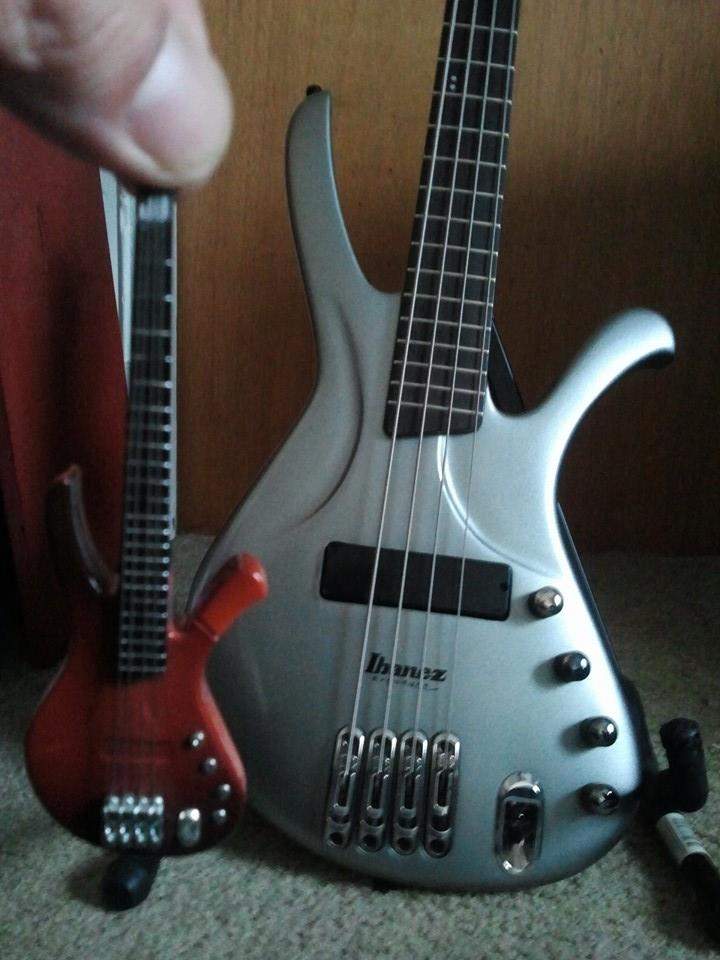
No.. seriously, there have been a lot of attempts with advancing the technology in bass guitars in sound, looks, feel and even "material" as your post so poignantly mentions. Well, truth is, there ain't nutin' better than a piece of wood with four strings on it - so why change perfection?
No.. seriously, there have been a lot of attempts with advancing the technology in bass guitars in sound, looks, feel and even "material" as your post so poignantly mentions. Well, truth is, there ain't nutin' better than a piece of wood with four strings on it - so why change perfection?

Exactly right. The entry level to having decent stuff and having at the very least competent equipment is far more within reach now than it ever was, and of higher quality too.I don't think you need to go high end to see the difference. If anything the biggest diff is at the low end. But let's compare a PRO setup from say 1965 to a beginner setup today.
PRO in 65 - Ampeg Portaflex or Bassman - UNDER 50 watts heavy as hell, a passive four string with with questionable to adequate quality control. Flat wound strings tuned by ear to an out of tune piano in the bar (or to a $600 (1965 dollars) strobocon).
BEGINNER 2014 - Your choice functional amps with 100-250 watts, more reliable (SS) and much lighter to carry. Chhoice of number of strings, passive OR active. Flat wound OR round-wound strings tuned with an accurate and cheap pedal tuner that doubles as a stage mute.


