• TalkBass has been independent since 1998. Add your voice.
    Create a free account to reply to discussions, view embedded media, and browse with fewer display ads.
    Join freeLog in
    Want zero display ads or expanded classifieds tools? Compare plans.

NAD - This tiny amp is ridiculous...

My 10 y.o. son needs a small practice amp to play along with acoustic guitars with my bass ukulele.
So I bought a Warwick BC 10 (10W, 8", 6kg, 98€ new) and I'm absolutely surprised how good this teeny weeny cheapo amp sounds.
I compared it to a Fender Rumble 15 and an Ashdown Studio junior and it just blew both of them away. While those 2 sound like a cardboard box and as wimpy as you would expect, the Warwick sounds like a grown up amp. Rock solid low end and waaay louder without any distortion.
I'm really impressed. (My own rig is a GK 700RB into Barefaced BB2 btw...)
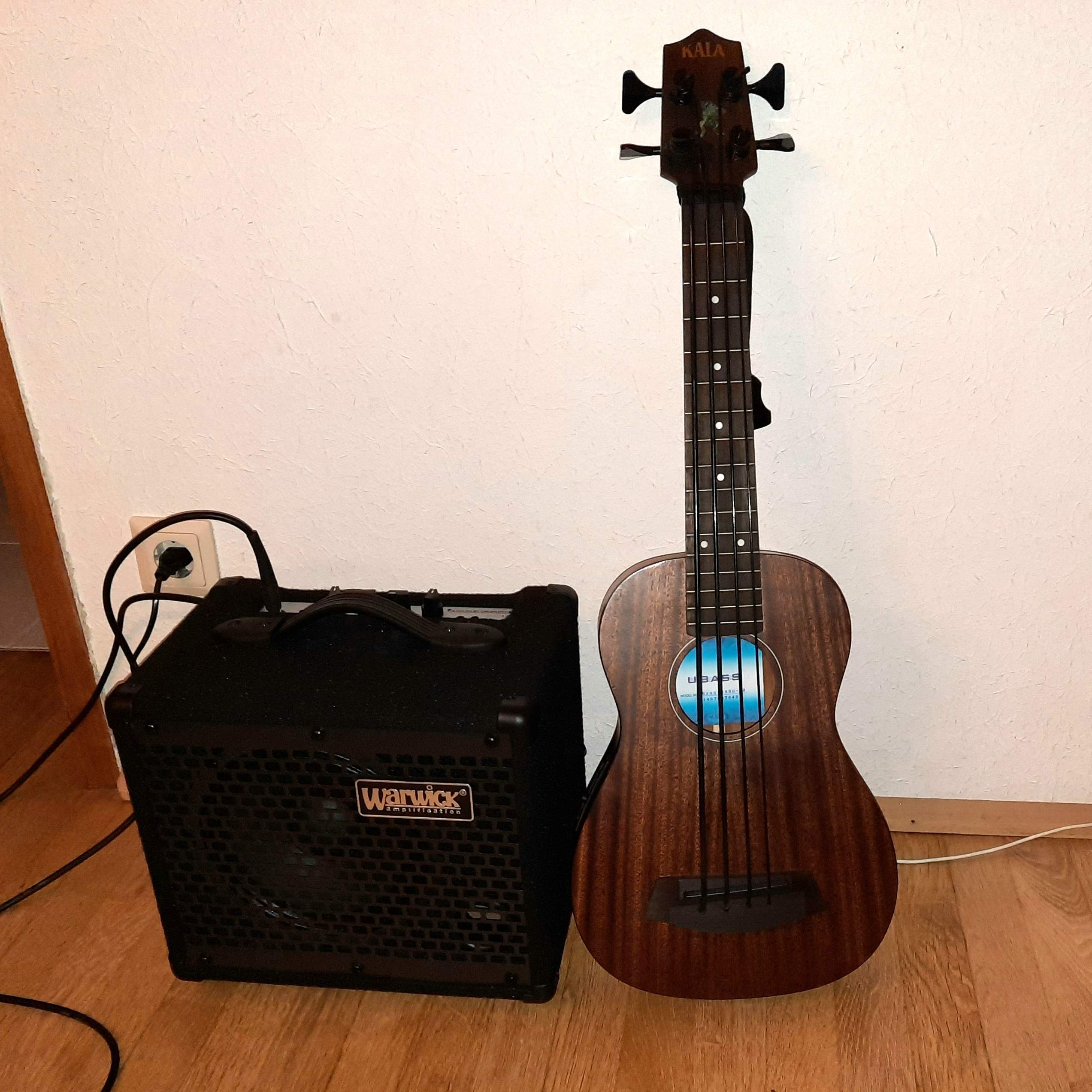
20211014_185037.jpg

And here is a spot on review:
 
I've been doing some reading about wattage and loudness. In order to get a 10db increase in loudness (twice as loud), you would need ten times the watts. The loudness of a 100W amp compared to the loudness of a 50W amp is barely discernible.

That said, a 10W amp is probably not what we want to gig with. :)
 
They called delivery for Monday if I ordered last night, so maybe not. Shipping just seems like a total crapshoot these days though, for sure.
Still waiting for an item that I bought online two weeks ago. FedEx has told me three different times that it was " on the truck for delivery ."
 
I've been doing some reading about wattage and loudness. In order to get a 10db increase in loudness (twice as loud), you would need ten times the watts. The loudness of a 100W amp compared to the loudness of a 50W amp is barely discernible.

That said, a 10W amp is probably not what we want to gig with. :)

That rule assumes you're using the same cab and same (sensitivity) driver so for combos it's not too useful. Also 10dB is a lot, generally '3db -> double the wattage' is a more useful rule. Still, yes, you're not getting too loud with 10w through an 8" driver with any bass extension.

I noticed when reading articles on Warwick combos that they perform to their power ratings at less distortion than many other amps. This allows for more volume knob travel before things get ugly.

Volume knob travel is all about gain structure, it's real easy to make an amp that goes all the way up clean by just reducing the gain, which has pros and cons. Combo distortion can come from the amp or the cab part of the combo, I'd be curious how they're evaluating the combo 'performing to its power rating.'

Considering how many cheap watts you can get from a chip amp these days I wonder if 10w rating is just for market segment differentiation or if it's to protect the driver at the low end.
 
That rule assumes you're using the same cab and same (sensitivity) driver so for combos it's not too useful. Also 10dB is a lot, generally '3db -> double the wattage' is a more useful rule. Still, yes, you're not getting too loud with 10w through an 8" driver with any bass extension.


Volume knob travel is all about gain structure, it's real easy to make an amp that goes all the way up clean by just reducing the gain, which has pros and cons. Combo distortion can come from the amp or the cab part of the combo, I'd be curious how they're evaluating the combo 'performing to its power rating.'

Considering how many cheap watts you can get from a chip amp these days I wonder if 10w rating is just for market segment differentiation or if it's to protect the driver at the low end.
True but the ears tell the story so clearly not just a GAIN structure thing else the amp would seem quiet when dimed. Maybe it's this.

DYNAMIC DISTORTION LIMITER
Distortion occurs when an amplifier works beyond its range, when the power supply cannot supply the power any more to take the amp higher. A common method to control distortion in amps is to use a limiter, a device that stops the signal going beyond a specific level. Audio limiters work by setting a threshold signal level where the circuit kicks in and keeps signal levels within the capabilities of the power supply. This method is not very precise and often causes audible effects such as pumping and thumps. We designed a circuit that instead reads the distortion level in the power amp and starts limiting as soon as the amp shows even miniscule amounts of distortion. This means our amps always stay within 0.3% distortion (THD) when most amps are rated at between 5-10% distortion (that means that to get your 20 Watts out of a 20 Watt amp you will get it audibly distorted and if you want a clean signal the power will be a lot less).