
I'm using the Ampero II Stomp, and tonally it's not "affordable option" at all (except for the not-so-good pitch shifter). The real problem is lack of processing power. I can only use one NAM per preset, so there's no option of running a NAM pedal into a NAM amp, or two NAM amps in parallel.

Enjoy the benefits of a premium membership!
Upgrade Account
-
TalkBass has been independent since 1998. Add your voice.
Create a free account to reply to discussions, view embedded media, and browse with fewer display ads.
Join free Log in
Want zero display ads or expanded classifieds tools? Compare plans.
You are using an out of date browser. It may not display this or other websites correctly.
You should upgrade or use an alternative browser.
You should upgrade or use an alternative browser.
More options
Who Replied?
It sounds great!Here's my Vemuram Shanks capture: I usually run input minus 5, there's two gain settings: Vemuram Shanks ODS-1 NAM Profile · TONE3000


It’s a sick pedal, expensive but it’s awesome!It sounds great!
Leo Gibson has just published a new short video teaser, just like he did before the release of the Anagram.
The voice over says:
So we can expect a new NAM compatible pedal, can't we?
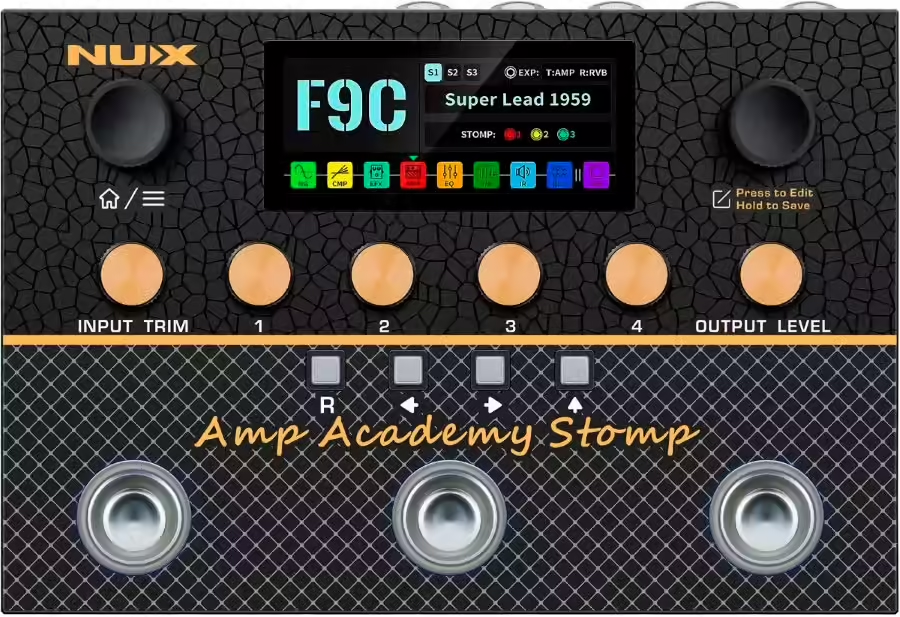
Except that the product is not super mysterious this time. It looks exactly like the NUX Amp Academy Stomp
And there's not a word about NAM profiles on the product page, so… we'll have to wait
The voice over says:
There's a mysterious new product in Leo Gibson studio. What is it going to be? Is it powerful enough to load NAM profiles?
So we can expect a new NAM compatible pedal, can't we?
Except that the product is not super mysterious this time. It looks exactly like the NUX Amp Academy Stomp
And there's not a word about NAM profiles on the product page, so… we'll have to wait
Well, I received today a Valeton GP-5 and here are a few thoughts after a couple of hours of playing.
- My unit has the language is locked to Chinese. Cannot be changed. If you purchase it straight from China you may need to memorize the settings or to translate some Chinese.
- The good news is that the app is in English and all of the changes are done in the app, not the pedal itself. The pedal has only a simple menu for global settings.
- I didn't care for most of the FX included but it could also be that they are tailored for guitar.
- The captures sound much better, both the included ones and the ones I've been importing into the pedal. The captures can be imported from the computer or the phone.
- The app is quite intuitive to use and this is important. I didn't like the Tonex pedals at all, I got super tired of screen diving with the desktop app and the endless refreshing of the online presets. The Valeton app works really well and it's very easy to change settings. The only limitation is to have just one switch but it's not a big deal if you know what you want to do with each patch.
- I didn't notice any latency, sharing signal path with a bunch of analog pedals.
- It will not replace almost anything on the pedalboard, but at the same time it adds a lot of possibilities in such a small enclosure.
- It’s perfect for traveling light, I can see myself bringing just this only pedal when the situation requires.
I'll bring it to rehearsal tomorrow for a test with an amp.
- My unit has the language is locked to Chinese. Cannot be changed. If you purchase it straight from China you may need to memorize the settings or to translate some Chinese.
- The good news is that the app is in English and all of the changes are done in the app, not the pedal itself. The pedal has only a simple menu for global settings.
- I didn't care for most of the FX included but it could also be that they are tailored for guitar.
- The captures sound much better, both the included ones and the ones I've been importing into the pedal. The captures can be imported from the computer or the phone.
- The app is quite intuitive to use and this is important. I didn't like the Tonex pedals at all, I got super tired of screen diving with the desktop app and the endless refreshing of the online presets. The Valeton app works really well and it's very easy to change settings. The only limitation is to have just one switch but it's not a big deal if you know what you want to do with each patch.
- I didn't notice any latency, sharing signal path with a bunch of analog pedals.
- It will not replace almost anything on the pedalboard, but at the same time it adds a lot of possibilities in such a small enclosure.
- It’s perfect for traveling light, I can see myself bringing just this only pedal when the situation requires.
I'll bring it to rehearsal tomorrow for a test with an amp.
Where did you buy it from? Kinda funny about the language barrier in your version. Glad to hear you can still make it work!Well, I received today a Valeton GP-5 and here are a few thoughts after a couple of hours of playing.
- My unit has the language is locked to Chinese. Cannot be changed. If you purchase it straight from China you may need to memorize the settings or to translate some Chinese.
- The good news is that the app is in English and all of the changes are done in the app, not the pedal itself. The pedal has only a simple menu for global settings.
- I didn't care for most of the FX included but it could also be that they are tailored for guitar.
- The captures sound much better, both the included ones and the ones I've been importing into the pedal. The captures can be imported from the computer or the phone.
- The app is quite intuitive to use and this is important. I didn't like the Tonex pedals at all, I got super tired of screen diving with the desktop app and the endless refreshing of the online presets. The Valeton app works really well and it's very easy to change settings. The only limitation is to have just one switch but it's not a big deal if you know what you want to do with each patch.
- I didn't notice any latency, sharing signal path with a bunch of analog pedals.
- It will not replace almost anything on the pedalboard, but at the same time it adds a lot of possibilities in such a small enclosure.
- It’s perfect for traveling light, I can see myself bringing just this only pedal when the situation requires.
I'll bring it to rehearsal tomorrow for a test with an amp.
I have to think we are going to see a proliferation of these NAM/IR devices around the $30-$60 price point especially as they migrate down into generic mini pedal housings and fully driven by a shared app suite from the megacorp.
Where did you buy it from? Kinda funny about the language barrier in your version. Glad to hear you can still make it work!
Got it second hand. For what I've read units that have been directly imported from China have this issue. It's not very important because there's little to change into the pedal settings, but it's funny to have such processing power and not being able to change the language.
I have to think we are going to see a proliferation of these NAM/IR devices around the $30-$60 price point especially as they migrate down into generic mini pedal housings and fully driven by a shared app suite from the megacorp.
Yes, as soon as they notice how well the Gp-5 is doing in sales every other brand is going to follow.
offtopic. I would love to be able to edit posts to correct grammar and misspellings. The editing period is too to short.
Last edited:
One thing I’ve noticed - there seems to be a need for a LPF after the NAM/IR to get anywhere near sounding like my analog signal chains. That’s for both guitar and bass.
It’s as if an ultra presence knob is turned to 11. A sizzle on the notes, if you will.
I can’t make out any preference between DI capture paired with IR vs mic’d captures. There’s enough good stuff on both sides to warrant auditioning them all and neither is particularly immune to the sizzle I mention above.
It’s as if an ultra presence knob is turned to 11. A sizzle on the notes, if you will.
I can’t make out any preference between DI capture paired with IR vs mic’d captures. There’s enough good stuff on both sides to warrant auditioning them all and neither is particularly immune to the sizzle I mention above.
Leo Gibson just released a new video where he compares the accuracy of Nam, ToneX and Kemper on 6 frequency ranges.
Very nerdy but interesting. In short, Nam is superior in general, but ToneX is almost as good as Nam on the bass frequency range. Nam is much more precise than ToneX on the high mid registry.
Very nerdy but interesting. In short, Nam is superior in general, but ToneX is almost as good as Nam on the bass frequency range. Nam is much more precise than ToneX on the high mid registry.
Well, I received today a Valeton GP-5 and here are a few thoughts after a couple of hours of playing.
- My unit has the language is locked to Chinese. Cannot be changed. If you purchase it straight from China you may need to memorize the settings or to translate some Chinese.
- The good news is that the app is in English and all of the changes are done in the app, not the pedal itself. The pedal has only a simple menu for global settings.
- I didn't care for most of the FX included but it could also be that they are tailored for guitar.
- The captures sound much better, both the included ones and the ones I've been importing into the pedal. The captures can be imported from the computer or the phone.
- The app is quite intuitive to use and this is important. I didn't like the Tonex pedals at all, I got super tired of screen diving with the desktop app and the endless refreshing of the online presets. The Valeton app works really well and it's very easy to change settings. The only limitation is to have just one switch but it's not a big deal if you know what you want to do with each patch.
- I didn't notice any latency, sharing signal path with a bunch of analog pedals.
- It will not replace almost anything on the pedalboard, but at the same time it adds a lot of possibilities in such a small enclosure.
- It’s perfect for traveling light, I can see myself bringing just this only pedal when the situation requires.
I'll bring it to rehearsal tomorrow for a test with an amp.
Quoting myself after a rehearsal with the band. The GP-5 is good, but it has to go.
It does sound good, specially the captures. I did like the Fake Plastic Trees capture, which is kinda worrisome for my wallet.
There are a couple of things I didn't like (it's something I don't like about these kind of pedals in general).
- The volume knob acts as a master volume for your whole pedalboard. I don't want to give it such entitlement

- I set up some presets before the rehearsal, but you'll inevitably want to tweak and change things, so I spent a lot of time focusing on the pedals and not on the playing. I really don't want to have to use the app at rehearsals.
- Keep in mind that if you buy it from China, it will be a model exclusive to that country, Chinese only. I contacted Valeton about the language settings and they accused me of smuggling pedals, literally. I guess it's their translator's fault, but...
Leo Gibson just released a new video where he compares the accuracy of Nam, ToneX and Kemper on 6 frequency ranges.
Very nerdy but interesting. In short, Nam is superior in general, but ToneX is almost as good as Nam on the bass frequency range. Nam is much more precise than ToneX on the high mid registry.
Gotra say this couldn't be less surprising - if you've played all three.
Kemper has a sound, and that sound is something people like about it. But that also means it doesn't sound accurate to the amps. Especially if you start messing with gain.
Tonex sounds pretty good, but also sounds very different to NAM in some noticeable ways, especially the high end.
NAM sounds like a micd amp. Good captures just sit in the mix. No weirdness.
Hopefully this test will open some people's eyes.
Leo Gibson has just published a new short video teaser, just like he did before the release of the Anagram.
The voice over says:
So we can expect a new NAM compatible pedal, can't we?
Except that the product is not super mysterious this time. It looks exactly like the NUX Amp Academy Stomp
View attachment 7279450
And there's not a word about NAM profiles on the product page, so… we'll have to wait
In THIS VIDEO Leo Gibson confirms that the NUX Amp Academy Stomp is also able to load NAM profiles.
It's already available from Thomann, and it's already one of the most affordable NAM pedal (269 € in Europe)
Until there's NAM hardware that can tun the hyper accurate profiles I'm gonna hold off. Hopefully the Helix Stadium will be able for that.In THIS VIDEO Leo Gibson confirms that the NUX Amp Academy Stomp is also able to load NAM profiles.
It's already available from Thomann, and it's already one of the most affordable NAM pedal (269 € in Europe)
Agree - standalone devices are a little too early adopter for me, too.
Plug-ins do the trick for fodder but move away from a controlled environment and the device itself matters much more as far as UX, making presets that include final EQ, adjusting between instrument input gain and whether or not to defeat the IR loader - stuff like that.
When you compare the closed enviroment of NDSP and Kemper for the capture process and compare to tonex and NAM via interface, the variability of captures becomes that much more apparent because everyone’s interface is a little different vs the dedicated hardware.
You commonly, almost universally, see folks state ToneX sounds amazing but the UX and interface leave quite a bit to be desired.
Plug-ins do the trick for fodder but move away from a controlled environment and the device itself matters much more as far as UX, making presets that include final EQ, adjusting between instrument input gain and whether or not to defeat the IR loader - stuff like that.
When you compare the closed enviroment of NDSP and Kemper for the capture process and compare to tonex and NAM via interface, the variability of captures becomes that much more apparent because everyone’s interface is a little different vs the dedicated hardware.
You commonly, almost universally, see folks state ToneX sounds amazing but the UX and interface leave quite a bit to be desired.
I use NAM in the studio, because IMHO it's the best sounding option available. And because I have a very nice interface - nicer than what you get with standalone hardware - this inconsistency works in my favour. If you see my point.Agree - standalone devices are a little too early adopter for me, too.
Plug-ins do the trick for fodder but move away from a controlled environment and the device itself matters much more as far as UX, making presets that include final EQ, adjusting between instrument input gain and whether or not to defeat the IR loader - stuff like that.
When you compare the closed enviroment of NDSP and Kemper for the capture process and compare to tonex and NAM via interface, the variability of captures becomes that much more apparent because everyone’s interface is a little different vs the dedicated hardware.
You commonly, almost universally, see folks state ToneX sounds amazing but the UX and interface leave quite a bit to be desired.
The guy who make the best NAM captures also recently updated his interface to a much nicer one and the results are noticeably better again.
If Stadium can match what I'm getting on my studio with NAM, it'll be a no brainier. Or if it can play the hyper accurate captures, again, no brainier.
But otherwise I'll just stick with the Helix Floor for live and NAM for the studio.
Tonex, BTW, sounds miles worse than the best NAM captures, as does the Kemper. I think the "cost" of NAM is the time it takes finding good captures. But that's a lot easier now that the hyper accurate captures exist.
And since the guy making those is widely sharing his method, it's just a matrer of time before more people hop on board and fill in the gaps.
I’ve heard such a mixed things on tonex I’m half convinced their marketing team is just flooding dollars into the pockets of the YouTube superstars.I use NAM in the studio, because IMHO it's the best sounding option available. And because I have a very nice interface - nicer than what you get with standalone hardware - this inconsistency works in my favour. If you see my point.
The guy who make the best NAM captures also recently updated his interface to a much nicer one and the results are noticeably better again.
If Stadium can match what I'm getting on my studio with NAM, it'll be a no brainier. Or if it can play the hyper accurate captures, again, no brainier.
But otherwise I'll just stick with the Helix Floor for live and NAM for the studio.
Tonex, BTW, sounds miles worse than the best NAM captures, as does the Kemper. I think the "cost" of NAM is the time it takes finding good captures. But that's a lot easier now that the hyper accurate captures exist.
And since the guy making those is widely sharing his method, it's just a matrer of time before more people hop on board and fill in the gaps.
Never tried Kemper but I am so curious about the claims of more accurate playing dynamics.
I think in the end, resistance to NAM is futile. It’s great when open source saves the day.
Can you please share a link, or the name / reference?The guy who make the best NAM captures also recently updated his interface to a much nicer one and the results are noticeably better again.
Can you please share a link, or the name / reference?

slamminmofo's NAM profiles & IR's · TONE3000
Explore slamminmofo's latest Neural Amp Modeler (NAM) profiles and impulse responses (IR's) for guitar tones, bass tones, recording and more! · If you like my captures and want to support my future NAM endeavors, please consider buying some of my commercial packs via the link below the bio...
www.tone3000.com
There's only guitar stuff, but it's astounding.


