Does anyone have feedback as to WHY the MTDs were so difficult to fit into the live mix? I've seen a few threads on this issue over the past couple days, and I'm curious to learn what was problematic in terms of the signal.
Lonnybass
Again, wonderful basses that many love. I gigged one for almost a decade.
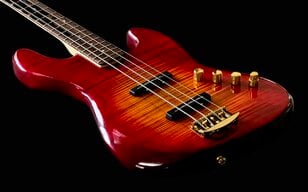
The 'issue' is a combination (IMO and IME) of the OEM Bartolini's (unusual active models) and the voicing tweak of the Bart preamp that result in LOTS of deep bass and lots of upper treble. Combine that with a pickup location that is quite wide (i.e., the neck pickup is relatively close to the neck, and the bridge pickup is really close to the bridge), and you get an inherent tone that emphasized the deep low end and treble versus the upper bass and/or mid mids.
Some wood combinations magnify this inherent voice (for example, a lightweight body and wenge neck).
The good news is, it is relatively easy to match these basses with a mid present rig that is voiced tight and has good upper bass push, like the old Eden XLT cabs or whatever). The bad news is, most front of house systems magnify the inherent voicings of these basses IMO and IME, and you CAN (on some occasions) get into trouble with too much bass coming from the subs, too much sizzly coming from the horns/tweeters, and not enough midrange meat to provide good note definition and 'tone center'.
The MTD does have a three setting midrange control, and that can be useful, but given what sounds like relatively narrow Q to me, cranking up the mids 'artificially' with that on-board can quickly become peaky and 'electronic' sounding.
So, pickup placement and pickup/preamp OEM voicing, combined with non-traditional body and neck woods gives many of the MTD's that uber modern sort of thing that can kind of sit 'over and under a mix'. Again, IMO, IMO, IME, and IMO