

Enjoy the benefits of a premium membership!
Upgrade Account
-
TalkBass has been independent since 1998. Add your voice.
Create a free account to reply to discussions, view embedded media, and browse with fewer display ads.
Join free Log in
Want zero display ads or expanded classifieds tools? Compare plans.
You are using an out of date browser. It may not display this or other websites correctly.
You should upgrade or use an alternative browser.
You should upgrade or use an alternative browser.
Nash basses, are they worth it?
- Thread starter twc1313
- Start date
More options
Who Replied?
I’ve owned 2 PB63’s. Still have one. “Worth” is entirely subjective but personally I like them. As has been said, they feel and sound terrific.
The relic look is the only potential downside, but on the other hand, it helps them retain their value a bit better than a Fender.
The relic look is the only potential downside, but on the other hand, it helps them retain their value a bit better than a Fender.
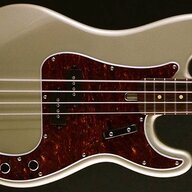
I was in the market possibly for a Nash PB-63. The closest dealer was about an hour away. Although I thought they had some in stock, turns out they didn't. They did have a Nash JB-63 in stock which I tried out for a bit. Frankly, I came away underwhelmed. Obviously, I can't extrapolate to all Nashes from trying one, but the JB-63 I tried was so-so and not as good as my Fender Road Worn Flea Signature Bass (purportedly a copy of his '61 J), and for twice the price of the Fender, I think I'll move on. Also, at least with this dealer, the lead time on specific orders from Nash is quoted to be at least 9-10 months. Finally, the Flea is pretty relic'd (and I'm very ambivalent about the practice--nevertheless, I really love this Fender, so I look past it), and it seems you can't get a Nash that isn't relic'd and you have to pay extra to have it less relic'd than standard. 

The wear is so unrealistic on them, it's way overdone so they are a non-starter for me
That’s my exact thought. I’ve seen a lot of vintage instruments with heavy wear and I’ve put some wear on a couple bases myself. The patterns on the Nash basses look nothing like normal wear. It looks like it was done by an entry level employee running a belt sander for the first time.
Here’s a ‘63 Jazz that belonged to a distant relative of mine (before he sold it to someone in Hong Kong for $10k).
This is actual player wear. I know everyone won’t put the exact same wear pattern on a bass, but this will give you some idea of the difference in real vs. “applied” wear.

Allparts basses to be exact...with a really bad relic job.I really wanted to love Nash bases. I love tasteful relics, Lollar pickups and the old-baseball-glove feel of a well worn instrument.
A few years ago when I was visiting Chicago I went to Chicago Music Exchange and they had (I think) 3 Nash P basses and 3 Nash J basses. I played them all one by one. For me, the feeling was... meh.
They look cool. But they felt like parts basses. Others certainly love them, but I didn't connect with any of them. YMMV.
If I was searching for a Fender-type bass with $2k to spend, I would play a Nash bass first rather than buying one unseen. In fact, I would take my time and play a bunch of basses and be patient. That's a good chunk of cash and for that amount you should get a fantastic bass that feels just right in your hands.

No experience with their basses, but I once had a Tele E57.
Pretty mediocre guitar with an ugly relic job, specially that maple neck tint.
I like good relics as the next guy, but having owned my share of vintage instruments, never had one that ressembles what Nash usually does.
Taste is really subjective, but a lot of dough for a parts instrument, imho.
Pretty mediocre guitar with an ugly relic job, specially that maple neck tint.
I like good relics as the next guy, but having owned my share of vintage instruments, never had one that ressembles what Nash usually does.
Taste is really subjective, but a lot of dough for a parts instrument, imho.

Early on, people were reporting Nash were All Parts bodies and necks. Is that still the case?
Allparts basses to be exact...with a really bad relic job.
I can't speak to the quality of Allparts necks but differences in details compared to Nash are obvious. If Allparts makes necks and bodies for Nash, they're not same as what Allparts sells retail.
The neck and body on Nash basses don't have Allparts stamps. Neck heal shapes are quite different; the fretboards present differently at the scoop on the headstocks. Also, Allparts doesn't offer maple capped necks, they're 1-pc with skunk stripe. Nash's maple fretboard necks are 2-pc with maple cap.
Last edited:

That’s my exact thought. I’ve seen a lot of vintage instruments with heavy wear and I’ve put some wear on a couple bases myself. The patterns on the Nash basses look nothing like normal wear. It looks like it was done by an entry level employee running a belt sander for the first time.
Here’s a ‘63 Jazz that belonged to a distant relative of mine (before he sold it to someone in Hong Kong for $10k).
This is actual player wear. I know everyone won’t put the exact same wear pattern on a bass, but this will give you some idea of the difference in real vs. “applied” wear.
View attachment 4826606
View attachment 4826607
I've seen and handled a number of guitars from the 1950s with honest wear, and it looks nothing like "heavy relic" guitars do.
Nashes usually have essentially no finish on the neck. While that feels good, it's not the best approach for stability over time - you might get lucky and get one that doesn't move much, or you might not. You are rolling the dice a bit, but so long as you know that, roll away.
Only time will tell the whole story but I've found several applications of Howard Feed-N-Wax do good. It provides at least some protection and leaves the back of the neck feeling as smooth as without; no stickiness. It doesn't collect dirt and it's easy to apply more of it periodically if need be.

Lots of good replies here, thanks again. I’m thinking the Nash isn’t the answer to my wants considering the money.
What I Like About Nash:
1. Quality build/pickups/sound
2. Cool case
3. Good looks (but don’t like relic)
4. Nitro
What I Don’t Like:
1. Relic (the one I’m looking at is light Relic, but I had two Fender CS Relics and it just doesn’t do it for me)
2. Reverse tuners
3. No truss access (huge deal breaker)
I guess what I’m looking for is good quality for price in a solid passive Jazz bass. The Am Pro2’s have the features and looks I like, but the pickups are meh to me and the build quality is hit or miss.
What other options are there in the 1900-2500 range for a good quality passive jazz?
There are a lot of choices (especially used) around that price point that might get you what you want. The main selling point on nash is the relicing/broken in feel. If you just want a nice P/J, Fender/Lakland/G&L etc are all decent options. Bluesman is really nice, although new is more like 3k, but I feel like they are a more tastefully reliced vintage style.
An alternative- you could do a warmoth build and spec it however you wanted. Their finishes are well done if you don't mind poly. Or you can get someone else to do paint to get nitro(my P is a warmoth body and neck that MJT finished. They mostly relic, but they will do closet clean). Warmoth bodies have the truss rod notch, and you could either get a guard with the notch or rout it yourself.
No experience with their basses, but I once had a Tele E57.
Pretty mediocre guitar with an ugly relic job, specially that maple neck tint.
I like good relics as the next guy, but having owned my share of vintage instruments, never had one that ressembles what Nash usually does.
Taste is really subjective, but a lot of dough for a parts instrument, imho.
I don't like their medium to heavy relic work, they're light light relic option is okay. I generally like don't anyone's medium to heavy relic works.
There's no such thing as any bass or guitar that isn't made of parts, no matter what the price.

@twc1313
I just bought a shell pink Nash PB63 last week. It arrived on Monday. I’ve been playing it since then, and here are my thoughts…..hopefully they will be helpful!
I am mainly a 6 string guitar/banjo/pedal steel player. I’ve been making music for 30 years performing solo, playing in bands, doing for hire gigs, session work (my main gig these days), and music for film and television (working on making this my main gig!). My studio has never had a bass until this week, when I bought the Nash.
The looks were unimportant to me. I bought a shell pink pb63, and happen to love the color. The relic job is light and no more offensive than any other relic job. But the real reason I bought a Nash is for the playability, build quality, and tone. It comes standard with Lollars, Gotoh hardware, and CTS pots….all upgrades I would have made to any non custom shop fender bass. It has a real nitrocellulose lacquer, which is something non custom shop fenders don’t have, except the vintera series. Because of this, I feel like the Nash is most comparable to a custom shop fender in terms of quality. But the fender custom shop p bass I was looking at was twice the price, but still within my budget. So it made sense to give the Nash a spin first.
The factory setup on the Nash was not good, but I’ve never had an instrument come out of the box with a great setup. The neck was bowed and needed adjusting, the intonation was not perfect, and the saddles needed some adjusting. But, I consider all of this par for the course with a new instrument. Even a $4000 Fender Custom Shop bass will need a good setup when you fist get it. After adjusting the neck, saddles, and intonation, the Nash plays like n absolute dream. I put a set of LaBella flats on, and it sounds spectacular. Huge low end, growling midrange, and a gentle treble with some soft clipping when you dig in. I like it, and it’s a keeper. I can’t imagine a Custom Shop Bass being twice as good for twice the price, so even though I have the budget for one, I’m sticking with the Nash.
Just remember, with any instrument, expect to need a setup, and expect things to continue to need adjusting for the first few weeks while the wood is adjusting to your local climate. Even if a music store sets the bass up before shipping it to you, expect to need to do more adjusting as the instrument acclimates to your climate. This is totally normal.
the one thing I don’t love about the Nash is that it is very very lightweight. Almost too lightweight. I think it will end up being great for long gigs, but my preference is for a bit more heft. That being said, I much prefer the light weight to some of the boat anchors I’ve played in the past.
I just bought a shell pink Nash PB63 last week. It arrived on Monday. I’ve been playing it since then, and here are my thoughts…..hopefully they will be helpful!
I am mainly a 6 string guitar/banjo/pedal steel player. I’ve been making music for 30 years performing solo, playing in bands, doing for hire gigs, session work (my main gig these days), and music for film and television (working on making this my main gig!). My studio has never had a bass until this week, when I bought the Nash.
The looks were unimportant to me. I bought a shell pink pb63, and happen to love the color. The relic job is light and no more offensive than any other relic job. But the real reason I bought a Nash is for the playability, build quality, and tone. It comes standard with Lollars, Gotoh hardware, and CTS pots….all upgrades I would have made to any non custom shop fender bass. It has a real nitrocellulose lacquer, which is something non custom shop fenders don’t have, except the vintera series. Because of this, I feel like the Nash is most comparable to a custom shop fender in terms of quality. But the fender custom shop p bass I was looking at was twice the price, but still within my budget. So it made sense to give the Nash a spin first.
The factory setup on the Nash was not good, but I’ve never had an instrument come out of the box with a great setup. The neck was bowed and needed adjusting, the intonation was not perfect, and the saddles needed some adjusting. But, I consider all of this par for the course with a new instrument. Even a $4000 Fender Custom Shop bass will need a good setup when you fist get it. After adjusting the neck, saddles, and intonation, the Nash plays like n absolute dream. I put a set of LaBella flats on, and it sounds spectacular. Huge low end, growling midrange, and a gentle treble with some soft clipping when you dig in. I like it, and it’s a keeper. I can’t imagine a Custom Shop Bass being twice as good for twice the price, so even though I have the budget for one, I’m sticking with the Nash.
Just remember, with any instrument, expect to need a setup, and expect things to continue to need adjusting for the first few weeks while the wood is adjusting to your local climate. Even if a music store sets the bass up before shipping it to you, expect to need to do more adjusting as the instrument acclimates to your climate. This is totally normal.
the one thing I don’t love about the Nash is that it is very very lightweight. Almost too lightweight. I think it will end up being great for long gigs, but my preference is for a bit more heft. That being said, I much prefer the light weight to some of the boat anchors I’ve played in the past.
Last edited:

Subjective in what one would say is actually better. They are nice basses and well made, however for the prices (even used) I would find myself better spending that kind of money of other things. Not to mention depending, you could get two possibly three other basses that could be good as well. I guess the boutique stuff never appealed to me.
I have an AmPro II that I'm absolutely loving. I was not so excited about the AmPro I pickups, but I'm happy with the V-Mod IIs. You could always swap out the pickups if you wish and still stay within your budget.Lots of good replies here, thanks again. I’m thinking the Nash isn’t the answer to my wants considering the money.
What I Like About Nash:
1. Quality build/pickups/sound
2. Cool case
3. Good looks (but don’t like relic)
4. Nitro
What I Don’t Like:
1. Relic (the one I’m looking at is light Relic, but I had two Fender CS Relics and it just doesn’t do it for me)
2. Reverse tuners
3. No truss access (huge deal breaker)
I guess what I’m looking for is good quality for price in a solid passive Jazz bass. The Am Pro2’s have the features and looks I like, but the pickups are meh to me and the build quality is hit or miss.
What other options are there in the 1900-2500 range for a good quality passive jazz?
The American Ultras also are great Js, and of course can be operated in passive mode. The necks are very nice on the Ultras, and the build quality is excellent.
The Adam Clayton Jazz is wonderful, as previously mentioned.

Allparts basses to be exact...with a really bad relic job.
Wrong.
Subjective in what one would say is actually better. They are nice basses and well made, however for the prices (even used) I would find myself better spending that kind of money of other things. Not to mention depending, you could get two possibly three other basses that could be good as well. I guess the boutique stuff never appealed to me.
Absolutely true. Quality instruments can be had for less. At one point, I considered a Vintera series bass, but by the time I factored in upgrades in hardware and electronics, the price difference shrank considerably. The Nash gives me all the upgrades I would want in an off the shelf bass. No additional work required ordering parts, installing them, etc. In my opinion, at roughly $2k new, it’s a decent value. I don’t think you really get any upgrade in quality until you start getting into the high $3k’s…


