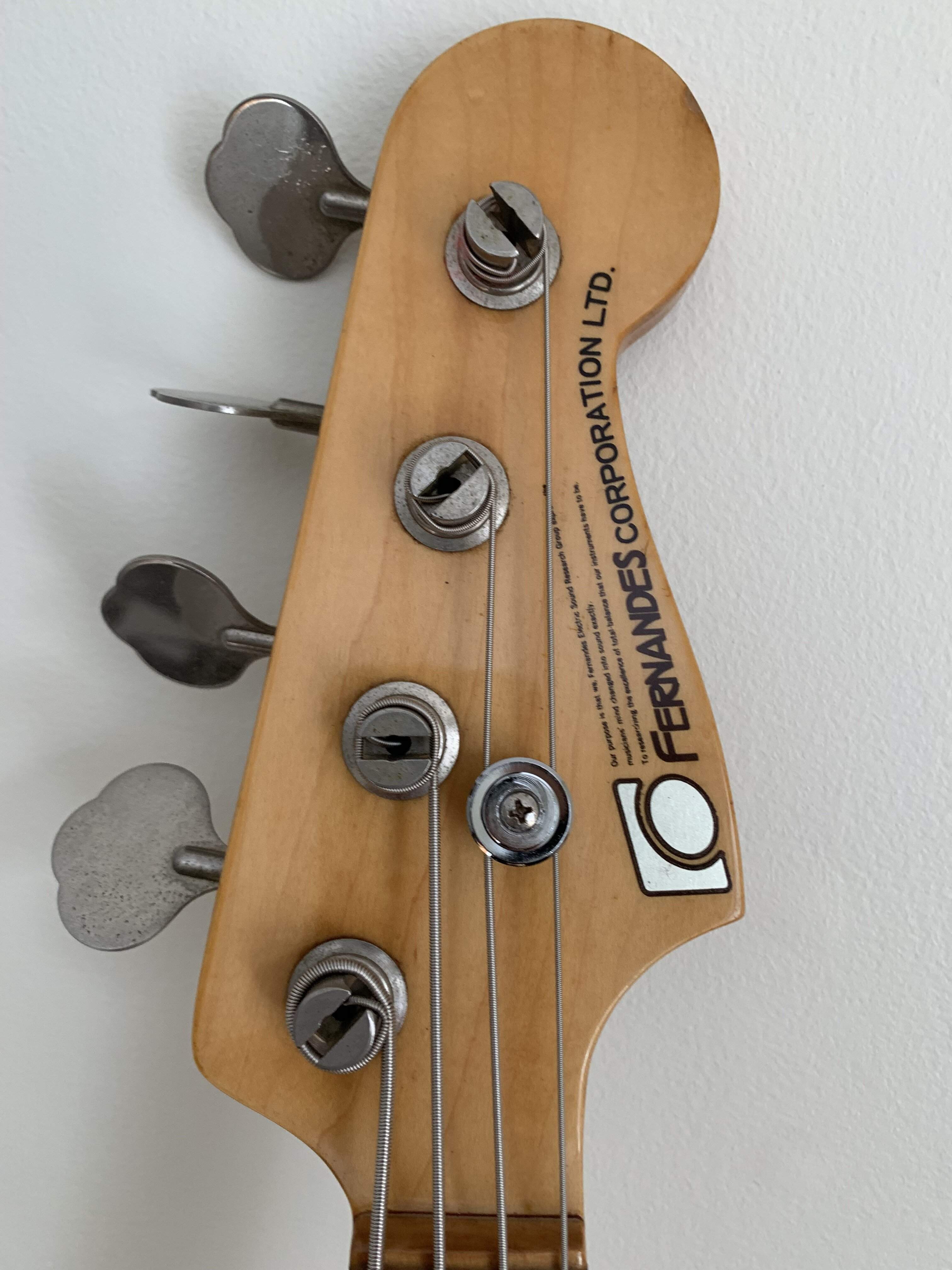
Fender shaped headstock? Check.
Precision bass neck? Check.
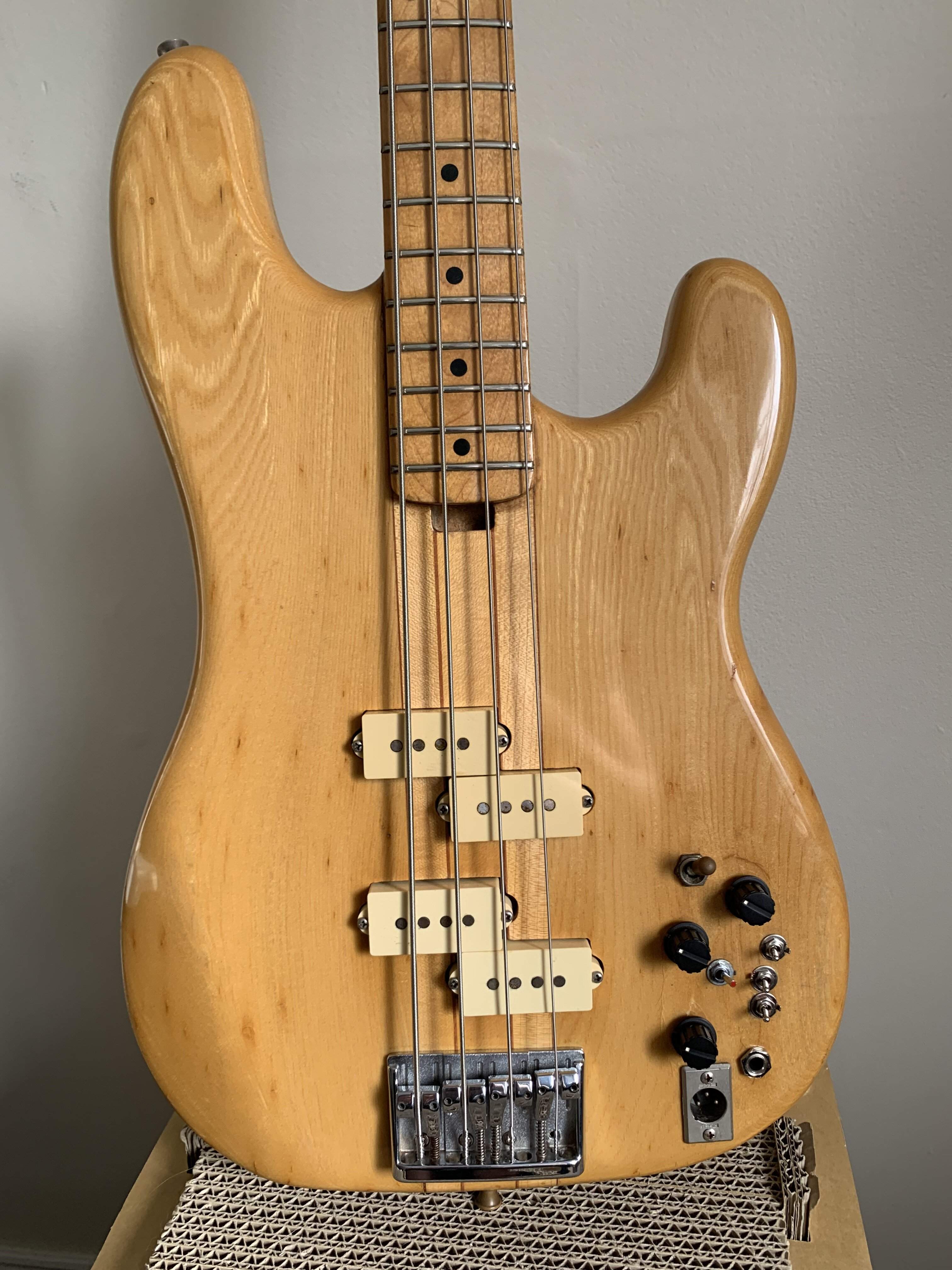
Split coil pickup? Check.
Second split coil pickup? What?
Neck-through body? Excuse me?
Mockingbird electronics? Beg pardon?
XLR output? Leave.
This bass had popped up on Reverb before and I spent weeks biting my tongue. Finally someone ended my suffering and bought the damn thing. Or so I thought…
This week it popped up again from the same dealer. I don’t need another bass. I exclusively play P basses. I don’t need another. But then again, I don’t have a passive, fretted P with rounds…
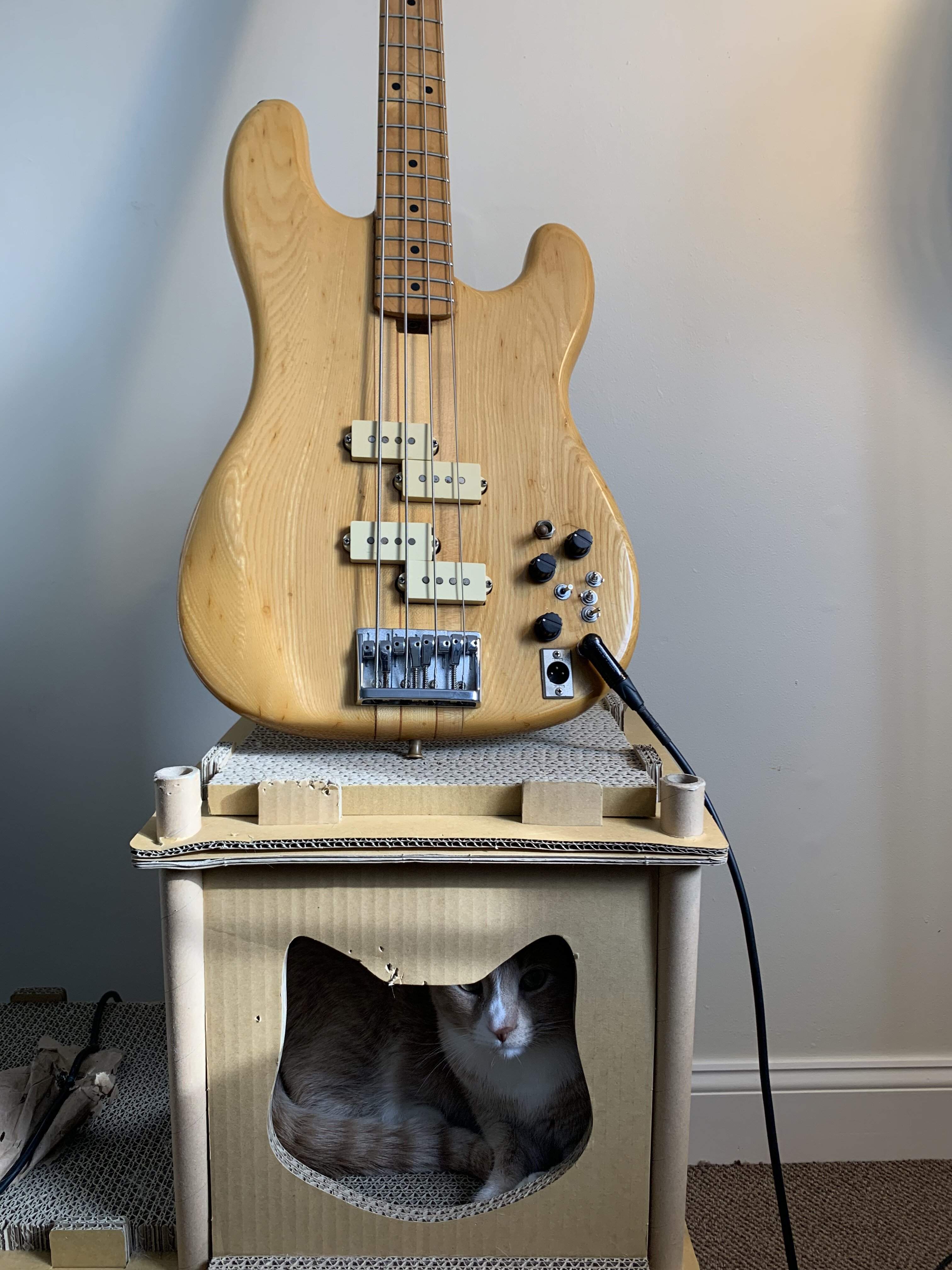
I couldn’t get it out of my head. I’m a sucker for natural finishes with maple necks. My #1 bass has this scheme. My #1 guitar has this scheme. Heck, even my cat sorta matches.
I asked the dealer a couple questions and sent an aggressive offer. Got some answers, but no response on the offer itself. Lo and behold, the dealer applied a shop-wide sale that pretty much matched my offer. I could no longer resist…
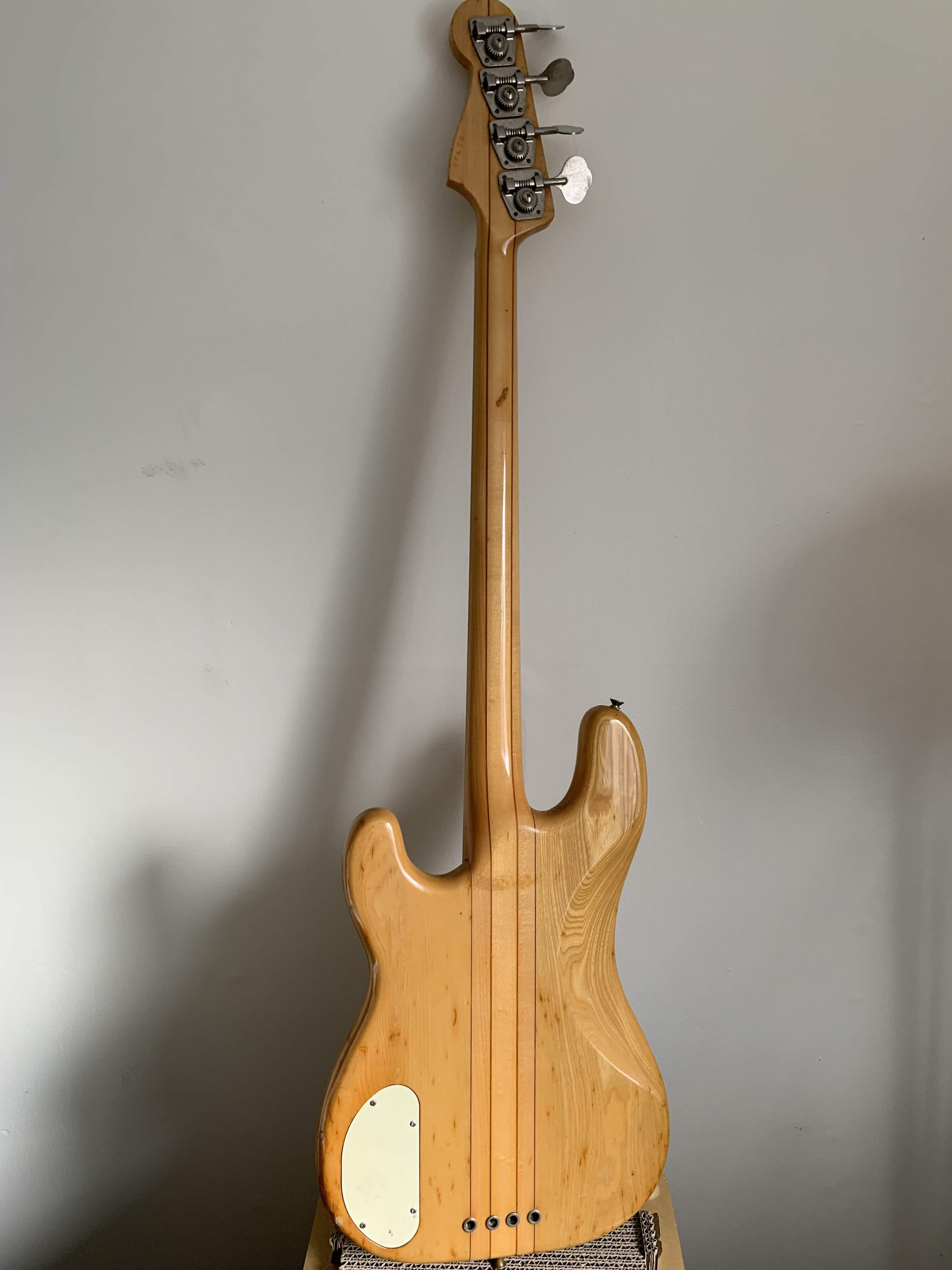
Fresh out of the box, I am now the proud owner of a 1979 Fernandes something-or-other:
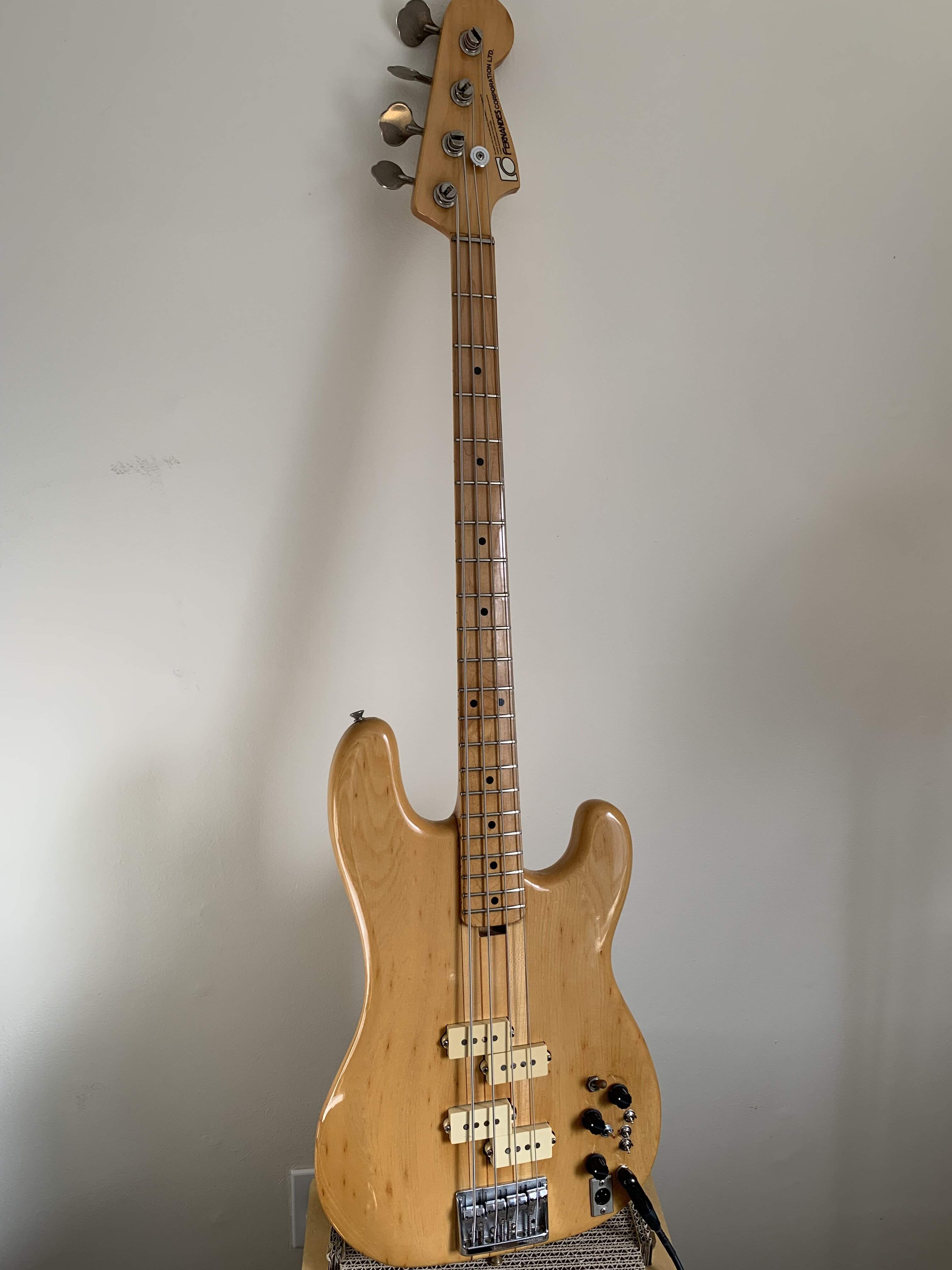
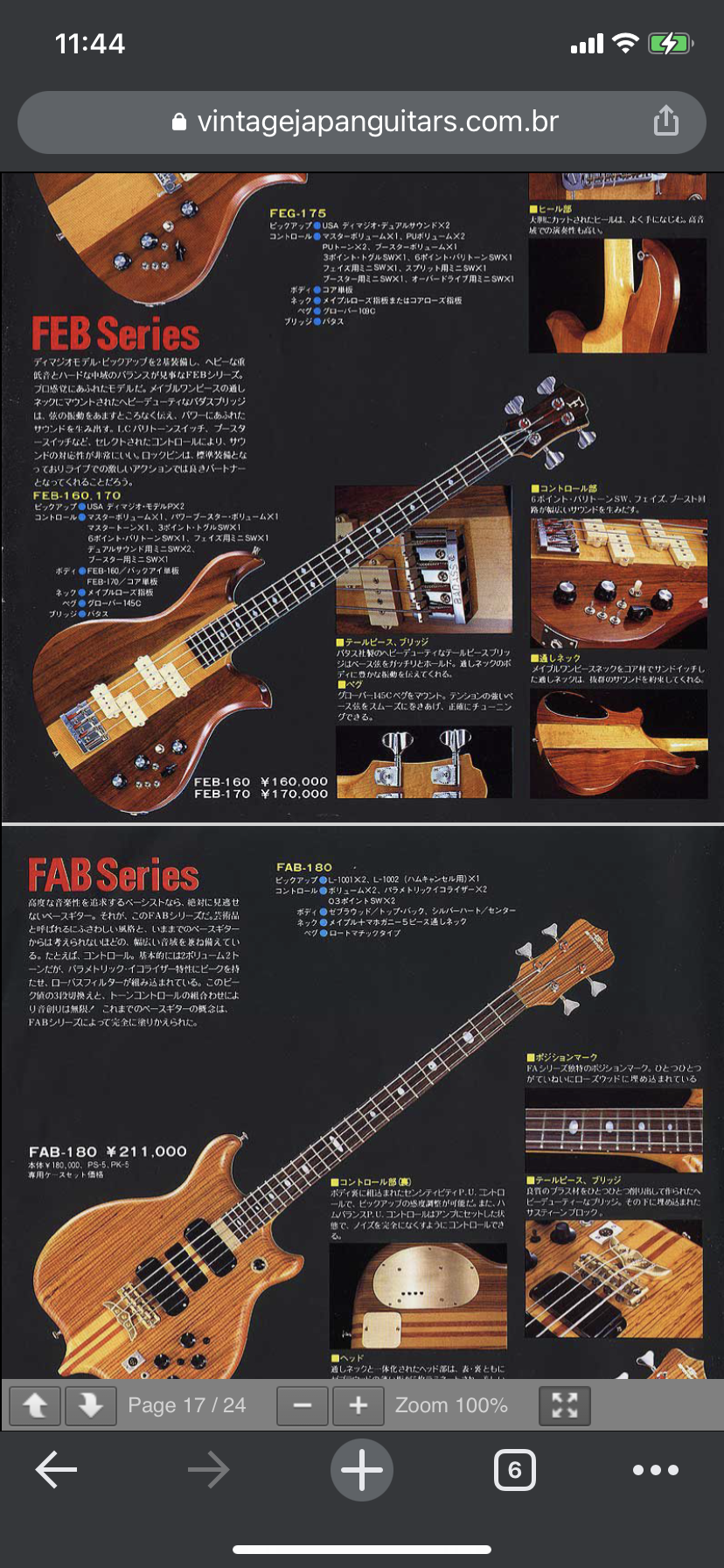
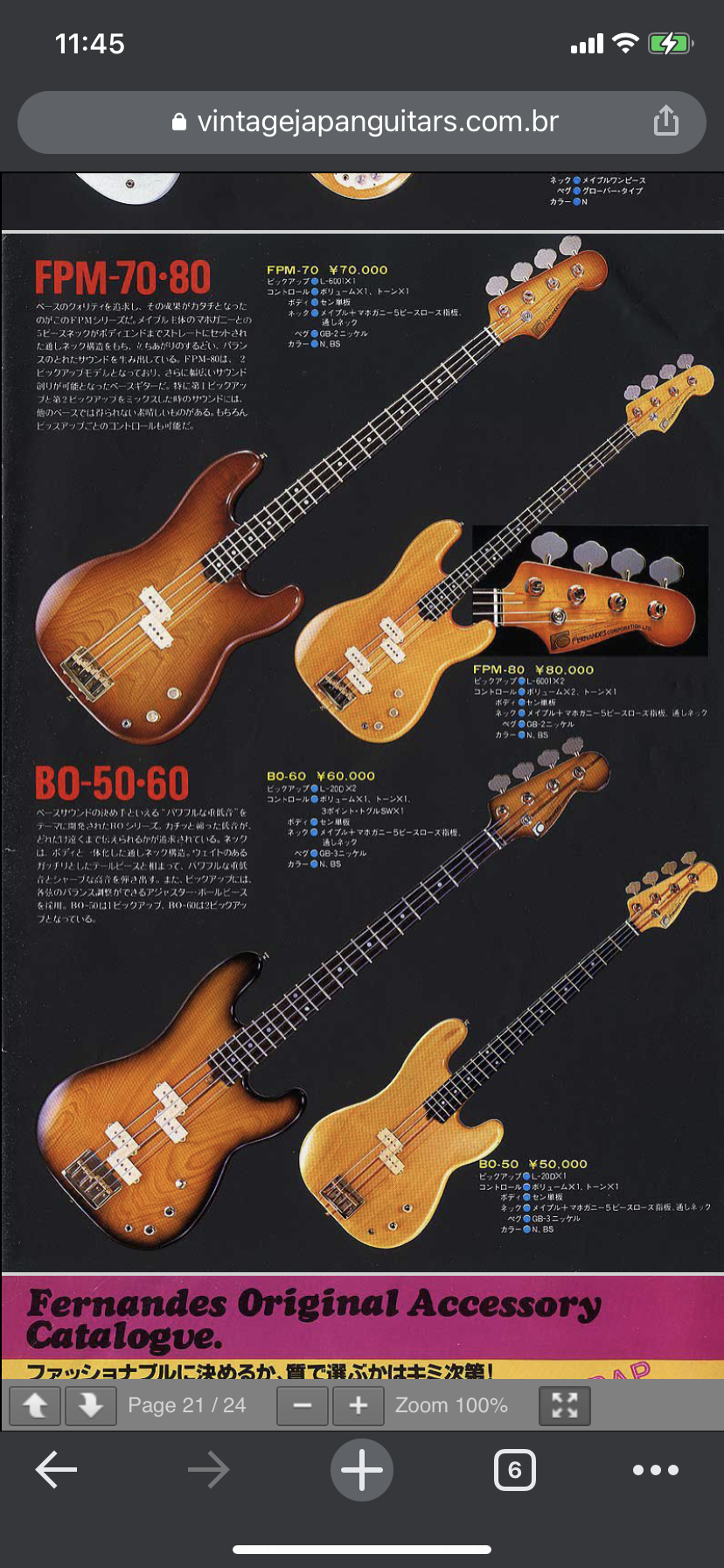
While waiting, I did a lot of snooping. This appears to be a one-off. This was during the ‘stone logo’ era (~1977-81) where Fernandes contracted manufacturing out to Tokai Gakki. The body/neck appears to have started life as a FPM-80 (based on the bridge) or a BO-60, first seen in the 1980 Fernandes catalog. But the bridge pickup isn’t in the right position. And those basses had a rosewood neck. Also, the controls and hardware don’t match.
Fernandes would also release a Mockingbird bass in 1980 with similar, but not exact electronics. Those basses appear to have an exact replica of the Moser circuit whereas this bass does not
THIS IS PURE SPECULATION ON MY PART:
My guess is that this was a prototype for the eventual Mockingbird production, using a FPM-80 body. It could’ve also been a custom order, but there is no way of knowing for sure. What I do know for sure is that this is one unique instrument.
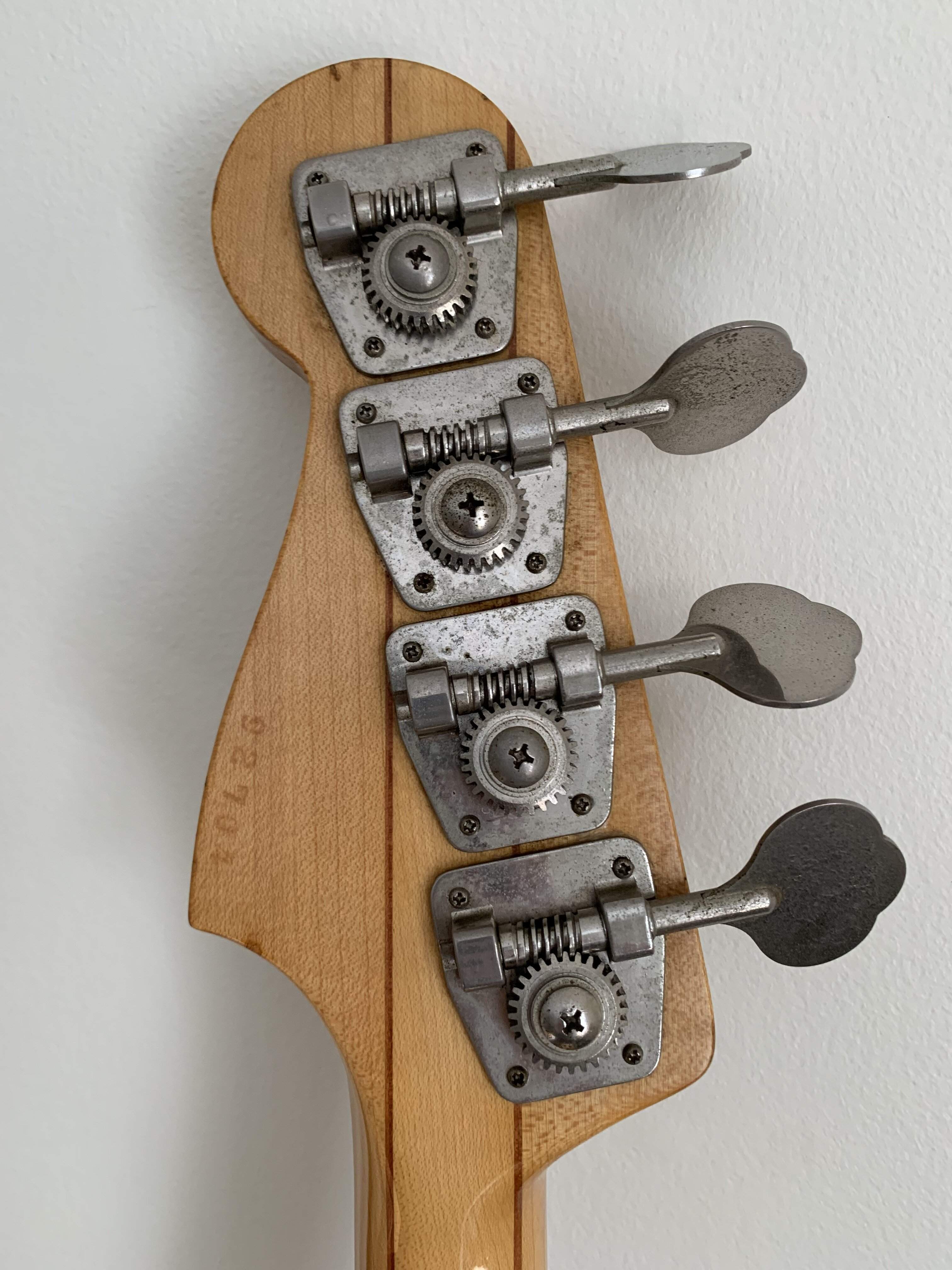
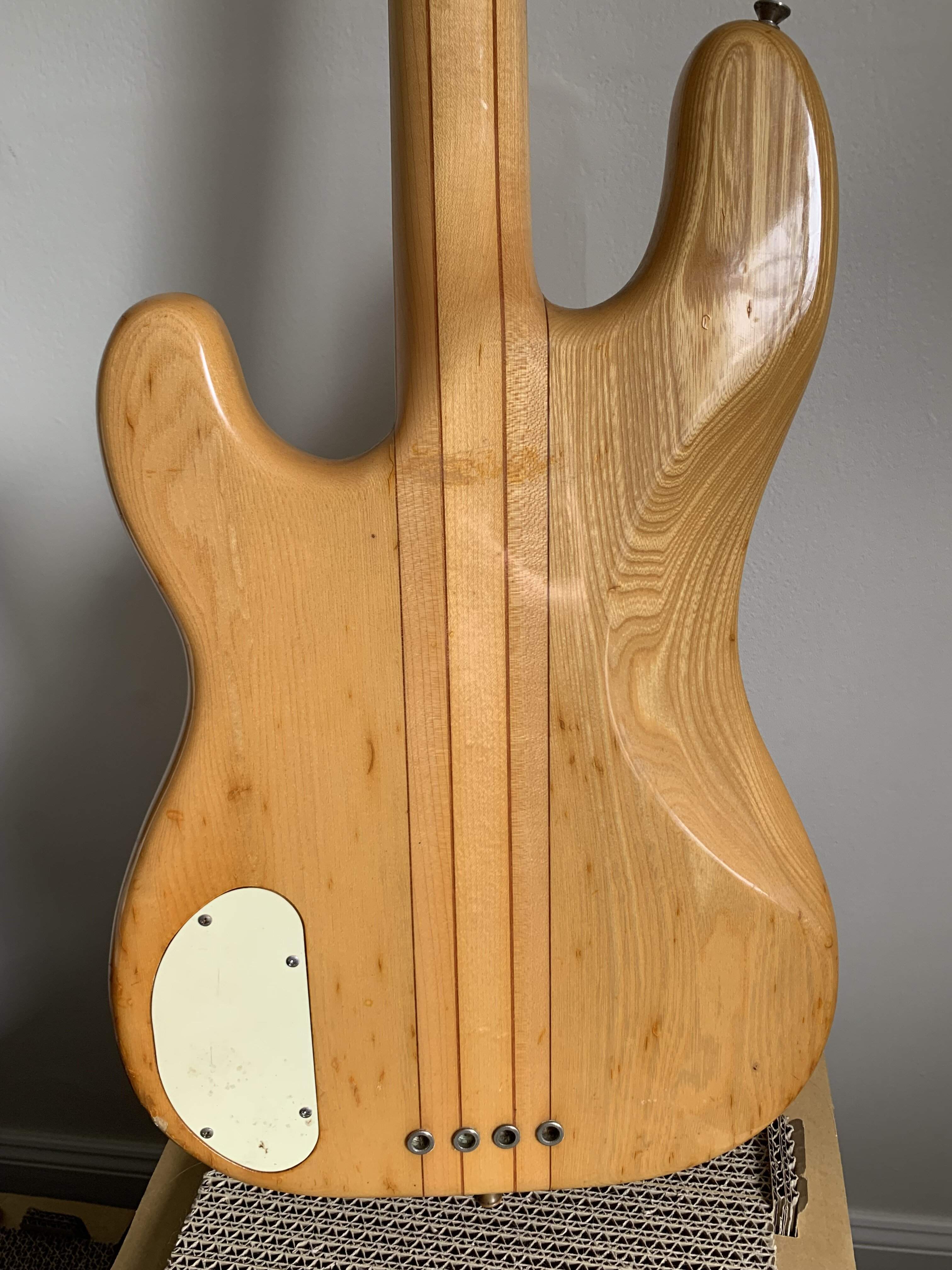
It’s a 2 piece sen ash body with a 5 piece maple/walnut neck that runs the length of the body. It has definitely seen a lot of action. The poly finish is pretty beat up and there is some slight separation between the ash and walnut at the bridge. Not sure how serious it is but definitely something to address.
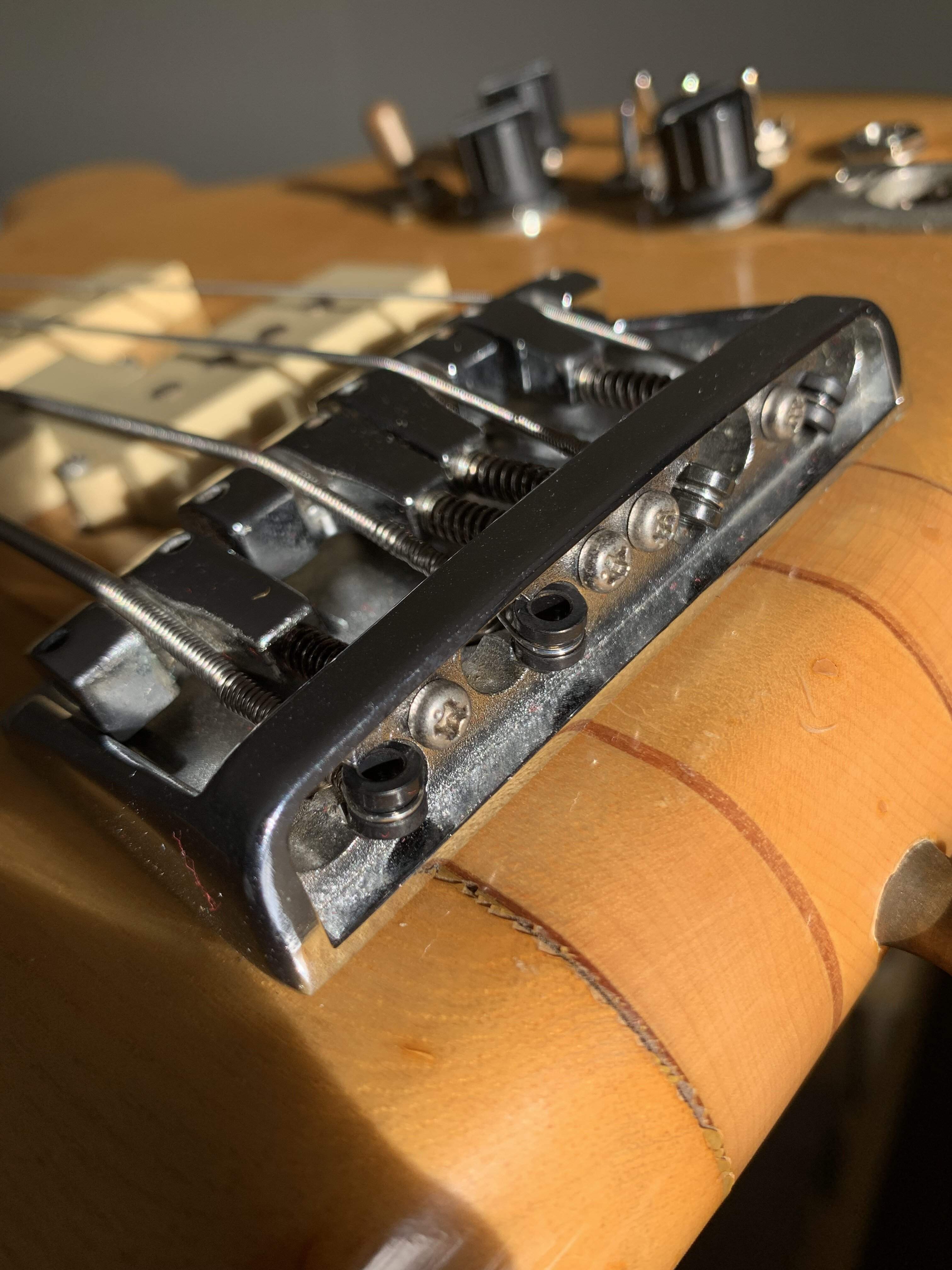
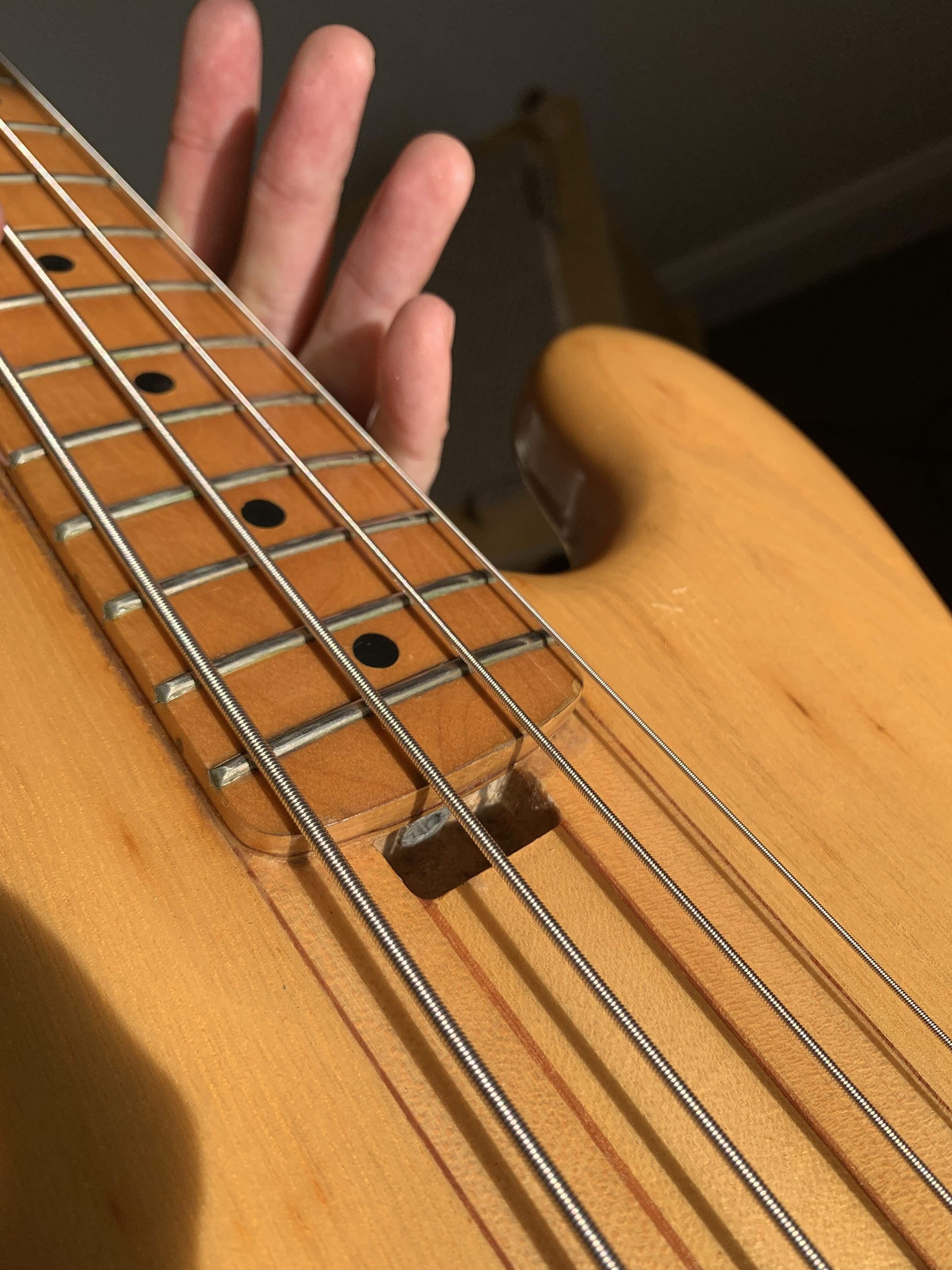
The truss rod is also absurdly difficult to access.
It gets weirder. There are three knobs. Care to guess how it’s wired? You’re wrong.
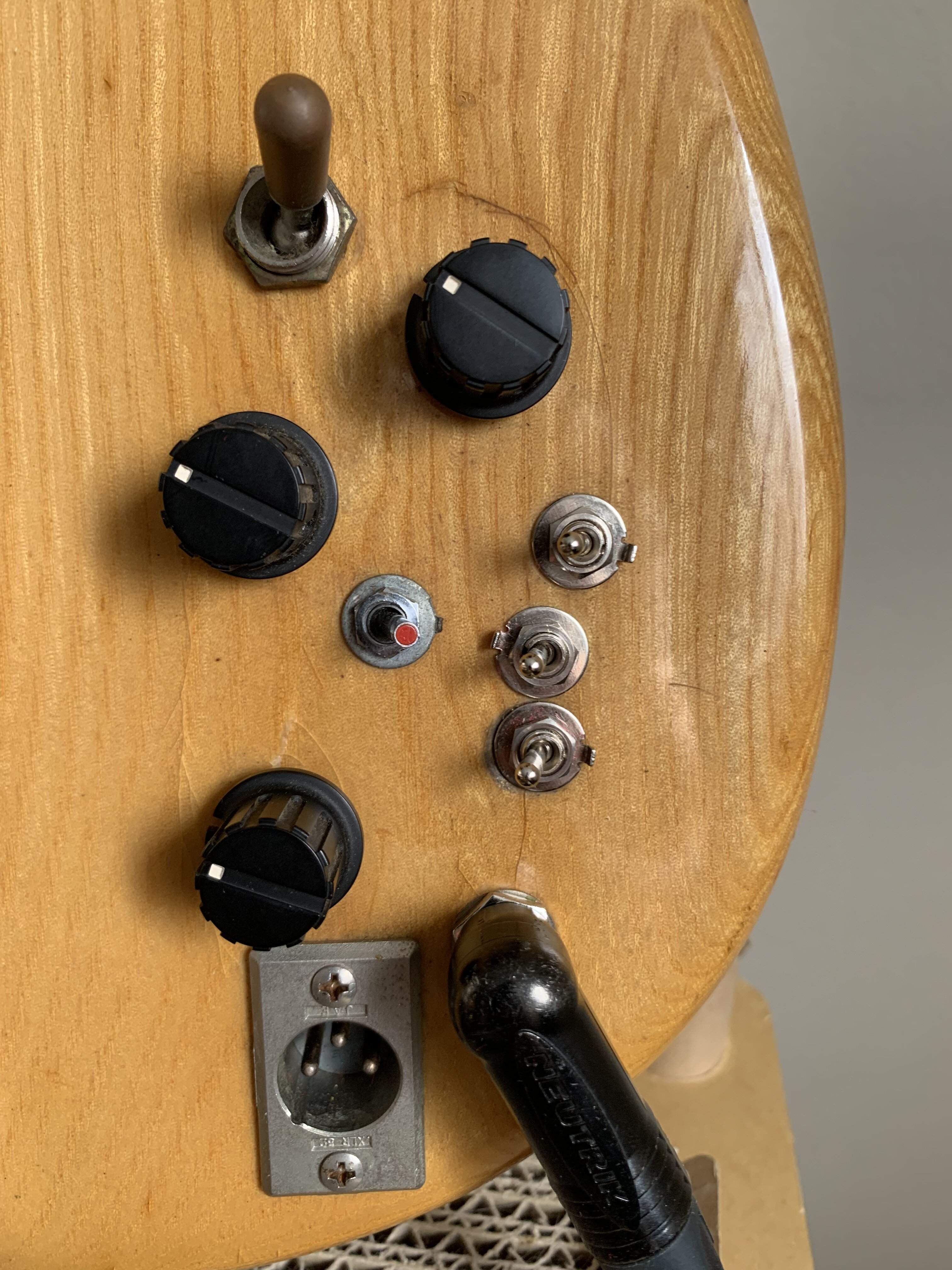
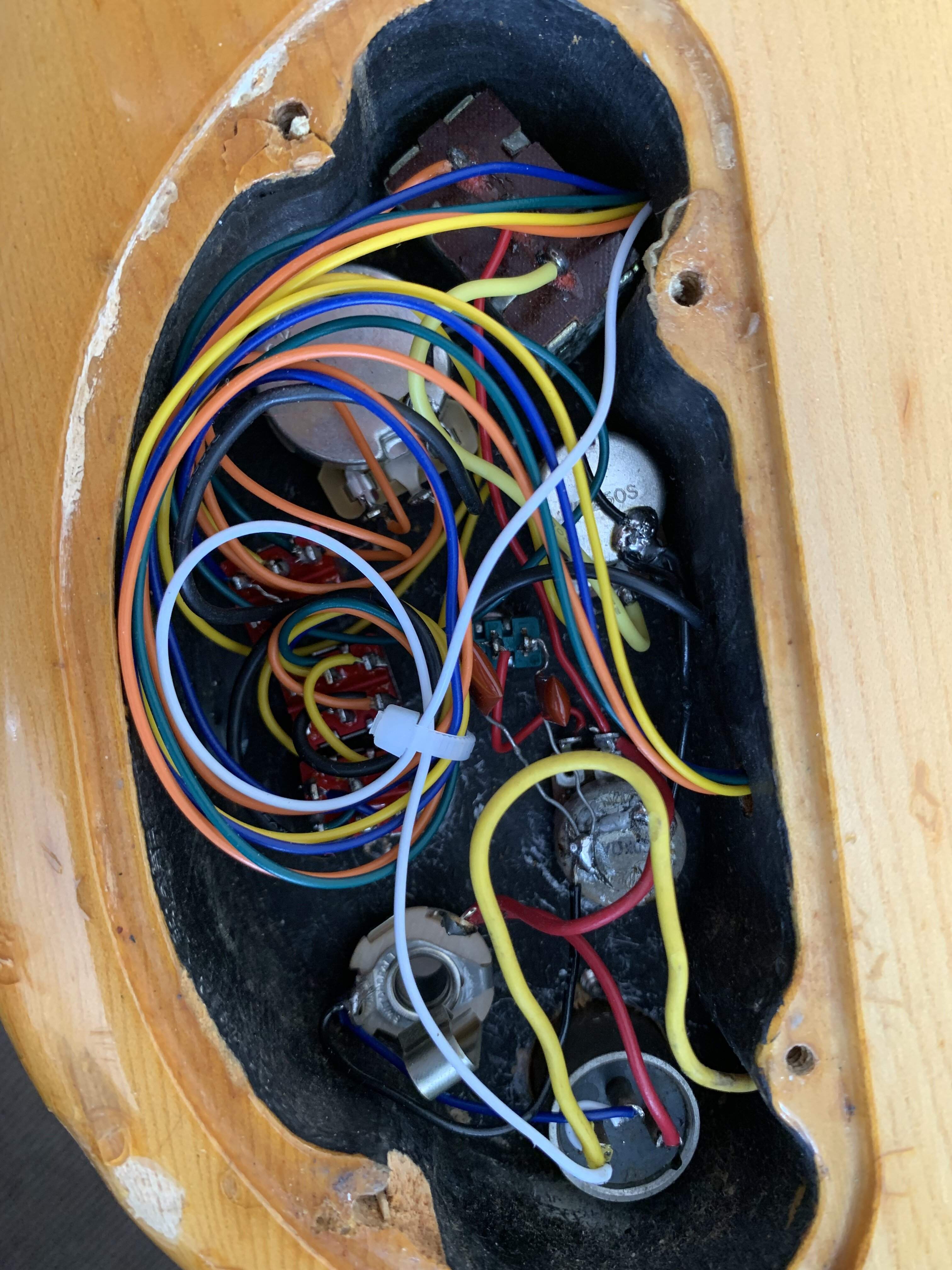
Inexplicably, it is wired V/V/Nothing. Top right (pic orientation) is the neck pickup, then to the left of that is bridge pickup. The other knob at the bottom does nothing. Doesn’t control the XLR volume and no combination of switches seem to help. Maybe broken? There are wires that run to the output jack, but not XLR. There are also wires that run to the switch with the red tip. No idea what this switch does yet but I'm sure they're related.
Either way, not a tone control in sight. Even stranger, when in the middle position, both the bridge and neck volume control acts as a master volume. No ability to blend whatsoever.
This is a bit of a disappointment. A tone control is essential for a P bass and it feels weird not to have one. That said, I’ve seen some other Japanese basses in the same vein with no tone knob. Wonder what the thinking was back then.
We also have a phase switch (only seems to effect middle and bridge position- maybe it’s a series/parallel switch?) and two coil taps. Adds some versatility but generally thins out the sound. Being a new purchase, I haven’t had a lot of time to see how I can fit those tones in yet.
I was also hoping that this would have the Moser Varitone switch found on Mockingbirds. 6 tone options in a passive bass? Yes, please.
Moser sells pre-wired Mockingbird circuits. At this point the game plan will be to drop that in this bass. Minimal modification should be required and it would turn this into a passive Swiss Army knife of a Precision, which was the original hope all along when I saw the control layout.
How does it sound? Well - like a P bass. I’m not sure what you (or I) was expecting but this is a welcome result. I wanted to get a passive, fretted P with rounds + some extra options and that’s exactly what I got. The bridge position pickup definitely has its own unique flavor vs that of a J. A bit fatter low but still has some burp on the D & G strings. I like it.
How does it play? Stupidly easy. Action is nice and low, neck is fast and there’s good access up to the 21st fret. The neck fills my hand perfectly. Nut width is somewhere between a P and a J, leaning towards the fatter side.
What does it weigh?? This was a big concern. Japanese basses during this era have a reputation of being heavy. I learned this is (partially) due to the fact that the Japanese bowling obsession of the 1960s and early 70s (who knew?) had waned and bowling alleys were being torn down. Many guitar manufacturers purchased the high quality wood used on the lanes themselves.
When I saw the shipping weight of 18lbs my heart sank a bit. I’m young(er) and strong but the thought of a 13+ pound bass hanging off my shoulder for a long gig is too much. I am thankful to report that it is a svelte 8.6lbs.
Anyways, I’d love to know if anyone has any information on this instrument. I plan to head over to the Fernandes club and poke around as well. Maybe @johnk_10 knows something due to his relationship with the original Mockingbird?
Thanks for checking it out!
More pictures:
Precision bass neck? Check.
Split coil pickup? Check.
Second split coil pickup? What?
Neck-through body? Excuse me?
Mockingbird electronics? Beg pardon?
XLR output? Leave.
This bass had popped up on Reverb before and I spent weeks biting my tongue. Finally someone ended my suffering and bought the damn thing. Or so I thought…
This week it popped up again from the same dealer. I don’t need another bass. I exclusively play P basses. I don’t need another. But then again, I don’t have a passive, fretted P with rounds…
I couldn’t get it out of my head. I’m a sucker for natural finishes with maple necks. My #1 bass has this scheme. My #1 guitar has this scheme. Heck, even my cat sorta matches.
I asked the dealer a couple questions and sent an aggressive offer. Got some answers, but no response on the offer itself. Lo and behold, the dealer applied a shop-wide sale that pretty much matched my offer. I could no longer resist…
Fresh out of the box, I am now the proud owner of a 1979 Fernandes something-or-other:
While waiting, I did a lot of snooping. This appears to be a one-off. This was during the ‘stone logo’ era (~1977-81) where Fernandes contracted manufacturing out to Tokai Gakki. The body/neck appears to have started life as a FPM-80 (based on the bridge) or a BO-60, first seen in the 1980 Fernandes catalog. But the bridge pickup isn’t in the right position. And those basses had a rosewood neck. Also, the controls and hardware don’t match.
Fernandes would also release a Mockingbird bass in 1980 with similar, but not exact electronics. Those basses appear to have an exact replica of the Moser circuit whereas this bass does not
THIS IS PURE SPECULATION ON MY PART:
My guess is that this was a prototype for the eventual Mockingbird production, using a FPM-80 body. It could’ve also been a custom order, but there is no way of knowing for sure. What I do know for sure is that this is one unique instrument.
It’s a 2 piece sen ash body with a 5 piece maple/walnut neck that runs the length of the body. It has definitely seen a lot of action. The poly finish is pretty beat up and there is some slight separation between the ash and walnut at the bridge. Not sure how serious it is but definitely something to address.
The truss rod is also absurdly difficult to access.
It gets weirder. There are three knobs. Care to guess how it’s wired? You’re wrong.
Inexplicably, it is wired V/V/Nothing. Top right (pic orientation) is the neck pickup, then to the left of that is bridge pickup. The other knob at the bottom does nothing. Doesn’t control the XLR volume and no combination of switches seem to help. Maybe broken? There are wires that run to the output jack, but not XLR. There are also wires that run to the switch with the red tip. No idea what this switch does yet but I'm sure they're related.
Either way, not a tone control in sight. Even stranger, when in the middle position, both the bridge and neck volume control acts as a master volume. No ability to blend whatsoever.
This is a bit of a disappointment. A tone control is essential for a P bass and it feels weird not to have one. That said, I’ve seen some other Japanese basses in the same vein with no tone knob. Wonder what the thinking was back then.
We also have a phase switch (only seems to effect middle and bridge position- maybe it’s a series/parallel switch?) and two coil taps. Adds some versatility but generally thins out the sound. Being a new purchase, I haven’t had a lot of time to see how I can fit those tones in yet.
I was also hoping that this would have the Moser Varitone switch found on Mockingbirds. 6 tone options in a passive bass? Yes, please.
Moser sells pre-wired Mockingbird circuits. At this point the game plan will be to drop that in this bass. Minimal modification should be required and it would turn this into a passive Swiss Army knife of a Precision, which was the original hope all along when I saw the control layout.
How does it sound? Well - like a P bass. I’m not sure what you (or I) was expecting but this is a welcome result. I wanted to get a passive, fretted P with rounds + some extra options and that’s exactly what I got. The bridge position pickup definitely has its own unique flavor vs that of a J. A bit fatter low but still has some burp on the D & G strings. I like it.
How does it play? Stupidly easy. Action is nice and low, neck is fast and there’s good access up to the 21st fret. The neck fills my hand perfectly. Nut width is somewhere between a P and a J, leaning towards the fatter side.
What does it weigh?? This was a big concern. Japanese basses during this era have a reputation of being heavy. I learned this is (partially) due to the fact that the Japanese bowling obsession of the 1960s and early 70s (who knew?) had waned and bowling alleys were being torn down. Many guitar manufacturers purchased the high quality wood used on the lanes themselves.
When I saw the shipping weight of 18lbs my heart sank a bit. I’m young(er) and strong but the thought of a 13+ pound bass hanging off my shoulder for a long gig is too much. I am thankful to report that it is a svelte 8.6lbs.
Anyways, I’d love to know if anyone has any information on this instrument. I plan to head over to the Fernandes club and poke around as well. Maybe @johnk_10 knows something due to his relationship with the original Mockingbird?
Thanks for checking it out!
More pictures: