Curiosity got the better of me, and I recently purchased a Dan Armstrong copy from China. The bass took just over a month to get to me from China. Specifically the bass spent around ten days in Qingdao (apparently this is typical for Customs there to 'find space on the plane') and the bass was delayed leaving the factory. Apparently.
I've commented on a few Chinabacker threads, and I've seen videos on Youtube of both quick wins and horror stories when it comes to importing Chinese instruments. I fancied taking the plunge myself.
These Dan Armstrong copies appeard on Ebay a few months ago. I figured that between Ebay and Paypal I would have a bit more coverage than buying directly from AliExpress. The bass cost £227 with some sort of novelty discount, and the shipping was free. I did have to pay customs charges, which I will cover later.
The bass arrived yesterday. But don't listen to me, listen to them:

Lol
That QR code kept trying to take my phone on a voyage of discovery while I was snapping this photo.
The good:
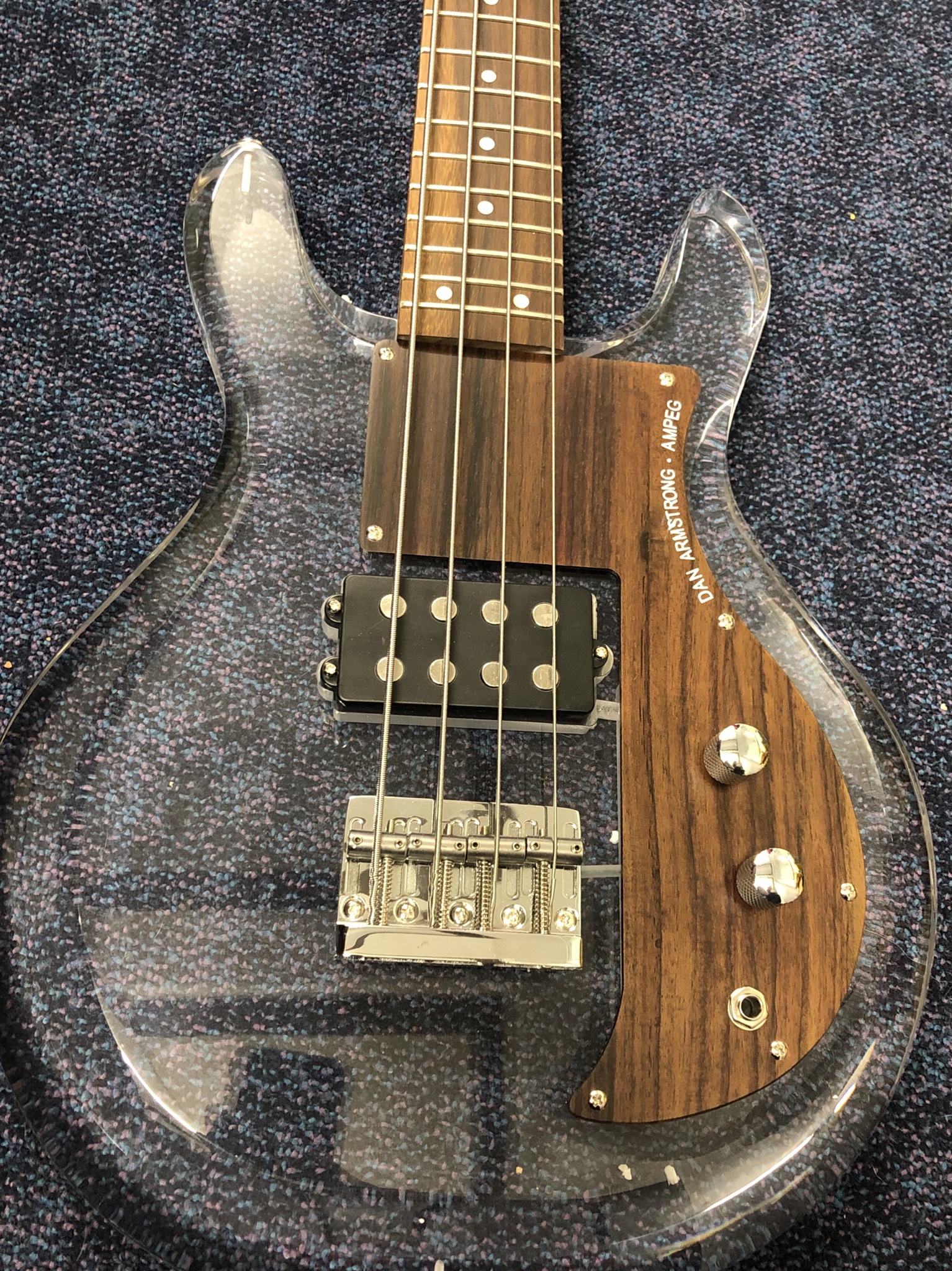
Eh, it looks like a Dan Armstrong bass. In fact, as long as you aren't an Armstrong purist the adjustable pickup and bridge are upgrades over the original design. The bass isn't too heavy, balances nicely on a strap and has a 32'' scale length (not advertised by the seller) over the 30'' of the original.
The bass has a chunky P-bass style neck. It has a truss rod; I've seen photos of Les Pauls with a simple metal bar with a fake adjuster welded on the end. That truss rod works. I was able to dial all the relief out of the neck, which was impressive given my level of expectation.
The bad:
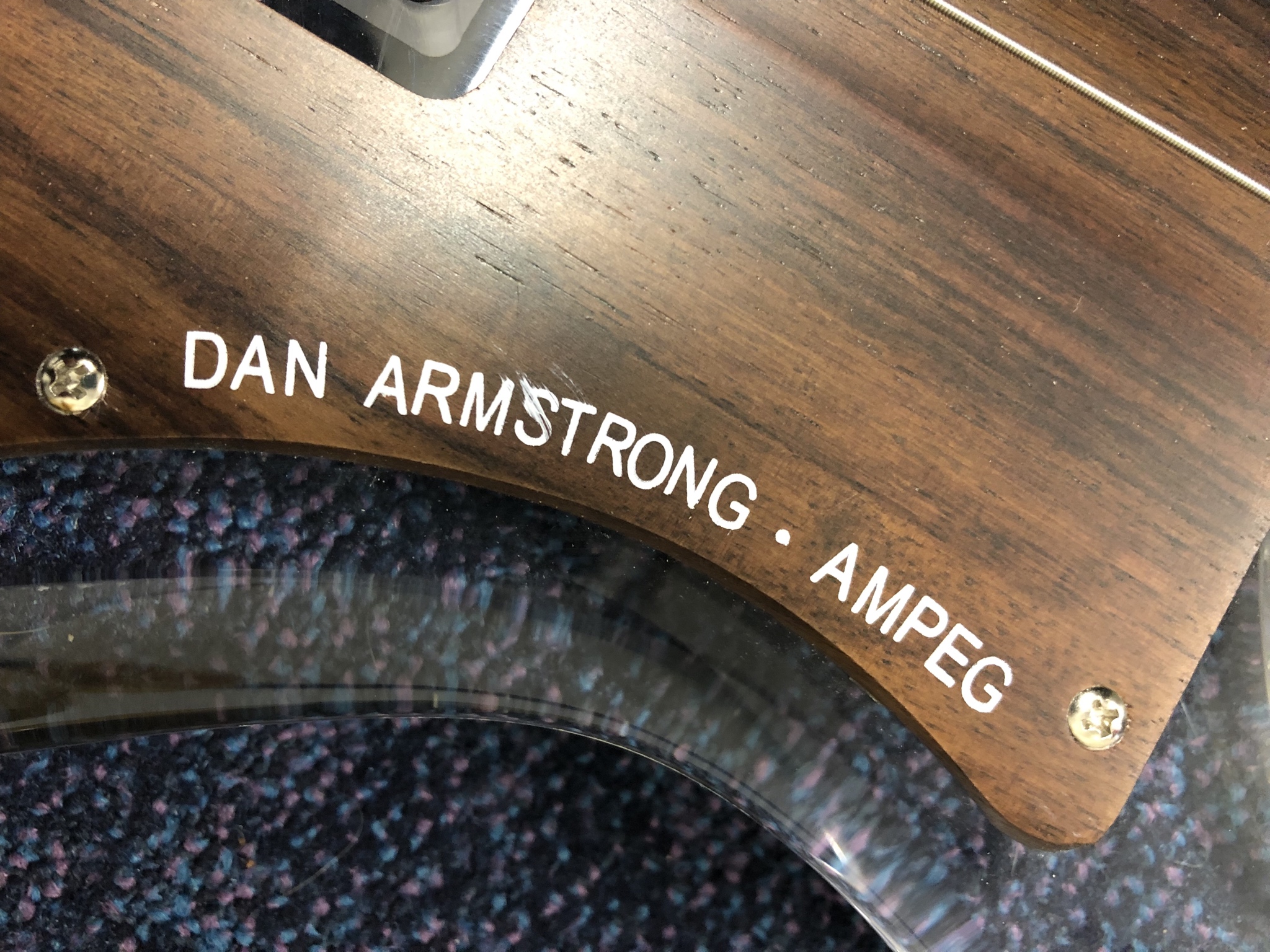
Woops. Somebody smeared that writing in the factory. That pickguard is also heavily treated rosewood rather than the Formica of the originals. Considering CITES, and the ramifications involved there, I feel a little bit dirty importing what is essentially grey market rosewood into the UK.
Plus, it goes without saying that neither Dan Armstrong or Ampeg had anything to do with this creation.
Fear not, the pickguard is already off the bass. I'm going to cut one white and one tort pickguard for the bass, and keep the rosewood pickguard in storage.
The bass arrived in a crumbly styrofoam coffin, bound up in yellow tape. It didn't come with even a soft case, though two Allen keys and a cheap cable were included in the coffin. The smell of chemicals that escaped the coffin when I first opened it was astonishing.
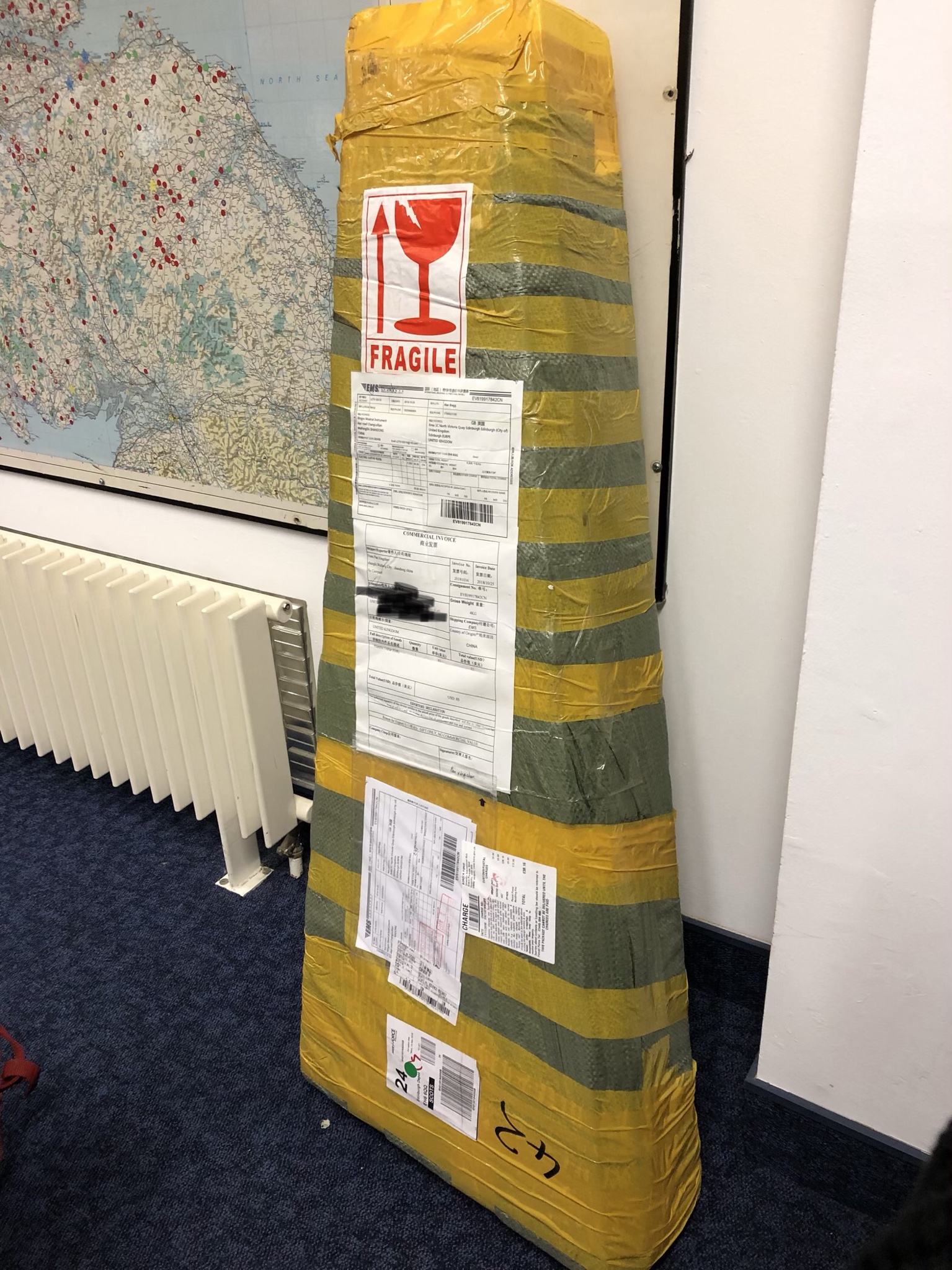
There could be anything in there.
Things get downright crooked when it comes to the import charges. The seller lists these as a 'gift' with a declared value of $85 USD:
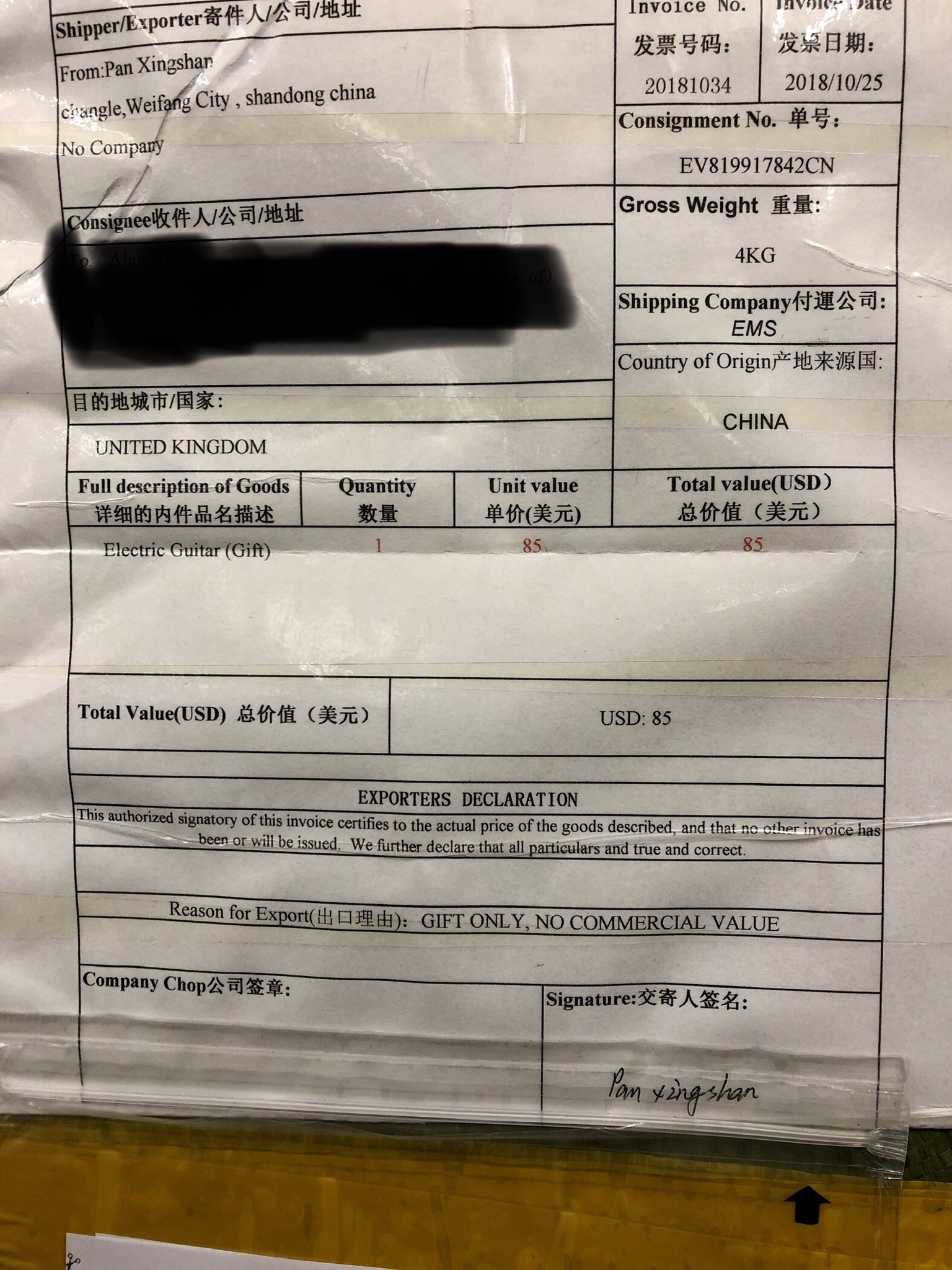
This is something to watch out for. Customs may well do a spot check on these packages and take a dim view on whether this is A) a gift and B) only worth $85 (though in my view this might not be far off the truth). Apparently Chinese sellers may fudge the value to massage domestic taxes back in China, though I'm not sure how much truth there is in this. Either way, I'm complicit in a scam as the seller stated on the Ebay advert that they under-report the value of the instrument:
"The BIN price does not include custom duty. But please do not worry, we can provide an invoice with a very low value, you may need to pay little or no customs duties. About the duty, Please consult your local customs before purchasing our products."
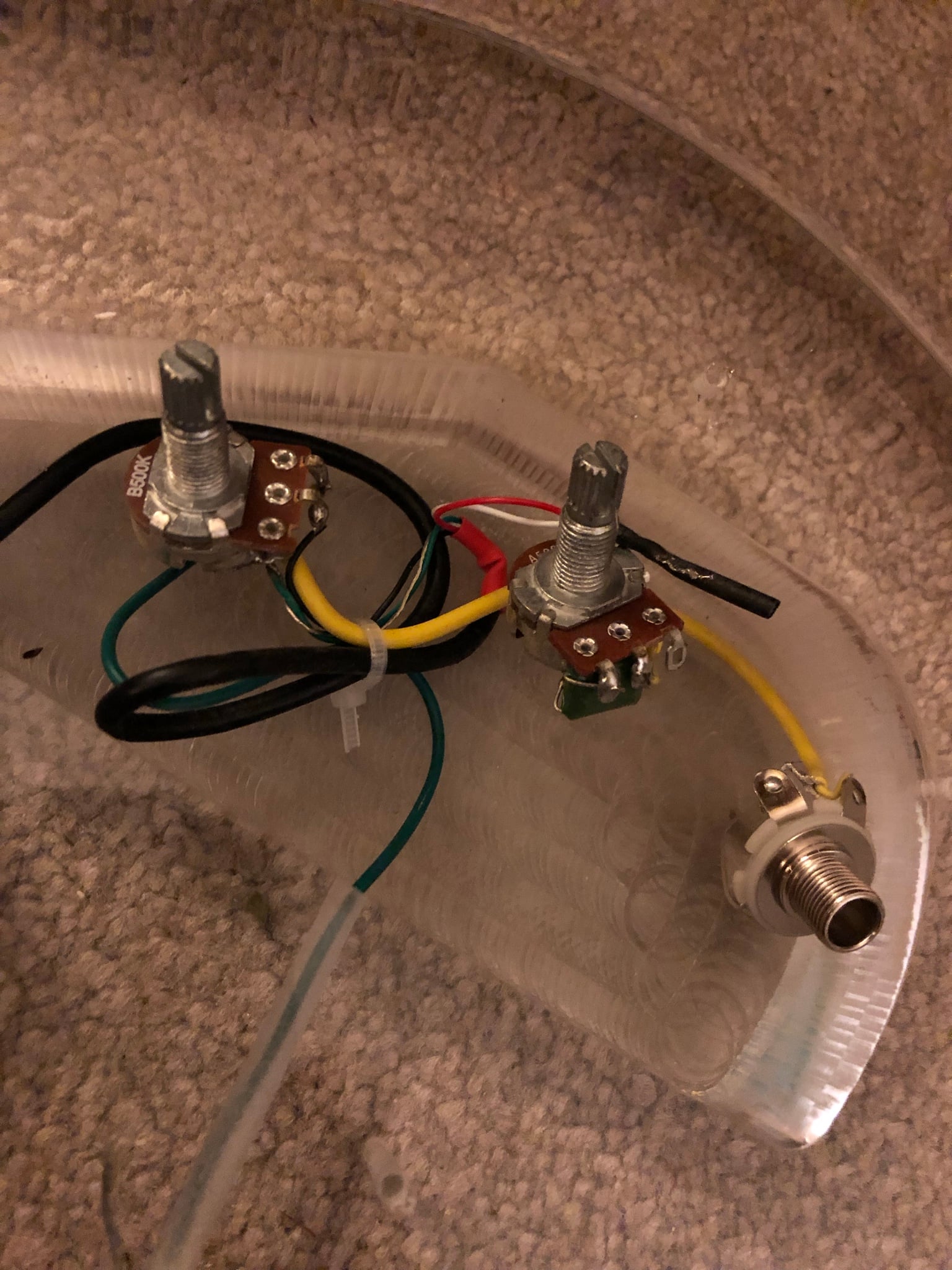
It is also worth noting at this stage that the electronics are no great shakes. Two very small 500 k pots, some very weak solder joints and a cheap ceramic MM-style humbucker. Nothing to write home about.
The Ugly:
The quality of the neck is pretty low. Original Dan Armstrongs had nice quarter-sawn maple necks with some nice figuring appearing from time to time. By contrast my bass has a pale, aneimic maple neck with mineral streaks and a sort of thin, powdery lacquer applied.
The fretwork is fairly horrible. The frets are rough, the ends are fairly sloppily cut and shaped, and some of the fret slots are finished off badly. There are at least two frets with high spots and they have a tarnished, ugly appearance.
The action is also a tad high.
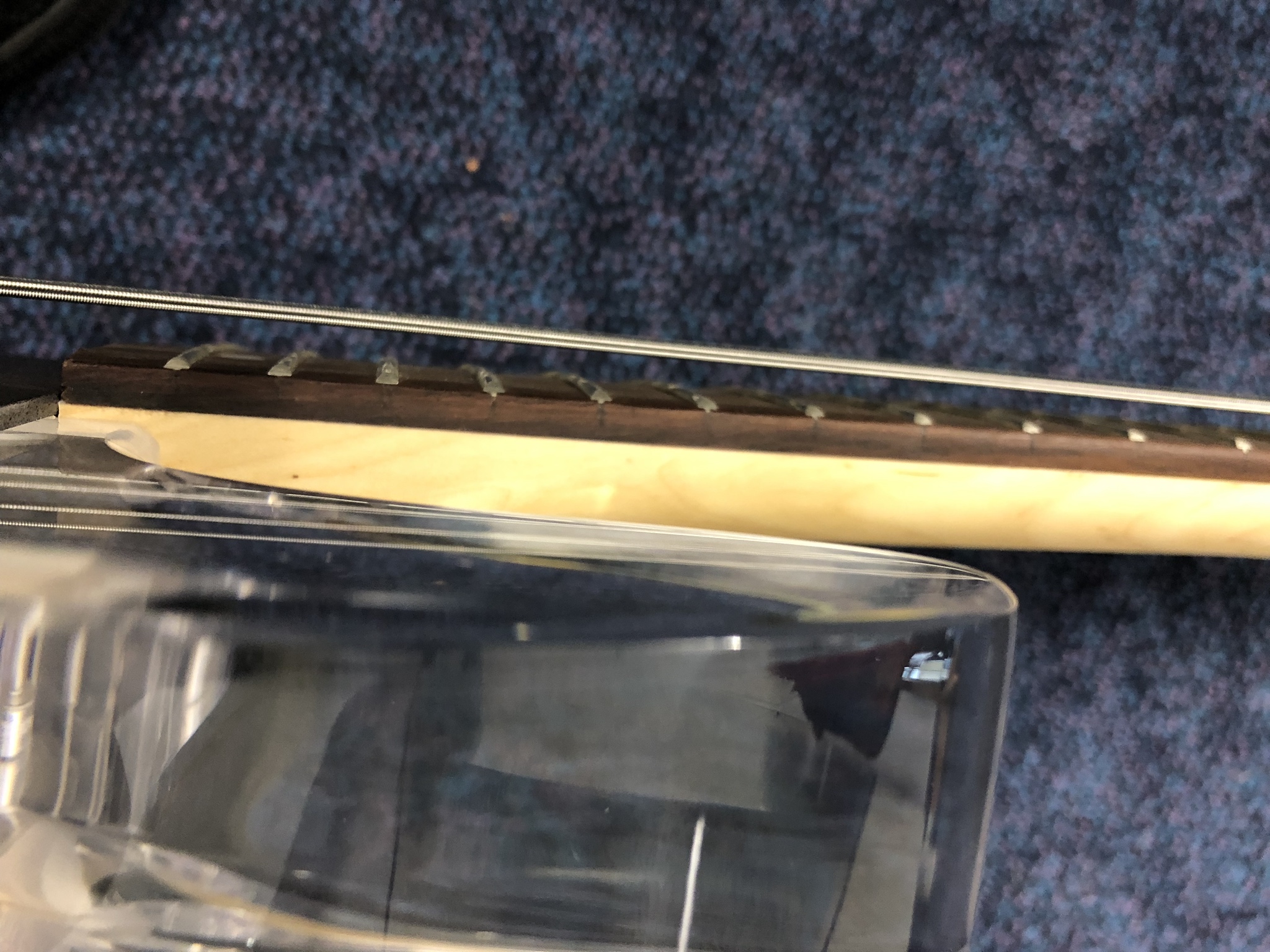
Errr, yeah. The saddles don't go much lower than this. Plus, because the heel of the neck extends under the pickguard you can't shim the neck without shaving wood off the top of the heel. Without doing this you would have the pickguard sitting proud of the body in this location.
This is a design issue you shouldn't see on any bass at any price point, but this drives home my opinion on Chinese bootleg instruments. They look the part (to some degree) because that is what they are built to do. Nobody in the factory cares about low action or even frets. They cut out wood and plastic to the shape you want, and then take your money. These are props, decoys and distractions. These are a demonstrable waste of money. No beginner bassist should go anywhere near a bass with action like this.
Also, come on dude. You had one job.
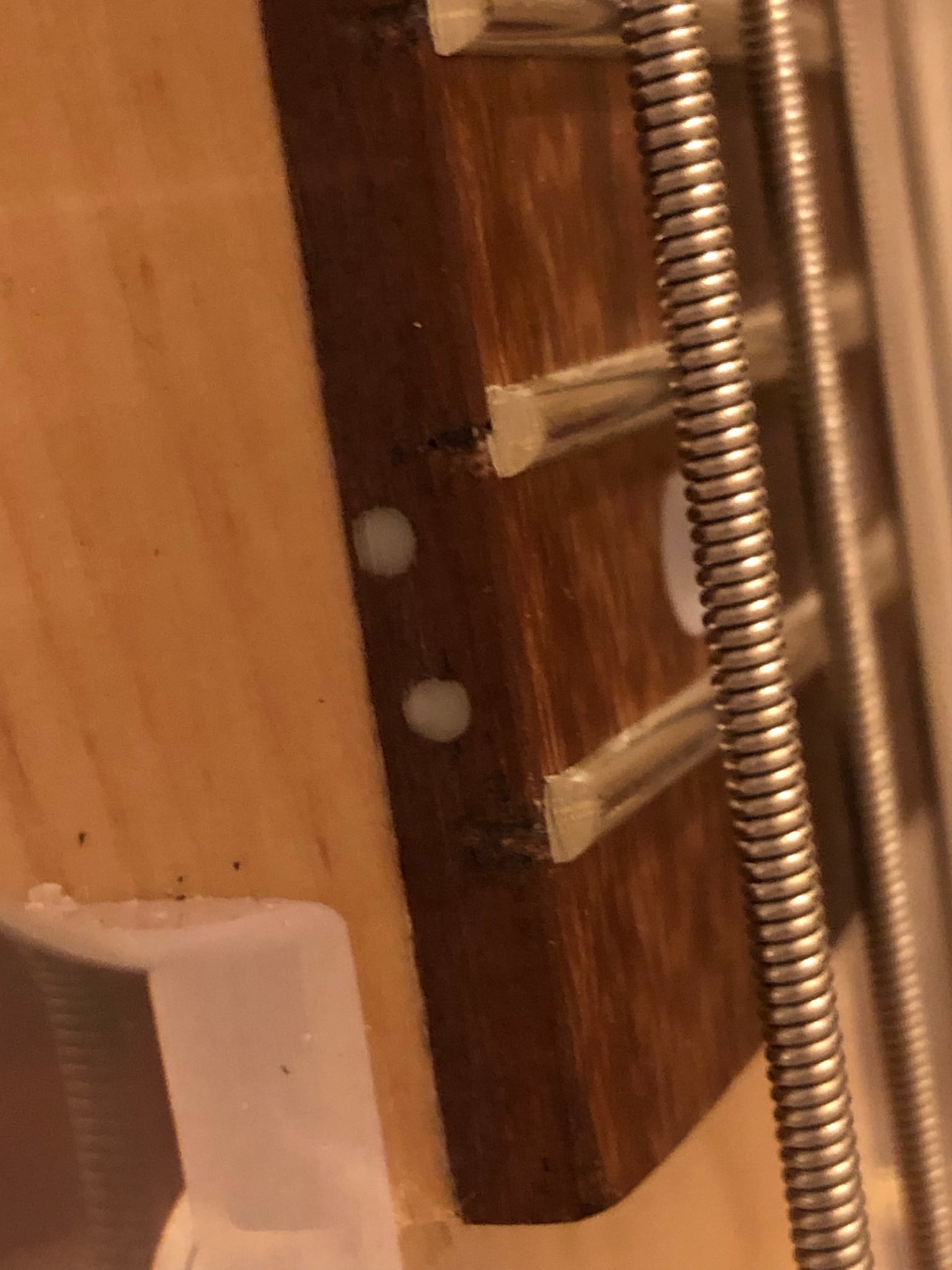
You can see the quality of the fretwork in the photo above, as well as the fairly crude, unfinished look of the woodwork on the neck.
Finally: Most of the screws are drilled off-centre. The bridge pickup screws are five random non-matching parts bin screws cut down crudely to length. The neck bolts are also cut down randomly from longer screws and three of them turn freely in the wood.
I can fix this bass up as this is the sort of thing I consider fun. Unless you want to do a whole raft of fairly intensive modding don't bother with this bass. The stock electronics are built to fail, the action is horribly high and requires wood working to correct, the fretwork is terrible and the general fit and finish is cheap and approximate.
This bass isn't "as good as the real thing" or anything approaching it. Anybody who says this about any Chinese counterfeit instrument should be challenged on this assertion; they likely just don't know what they are looking for or have ever handled a well made instrument.
You can buy a much better bass for £250, any day of the week, from more reputable sources. You won't wait a month for your bass and you won't be stung with Customs charges. Just go here and take a look: Invalid Link Removed
I've commented on a few Chinabacker threads, and I've seen videos on Youtube of both quick wins and horror stories when it comes to importing Chinese instruments. I fancied taking the plunge myself.
These Dan Armstrong copies appeard on Ebay a few months ago. I figured that between Ebay and Paypal I would have a bit more coverage than buying directly from AliExpress. The bass cost £227 with some sort of novelty discount, and the shipping was free. I did have to pay customs charges, which I will cover later.
The bass arrived yesterday. But don't listen to me, listen to them:
Lol
That QR code kept trying to take my phone on a voyage of discovery while I was snapping this photo.
The good:
Eh, it looks like a Dan Armstrong bass. In fact, as long as you aren't an Armstrong purist the adjustable pickup and bridge are upgrades over the original design. The bass isn't too heavy, balances nicely on a strap and has a 32'' scale length (not advertised by the seller) over the 30'' of the original.
The bass has a chunky P-bass style neck. It has a truss rod; I've seen photos of Les Pauls with a simple metal bar with a fake adjuster welded on the end. That truss rod works. I was able to dial all the relief out of the neck, which was impressive given my level of expectation.
The bad:
Woops. Somebody smeared that writing in the factory. That pickguard is also heavily treated rosewood rather than the Formica of the originals. Considering CITES, and the ramifications involved there, I feel a little bit dirty importing what is essentially grey market rosewood into the UK.
Plus, it goes without saying that neither Dan Armstrong or Ampeg had anything to do with this creation.
Fear not, the pickguard is already off the bass. I'm going to cut one white and one tort pickguard for the bass, and keep the rosewood pickguard in storage.
The bass arrived in a crumbly styrofoam coffin, bound up in yellow tape. It didn't come with even a soft case, though two Allen keys and a cheap cable were included in the coffin. The smell of chemicals that escaped the coffin when I first opened it was astonishing.
There could be anything in there.
Things get downright crooked when it comes to the import charges. The seller lists these as a 'gift' with a declared value of $85 USD:
This is something to watch out for. Customs may well do a spot check on these packages and take a dim view on whether this is A) a gift and B) only worth $85 (though in my view this might not be far off the truth). Apparently Chinese sellers may fudge the value to massage domestic taxes back in China, though I'm not sure how much truth there is in this. Either way, I'm complicit in a scam as the seller stated on the Ebay advert that they under-report the value of the instrument:
"The BIN price does not include custom duty. But please do not worry, we can provide an invoice with a very low value, you may need to pay little or no customs duties. About the duty, Please consult your local customs before purchasing our products."
It is also worth noting at this stage that the electronics are no great shakes. Two very small 500 k pots, some very weak solder joints and a cheap ceramic MM-style humbucker. Nothing to write home about.
The Ugly:
The quality of the neck is pretty low. Original Dan Armstrongs had nice quarter-sawn maple necks with some nice figuring appearing from time to time. By contrast my bass has a pale, aneimic maple neck with mineral streaks and a sort of thin, powdery lacquer applied.
The fretwork is fairly horrible. The frets are rough, the ends are fairly sloppily cut and shaped, and some of the fret slots are finished off badly. There are at least two frets with high spots and they have a tarnished, ugly appearance.
The action is also a tad high.
Errr, yeah. The saddles don't go much lower than this. Plus, because the heel of the neck extends under the pickguard you can't shim the neck without shaving wood off the top of the heel. Without doing this you would have the pickguard sitting proud of the body in this location.
This is a design issue you shouldn't see on any bass at any price point, but this drives home my opinion on Chinese bootleg instruments. They look the part (to some degree) because that is what they are built to do. Nobody in the factory cares about low action or even frets. They cut out wood and plastic to the shape you want, and then take your money. These are props, decoys and distractions. These are a demonstrable waste of money. No beginner bassist should go anywhere near a bass with action like this.
Also, come on dude. You had one job.
You can see the quality of the fretwork in the photo above, as well as the fairly crude, unfinished look of the woodwork on the neck.
Finally: Most of the screws are drilled off-centre. The bridge pickup screws are five random non-matching parts bin screws cut down crudely to length. The neck bolts are also cut down randomly from longer screws and three of them turn freely in the wood.
I can fix this bass up as this is the sort of thing I consider fun. Unless you want to do a whole raft of fairly intensive modding don't bother with this bass. The stock electronics are built to fail, the action is horribly high and requires wood working to correct, the fretwork is terrible and the general fit and finish is cheap and approximate.
This bass isn't "as good as the real thing" or anything approaching it. Anybody who says this about any Chinese counterfeit instrument should be challenged on this assertion; they likely just don't know what they are looking for or have ever handled a well made instrument.
You can buy a much better bass for £250, any day of the week, from more reputable sources. You won't wait a month for your bass and you won't be stung with Customs charges. Just go here and take a look: Invalid Link Removed
Last edited: