. I've made the necessary spelling corrections, because that kinda thing drives my OCD mind crazy. Seems to conflict a little with Lug's findings. Maybe the manual is referring to non-natural finished basses and guitars. Anyway...thanks, TonH!!
Eilif's T-40 Info sheet (as of Jan 12, 2008 12:08 pm)
I put this together a while back and it has been updated a few times on a different forum. I'm glad I can finally give it the home it deserves. If anyone has anything to add, let me know. I'd welcome the suggestions.
Everything you wanted to know about the T-40 bass V2.2:
Tone - Very versatile, but still has a unique tone all it's own. Can achieve one of the best pseudo-Ric tones of any non-Rickenbacker instrument. The T-40 is said to be able to do good versions of many other classic basses, but it definitely has its own unique tonal character.
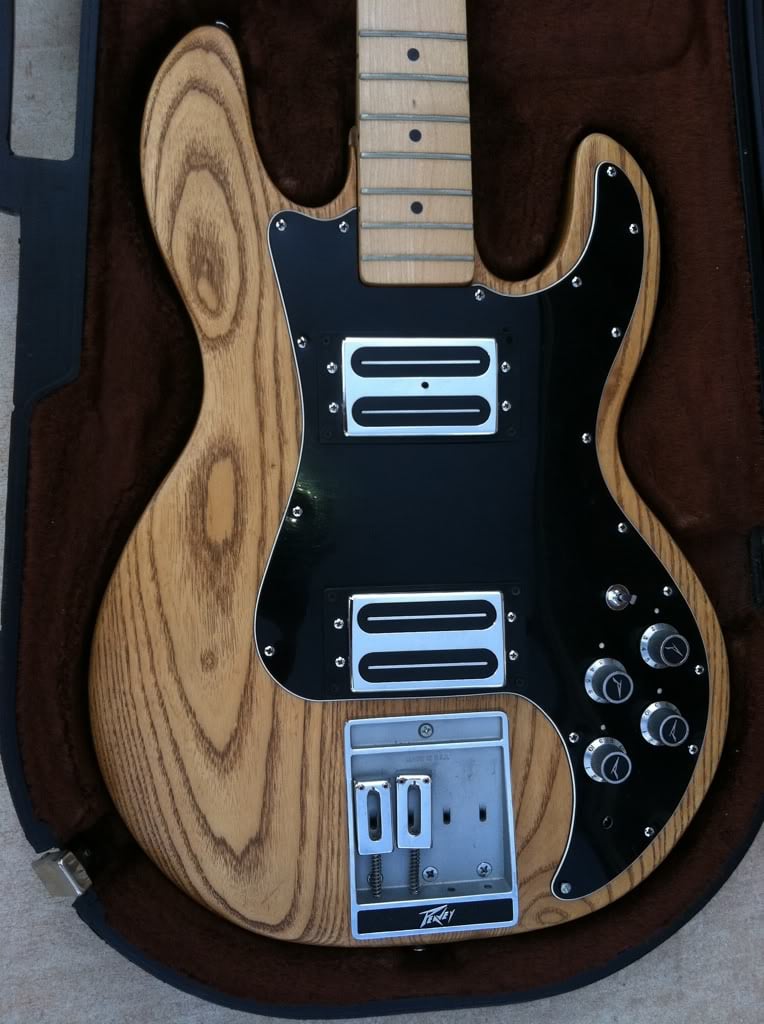
Bodies - Natural and sunburst finished bodies are Ash, and solid colored bodies are made of poplar, with a few early solid colored bodies being made of alder. T-40 bodies are very heavy and are usually made of 4 pieces of wood, with two smaller strips in the middle, reaching a bit wider than edges of the pickups, and two larger pieces on the sides. Fairly good grain matching, along with the huge pick guard, makes many T-40s look quite consistent from the front, and akin to a butcher block on the back. Later model T-40 bodies are reportedly more contoured and a bit lighter than earlier model T-40s.
Finishes-
The most common T-40 body finish is a thin satin natural colored finish with the grain accentuated by the application of a walnut colored grain filler. The finish is not extremely hard, but not being gloss, natural T-40s hide their dents well. Most other finishes are hard polyurethane gloss and include black, white, at least two types of sunburst (traditional and sienna), red, blue, and burgundy. Orange has also been spotted, but it is unclear if it is a stock color, custom, or aftermarket refinish.
T-40 necks and headstocks are always gloss finished.
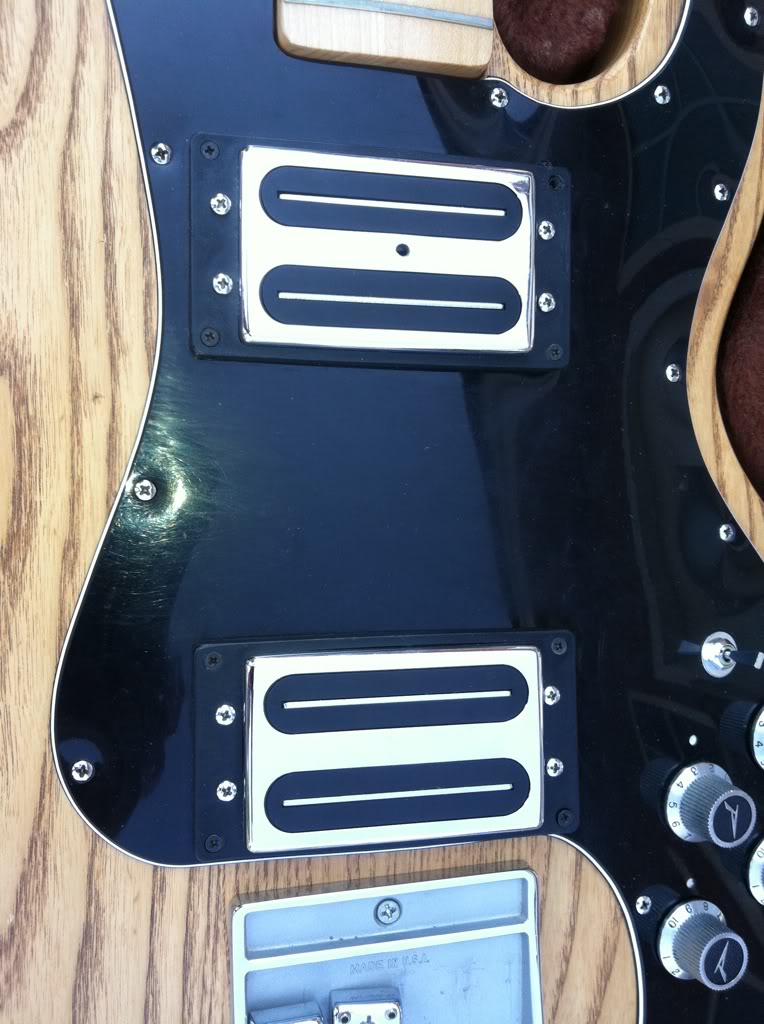
Pickups - All Peavey T-40s have chrome rimmed ferrite (iron) humbuckers with a wide frequency range and the ability to operate in humbucking and single coil modes.
- Early models 78-82/83 have covered dual magnet humbucking pickups (often referred to as toaster style). These pickups are noted for being somewhat warmer sounding without quite as much gain as, but perhaps more "thickness" than, the blade models.
- 82/83 and later models have single magnet and exposed blade humbucking pickups. The single magnet design is more efficient and these pickups are noted for having greater attack and high end with more gain than the "toaster" style.
Construction - Made in the USA in Meridian, Mississippi, T-40s tend to be very consistent, well built basses. First bass ever made on CNC routing machines. Changed the way basses were made industry-wide.
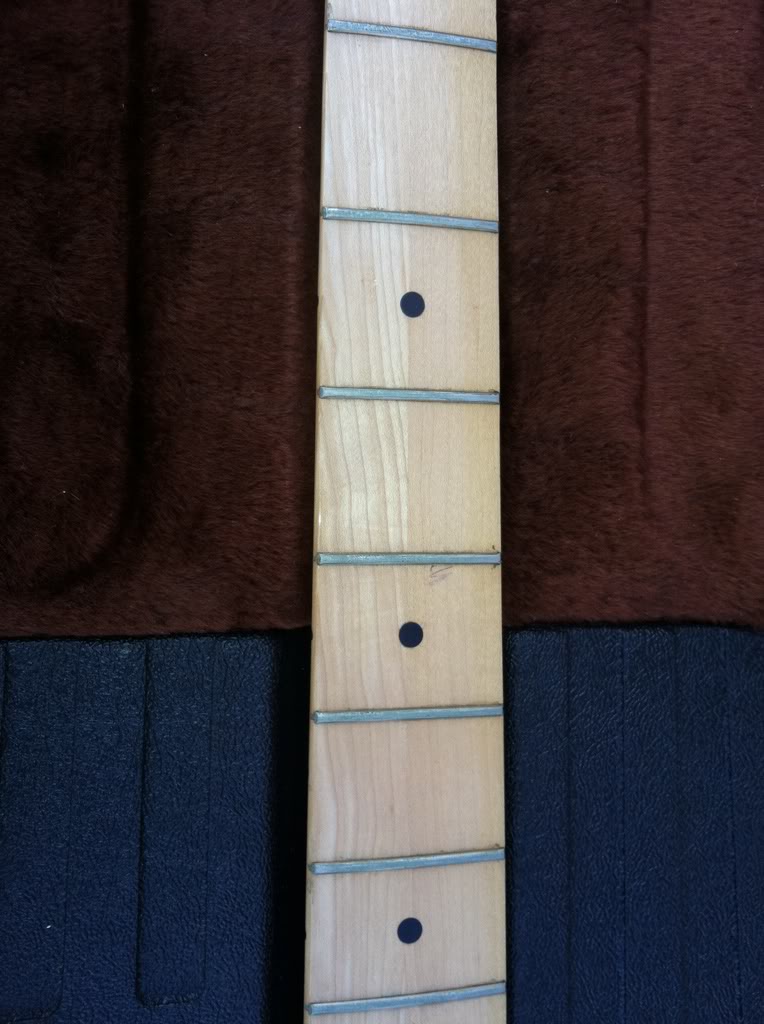
Neck/Fingerboard - Gloss finished "bi-laminate" maple neck (two pieces of reverse grain maple) is very stable, but sometimes not particularly attractive. No separate fingerboard on maple board models. Also available with a rosewood fingerboard, though not as common as maple. T-40s have a neck tilt feature similar to '70s Fenders, but with 4 bolt necks. Some fretless rosewood fingerboard T-40s were produced as the T-40FL model.
Nut - T-40 was introduced with a metal nut, which many owners credit with giving the bass clarity and ring. Somewhere in the second half of production (probably post 1984) it was replaced with a plastic nut.
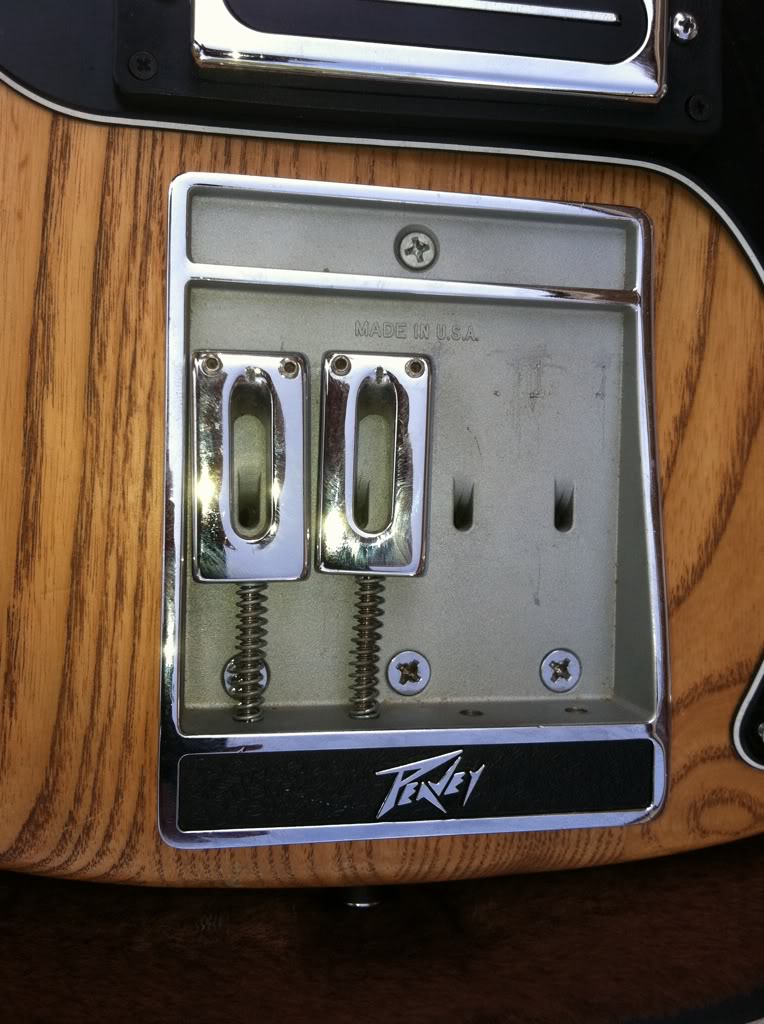
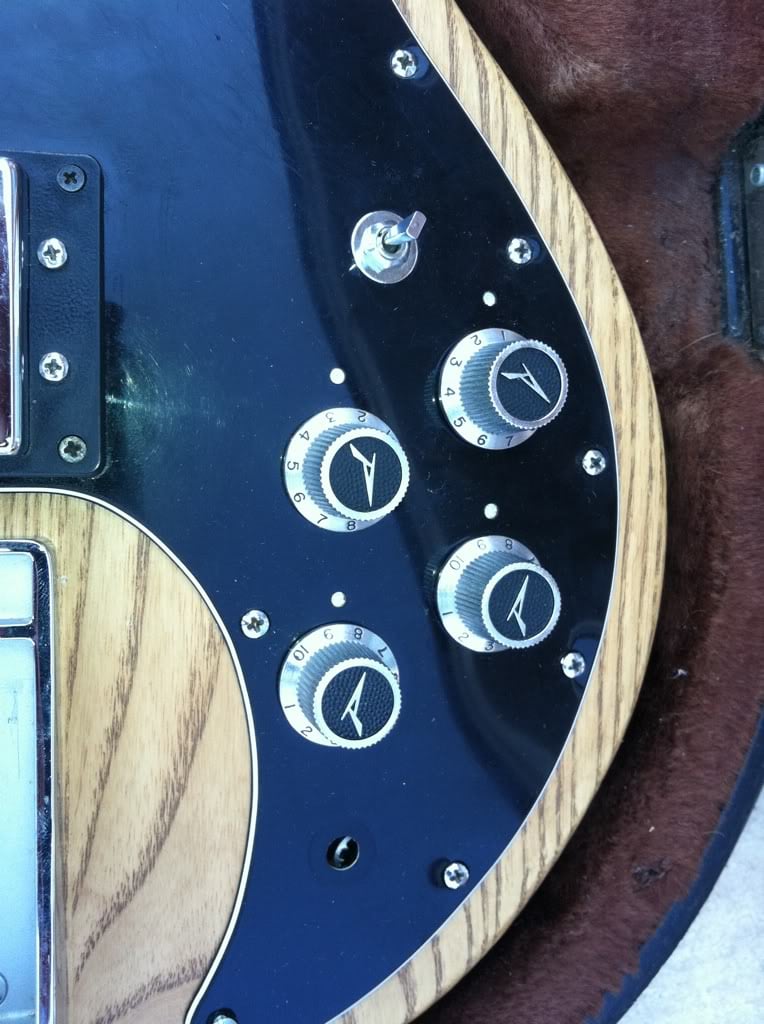
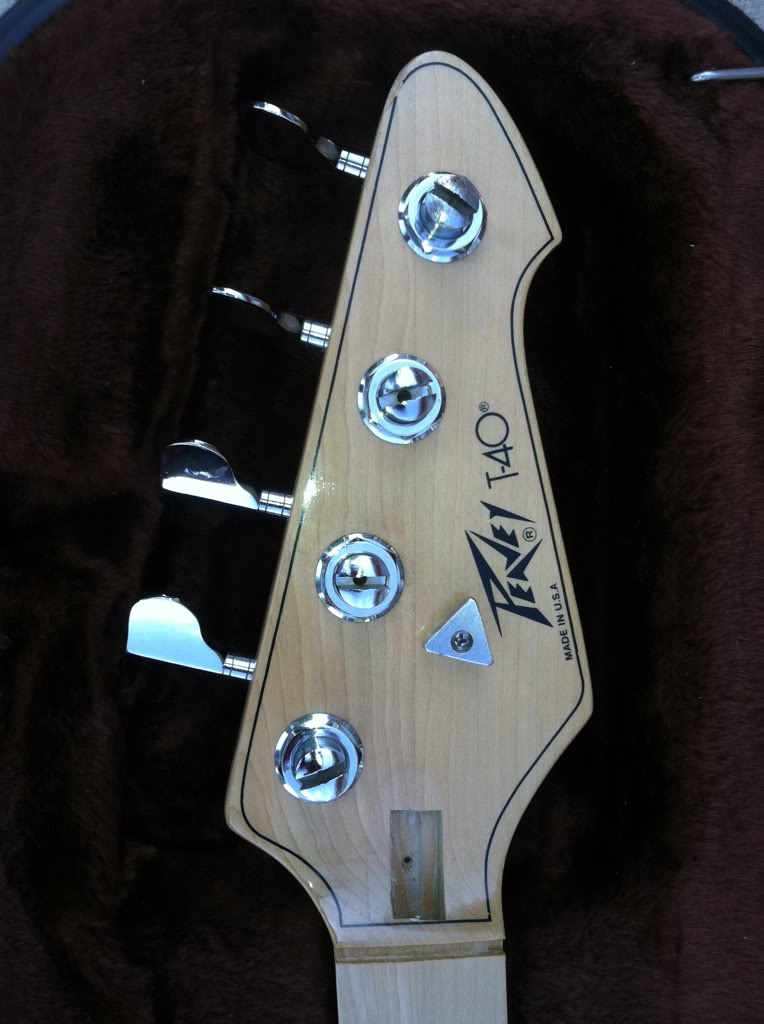
Hardware - Sturdy, sometimes oversized chrome hardware. The cast bridge has a sustain block and allows through body stringing only. Tuners are similar to current model Grover Titan and Schaller m4s model machines. Knobs, bridge and neck plate have "Peavey" or the Peavey "P" embossed over a black enamel background.
Controls - Two switches-a three way selector switch and "mystery" phase switch. Four knobs, consisting of volume and tone for each pickup.
Single coil options - Tone knob switches from humbucker to single coil at the "7" position.
Mystery Switch - Second "mystery" switch is an in-phase/out-of-phase switch that only works when both pickups are on. Brings a nasally honking sound to the bass.
History - Designed by Chip Todd, manufactured from 1978-1987. The T-40 and it's guitar counterpart, the T-60, were the first guitars manufactured by Peavey.
Dating - Peavey has a forum where you can post your serial number and get the year of manufacture in a couple of days.
Invalid Link Removed
Going rate - Last time I did an eBay completed auctions search (march 2007), they were averaging between 250 and 350 (with a few cheaper and more expensive) depending on condition, case, etc.
Related instruments - The T-40 is the bass counterpart to the T-60 guitar. A single pickup version of the T-40 was also manufactured, called the T-45. The T-45 is similar, but lacks a pick guard and phase switch, and has a passive "special mid-
frequency roll-of control". The T-20 has similar (though lighter) body and neck to the T-40, but has a single large size super ferrite pickup under a pickguard in the mid position, similar to early Peavey Fury basses.
Truss rod adjustment - Requires a 5/16" socket-type and it is available through Stewart MacDonald
STEWMAC.COM: Pocket Truss Rod Wrenches
Owners Manual - Available for download at:
peaveyt60.com
Wiring diagram -
peaveyt60.com
Modifications - T-40 is one of the few basses that Darkstar pickups (Hagstrom Bi-Sonic style pickups by Hammon Engineering:
www.basspickup.com) can be fitted to without any additional routing. Some owners have also experimented with various means of lightening the bodies. Replacement pick guards are made by Jeanies pick guards and others.
Case - T-40s came with a fitted plastic hardshell case in either a rectangle (aluminum frame under plastic) or a rounded wedge shaped case with integral handle. Some early examples may have come with a very heavy Tolex case with unfitted interior, leather endcaps, white piping and rounded edges (very similiar to traditional Fender style).
Custom work - Chip Todd (T-40 creator) does custom work on T-series instruments and others, including lightening bodies, custom tops, body binding and left handed instruments.
peaveyt60.com
Promotional materials - All the T-60 materials are also features the T-40.
peaveyt60.com
Websites:
peaveyt60.com has schematics (same as T-60) info about T-40 creator Chip Todd, and early Peavey instruments, and some informative articles. Also, check the Peavey website for owners manual and related information on their forums. Chip Todd is known to post on those forums.



 $40 (with the case)!!!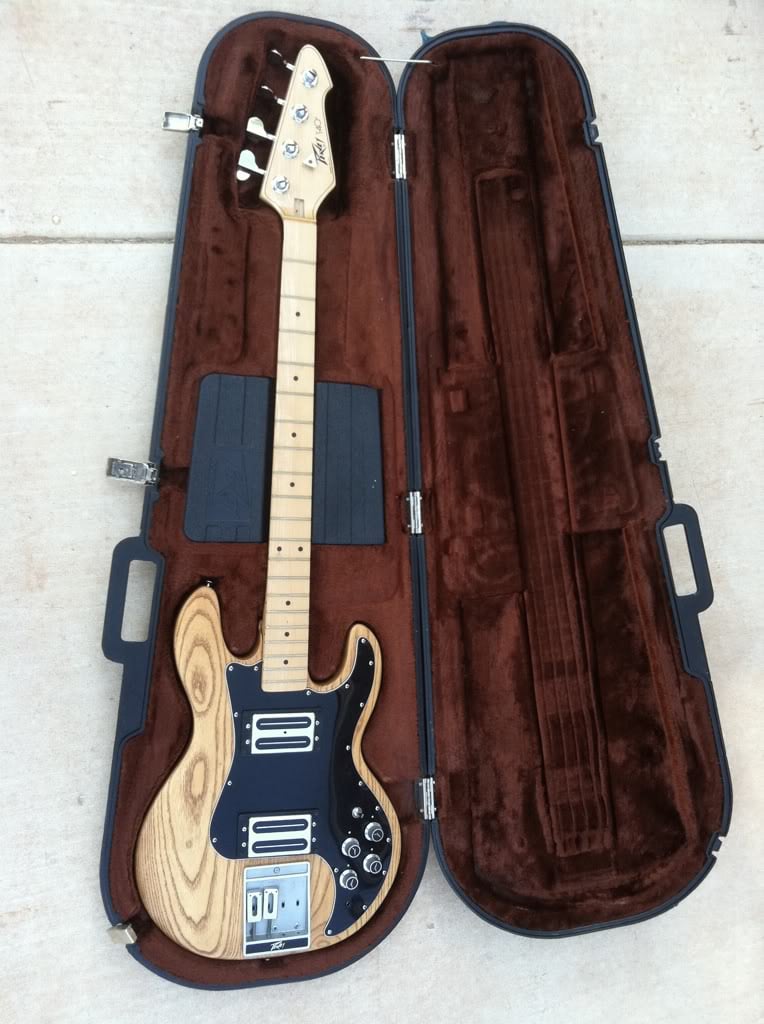
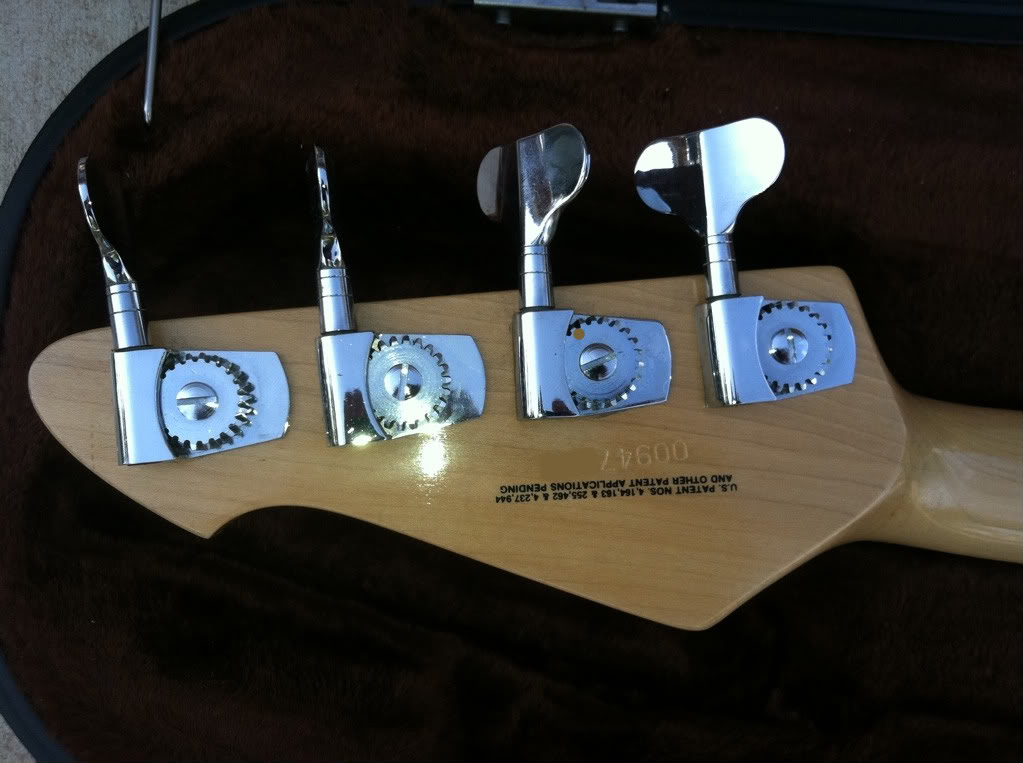
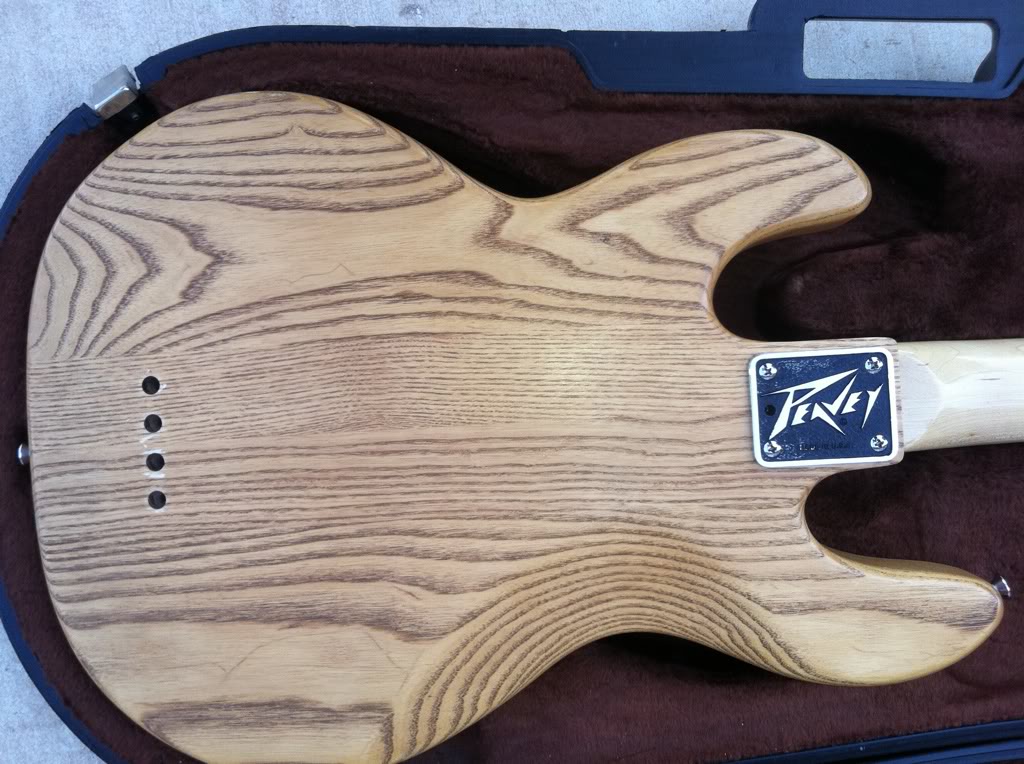







 Congrats on your theft !