• TalkBass has been independent since 1998. Add your voice.
    Create a free account to reply to discussions, view embedded media, and browse with fewer display ads.
    Join freeLog in
    Want zero display ads or expanded classifieds tools? Compare plans.

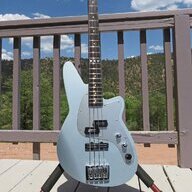
NBD ~ Reverend Sentinel!

Surprised to hear a Milwaukee Wisconsin reference in the color name. There isn’t an obvious connection I could see, does anyone know where that came from?
That’s funny. I live in MKE, I just got a Sentinel in the very same color and it still never occurred to me that Bradford Beach is a MKE landmark! Duh oh…
Great bass BTW. I wasn’t sure I’d want to keep my Dub King too, but the Sentinel is a whole different bass. Very fast and playable on a strap. Cheers to the OP for a great purchase decision.
 
Nope, it's not sharp edged (at least on top), even though the binding makes it look like it might be. The upper edge on my Rumblefish is what made me eventually sell it. This one is 100% comfy! :)
Now that you've had it for all of a week or so...how are you getting on with it? I've got the Reverend Raymond (34" scale) and love it. Your bass is just gawjus. Your photos gave me possibly incurable GAS for a Sentinel.
 
Now that you've had it for all of a week or so...how are you getting on with it? I've got the Reverend Raymond (34" scale) and love it. Your bass is just gawjus. Your photos gave me possibly incurable GAS for a Sentinel.
I'm madly in love, and have been playing this exclusively to get used to the controls (placement) and switch (tone possibilities) before this Saturday's gig. It is very light (7 lbs 2 ounces), has tremendous bottom end, but is quite bright. It's very easy to get around on the neck. The quality of the build is excellent, and it is really good looking, IMO. So far, expectations exceeded and I'm really happy with it.
 
Surprised to hear a Milwaukee Wisconsin reference in the color name. There isn’t an obvious connection I could see, does anyone know where that came from?

The color was originally for a Greg Koch Gristlemaster. He came up with the name.
 
How'd it do at the gig? Looks like a beauty!

Thanks, the gig went went just great! I got every tone I wanted, be it smooth or crunchy. I got plenty of compliments on both the sound and looks (especially the color, Bradford Beach Blue). It's a really bright bass, even with the treble turned down on the amp (Bergantino Forte} to 9 o'clock and I ran just 1 of the 2 tweeters (Berg CN112 pair). The strings are GHS Pressurewounds just past the brand new stage. So for my flavor of sound I pretty much kept the tone control almost all the way down or a little up from that. Massive low end, and it played super smoothly and punched hard sonically. The light weight (7 lbs 2 ounces) is great and cuts down gig fatigue. It doesn't hurt that it's beeyootyfull either! :thumbsup:

_DMP1958 copymsp3 copy.jpg
 
Is it possible for someone to explain to me how that three way switch for the three different tones works? I’m so intrigued by these bases.
I ended up wondering the same thing. And since @petch just dropped this bass off with me to do some new pots (attempting to tame the highs a bit and change the volume drop curve), figured I should at least do a little documenting of the switch for anyone else wondering the same thing.
My googling came up pretty empty.

The essence/TL;DR of the wiring on this bass is, the pickup goes to a 3-way blade switch with caps (.0091uf?) wired in to the different positions, as well as a resistor on the one end. That signal is then sent to the volume and tone controls, which are essentially similar to a normal P bass V-T setup.

IMG_5159.JPG


The effect of whatever they are doing with this is 3 different sort of voices for the pickup.
- DEEP: switch all the way towards the neck. Boomier voice to the sound.
- NORMAL: middle position. Sounds like... normalness?
- BRIGHT: switch towards the bridge. Has more bright attack in the sound and less boom.

This video does a great job showing the various sounds

I wish I was the guy to explain it better, but that is the info I was not sure on and was hoping to find out from more of an expert in this area. If anyone can explain the switching functions in more detail, I'd love to learn more.

What I can tell you from what I do know is, the switch isn't changing the pickup wiring like you'd find with a series/parallel switch or something like that. I've had a number of Dimarzio P pickups in my day and wired them with series/parallel switching and while there is a similar effect on some of it (series is beefy and louder, parallel is crispier and quieter), this isn't wired like that at all.
The pickup signal wire is the red one going to the switch. Any effects being imposed on the sound are a result of how that pickup signal is connecting to the caps/resistor on the switch.

The signal from that switch goes to what is essentially the normal P bass controls. And there have certainly been a plethora of different specs used over many years and many thousands of different basses that are based on the P design. Typically though, the result is relatively similar: you get volume and tone controls, simple as it can be.

Petch was noticing that this one is a little hard to tame when it comes to the high end. This bass has a bright output, even with TI Jazz Flats. And the response of the controls seemed to be a little bit "drastic" when it came to max settings. In other words, if you roll back the volume from max, it quickly drops a lot. And if you are rolling back the tone, it doesn't tame the high very much until you reach almost the end of the sweep and even then, it's not super subtle.
As we've seen, Petch loves this thing live and when you're getting these difficult moments happening with volume and tone on the fly, in public, it can be a little dodgy. So that's what we're hoping to change.

This bass comes equipped with 500k audio (A taper) pots for both controls. That fact may be attributing to the drastic nature of the ends of the sweeps. A linear control pot (B taper) can sometimes rectify this phenomenon.
And since we're doing that swap (A for B), we may as well try to see if the change from a 500K to a 250K pot can mellow out some of the highs in this, too.

I'll be doing that soon here and post what short term findings I notice, but I'm sure Petch will be able to fill us in on the longer term, as he's certainly had way more time with this and will notice more than I will once this is back in his hands.

It's a super cool bass, though, definitely gotta say that! The color is one of my all time faves and I always love a P that can do more than just a P, while still being a lot of P.
 
I ended up wondering the same thing. And since @petch just dropped this bass off with me to do some new pots (attempting to tame the highs a bit and change the volume drop curve), figured I should at least do a little documenting of the switch for anyone else wondering the same thing.
My googling came up pretty empty.

The essence/TL;DR of the wiring on this bass is, the pickup goes to a 3-way blade switch with caps (.0091uf?) wired in to the different positions, as well as a resistor on the one end. That signal is then sent to the volume and tone controls, which are essentially similar to a normal P bass V-T setup.

View attachment 5150917

The effect of whatever they are doing with this is 3 different sort of voices for the pickup.
- DEEP: switch all the way towards the neck. Boomier voice to the sound.
- NORMAL: middle position. Sounds like... normalness?
- BRIGHT: switch towards the bridge. Has more bright attack in the sound and less boom.

This video does a great job showing the various sounds

I wish I was the guy to explain it better, but that is the info I was not sure on and was hoping to find out from more of an expert in this area. If anyone can explain the switching functions in more detail, I'd love to learn more.

What I can tell you from what I do know is, the switch isn't changing the pickup wiring like you'd find with a series/parallel switch or something like that. I've had a number of Dimarzio P pickups in my day and wired them with series/parallel switching and while there is a similar effect on some of it (series is beefy and louder, parallel is crispier and quieter), this isn't wired like that at all.
The pickup signal wire is the red one going to the switch. Any effects being imposed on the sound are a result of how that pickup signal is connecting to the caps/resistor on the switch.

The signal from that switch goes to what is essentially the normal P bass controls. And there have certainly been a plethora of different specs used over many years and many thousands of different basses that are based on the P design. Typically though, the result is relatively similar: you get volume and tone controls, simple as it can be.

Petch was noticing that this one is a little hard to tame when it comes to the high end. This bass has a bright output, even with TI Jazz Flats. And the response of the controls seemed to be a little bit "drastic" when it came to max settings. In other words, if you roll back the volume from max, it quickly drops a lot. And if you are rolling back the tone, it doesn't tame the high very much until you reach almost the end of the sweep and even then, it's not super subtle.
As we've seen, Petch loves this thing live and when you're getting these difficult moments happening with volume and tone on the fly, in public, it can be a little dodgy. So that's what we're hoping to change.

This bass comes equipped with 500k audio (A taper) pots for both controls. That fact may be attributing to the drastic nature of the ends of the sweeps. A linear control pot (B taper) can sometimes rectify this phenomenon.
And since we're doing that swap (A for B), we may as well try to see if the change from a 500K to a 250K pot can mellow out some of the highs in this, too.

I'll be doing that soon here and post what short term findings I notice, but I'm sure Petch will be able to fill us in on the longer term, as he's certainly had way more time with this and will notice more than I will once this is back in his hands.

It's a super cool bass, though, definitely gotta say that! The color is one of my all time faves and I always love a P that can do more than just a P, while still being a lot of P.

Very interesting. I would have thought it was a series/parallel switch.
 

Latest posts