The thing with this conversation is that we're trying to all give general advice to what really should be an individualized solution tailored to each player as everyone's body is different. While let's say fishing weights in the control cavity and grippy straps could be the solution for one player, at the end of the day for others it might as well be a bandaid solution that leads them to further struggle with their instrument. It doesn't help that everyone's going to have different definitions on what neck dive is, as there's no agreed upon definition based on all the threads made. My own definition is that anything that can't be kept at a player's desired angle (including above 45 degrees) without it moving or tipping forward is neck dive. I am aware this rules out most basses, by this works for me as a player.
On the topic of horizontal vs vertical I remember having a similar conversation with a coworker. He claimed his basses he owned, never had any neck dive, but when I played them strapped at the height that is advised to most players (same as when you're sitting down, but slightly lower), some had horrible dove. he explained to me that he had his basses strapped up as high as possible like a necklace. So he never noticed the issues, so I can attest it's something certain players can and do go their playing careers without giving much thought.
I'll always post this thread made on seven string.com that speaks about how a guitar balances, as most players have to make ergonomic compromises based on what bass they play. I fall into the camp of preferring to have the neck of my bass near vertical (higher than 45), so I've come to accept that I'll have to modify my basses to suit my ergonomic goals, especially since I wear them as low as I can get away with being mindful of ergonomics.
Determining guitar balance through simple visualisation
I believe that at bass guitar not the most ergonomic instrument to begin with. I like this thread because for me, I don't really find the standard strap button locations really work for me as a player. Some basses in an attempt to be ergonomic tend to be the opposite (Gibson EB 5, any Cort Curtbow but especially those awful luthite ones, Warwick thumbs, for example). For these basses, you can't mitigate the fact that the neck itself (not just the headstock) is far heavier than the downsized body.. This is usually a problem with most lighter basses, especially those made with basswood, and you can only mitigate the issue of having an imbalance of weight between the neck and body so much in the name of making basses lighter and more ergonomic.
This even applies to how you wear the strap on your body. I see most players (in person) tend to shift their bass and strap closer to the right side of their body, which leads to having the already thin straps a lot of players use practically dig in towards their neck/collarbone. A lot of players don't notice doing this, or maybe do this to have the neck be at a higher angle and shift the bass to try to reach notes in the neck easier (This reason could be more spitballing but YMMV). For myself, I always move the strap to rest farther on my left directly the harder, bony part of my shoulder.
I find I prefer playing bass standing up as I never have been able to find a comfortable position for my wrists sitting down, especially for my right hand. Trying to play basses horizontally for me, while I can do it, leaves my right wrist at an awful angle, meaning I have to play right at the end of the fingerboard for my wrists to be straight in a lot of basses. Which then brings the issue of lowering the strap and then trying to do my best Rob Trujillo impression and tilt the neck up every time I play, leading to the bass fighting me in trying to keep it at the angle I want, especially with basses with the strap on the top horn of the 12th fret.
TL;DR Sometimes the only long term solution is how much you're willing to modify your instrument to fit your needs, as neck dive will always have a specific definition of what it means to you. Some players are better off finding a bass that works for them and fit their definition of balance, while others are going to find out of the box solutions to modify the bass to fit their needs (a la Bootsy Collins, Holger Czukay, Leon Wilkerson) with aftermarket parts and drilling into their basses




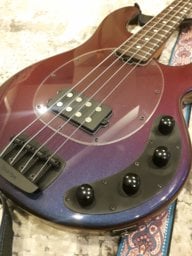









 I'll make sure a bass balances on a strap before I buy it