• TalkBass has been independent since 1998. Add your voice.
    Create a free account to reply to discussions, view embedded media, and browse with fewer display ads.
    Join freeLog in
    Want zero display ads or expanded classifieds tools? Compare plans.

Need help properly amplifying my upright and electric

Hi. I play an old French upright bass, and a Lakland J-style 5-string electric. Mostly jazz, blues, and old timey stuff on the upright, rock and soul on the electric. I'm interested in all musical genres.

I have a HPF-Pre Series 3 pre-amp and a K&K Bass Max transducer (high ohmic impedance) for the upright. I am utterly ignorant about how to use the pre-amp.

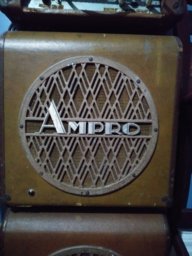
For both basses, I have been playing through a Fender Bassman 250, which is not in great shape and I am thinking of upgrading the amp rig (my dad had an old tube Ampeg which sounded amazing, wish I still had that bad boy).

Anyway, I really need some advice on what amp would suit my needs (amateur, coffee houses, occasionally playing either bass with louder electric groups) and how best to use the pre-amp. Your plainspoken guidance is hugely appreciated. Thanks!

 
TBH you may get more useful responses over on the upright side of the site. I always feel like my upright is more picky about amp rigs than my electric.

I've been pretty happy with Phil Jones cabs (C4 + C2) and a Warwick Gnome for my upright and I've done electric gigs with the same setup and have been happy with it. I have a higher power amp with a Mesa 115 that I prefer on electric but the PJ + Gnome setup is not bad at all.
 
TBH you may get more useful responses over on the upright side of the site. I always feel like my upright is more picky about amp rigs than my electric.

I've been pretty happy with Phil Jones cabs (C4 + C2) and a Warwick Gnome for my upright and I've done electric gigs with the same setup and have been happy with it. I have a higher power amp with a Mesa 115 that I prefer on electric but the PJ + Gnome setup is not bad at all.
Thank you. I wasn't sure where to post. I will search around for the right sub.
 
I find I like a clean-and-clear rig if I’m planning on using it for upright and electric. I usually use a high pass filter on the upright and set the eq on the amp so the upright sounds good. I try to bring an active electric bass so I can use the preamp make up for any eq deficiencies at the amp.

In general, upright is pickier so I bring a rig that sounds good for upright and sounds good enough for electric.

It’s always a compromise.
 
I try to keep things simple. The bass guitar usually goes straight in to the amp and the double bass gets the HPF-Pre inserted. I use a Radial Bigshot I/O to switch quickly when I'm doubling.
I find all the settings on the HPF-Pre are quick – and relevant. Adjust HPF so the bass sounds full, but not boomy. Try both phase settings & go with the one that sounds better. Adjust volume to either 1) match the bass guitar if you're doubling or 2) approximate a BG level that the amp can deal with. (Cranked is usually pretty "hot".)
There are more elaborate solutions. A head or pedal w/ 2 channels (each with their own gain & EQ) could be good, but not necessary IME. They may have their own drawbacks. My simpler approach has served me well.
 
Get a Markbass 112 combo (you can add an extra cabinet if necessary, though you mentioned coffee house gigs).

You’ll need a preamp of your choice for the DB. That will plug into the xlr input of the combo, creating a second channel for the amp. The regular input on the amp will be used for your BG.
I did this quite often, until I found a used Euphonic Audio Doubler-a great amp made specifically for us-an easy option if you can find one. Speaker selection is your choice.
 
I am utterly ignorant about how to use the pre-amp.

Piezos are highly capacitive.

The capacitance in conjunction with the input impedance of your amp forms a high pass filter. A high pass filter blocks low frequencies.

If the input impedance of the amp is not high enough, the pickup's low frequency roll off starts too high. By loading the pickup with a higher impedance the LF cutoff is moved to a lower frequency

The Series 3 HPF serves as a high impedance buffer and loads the pickup with 10 Meg Ohms. I consider 1 Meg to be about the lowest you want to go with a Piezo.

To get the Series 3 to serve as a buffer, plug the pickup to the input and run the output to the instrument input on your amp.


1727117397807.png


The Series 3 has three controls. Volume does exactly what it sounds like. I suggest running the Series 3 volume at max and setting you playing level with the volume control on the amp. If the signal is too hot, try the active or padded input if your amp has one. If you need to put the upright down, turn the Series 3 volume off.

The next control is phase. A better name is polarity. The switch flips the polarity of your signal 180 degrees. Set the control to which ever position sounds best. If you get feedback, sometimes flipping this control can help.

The final control is HPF. The Series 3 has two 6dB/octave HPFs. One of the filters is fixed to a 35hz cutoff. The other filter can be raised/tuned to taste. A common way to adjust is to increase the cuttoff until it noticeably starts to thin out the low end. If you want the fullest lows, back the filter down a few hz. Sometimes a bit of thinning can be very helpful, so don't be afraid to experiment. Per the graphics on the Series 3 case, the turning the control CW lowers the cutoff. Think of it as CW fills in the lows and CCW thins the lows.


If you are going to switch between upright and bass guitar during gigs, ideally you need a two channel preamp. Each channel needs its own gain, EQ, and mute switch. Not a lot of amps meet these requirements. Gollihur (exclusively) offers a bass specific version of the Genzler Acoustic Array Pro. Gollihur Series Bass Acoustic Array Pro Amplification (Exclusive)

If you need more volume, a matching extension cab is also available.

Other options include acoustic oriented preamps like the Grace Felix: FELiX2 2ch instrument preamp / EQ / DI Acoustic Instrument and Mic Preamp - Grace Design

or Headway EDB-2 H.E.: Headway's webpage appears to be down, but I think this is the link: EDB-2 H.E – Headway Music Audio

I believe the Genzler, Grace, and Headway options I listed provide a suitable input impedance to load a piezo pickup.
 
Piezos are highly capacitive.

The capacitance in conjunction with the input impedance of your amp forms a high pass filter. A high pass filter blocks low frequencies.

If the input impedance of the amp is not high enough, the pickup's low frequency roll off starts too high. By loading the pickup with a higher impedance the LF cutoff is moved to a lower frequency

The Series 3 HPF serves as a high impedance buffer and loads the pickup with 10 Meg Ohms. I consider 1 Meg to be about the lowest you want to go with a Piezo.

To get the Series 3 to serve as a buffer, plug the pickup to the input and run the output to the instrument input on your amp.


View attachment 7037083

The Series 3 has three controls. Volume does exactly what it sounds like. I suggest running the Series 3 volume at max and setting you playing level with the volume control on the amp. If the signal is too hot, try the active or padded input if your amp has one. If you need to put the upright down, turn the Series 3 volume off.

The next control is phase. A better name is polarity. The switch flips the polarity of your signal 180 degrees. Set the control to which ever position sounds best. If you get feedback, sometimes flipping this control can help.

The final control is HPF. The Series 3 has two 6dB/octave HPFs. One of the filters is fixed to a 35hz cutoff. The other filter can be raised/tuned to taste. A common way to adjust is to increase the cuttoff until it noticeably starts to thin out the low end. If you want the fullest lows, back the filter down a few hz. Sometimes a bit of thinning can be very helpful, so don't be afraid to experiment. Per the graphics on the Series 3 case, the turning the control CW lowers the cutoff. Think of it as CW fills in the lows and CCW thins the lows.


If you are going to switch between upright and bass guitar during gigs, ideally you need a two channel preamp. Each channel needs its own gain, EQ, and mute switch. Not a lot of amps meet these requirements. Gollihur (exclusively) offers a bass specific version of the Genzler Acoustic Array Pro. Gollihur Series Bass Acoustic Array Pro Amplification (Exclusive)

If you need more volume, a matching extension cab is also available.

Other options include acoustic oriented preamps like the Grace Felix: FELiX2 2ch instrument preamp / EQ / DI Acoustic Instrument and Mic Preamp - Grace Design

or Headway EDB-2 H.E.: Headway's webpage appears to be down, but I think this is the link: EDB-2 H.E – Headway Music Audio

I believe the Genzler, Grace, and Headway options I listed provide a suitable input impedance to load a piezo pickup.
Thank you! Super helpful reply.
 
  • Like
Reactions: Wasnex
Hi. I play an old French upright bass, and a Lakland J-style 5-string electric. Mostly jazz, blues, and old timey stuff on the upright, rock and soul on the electric. I'm interested in all musical genres.

I have a HPF-Pre Series 3 pre-amp and a K&K Bass Max transducer (high ohmic impedance) for the upright. I am utterly ignorant about how to use the pre-amp.

For both basses, I have been playing through a Fender Bassman 250, which is not in great shape and I am thinking of upgrading the amp rig (my dad had an old tube Ampeg which sounded amazing, wish I still had that bad boy).

Anyway, I really need some advice on what amp would suit my needs (amateur, coffee houses, occasionally playing either bass with louder electric groups) and how best to use the pre-amp. Your plainspoken guidance is hugely appreciated. Thanks!

Another approach:

If you find an amplifier with an effects loop that sounds great with your electric bass, you could use an outboard preamp like a MXR M81 Bass Preamp, which is quite transparent, for your upright bass by simply plugging the output of the preamp into the RETURN jack on the effects loop. That will send the upright bass’ preamplified signal directly to the power amplifier stage of the amplifier.

I have used Euphonic Audio amplifiers for years and love their transparency, but they are no longer doing business. A MXR M81 going into the effects return jack on a Fender Rumble 100 makes for a very compelling upright bass amp and you can plug the electric bass into the Fender amp’s preamp for a more traditional electric bass tone.

This method effectively gives you two channels, one expressly for upright bass and one for electric bass.

Just remember that plugging into the effects return jack will probably defeat the controls on the front of the amp (with, perhaps, the exception of the master volume control), so you will have to unplug the outboard preamp from the effects return jack when you need to play your electric bass.
 
I just use a small mixer into fx return. The DB has a preamp, and the passive p goes into a channel with a trim knob, the active jazz into another channel. I find basically running with just the b,m,t eq on each channel works fine for me. Three very different tonal profiles and once I dial in their levels to basically match I don't have anything to fiddle with when switching around aside from a single volume knob when switching to/from my DB. The BGs obviously have volume, so I don't need to touch the mixer at all when switching to/ from those.

Edit...
Plus there's only one output to foh.
 
Most Piezos work best with ~1M input impedance, there are only a couple with very small crystals that benefit from higher than 1M.

There are a few significant downsides to higher input impedance, they are an increased noise floor, increased RF noise, and turbo-electric noise from the mechanical cable capacitance variations with mechanical force or vibration of the cable.

When it comes to high input impedances, there are no free lunches.
 
  • Like
Reactions: Passinwind
The HPF pre is a simple and very useful device, don't overthink it. I have one, I don't always use it. When you're on a gig and you start experiencing all of that boom, with lack of distinct note and pitch, that's where you're going to want it. Turn the cut knob all the way to the right towards 35hz. Play a little and start moving it to the left, play a little bit more, keep moving it left until that boom goes away, move it back to the right then left until you like what you hear and you're done.

I never use that phase/reverse switch, but some people swear by it.

If you're not getting that boom, leave the knob all the way to the left. That's it. I didn't get it for a while, because depending on the stage, the room, and maybe some other stuff that I never quite figured out, I didn't always need it. It is a solution to a problem and if that problem doesn't show up on your gig, twiddling the knob won't help you and at some point it might screw up your tone. But, when that problem does appear, it's a get-out-of-jail-free card.

The other thing it's doing for you is buffering your piezo input impedance which makes it get along better with your amp. Nothing to do or know, just plug it in and make sure that the battery is good.
 
  • Like
Reactions: agedhorse