
• TalkBass has been independent since 1998. Add your voice.
    Create a free account to reply to discussions, view embedded media, and browse with fewer display ads.
    Join freeLog in
    Want zero display ads or expanded classifieds tools? Compare plans.

Need to do a fast refinish!

I'm not real sure what your expectations are for the final look are but there have been a number of good suggestions ranging from Tru-oil to wait and do a good job. I offer a word of caution on any finishes recommended, from the picture it looks like the body is Poplar, which Peavey used often for painted basses in the '80s. Poplar can be a challenging wood for a natural or oiled finish in that it can go yellow-green, dark black-green, and get uneven splotches of tone. Part of it is due to the open grain nature Poplar has.

I just finished a refurb on an '86 Foundation S with a Poplar body, was painted black. Spent a small but important amount of time testing finishes. I've seen a wiping varnish of boiled linseed oil, naphtha, and varnish look great on Ash and other hardwoods but looked terrible on my test pieces. Ended up with Danish oil coats followed by coats of a naphtha/varnish wipe. There's no way it could have been done quickly. I'll post a picture of my results.
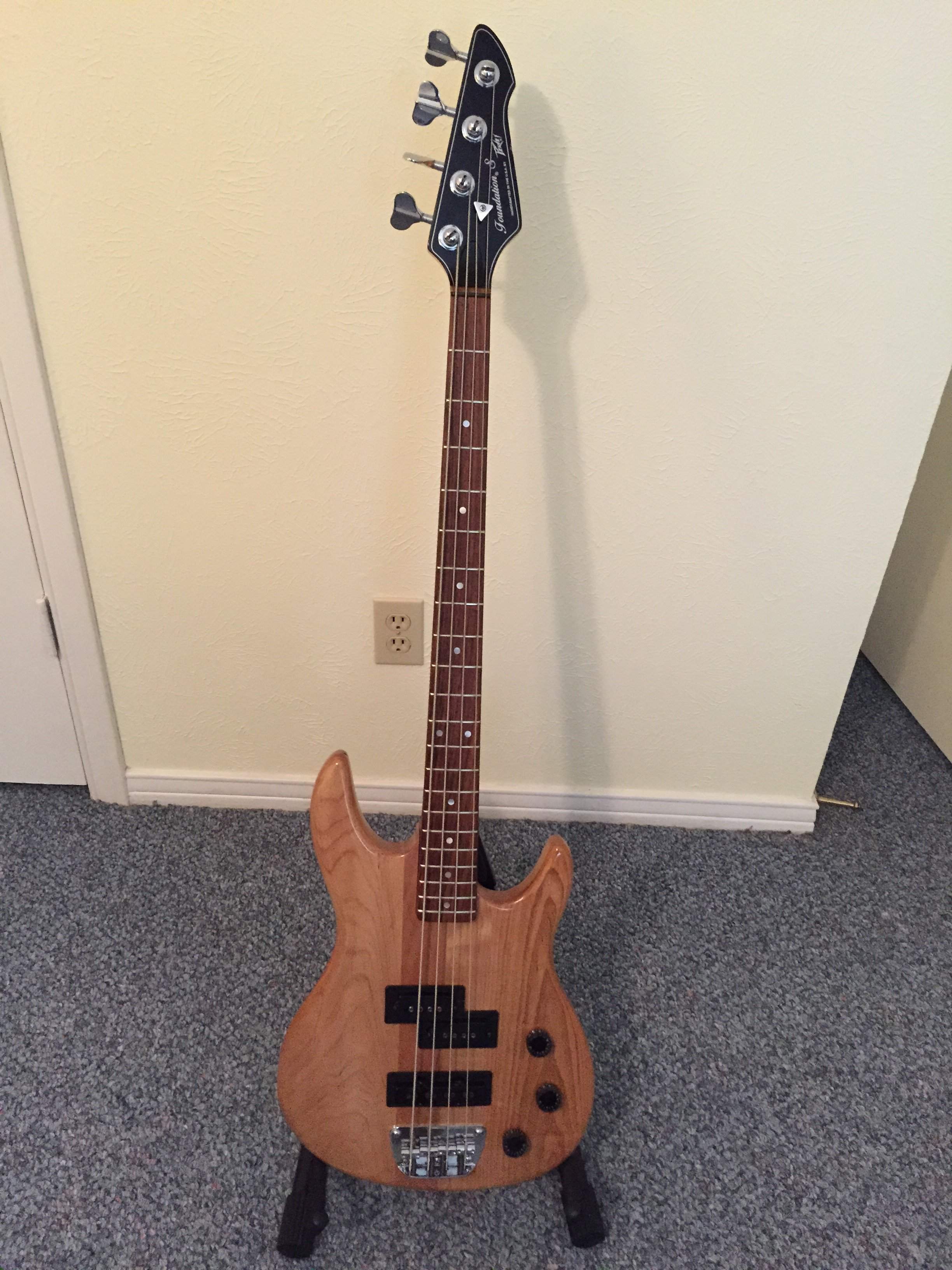
image.jpeg
 
I'm not real sure what your expectations are for the final look are but there have been a number of good suggestions ranging from Tru-oil to wait and do a good job. I offer a word of caution on any finishes recommended, from the picture it looks like the body is Poplar, which Peavey used often for painted basses in the '80s. Poplar can be a challenging wood for a natural or oiled finish in that it can go yellow-green, dark black-green, and get uneven splotches of tone. Part of it is due to the open grain nature Poplar has.

I just finished a refurb on an '86 Foundation S with a Poplar body, was painted black. Spent a small but important amount of time testing finishes. I've seen a wiping varnish of boiled linseed oil, naphtha, and varnish look great on Ash and other hardwoods but looked terrible on my test pieces. Ended up with Danish oil coats followed by coats of a naphtha/varnish wipe. There's no way it could have been done quickly. I'll post a picture of my results.View attachment 693661
That looks great.....still, the great thing about Tru-Oil is it dries very fast, easily wiped on and can be recoated or repaired later.

Tru-Oil was designed for the rough use of gunstocks....go ahead and put on a few coats now, then later sand and recoat.

You don't have to wait, its not a long drawn out process to get Tru-Oil to look great....LOTS of luthiers are using it.
 
Birchwood Casey Tru oil is not available in Canada, and several other countries, due to it's chemical components.

...get Tru-Oil....LOTS of luthiers are using it.
Apparently, not in a bunch of countries, however. ;)

I have a bottle of Tru-Oil for my EBMM SR4's neck. Haven't used it yet, but I may do a test on some QS red oak I have laying around.
 
No at 6:30 (my time) ill be putting a second coat
Good, as that did not look stained really. Looking forward to seeing the final result! :cool:

We have stained some doors here, and just recently had a bunch of all new red oak and white oak trim and staircase railings stained, and poly clear coated; your bass did not look like it had stain on it in that photo.
 
Good, as that did not look stained really. Looking forward to seeing the final result! :cool:

We have stained some doors here, and just recently had a bunch of all new red oak and white oak trim and staircase railings stained, and poly clear coated; your bass did not look like it had stain on it in that photo.
I put the conditioner on first as recommended and now the problem is that certain areas are absorbing the stain well and others are not :/
 
Hmm, the conditioner is supposed to promote even staining! I have never used stain pre-conditioner but from all that I have read it should not do what it is to your bass. Perhaps this is down to the type of wood, as it is strongly recommended to to test before doing it for real.

I do recall that poplar is not a suitable wood for staining.

Hope that helps.
 
Hmm, the conditioner is supposed to promote even staining! I have never used stain pre-conditioner but from all that I have read it should not do what it is to your bass. Perhaps this is down to the type of wood, as it is strongly recommended to to test before doing it for real.

I do recall that poplar is not a suitable wood for staining.

Hope that helps.
Good luck getting the stain to look good.....remember once you go with poly, you are stuck with it....very difficult to remove....though you might be able to light sand poly and paint directly over it in the future if you decide you don't like the stained look.
 
Good luck getting the stain to look good.....remember once you go with poly, you are stuck with it....very difficult to remove....though you might be able to light sand poly and paint directly over it in the future if you decide you don't like the stained look.
Hmm, the conditioner is supposed to promote even staining! I have never used stain pre-conditioner but from all that I have read it should not do what it is to your bass. Perhaps this is down to the type of wood, as it is strongly recommended to to test before doing it for real.

I do recall that poplar is not a suitable wood for staining.

It turned out ugly as sin but at least now I have an ugly bass in my collection lol!
 
That looks great.....still, the great thing about Tru-Oil is it dries very fast, easily wiped on and can be recoated or repaired later.

Tru-Oil was designed for the rough use of gunstocks....go ahead and put on a few coats now, then later sand and recoat.

You don't have to wait, its not a long drawn out process to get Tru-Oil to look great....LOTS of luthiers are using it.

I'm considering using Tru-Oil for an upcoming body refinish. The body has been sanded down to bare wood. What size bottle of Tru-Oil should I buy to adequately refinish it?
 

Latest posts