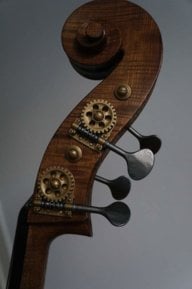
Though some folks do use the schoeps in a similar 90o orientation when suspended from the bridge on rubber bands

TalkBass has been independent since 1998. Add your voice.
Create a free account to reply to discussions, view embedded media, and browse with fewer display ads.
Join free Log in
Want zero display ads or expanded classifieds tools? Compare plans.
Thanks a lot for your comments and remarks. At the moment I'm ‘only’ interested in comparing the mics with each other to find out what you ‘lose’ if you use the Neumann instead of the Schoeps or the Sandhill. We don't (yet?) use microphones in the symphony orchestra, but for jazz gigs and some other small ensembles I'm very interested in amplification that is as ‘acoustic’ as possible. Another point is "practicability"...For LaFaro:
These are great pics of your testing setup. I'd like to make some comments, based on my experience working as a sound engineer for a major symphony orchestra and various big bands and jazz ensembles -
I'm sure you realize that your testing setup will result in a good comparison of the mics IN THAT TESTING ENVIRONMENT. One of the most important aspects of the mics you're interested in is how they'll react in the setting that you're playing in and the reason you're miking your instrument in the first place.
Your choice of mics will be governed, and might change, if you're playing for a recording or for amplification during a show. If recording, are you playing in a studio or during a live performance?
In both of the above scenarios, what else is in the vicinity of your area on stage? Are you in a section of contrabasses, with brass or percussion nearby? Are you set up next to a drum kit, like in a big band or jazz ensemble situation? Do you have the ability to have any plexi shields or sound-absorbing gobos around you?
Because not only do you need to compare the qualities of the mics in a place like your testing environment, but you also need to be concerned (or not) about leakage from other instruments. The DPAs, Neumanns, Prodipe e,g,, will perform great if you're a solo player or can isolate yourself on a stage. But if you're playing next to a drum kit in a big band, the DPA will be VERY problematic (I won't rile up others here by saying "worthless"). And so a pickup or very close mic - like the Yamahiko or Remic - will probably serve you better. If you WANT the leakage, or have to have the most natural-sounding leakage as possible like in a symphony setting, Neumanns, Schoeps, DPAs, Royers, etc are your choices.
I just got a pair of Neumann MCMs and have used them on grand piano with the lid on short stick. They sounded good with the placements I did, and the leakage from drums and a guitar amp was manageable and was a little less than 4099s, which many engineers swear by. I think the MCMs would sound even better with a solo piano and the lid on tall stick or removed. I still felt I wanted my Yamahiko or Accusound for the bottom 2 octaves and for feeds to on-stage monitors.
One of the things I like about the Remic - and they point it out in numerous online videos - is that you have a choice of 3 placements of the mic, and each positioning brings out different tonal qualities in your instrument and your playing style. The DPAs, Prodipe and Neumanns can't do that. I didn't know about the Remic supercardioid option; I'll have to check it out.
Unfortunately, MY experience with the Remic is that they're great for a musician who owns one and is miking his/her own instrument. If you're the engineer trying to get bass players to cooperate with you by agreeing to use the Remic, they don't want to be bothered - the Remic does take a bit of setup time (extra seconds) versus the simplicity of the clip-on DPA, which most players, by now, are familiar with. The symphony players I work with want to come on stage just barely before downbeat and they want to head for the exits (and the bar) before bows.
PS Other "stand mics" you should try are the Beyer M160, along with the Royer R-121 or R-122. Both are great ribbon mics with different and interesting characteristics. (And the rabbit hole gets deeper...)


The Neumann capsule is also replaceable and there is already an omnidirectional capsule with the KK 13. I'm curious to see if and when they will release a supercardoid capsule...Update
The new Remic Reshape DB mic is avaliable with a Supercardioid capsule. Since both the revered Schoeps CMC 6/MK41 and the Remic Reshape are Supercardioid
I’m very interested in demoing the new Remic which also has a detachable soft foam mounting block.
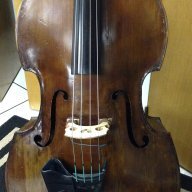
I have an sE filter-x (the cheap one), and it’s excellent. I mic’d a stereo pair of cardiod GTZ103’s (knock off Neumann) on a piano with the lid fully open for a concerto piece in my community orchestra. The piano was situated next to the percussion and French horns. Those mic’s were on a stereo bar, which you can only push it so far back into the filter but still great isolation. With smaller mics and the better filter I’d imagine, well, better isolationI was and am still thinking about a reflection filter like the sE...


“Another point is "practicability"...
I was and am still thinking about a reflection filter like the sE...
but I#m not decided yet...

Sounds great! That said Remic already has one and for me that’s good enough. I’m already to far down the Remic Road.The Neumann capsule is also replaceable and there is already an omnidirectional capsule with the KK 13. I'm curious to see if and when they will release a supercardoid capsule...
First impressions....I just started a "little comparison" between the Neumann MCM, the Schoeps, the Sandhill and the Brauner Phantom...
It is a continuation of the comparison with the Remic mentioned here:
https://www.talkbass.com/threads/dpa-mics.1664129/page-2#post-28842236
View attachment 7115673
View attachment 7115674
and for live it's such a thing....also because of crosstalk and so on... but maybe with a reflection filter a la sE?!?!?!?  ) The handling is completely uncomplicated.
I read somewhere, that the developers of the MCM also tested supercardioid characteristics, but they were not quite as satisfied with the sound in direct comparison to cardioid characteristics...Update
The new Remic Reshape DB mic is avaliable with a Supercardioid capsule. Since both the revered Schoeps CMC 6/MK41 and the Remic Reshape are Supercardioid
I’m very interested in demoing the new Remic which also has a detachable soft foam mounting block.
Is the Sandhill still the overall favorite?First impressions....
2) The Schoeps and the other ‘studio mics’ sound a tad (or even a bit more) better and more dynamic in direct comparison to the Neumann, and are also less noisy, although the Brauner is absolutely ahead...but there is more of a ‘crosstalk problem’...
Yes indeed... the Phantom is "more neutral" and a bit more realistic, but for my ears and my basses the Sandhill is more "musical" and with a little more warmth ... it's hard to explain.. perhaps in this way: "clear and natural and with great dynamics, but also with a certain warmth"...Is the Sandhill still the overall favorite?


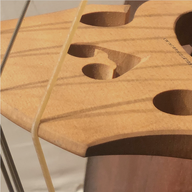
The bass and mic look great. How are you liking the mic several months in now?For my eyes the Neumann fits also my Primus de Quatuor very fine...
View attachment 7139599View attachment 7139598
I just connected the Neumann for a first "quick and dirty" check with the Grace Design Felix and from the first impressions I am quite enthusiastic
It seems to work really well together..
In between I sold my Remic, because I like the Neumann more and more and so it replaced the Remic, because it captures less background noise and sounds better...a supercardioid like the DPA might even catch a bit less noise, but for my ears the Neumann sounds better... In an interview with one of the developers of the MCM system, I read that after many tests and comparisons, they deliberately decided against the supercardioid because the cardioid characteristic sounded better to them and was easier to use...I don't know about the ATM35, but I've heard about this mic and it seems to work very fine also.. but I never hat the chance to check it out or to compare.. but if the ATM35 works for you, the Neumann MCM should do so also or even better...The bass and mic look great. How are you liking the mic several months in now?
How well does it reject off-axis, both bleed or feedback?
Just bought a Felix2 and using it with the ATM35 that I've had for 30 years: wondering if its worth upgrading to this. Thanks.

Yes it does...there is a little clip to secure the connection...Does the mic disconnect from the cord?


In addition this video might help to imagine the connections and possibilities of the MCMYes it does...there is a little clip to secure the connection...
View attachment 7262706View attachment 7262707

I have been using my old ATM 35 lately through a QSC CP8 (although I would really like to try an Everse 8) and it is VERY feedback resistant. I wonder if the Neumann could compare?I have an ATM35, but didn’t use it very often. I got it used and didn’t liked the sound first. But then I replaced the already disintegrating windshield (the one for the actual ones works) and the sound seemed to be a lot better then (nothing to complain).
Used it two days ago for flute and it sounded good.
For DB I bought the DPA rubber piece for DB (it was cheaper than it is now), bent a piece of aluminum to hold the rubber parts around the goose neck together, put in the goose neck and clamped the aluminium over it.
The goose neck is a bit short compared to the DPA, but it works.
An alternative would be using the ATM clamp at the DPA holder.
Others clamp the ATM to a larger adjuster wheel.
I found the ATM35 rather feedback resistant compared to other small diaphragm air mics (tried at home with a combo amp close to the bass), but have no comparison to other higher quality clip on mics (a very cheap electret I tried quickly goes into feedback).