I believe your talking over the OP's head.porting, speaker excursion, parts of a speaker, etc all work in a loudspeaker it music technology class.

Enjoy the benefits of a premium membership!
Upgrade Account
-
TalkBass has been independent since 1998. Add your voice.
Create a free account to reply to discussions, view embedded media, and browse with fewer display ads.
Join free Log in
Want zero display ads or expanded classifieds tools? Compare plans.
You are using an out of date browser. It may not display this or other websites correctly.
You should upgrade or use an alternative browser.
You should upgrade or use an alternative browser.
New bass amp/speaker concept
- Thread starter Caledonian_Enterprises
- Start date
More options
Who Replied?

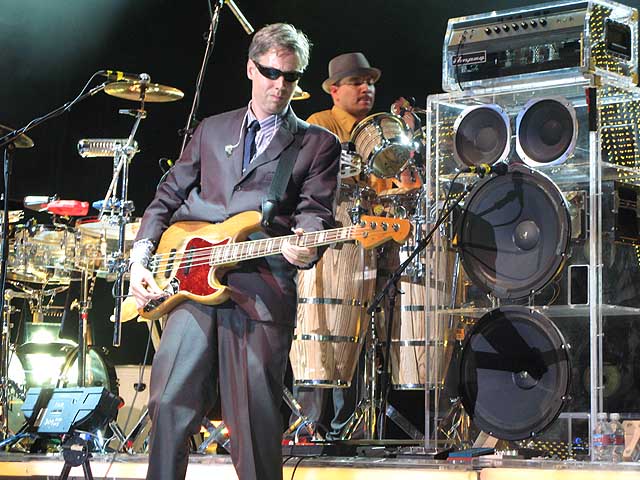
the Beastie Boys had an acrylic B15 back in the 90's.
Here is the B-15 that Ampeg did. It is more of a novelty concept.
The biggest issue was already mentioned. Sealed cabinets need to be filled with an energy damping material, ported cabinets need to be lined.


Play that rig with a Dan Armstrong and you'd have to worry about being seen, but everyone would hear you!!A Peavey as well.

SirMjac28
Patiently Waiting For The Next British Invasion
Great concept but I think it would work better for car audio applications.
Play that rig with a Dan Armstrong and you'd have to worry about being seen, but everyone would hear you!!
They may hear you, but I doubt the cab would sound good.

I would go with just the fronts being plexi as this will allow the "showy-ness" of it while maintaining more conventional weight and durability (plexiglass is strong but likes to scratch).Hey,
Im currently designing a concept valve amp/bass speaker for a uni project to take to market. its in early stages of development but will be constructed of plexi glass and lit with colour strips. Im looking for market feedback regarding interest in the product.
The spec shows the sizes and dimensions, the angle on the face to project the sound and some possible options.
The speakers selected were Eminence, Fane, Celestion.
The unit will come with wheels and an extention to pull it (making it portable).
Costing of the products would be - 12" setup, around £600. 15" setup, around £700. 4 x 10" setup, around £1000.
I also attached a picture to show an example of how the design should look.
Hope to incorporate a silent recording feature aswell.
Are you doing this with LED light bars (good for weight and reliability and I think cost) - if not think that way).
Make the lights responsive to either frequency or volume - so that there is a bit of a light "show" not just showy lights.
Final suggestion - have a footswitch to turn the effect on and off and to select between a number of "programs" - ideally selectable by the player.
EDIT: Okay, I saw that you are doing this with polycarbonate - but anything clear and shiny will show scratches so I still suggest you go just with the fronts.
ALSO - don't go with batting - engineer the cabs so they don't need it so they look good clear - this can be done with non-parallel sides, etc to reduce the standing resonances. This will mean the cabs will be designed around a particular driver set, but as other have said this is a niche market so having the option of a bunch of different drivers is probably not necessary.
Re: request for market feedback: I wouldn't be interested in this.

wmhill
Inactive
- Aug 20, 2012
- 4,054
- 17,209
- Disclosures
- MTD basses endorsed artist Bartolini pickups emerging artist TECAMP bass players gear endorsed
if you do start building these, definitely go with mixed driver sizes (say a 10 & a 15) to ensure maximum response (from the bass community, not the cab). It's not my thing, but it's a cool concept and would wait till I saw/heard one before I passed judgment on them.

Without a huge amount of care, they will look like something that's often confused with Shineola in short order - plastic loves to scratch, and it doesn't look good when it is. Add "sounding like crap" (or looking like a big clear box stuffed with polyfill) and you have a non-winning combination. Pass.
FYI - polycarbonate is even more prone to scratching than plexi/acrylic. It's tough, but it's also soft.
FYI - polycarbonate is even more prone to scratching than plexi/acrylic. It's tough, but it's also soft.

Absolutely NO reason for them cabs to sound bad - it's a bit of a myth (particularly with bass cabs) that cabinet resonance is part of the tone - the cab should be neutral - add nothing to the tone - or to be more accurate it shouldn't resonate itself - its design will change the response of the driver (and thus the amp) but the sides and baffle should not be adding resonances they should just be strong, stiff supports for the drivers and the air in the cabinet.They may hear you, but I doubt the cab would sound good.
Big Hoss
Up note, down note, blue note, brown note...
- Sep 5, 2014
- 5,455
- 4,234
- Disclosures
- None
Lighted plexiglass housed amp and cab? I'll pass. Too heavy, too much of a toy and not a real amp. Just, well gimmicky... I mean I guess if I was doing Sushi Bar gigs or something but aside from that, no thank you.
Absolutely NO reason for them cabs to sound bad - it's a bit of a myth (particularly with bass cabs) that cabinet resonance is part of the tone - the cab should be neutral - add nothing to the tone - or to be more accurate it shouldn't resonate itself - its design will change the response of the driver (and thus the amp) but the sides and baffle should not be adding resonances they should just be strong, stiff supports for the drivers and the air in the cabinet.
100% agree. How do you think that is going to be done with unbraced panels? Additionally the mids are going to get wonky with out batting.
This is 100% subjective, as some people look for tone out of their cab.
That's why I suggested just fronts for the clear part. - you get the look with better protection for the scratchy bits - add covers or removable front protection and you'll be good.Without a huge amount of care, they will look like something that's often confused with Shineola in short order - plastic loves to scratch, and it doesn't look good when it is. Add "sounding like crap" (or looking like a big clear box stuffed with polyfill) and you have a non-winning combination. Pass.
FYI - polycarbonate is even more prone to scratching than plexi/acrylic. It's tough, but it's also soft.
As I've said elsewhere - no need to sound bad - but I agree he has to design it without the batting - else they will really only appeal to a few audio geeks who get off on seeing the inner workings - this can be done and will be much cooler looking and have a wider appeal - still a narrow appeal - it's a little showy and "hair-band" for some, but would be great for a really showy band or something vaguely retro like a glam-rock group or Elvis (70s) tribute or something like that, or someone who likes to be showy and doesn't take themselves too seriously. And for major Arena rockers they'd be just right - I can see a wall of them behind Aerosmith or the backing band for Beyoncé or someone like that.

I think this might be the better way to go - leave the cabs as is and just do lighted panels that match the music. A lot of bands already have sneeze guards around the drums, why not put them around all the amps as well, and have them do the light show there as well?What's gonna protect the cab from accidental scratches? The plexiglass I've worked with was great against blunt forces and drops but sharp force and scratches marred it all up.
Also you could hook the lights up to a voltage sensitive device on the input so the cabs sync to your playing. Additionally a MIDI or CV in for control via the house light controllers. Itd be a sick idea for backline if it was hooked up to your whole light show scheme and the whole band had em. Also multi colours/different colors on different faces? You could also market small demo speakers as an educational device for music tech classes (I.e. a speaker where you can see the inside and show your students how porting, speaker excursion, parts of a speaker, etc all work in a loudspeaker it music technology class.) just my 2 cents I think its a neat flashy idea!
They will absolutely have to be braced - but if done well with the clear polycarb will look cool.100% agree. How do you think that is going to be done with unbraced panels? Additionally the mids are going to get wonky with out batting.
This is 100% subjective, as some people look for tone out of their cab.
Proper engineering can deal with the mids.
Subjective? Yes - but again the tone is from the cab design interacting with the drivers, not from the cabinet resonating on its own. That's why I clarified - cabinet as a SYSTEM adds tremendously to the final tone - as a BOX or resonant piece should add none.
They will absolutely have to be braced - but if done well with the clear polycarb will look cool.
Proper engineering can deal with the mids.
Subjective? Yes - but again the tone is from the cab design interacting with the drivers, not from the cabinet resonating on its own. That's why I clarified - cabinet as a SYSTEM adds tremendously to the final tone - as a BOX or resonant piece should add none.
I think you are arguing with the wrong person on all these points, as they are usually the ones I bring to the table in most threads.
They are not really pertinent here, because the construction using said material isnt viable. It offers no benefit over wood, other than aesthetics. While that may appeal to some, its not something one should build a business model on.
To the bolded part, I dont think that adding the bracing and batting to such a cab, to remove the cabs resonance, is going to hold up with transparent pannels. Takes all the cool factor out of this, and leaves you with a fragile, dumpy looking cab.
I didn't realize we were arguing - just exchanging opinions and ideas. I have no horse in this race.I think you are arguing with the wrong person on all these points, as they are usually the ones I bring to the table in most threads.
They are not really pertinent here, because the construction using said material isnt viable. It offers no benefit over wood, other than aesthetics. While that may appeal to some, its not something one should build a business model on.
To the bolded part, I dont think that adding the bracing and batting to such a cab, to remove the cabs resonance, is going to hold up with transparent pannels. Takes all the cool factor out of this, and leaves you with a fragile, dumpy looking cab.
I actually agree with what you are saying - I was just making suggestions to make his concept work. I think he has a long road ahead of him to make this a business, but that's an entirely different issue - he asked for suggestions to make the product the most viable possible.
As for the braces being non-viable - I'm not entirely sure of that but while I think bracing could very easily wreck the look, but could, if done extremely well, look okay - though this would involve really high end labour which would probably eliminate profitability at any scale of manufacturing.
The ONLY benefit of the material is aesthetics in this case - same as on Bonham's old drums, the cabs/amps previously done this way and most guitars/basses done in acrylic. That's why it's a niche product.