

Enjoy the benefits of a premium membership!
Upgrade Account
-
TalkBass has been independent since 1998. Add your voice.
Create a free account to reply to discussions, view embedded media, and browse with fewer display ads.
Join free Log in
Want zero display ads or expanded classifieds tools? Compare plans.
You are using an out of date browser. It may not display this or other websites correctly.
You should upgrade or use an alternative browser.
You should upgrade or use an alternative browser.
New Bass Day - Gibson Ripper II
- Thread starter abngourmet
- Start date
More options
Who Replied?


?!?! I've never heard of the "Ripper II" What years were they made? Did they get an alphanumeric designation, like the original Ripper's "L-9S"? How does it differ from the original?
(I owned an original for a couple years in the late 1970s, fwiw)
(I owned an original for a couple years in the late 1970s, fwiw)
The Ripper II was a Special Edition produced in 2009. 350 of them - I think mine in #34.
Difference with the originals ...
Headstock is shorter ...
Neck is thinner widthwise ....
Corian nut.
Pickups - much better, with hotter output in my opinion.
Tone Controls - the six position switch taps different coils. Much better than the series/parallel/in or out of phase of the originals in my opinion.
It still has the crappy three point bridge, but I replaced that with a Hipshot, which is a huge improvement in my view.
Overall - a much more playable bass in more situations in my view.
Difference with the originals ...
Headstock is shorter ...
Neck is thinner widthwise ....
Corian nut.
Pickups - much better, with hotter output in my opinion.
Tone Controls - the six position switch taps different coils. Much better than the series/parallel/in or out of phase of the originals in my opinion.
It still has the crappy three point bridge, but I replaced that with a Hipshot, which is a huge improvement in my view.
Overall - a much more playable bass in more situations in my view.


 . If possibly can you A/B the original & the re-issue. Other than the big differences.
I've done some A/Bing, and here's my take ...
Playability - both play fairly well, but I'd have to give the nod to the Ripper II overall. The neck is thinner front to back, making it "faster" if you will.
Tones - it really depends on what you're going for. The II definitely has a modern vibe to it, and I find the ability to tap coils very useful. The original Ripper was a bit more limited - the in/out of phase, parallel, series, etc. settings are great, but aren't as versatile in a modern context in my view.
Construction - The body on the II is more akin to the later iterations of the originals. Gibson changed the body a bit during the production run, and this one looks more like the later 70s/early 80s models to me. It's a bit more comfortable ergonomically as a result. And unlike some recent Gibson stuff, fit and finish is top notch.
Balance - the shorter headstock leaves the II with a nice 2 o'clock position when standing (it helps that I use Moody straps). My original balances well too, but I think the edge goes to the II here.
Adjustability - both adjust well trussrod wise. I've already covered the three point bridge - why Gibson still uses that monstrosity (other than for cost control) is beyond me. No wonder they've gone to the Babicz on the Thunderbird.
Overall, this is, IMHO one of the better basses Gibson has put out in recent years. I must say I like what they've done with the Thunderbird - I had the opportunity to play a 2015 model, and it was a very good idea to ditch the TBird Plus pickups - they just out and out suck IMHO. The coil tapping is a great idea too, and it works. Now, if it didn't cost almost $2500, they might be onto something ..... ;-)
Playability - both play fairly well, but I'd have to give the nod to the Ripper II overall. The neck is thinner front to back, making it "faster" if you will.
Tones - it really depends on what you're going for. The II definitely has a modern vibe to it, and I find the ability to tap coils very useful. The original Ripper was a bit more limited - the in/out of phase, parallel, series, etc. settings are great, but aren't as versatile in a modern context in my view.
Construction - The body on the II is more akin to the later iterations of the originals. Gibson changed the body a bit during the production run, and this one looks more like the later 70s/early 80s models to me. It's a bit more comfortable ergonomically as a result. And unlike some recent Gibson stuff, fit and finish is top notch.
Balance - the shorter headstock leaves the II with a nice 2 o'clock position when standing (it helps that I use Moody straps). My original balances well too, but I think the edge goes to the II here.
Adjustability - both adjust well trussrod wise. I've already covered the three point bridge - why Gibson still uses that monstrosity (other than for cost control) is beyond me. No wonder they've gone to the Babicz on the Thunderbird.
Overall, this is, IMHO one of the better basses Gibson has put out in recent years. I must say I like what they've done with the Thunderbird - I had the opportunity to play a 2015 model, and it was a very good idea to ditch the TBird Plus pickups - they just out and out suck IMHO. The coil tapping is a great idea too, and it works. Now, if it didn't cost almost $2500, they might be onto something ..... ;-)

Congrats! I went by there a few weeks ago, might have been the same bass I saw on the wall. Looks like a real winner! A friend of mine had a former employee of Gruhn, Dave Johnson (Scale Model Guitars), to build him a Ripper clone. Those are such cool looking basses. So much personality.
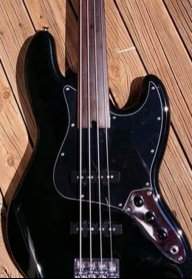
I've not played a Gibson bass that i've liked (looks or feel) but for looks this thing made me go "wow" when i opened the photo. Very nice.

I've done some A/Bing, and here's my take ...
Tones - it really depends on what you're going for. The II definitely has a modern vibe to it, and I find the ability to tap coils very useful. The original Ripper was a bit more limited - the in/out of phase, parallel, series, etc. settings are great, but aren't as versatile in a modern context in my view.
.
.
.
why Gibson still uses that monstrosity (other than for cost control) is beyond me. No wonder they've gone to the Babicz on the Thunderbird.
Funny, but my opinion differs on a couple of points.
I own an all original '74 Ripper. I bought it new back in April of 1974. And I got a relatively short crack (about 30 minutes courtesy of its owner) on a Ripper II. That short amount of time may be why I possibly missed something that somebody who owned one (and was able to put some quality hours in on it) might notice.
But...my impression was that, while it was a very nice bass, it just didn't seem like a Ripper to me. Other than the visual resemblance, it was a totally different beast. The tones I could get out of it were significantly different. The Lawrence pickups on the original, and the oddball (for the times) wiring scheme, gave the original L9-S that characteristic Ripper sound I've never heard on any bass before of since. It's a "70's sound" to be sure. But it's a good 70's sound IMO.
I know Gibson can't exactly duplicate the old pickups because they supposedly used an oddball magnet alloy that's no longer made. But to substitute those replacement SDs with their hotter more modern sound and a totally different wiring scheme just didn't do it for me. The Ripper II is a very nice bass. But it wasn't a Ripper AFAIC. Not to say I wouldn't have bought one. Because I really intended to get one. But $3700? Seriously? And for that money they couldn't even give you a snazzier finish or inlay the Gibson logo? No burst or pretty transparent colors -natural only? And the logo is just a silkscreen? Dunno. Didn't scope out as a good deal for me.
As far as that 3-point bridge, I've never had a problem with one of those. I know it's the thing to bash them. But I don't think they detract all that much from the sound. Because I've played Rippers retrofitted with everything from a Badass to a Babicz bridge - and my ears didn't think that mod brought all that much to the party sound-wise. But that's probably just me.
Anyway, that's one sweet bass you've got there. Ignore me and play it well. It's definitely worth owning.

Last edited:
40 - like you I own a '74 Ripper (mine even has the tortoise shell pickguard, which I understand is fairly rare). I'd agree that the tones between the two are definitely different - the originals are true to their period correct in/out of phase, series/parallel wiring schemes, whereas the Ripper II is much more modern in that it taps different coils, as well as providing options for bridge/neck pickup only options.
I see the Ripper II as an improvement on the original (which, of course doesn't make the original Ripper a bad bass - just different). For me, it is far more comfortable from a playability standpoint, and I really like the pickups and electronics.
I'd agree that the original $3700 price was a bit excessive, even for a limited edition. The price I paid for this one was more than half that, so I think I got a pretty good deal. As for finish, there weren't a lot of black and/or sunburst Rippers made to begin with, so I think they got it right by going with the natural finish, as that was the largest number produced in terms of the originals.
The logo on the original was silkscreened, so my guess is that's why they went with that.
I hate Gibson three point bridges, not so much from a tonal/sonic viewpoint, but from an adjustability tack. You can't adjust individual saddles with the three-point, whereas with other bridges (the Hipshot, Babicz, etc.) you can. Also, the adjustment screw for intonation is in the front of the bridge, not at at the rear, which I consider a pain in the ass (more difficult to fit a standard screwdriver from the front). That bridge is "floating" most of the time too, minimizing contact with the body and potentially impacting sustain, resonance, what have you. As the Ripper, old and new is a set neck instrument, most of the tone produced by the instrument comes from the body. The more contact the bridge has with that body, the more tone is affected. Of course, tone is very subjective, so the three point might work for some, and not work for others. I'm in the not-work-for-others camp. To each his/her own as they say.
And yeah, it's sweet. I really like it, and I think if Gibson were able to produce this same bass at a reasonable price, they might (finally) have a hit on their hands.
I see the Ripper II as an improvement on the original (which, of course doesn't make the original Ripper a bad bass - just different). For me, it is far more comfortable from a playability standpoint, and I really like the pickups and electronics.
I'd agree that the original $3700 price was a bit excessive, even for a limited edition. The price I paid for this one was more than half that, so I think I got a pretty good deal. As for finish, there weren't a lot of black and/or sunburst Rippers made to begin with, so I think they got it right by going with the natural finish, as that was the largest number produced in terms of the originals.
The logo on the original was silkscreened, so my guess is that's why they went with that.
I hate Gibson three point bridges, not so much from a tonal/sonic viewpoint, but from an adjustability tack. You can't adjust individual saddles with the three-point, whereas with other bridges (the Hipshot, Babicz, etc.) you can. Also, the adjustment screw for intonation is in the front of the bridge, not at at the rear, which I consider a pain in the ass (more difficult to fit a standard screwdriver from the front). That bridge is "floating" most of the time too, minimizing contact with the body and potentially impacting sustain, resonance, what have you. As the Ripper, old and new is a set neck instrument, most of the tone produced by the instrument comes from the body. The more contact the bridge has with that body, the more tone is affected. Of course, tone is very subjective, so the three point might work for some, and not work for others. I'm in the not-work-for-others camp. To each his/her own as they say.
And yeah, it's sweet. I really like it, and I think if Gibson were able to produce this same bass at a reasonable price, they might (finally) have a hit on their hands.

40 - like you I own a '74 Ripper (mine even has the tortoise shell pickguard, which I understand is fairly rare). I'd agree that the tones between the two are definitely different - the originals are true to their period correct in/out of phase, series/parallel wiring schemes, whereas the Ripper II is much more modern in that it taps different coils, as well as providing options for bridge/neck pickup only options.
I see the Ripper II as an improvement on the original (which, of course doesn't make the original Ripper a bad bass - just different). For me, it is far more comfortable from a playability standpoint, and I really like the pickups and electronics.
I'd agree that the original $3700 price was a bit excessive, even for a limited edition. The price I paid for this one was more than half that, so I think I got a pretty good deal. As for finish, there weren't a lot of black and/or sunburst Rippers made to begin with, so I think they got it right by going with the natural finish, as that was the largest number produced in terms of the originals.
The logo on the original was silkscreened, so my guess is that's why they went with that.
I hate Gibson three point bridges, not so much from a tonal/sonic viewpoint, but from an adjustability tack. You can't adjust individual saddles with the three-point, whereas with other bridges (the Hipshot, Babicz, etc.) you can. Also, the adjustment screw for intonation is in the front of the bridge, not at at the rear, which I consider a pain in the ass (more difficult to fit a standard screwdriver from the front). That bridge is "floating" most of the time too, minimizing contact with the body and potentially impacting sustain, resonance, what have you. As the Ripper, old and new is a set neck instrument, most of the tone produced by the instrument comes from the body. The more contact the bridge has with that body, the more tone is affected. Of course, tone is very subjective, so the three point might work for some, and not work for others. I'm in the not-work-for-others camp. To each his/her own as they say.
And yeah, it's sweet. I really like it, and I think if Gibson were able to produce this same bass at a reasonable price, they might (finally) have a hit on their hands.
Yesiree. Like I said, I wanted very much to buy one. But not at the price. If it exactly duped the original Ripper sound I might have bit the bullet anyway. But for a completely different sounding bass? There's plenty of those to choose from at the just below $4k price point. Nice to see you got a deal on yours. At $1500 or so I would have grabbed one for sure.
I keep hoping they'll bring back the Victory Artist. Now that covergirl was a bass worth getting. I regret not springing for one back in '81 when I had the chance.

I had a Victory Artist. It weighed over 10 pounds. It had a neck that was too big for me, and tones that were derivatve. To each his/her own.
I had a Victory Artist. It weighed over 10 pounds. It had a neck that was too big for me, and tones that were derivatve. To each his/her own.
Just out of curiosity, derivative of what exactly? I've heard that said before about certain Gibson basses. But nobody ever seems to say precisely what they mean by saying that.
Could you elaborate a bit for my benefit?
40 - the tones were derivative in the sense that at the time, they didn't set themselves apart. For example, my
'79 Musicman Stingray has tones that are ver distinct from the Fenders of the day. The Gibsons of that day, to include the Victory weren't all that distincitive at the time. This is one reason they didnt sell well back then.
'79 Musicman Stingray has tones that are ver distinct from the Fenders of the day. The Gibsons of that day, to include the Victory weren't all that distincitive at the time. This is one reason they didnt sell well back then.
40 - the tones were derivative in the sense that at the time, they didn't set themselves apart. For example, my
'79 Musicman Stingray has tones that are ver distinct from the Fenders of the day. The Gibsons of that day, to include the Victory weren't all that distincitive at the time. This is one reason they didnt sell well back then.
Interesting. One of the big Gibson dealers in my area said the biggest impediment to their sales that he saw was the fact that they were active - and most bass players wanted no part of that back then. The whole idea of putting a battery in an instrument met with heavy resistance at first.
The other problem he said was the price. Didn't say anything about their tone not being distinct enough, or that it was ever an issue. You either liked the "Gibson bass sound" or you didn't. And there was so much momentum behind Fender (and there still is) that it was pretty hard to sell any bass that wasn't a P or a J unless the price was really right. As he described it, the Victory was too expensive, complicated, and different to sell well. Especially since the de facto "designated maverick" basses were Rics and TBirds for those who wanted something different looking and sounding. There wasn't much room for a third entry in that sector.
As far as the sound goes, I thought they had a truly unique voice and a pretty broad range of usable tones - plus some interesting sonic subtleties once you got into playing with the controls and varying your plucking hand's position and attack. In that regard they struck me as one of the most sensitive and responsive basses ever built. Or so it seemed to me.
"But to each his/her own" as you said earlier. I personally thought the Victory bass was way ahead of it's time and superior to most of what was on the market when they were introduced. By today's standards they would probably be seen as just another midpriced bass. But back when they first came out, they came across like something from Mars. About the only people that were doing anything more radical or sophisticated with the electric bass at that point was Ric Turner and Alembic.
Oh well. It's over now, for better or for worse. In the meantime I'll remain hopeful. And if I get frustrated enough with waiting, maybe someday I will build one from scratch like I keep threatening to do.

Last edited:
40 - I remember when the Victory and RD series came out. They were different from other marques at the time, but really weren't all that complicated to me. The RD had two toggle switches and four knobs (later they went to two mini switches and a regular toggle switch), and the Victory Artist had two switches and three knobs. I guess, though, if you're used to one volume and one tone knob, or two volume and one tone knob, that might be excessive.
I still have my RD Artist (I sold the Victory a while back - just too heavy), and while I like it, it is just too heavy to play in a gig situation (I did one set with it once, and my back hurt so bad I put it on a stand and used my backup bass). Sitting down it's no problem, and you can get a lot of cool tones out of it. The weight is the primary issue, but I love how it looks and plays.
I'd agree that Gibson basses are, for most bass players an acquired taste. I've always liked them myself, mainly because they're something different from what most players use. I'd also agree that you either like the Gibson "tone" or you don't.
I think if the Victory didn't weigh as much as it does, it may have sold better. Same goes for the RD. BTW, both basses were available with simpler electronics, so for me, the "it's too complicated" assertion doesn't make a lot of sense. But hey, what do I know? ;-)
Maybe Gibson will come out with a Victory reissue that's a bit lighter? Now that's a bass I'd be willing to buy.
BTW, I've got a '73 EB-3 I'm willing to part with if anyone is interested .... ;-)
I still have my RD Artist (I sold the Victory a while back - just too heavy), and while I like it, it is just too heavy to play in a gig situation (I did one set with it once, and my back hurt so bad I put it on a stand and used my backup bass). Sitting down it's no problem, and you can get a lot of cool tones out of it. The weight is the primary issue, but I love how it looks and plays.
I'd agree that Gibson basses are, for most bass players an acquired taste. I've always liked them myself, mainly because they're something different from what most players use. I'd also agree that you either like the Gibson "tone" or you don't.
I think if the Victory didn't weigh as much as it does, it may have sold better. Same goes for the RD. BTW, both basses were available with simpler electronics, so for me, the "it's too complicated" assertion doesn't make a lot of sense. But hey, what do I know? ;-)
Maybe Gibson will come out with a Victory reissue that's a bit lighter? Now that's a bass I'd be willing to buy.
BTW, I've got a '73 EB-3 I'm willing to part with if anyone is interested .... ;-)

Do you still have this bass? If you could take some detailed pictures of the wiring that would be amazing!


