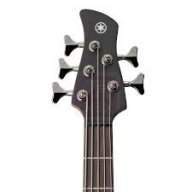
I tried one at the store the other day and really loved it too (but it was unplugged). The feeling for a 6 string was incredible, the neck is a joy to play. But I wish it has a better body finish.I used to have one and I loved it.

Enjoy the benefits of a premium membership!
Upgrade Account
-
TalkBass has been independent since 1998. Add your voice.
Create a free account to reply to discussions, view embedded media, and browse with fewer display ads.
Join free Log in
Want zero display ads or expanded classifieds tools? Compare plans.
You are using an out of date browser. It may not display this or other websites correctly.
You should upgrade or use an alternative browser.
You should upgrade or use an alternative browser.
New bassist - 6 strings?
- Thread starter MrAwesomes
- Start date
More options
Who Replied?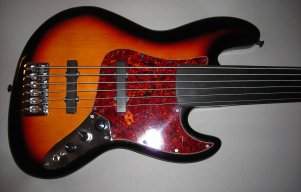
Since a six-string bass is most commonly tuned all-fourths just like the four- and five-string variants, it's a fairly "regularly" tuned instrument much like your cello (except that was all-fifths, I assume) and shouldn't be hard to adapt to.
The only thing that may slow down your progress is the fact six-string basses tend to have narrow string spacing. The GSR206 you're looking at has a string spacing of only 16.5mm, compared to five- and four-string basses that can have 17, 18 and even 19mm spacing. Narrow spacing may not be a problem if you're playing fingerstyle, but it might be an impediment if you're trying to slap, as it's hard to nail one string at a time with your thumb at first. It can be done, it will take more time than if the strings were a bit more separate, but don't get discouraged.
I made my leap from 4 to 5 in one year, and from 5 to 6 in the next one. I never regretted it and my sixer is still my favorite instrument, though I still go back to both the four and the five from time to time.

As a beginner you'll have to resolve a few issues before you are really experienced enough to resolve them. And that has to do with what kind of music you are interested in. I divide basses into 4 string and 5-6 string because of the way you play them. The guy who said he was glad he learned on a 4 string because then he could sit-in etc. and play one was right. Also a 4 string is probably what you want for old school and most people find them muc easier for slap. I know i do.
But 4 strings also have problems. Range is limited. Eb keys mean you are missing a low note unless you detune and you tend to play up and down the neck a lot. A 5-6 string has a wide range of notes across the neck, has extended lows for horn keys, as well as highs for solos and chords that aren't muddy.
For these reasons, you have to decide what kind of musical approach to bass interests you. In short, as most have said here, pick the instrument to learn that turns you on.
I feel the myth that you start on a 4 string and "move up" to 5 or 6 is nonsense. Hey I started on a 4 string upright and "moved up" to a 4 string bass guitar. Right? Funny you never hear people saying that!
But on the other hand if a 5-6 string thing has tweaked your interest, I strongly recommend you start on a 6 string. I really never quite "got" what a 5-6 string bass was about when I only had a 5er. Like so many I figured it was just a 4 stringer with a couple of extra notes. Wrong. You play it quite differently. That was driven home to me when I gota 6 string and discovered I had to deal with a wide neck using proper hand positions, I had to deal with string damping in an effective manner, I had to learn cross-neck scale patterns, and I had to learn how to use those extra high and low notes TASTEFULLY!
Having done that, a 5 string then is simply a move back minus a string that I do either because the intrument in question does not come in a 6 string (example: my G&L L2500s) or the music doesn't need the extra high notes and it's just lazier to not carry a 6er around and play it without using the c string.
As for nice noob 6ers there is some great stuff out there. I've got an Ibanez SR206 and an SR506, both are killer thin necked 6 string. I also have a ESP LTD Spalted maple 6 string that looks like a million and sounds and plays as good as it looks (is heavy though) in the same price range. Look a used 6er. GREAT buys out there. Yeah, used means you have to put up with a color someone else picked out but it sure saves your wallet!
Personally I never play 4 strings anymore (except my 8 string which is in essence a 4), but then I'm not doing old school music either. But I played 4 strings for MANY years and I can do it again if the music demands it. But right now I love my 5 and 6 string basses!
Thanks for the detailed response! I think you've confirmed for me what most people were saying. I'm definitely getting a 6 string.
I'm more into modern metal/rock and don't really have an interest for old school stuff, and as for slap... I don't get the appeal of it. I just don't like slap.a 4 string is probably what you want for old school and most people find them muc easier for slap. I know i do.
Again, this is what I'm interested in. I tried detuning my cello before and the result was... disasterous. I've bought a little device to help tune it just because of that. I'd rather have all the notes there without messing about with the tuning; I only really want to deal with minor issues of going out of tune. Solos are probably going to be useful as (so far) I don't know anyone interested in forming a band who actually knows what they're doing.But 4 strings also have problems. Range is limited. Eb keys mean you are missing a low note unless you detune and you tend to play up and down the neck a lot. A 5-6 string has a wide range of notes across the neck, has extended lows for horn keys, as well as highs for solos and chords that aren't muddy.
Makes sense.pick the instrument to learn that turns you on.
I guess I'm in a similar situation, going from cello to bass. I've just got to get used to being tuned in fourths instead of fiths.I feel the myth that you start on a 4 string and "move up" to 5 or 6 is nonsense. Hey I started on a 4 string upright and "moved up" to a 4 string bass guitar. Right? Funny you never hear people saying that!
Yep. 6 string it is.if a 5-6 string thing has tweaked your interest, I strongly recommend you start on a 6 string. I really never quite "got" what a 5-6 string bass was about when I only had a 5er. Like so many I figured it was just a 4 stringer with a couple of extra notes. Wrong. You play it quite differently. That was driven home to me when I gota 6 string and discovered I had to deal with a wide neck using proper hand positions, I had to deal with string damping in an effective manner, I had to learn cross-neck scale patterns, and I had to learn how to use those extra high and low notes TASTEFULLY!
Having done that, a 5 string then is simply a move back minus a string that I do either because the intrument in question does not come in a 6 string (example: my G&L L2500s) or the music doesn't need the extra high notes and it's just lazier to not carry a 6er around and play it without using the c string.
The main one I'm looking at is an Ibanez GSR206. After Righteous Thunderer said I should look at secondhand guitars for better value the SR506 was my next choice, but it seems people only want to sell them in America and demand ridiculous shipping prices for me in the Uk -.- I'll keep looking though, they do seem very nice, and the reviews are good too.As for nice noob 6ers there is some great stuff out there. I've got an Ibanez SR206 and an SR506, both are killer thin necked 6 string.
Thanks for the detailed response! I think you've confirmed for me what most people were saying. I'm definitely getting a 6 string.
The main one I'm looking at is an Ibanez GSR206. After Righteous Thunderer said I should look at secondhand guitars for better value the SR506 was my next choice, but it seems people only want to sell them in America and demand ridiculous shipping prices for me in the Uk -.- I'll keep looking though, they do seem very nice, and the reviews are good too.
Yes, mine is a GSR206. The main diffrences from the SR506 is that the 506 is 24 frets... I don't know, somehow I just like the IDEA of two octaves up the neck even though it really isn't that important! And GSR206 has a problem with even volume across the strings (note mine is older and may be different from newer ones) It's easy to fix with a bit of bass and treble boost, but that sort of limits the versatility of your tone. But to tell the truth I like the tone of the 206 a tiny bit better! Both basses play like dreams!
I think if i were buying now I'd look very closely at a bit more money for the SR256. Very nice! And I don't think much of that dull wood finish they are putting on these basses now. Mine are older, and just plain black paint. Look good enough for me! (SR256 is also paint)
But on the other hand if a 5-6 string thing has tweaked your interest, I strongly recommend you start on a 6 string. I really never quite "got" what a 5-6 string bass was about when I only had a 5er. Like so many I figured it was just a 4 stringer with a couple of extra notes.
ummmm... this... I think, err kind of...
I think if you look around here... You will find a TON of people saying something to the effect of...." I bought a 5 or a 6, I only play 4 strings , and then I will basically use the B or C as "an effect"..
The thing is. If you take the "graduate up" strings mind set, then you may never really learn or understand using the whole instrument as a single cohesive instrument.
Put it this way.. How many times have you ever heard..
"ooh you have 88 keys!! You must be REALLY good!"
Doesn't happen, because an extra octave either way really does not effect things.
Or
"Wow! You have 24 frets, you must practice a whole bunch to learn that!"
A few thoughts, in no particular order:
Definitely buy the bass you want, one that feels good and looks good to you. So when you see it you want to play it, and not think "I wish I bought that other one instead."
You've been playing cello for nine years, and now you're starting bass. You'll probably be playing bass at least a little for the rest of your life. Any basses you don't buy now but end up needing or wanting, you'll get.
Definitely buy used. You'll get a lot more bass for your buck, maybe twice as much. But then again, if there's a new one you really really want, get it.
Cello is tuned in fifths, with the lowest pitched string tuned to C, right? So you have C,G,D&A, which are the top four strings of a typical six-string bass, but upside down. So those four strings will be a piece of cake.
As somebody else remarked, you're a long way past the beginner stage, before you've even started. Find a band, immediately! Or start one. Really! Today! You're SO far ahead of where most of us started!
Do you have an amp? If not, you'll need to get one (obviously). But that's another discussion.
Good luck! It's gonna be great!
Definitely buy the bass you want, one that feels good and looks good to you. So when you see it you want to play it, and not think "I wish I bought that other one instead."
You've been playing cello for nine years, and now you're starting bass. You'll probably be playing bass at least a little for the rest of your life. Any basses you don't buy now but end up needing or wanting, you'll get.
Definitely buy used. You'll get a lot more bass for your buck, maybe twice as much. But then again, if there's a new one you really really want, get it.
Cello is tuned in fifths, with the lowest pitched string tuned to C, right? So you have C,G,D&A, which are the top four strings of a typical six-string bass, but upside down. So those four strings will be a piece of cake.
As somebody else remarked, you're a long way past the beginner stage, before you've even started. Find a band, immediately! Or start one. Really! Today! You're SO far ahead of where most of us started!
Do you have an amp? If not, you'll need to get one (obviously). But that's another discussion.
Good luck! It's gonna be great!

Dont be afraid just to start with a 6, you wont even realize the strings are closer together. Check out the esp b206. For the price you wont find a better playing or sounding six.
you could get really really clever and tune the bass in 5ths. as it's what you're already used to.
Yes, mine is a GSR206. The main diffrences from the SR506 is that the 506 is 24 frets... I don't know, somehow I just like the IDEA of two octaves up the neck even though it really isn't that important!
I think if i were buying now I'd look very closely at a bit more money for the SR256. Very nice! And I don't think much of that dull wood finish they are putting on these basses now. Mine are older, and just plain black paint. Look good enough for me! (SR256 is also paint)
I didn't realise the 206 only had 22 frets :/ I assumed all the SR and GSR (Aren't they the same thing?) had 24. Still, it doesn't matter too much, though I like the idea of a full 2 octaves as well... I'm having the same problem finding SR256's as I did with the 506 - Nobody in England seems to have or want to sell them
 I'm not a fan of the pearl white colouring either; it just doesn't suit me at all. GSR206 is still looking like my best bet, even if those two missing frets make me slightly upset.
haha... That sort of rhymed...
As for amps, I've pretty much settled on a Fender Rumble, seeing as the reviews say it has a good range of tones for its price which I'd love to have a play with. If any of the fine people here at TalkBass have better suggestions though, I'd love to hear them!

Those fender rumbles are alright, especially the 2x10 combos. I used one for quite a while with a drummer and acoustic guitar/vocals through a P.A... it did alright. The GSR is a lower quality bass than the other Ibanez's, more of an entry model. I'm sure it's a fine instrument though, because even Ibanez's cheapest stuff is pretty good.
I bought the Ibanez GSR206 a few weeks ago and I've had no problems with it at all so far... It's actually a lot better than I expected! Sounds great and easy enough to play 
I bought the Ibanez GSR206 a few weeks ago and I've had no problems with it at all so far... It's actually a lot better than I expected! Sounds great and easy enough to play
Not surprised at all. Tone and playability are the two thing everybody always talks about when it comes to Ibbys.
Construction quality is a bit lower on a GSR206 compared to my SR506, But there are really no serious problems with the 206. What can I say. I paid almost as much for the GSR206 used as I did for used SR506. I got the SR506 of EBAY so didn't get to see it first and just bought based on price. The GSR206 was in the Music Go Round used instrument store and as soon as I had it in my hands and plugged it into an amp I KNEW i'd be leaving the store with it! And have not been sorry since.
Eventually the plan is to turn one of them into a fretless.
Good going!

Regardless of how many strings you buy, do yourself a huge favor: Buy something used. Shop around, so you know that you're paying a fair price for whatever you buy. Whatever you can buy, new, on your budget, you can get a much nicer bass used, for the same money.
And, if you pay a fair price for a used bass, you should be able to sell it later for approximately what you paid. If you buy a brand new bass and ever sell it, you'll lose roughly half your money.
Be patient and shop smart.
And, if you pay a fair price for a used bass, you should be able to sell it later for approximately what you paid. If you buy a brand new bass and ever sell it, you'll lose roughly half your money.
Be patient and shop smart.

As a beginner, I would say no more than 5 and 4 should be the start unless someone is giving you a 6, don't go buy one until you understand more
He did say he's been playing cello for 9yrs, and is well versed in Theory and such. All he seems to need is the mechanics of playing bass. It's not like he's new to music and starting from scratch.


