• TalkBass has been independent since 1998. Add your voice.
    Create a free account to reply to discussions, view embedded media, and browse with fewer display ads.
    Join freeLog in
    Want zero display ads or expanded classifieds tools? Compare plans.

New GK Plex Preamp

I would certainly agree that between the two, the Plex has more options than the Rumble. My inexperience just never imagined that it was best to choose one over the other rather than combining the two.

I'm assuming then that all comparable products, e.g. SansAmp, are best used the same way, i.e. through the effects return. Would that be correct? If so, then what about when one has a collection of effects. Isn't that normally run to the input of the amp (engaging the amp's preamp) rather than the effects return?

Just curious, but don't you have the same problems when plugging in an active bass to an amplifier, i.e. stacking pres? Or is there a power difference between the preamp within a bass when compared to an external preamp like the Plex?

Thanks everyone for the education. Appreciate your patience and helpfulness.
I think of active basses preamps as seasoning when going into an amp or preamp and just make small adjustments on the Bass. I usually start with the amp set flat and the bass preamp set flat. Ill get my sound dialed in on the amp and then tweak the bass pre if I need to. On the other hand if it's an amp I'm not familiar with or don't particularly enjoy ill set the amp flat and tweak the bass preamp. It's really up to what your ears tell you. But in my experience stacking preamps and eqs can create unwanted results.
Yes I've found that preamps that impart a specific sonic character, sansamps for example sound better to me going into the effects return than in front of the amps eq. But I'm sure there are just as many others who have had good results going into the amp.
Brent

 
I tried the USB soundcard of the Plex today. I noticed that it does not capture the effects in the effects loop. I was trying to make sound samples from the patches of my Zoom B3n and it's in the loop only to find in my DAW that the two signals are the raw and the one effected by Plex's EQ.

Has anybody also tried or can confirm this? @rag
 
I think of active basses preamps as seasoning when going into an amp or preamp and just make small adjustments on the Bass. I usually start with the amp set flat and the bass preamp set flat. Ill get my sound dialed in on the amp and then tweak the bass pre if I need to. On the other hand if it's an amp I'm not familiar with or don't particularly enjoy ill set the amp flat and tweak the bass preamp. It's really up to what your ears tell you. But in my experience stacking preamps and eqs can create unwanted results.
Yes I've found that preamps that impart a specific sonic character, sansamps for example sound better to me going into the effects return than in front of the amps eq. But I'm sure there are just as many others who have had good results going into the amp.
Brent

My curiosity is about the power output of a preamp in a bass compared to that of something like the Plex. If the gain potential of a bass preamp is less than that of the Plex, for example, then the potential for extra noise when stacking them would be minimal. If I understand it all correctly.

Answer me this, can the trim/clip knob on the Plex be considered an input gain control? They call it "trim", but is that accurate, circuit-wise? As the manual says, "...adjusts the level of the signal coming in...". That sounds like gain. The manual says to turn it up until the light starts to come on. If it flashes more than occasionally, it should be lowered. At the moment, I have it all the way up and it never flashes. I have the pickups on my bass (passive jazz) all the way up.

The end result is definitely based on personal taste. There are technical aspects that you need to be aware of though. As you said, Brent, stacking the gain of two preamps is going to introduce noise. It's that kind of understanding that I'm after and I appreciate your responses.
 
  • Like
Reactions: BrentSimons
My curiosity is about the power output of a preamp in a bass compared to that of something like the Plex. If the gain potential of a bass preamp is less than that of the Plex, for example, then the potential for extra noise when stacking them would be minimal. If I understand it all correctly.

Answer me this, can the trim/clip knob on the Plex be considered an input gain control? They call it "trim", but is that accurate, circuit-wise? As the manual says, "...adjusts the level of the signal coming in...". That sounds like gain. The manual says to turn it up until the light starts to come on. If it flashes more than occasionally, it should be lowered. At the moment, I have it all the way up and it never flashes. I have the pickups on my bass (passive jazz) all the way up.

The end result is definitely based on personal taste. There are technical aspects that you need to be aware of though. As you said, Brent, stacking the gain of two preamps is going to introduce noise. It's that kind of understanding that I'm after and I appreciate your responses.

The only way to find out if your particular configuration works is to try it out. In some cases, two (or three) preamps can just be redundant, with the second or third preamp stage negating what you're trying to achieve with the first, and vice versa. It can also be a means of fine tailoring your end signal. I have an Ampeg SCR-DI pre and I've concluded that it simply sounds better going into my 700RBII's preamp, at which point I'm able to further adjust low and hi mid frequencies, mostly cutting said frequencies.
 
I tried the USB soundcard of the Plex today. I noticed that it does not capture the effects in the effects loop. I was trying to make sound samples from the patches of my Zoom B3n and it's in the loop only to find in my DAW that the two signals are the raw and the one effected by Plex's EQ.

Has anybody also tried or can confirm this? @rag
That's not good. :( I hope you find a solution. Like before mine gets here?
Brent
 
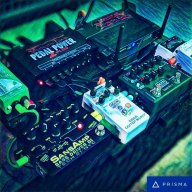
IMG_2256.PNG

That's not good. :( I hope you find a solution. Like before mine gets here?

Brent

After rereading the manual, it seems like I was right. "Instrument signal after EQ and instrument processing". The send signal is after the EQ so it might be possible the soundcard output is before it, thus not capturing the effects loop. The solution would be putting desired effects in FRONT of the Plex.
 
  • Like
Reactions: BrentSimons
The only way to find out if your particular configuration works is to try it out. In some cases, two (or three) preamps can just be redundant, with the second or third preamp stage negating what you're trying to achieve with the first, and vice versa. It can also be a means of fine tailoring your end signal. I have an Ampeg SCR-DI pre and I've concluded that it simply sounds better going into my 700RBII's preamp, at which point I'm able to further adjust low and hi mid frequencies, mostly cutting said frequencies.

When I first started playing with the Plex through my amp, I was going directly in. I've also tried it through the effects return. I like what I'm getting either way. I think I'd rather go through the amp's preamp so that I can EQ the final sound.

In at least two of the venues that we have frequented, using just my amp, I've had to adjust the EQ to get a decent sound out to the audience. In one case, with the EQ flat, it's a very muddy sound. If I play above an A, it's ok. Anything below and it's muddy. So I add in some mids and it clears up the lower frequency notes. In most other venues, I run EQ flat with no problems. It would be nice to have that capability when I use the Plex.

I could use the EQ on the Plex, and go into the effects return on the amp, but you have to turn off the voicing option, which defeats the effect of the Plex, as I like voice #2.

The experimenting has been fun and the advice from TB has been quite valuable, making the whole experience that much more enjoyable.

TalkBass rocks!! :bassist:
 
When I first started playing with the Plex through my amp, I was going directly in. I've also tried it through the effects return. I like what I'm getting either way. I think I'd rather go through the amp's preamp so that I can EQ the final sound.

In at least two of the venues that we have frequented, using just my amp, I've had to adjust the EQ to get a decent sound out to the audience. In one case, with the EQ flat, it's a very muddy sound. If I play above an A, it's ok. Anything below and it's muddy. So I add in some mids and it clears up the lower frequency notes. In most other venues, I run EQ flat with no problems. It would be nice to have that capability when I use the Plex.

I could use the EQ on the Plex, and go into the effects return on the amp, but you have to turn off the voicing option, which defeats the effect of the Plex, as I like voice #2.

The experimenting has been fun and the advice from TB has been quite valuable, making the whole experience that much more enjoyable.

TalkBass rocks!! :bassist:
With the Plex going into the effects return (1/4 output) you should still be able to use the voicing filters and all of the EQ on the Plex. You can send a pre eq or post eq signal to the front of the house with the XLR out. :)
Brent
 
  • Like
Reactions: Philly Watts
With the Plex going into the effects return (1/4 output) you should still be able to use the voicing filters and all of the EQ on the Plex. You can send a pre eq or post eq signal to the front of the house with the XLR out. :)
Brent

Right. But if I were in a venue like the one I described, I would have to turn off the voicing to enable the EQ. If I have to do that, I might as well just play through the amp. By going through the amp's preamp, I could keep the voicing setting and use the EQ on the amp to compensate for the acoustics of the venue.
 
Right. But if I were in a venue like the one I described, I would have to turn off the voicing to enable the EQ. If I have to do that, I might as well just play through the amp. By going through the amp's preamp, I could keep the voicing setting and use the EQ on the amp to compensate for the acoustics of the venue.

You don't HAVE to disable the preset voicings (0) nor the EQ (5); those are just a suggestions from GK so that the Plex doesn't "get in the way" of the amp and instead would only function as a tuner/overdrive/compressor pedal. Do what sounds good to you, whether that means using the Plex's EQ or not, or placing the Plex in front of the amp with preset voicings or not. Just mess around with it and enjoy! :bassist:
 
  • Like
Reactions: BrentSimons
The DI has two positions:
PRE places it right after the Trim control so nothing but the the Trim will effect it.
POST places it just before the Master so everything but the Master effects it.
RAG

Is it also after the effects loop? Kinda disappointed that the USB audio is before the effects loop. What more if the DI is too.
 
Ok, here's the deal going in to the effects return.

It's louder, but it negates all the tonal features of the amp. Contour, 'Vintage', brightness, EQ and overdrive. Nothing has an effect. I basically have a 15" cabinet. I understand why though. I'm just not sure of the advantages.
The advantages are that the Plex will be the "tone center" of your sound. You'll be able to get roughly the same tone as you get using the headphone out and the XLR DI out. There will be a slight difference because of the cabinet's voicing.

This happened to me while using the Sansamp with my GK 700RB ii. Running the Sansamp into the input and stacking the two tones together sounded horrible to my ears. Once I ran into the effects return, and allowed my pedal board to do all of the tonal shaping, Ive never been happier.

Remember, there is no right or wrong, just what sounds good!
 
Hey Guys,
Mine just arrived last night and I haven't had much time to play around with it. My first impression is that it seems very well built and I don't hear any hissing or added noise. Just a quick question; what does the red "sharp" light mean? Am I clipping somewhere? Hitting the compressor too hard? I couldn't find anything in the manual.
Thank you in advance,
Brent
 
Last edited: