
Looks like this guy's had one for a few months now:

TalkBass has been independent since 1998. Add your voice.
Create a free account to reply to discussions, view embedded media, and browse with fewer display ads.
Join free Log in
Want zero display ads or expanded classifieds tools? Compare plans.


Actually no =) The reach is determined by what fret the horn strap button lines up with, headless or not is irrelevant.
A Fender P Bass has a button halfway between 11th and 12th (surprisingly good for such an old design), the Ibanez is halfway between 12th and 13th, so very slightly more reach.
However, the better balance and strap button angle allows high-angle playing, which will bring the nut closer. The Ibanez is still more ergonomic overall.
On this subject, this Ibanez is far better designed than the Strandberg Boden bass, as that re-uses a guitar body design and has a short horn, the strap button lines up with the 15th fret. This will neutralise some of the balance advantage gained by being headless, in fact i expect the Boden bass is still a little neck-heavy.
Poor design from a company that claims to prioritise ergonomics.



Hi all, Anyone own a 5 string Ibby Headless yet??? I'm trying to get a sense of the weight and hoping they come in light due to a bad back. I'm between one of these or a Sandberg SL for my big 5 string purchase but waiting on the weight of these Ibby's.
Hi all, Anyone own a 5 string Ibby Headless yet??? I'm trying to get a sense of the weight and hoping they come in light due to a bad back. I'm between one of these or a Sandberg SL for my big 5 string purchase but waiting on the weight of these Ibby's.
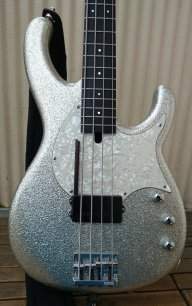
I orderd a black EHBms 5. The store told me it would arrive in the beginning of April.
 Let us know how you like it when it arrives!
I orderd a black EHBms 5. The store told me it would arrive in the beginning of April.
I have not. I can tell the balance on a strap is not 'perfect' (my definition of 'perfect balance') by looking at it, see below for how.ixlramp, have you even played a strandberg bass? I think you might change your tune once you do. The balance is perfect,
The button is at 13-14th fret, the BTB is at 12th fret, not much difference.I replaced it with an SRSC805 which has the strap button at a the higher frets
It will certainly be slightly neck-heavy on a strap, i can tell by looking at it, although i accept it may not be problematically so for you personally.After a gig and a rehearsal it doesn't seem to have any balance problems.
You can, using a mechanics analysis, as long as you know where the COM is (easy to find where it is, see my thread).So I don't think you can go by strap button position or bass weight to predetermine balance.
I have not. I can tell the balance on a strap is not 'perfect' (my definition of 'perfect balance') by looking at it, see below for how.
What do you mean by 'perfect'? Many people descibe the balance of a guitar as 'perfect' even though it is still significantly neck-heavy, they just mean the balance is better than the typical very neck-heavy headed guitar, which is not difficult to do.
Lack of 'neck dive' (a different thing) is dependent on strap-shoulder friction. A guitar can be poorly balanced but not neck dive.
To make it objective, 'perfect balance' means there is zero torque (rotational force) at playing angle, this means equal weight on each end of the strap, the guitar does not want to rotate even if the strap and your shoulder were frictionless.
The torque can be calculated using a mechanics analysis, see below for the link.
The torque can also be rougly judged by looking at the angle the guitar balances on a leg, this allows you to judge where the centre of mass (COM) is, and from the geometry of the COM and strap buttons, the torque when on a strap and at a particular angle can be judged.
Looking at photos of Strandberg Boden basses balancing on players legs, i can judge that it is a little neck-heavy on a strap. Better than a headed bass, but still far from as good as it could be.
I also judge the Ibanez to also be a little neck-heavy on a strap, but a little less than the Strandberg.
The button is at 13-14th fret, the BTB is at 12th fret, not much difference.
The SRSC805 also has the strap button lower and closer to the neck, which helps balance as playing angle increases from horizontal (covered in my thread).
So the button position is only slightly worse than the BTB.
It will certainly be slightly neck-heavy on a strap, i can tell by looking at it, although i accept it may not be problematically so for you personally.
You can, using a mechanics analysis, as long as you know where the COM is (easy to find where it is, see my thread).
I go into detail in this thread, although unfortunately you will not be able to view my diagrams full size unless you join the forum.
Determining guitar balance through simple visualisation
(I am a qualified physicist.)
Good morning. Or, since you're somewhere near the prime meridian, afternoon.I have not. I can tell the balance on a strap is not 'perfect' (my definition of 'perfect balance') by looking at it, see below for how.
What do you mean by 'perfect'? Many people descibe the balance of a guitar as 'perfect' even though it is still significantly neck-heavy, they just mean the balance is better than the typical very neck-heavy headed guitar, which is not difficult to do.
Lack of 'neck dive' (a different thing) is dependent on strap-shoulder friction. A guitar can be poorly balanced but not neck dive.
To make it objective, 'perfect balance' means there is zero torque (rotational force) at playing angle, this means equal weight on each end of the strap, the guitar does not want to rotate even if the strap and your shoulder were frictionless.
The torque can be calculated using a mechanics analysis, see below for the link.
The torque can also be rougly judged by looking at the angle the guitar balances on a leg, this allows you to judge where the centre of mass (COM) is, and from the geometry of the COM and strap buttons, the torque when on a strap and at a particular angle can be judged.
Looking at photos of Strandberg Boden basses balancing on players legs, i can judge that it is a little neck-heavy on a strap. Better than a headed bass, but still far from as good as it could be.
I also judge the Ibanez to also be a little neck-heavy on a strap, but a little less than the Strandberg.
The button is at 13-14th fret, the BTB is at 12th fret, not much difference.
The SRSC805 also has the strap button lower and closer to the neck, which helps balance as playing angle increases from horizontal (covered in my thread).
So the button position is only slightly worse than the BTB.
It will certainly be slightly neck-heavy on a strap, i can tell by looking at it, although i accept it may not be problematically so for you personally.
You can, using a mechanics analysis, as long as you know where the COM is (easy to find where it is, see my thread).
I go into detail in this thread, although unfortunately you will not be able to view my diagrams full size unless you join the forum.
Determining guitar balance through simple visualisation
(I am a qualified physicist.)

(I am a qualified physicist.)
I really need to try before I buy this time.Nope basstore.se. Marcus has a special deal.


