• TalkBass has been independent since 1998. Add your voice.
    Create a free account to reply to discussions, view embedded media, and browse with fewer display ads.
    Join freeLog in
    Want zero display ads or expanded classifieds tools? Compare plans.

So, I guess I can pin down where I first heard or learned a lot of the things I play, but since I've practiced those things quite a bit, they belong to my personal vocabulary.

^^^This. When playing, what as been bred in the bone will out in the flesh.

@Chris: With these new developments, maybe we should record two new talking heads (real small ones) and edit those on top of our current talking heads.

Like this? :D

Screen Shot 2016-07-31 at 10.34.54 AM.png
 
Since the thread took a detour into "books for travel and other things related to Canada and Robertson Davies" - a worthy subject, to be sure - I spilt that part of the thread off so it could exist outside of discussion of the series. That thread can be found here. :)
 
Something Ed said in another thread* struck a chord with me, and I realized that it is also highly applicable here:

Pianist Jon Easton said something I try to bear in mind - we were playing duo every week for awhile, just sessions, and I was talking about how to improvise in a musical way with someone (like Jon) who could hear at a much deeper level than I could. Particularly when that improviser was hearing a much different harmony than originally composed nod was following a melodic line that strayed pretty far afield; I think what I actually said something like 'how do I respond when I can't fully hear where you're going?' Jon said that, first, if what I'm doing is 'responding' I'm not really playing with what's happening, I'm playing with what happened. And second, if what he's doing is improvising music he's hearing based on the melody we've chosen and I'm improvising what I'm hearing with the same melody, then the end result should be musical. We're both hearing the melody, we're both hearing our internal line, we hear each other as that internal unfolds in the air; it's more action and less reaction.


Stuff like this is why Ed was always a great influence on me - his way of bringing these salient points into digestible words and concepts is admirable. More action and less reaction. It's less a matter of thinking and analyzing in the moment and more a matter of feeling what's actually happening and remaining open to it. To me playing is always a leap of faith; faith not in some mysterious mythical higher power, but rather faith that there is a common path and purpose between two independent lines that does not have to be understood to be valid.
It's almost like the concept of subtext in a plot line: there's what the people are actually saying, then there's the behind-the-overt-words-and-gestures meaning that really ties it all together and makes it hit home. I think Ed explained it far better above, but I always feel something like that when the music is really happening. Two lines of independent melody in orbit around the same star. Take away the star, and the orbits don't make sense. But with it emitting its gravitational pull, it's as natural as it can be.

* alliterative rhyming purely unintentional!
 
Here's the new video in the "Bachrilege" series:


Here is the index for this episode:

0:00 Performance of Suite I Prelude
3:12 Bachrilege fugue theme and titles
4:25 Episode introduction and intent of the series
5:26 Prelude overview and articulation review
10:42 Important excerpts: mm. 1-4
22:40 Important excerpts: mm. 19-23
30:55 mm. 23-29: Quasi rubato lyricism
34:22 Important excerpts from mm. 29-42
43:37 Conclusion and looking forward

I'm still putting the finishing touches on the score fingerings, but it should be up on my site by the end of the week. I'm also going to link this video in to the Bach discussion in the old Bach thread. Hope this material will be useful to a few folks!
 
Chris, I've watched about 60% of your video. You are a great teacher! Your explanations and analysis are effective and easy to understand. The one phrase that made me laugh was, "It's only when we shift that intonation can become extremely dangerous". "He's cruel but fair". (Monty Python) I'll get to the rest of the video soon. Congratulations and Merry Christmas, Happy Holidays.
 
The E string is a spirocore stark, the top three are dominants. String height in the summer is usually 7-10mm G to E, this time of year it's probably more like 6-9mm. I can slip my thumb under the E at the end of the board up to the cuticle of the nail. Thanks for watching!
 
The E string is a spirocore stark, the top three are dominants. String height in the summer is usually 7-10mm G to E, this time of year it's probably more like 6-9mm. I can slip my thumb under the E at the end of the board up to the cuticle of the nail. Thanks for watching!


RE the tutorial:
That was (is) absolutely wonderful! Thank you for posting it. I hope the younger players here appreciate it. I'm not putting them down, or casting aspersions on their intelligence, but I fear, that because they are immersed in so much technology, they will tend to take it for granted. I know it sounds cliche, but if only it was available in 60s.
 
Something Ed said in another thread* struck a chord with me, and I realized that it is also highly applicable here:


Stuff like this is why Ed was always a great influence on me - his way of bringing these salient points into digestible words and concepts is admirable. More action and less reaction. It's less a matter of thinking and analyzing in the moment and more a matter of feeling what's actually happening and remaining open to it. To me playing is always a leap of faith; faith not in some mysterious mythical higher power, but rather faith that there is a common path and purpose between two independent lines that does not have to be understood to be valid.
It's almost like the concept of subtext in a plot line: there's what the people are actually saying, then there's the behind-the-overt-words-and-gestures meaning that really ties it all together and makes it hit home. I think Ed explained it far better above, but I always feel something like that when the music is really happening. Two lines of independent melody in orbit around the same star. Take away the star, and the orbits don't make sense. But with it emitting its gravitational pull, it's as natural as it can be.

* alliterative rhyming purely unintentional!

That goes a ways toward my idea of dropping the conversation metaphor in favor of building something.
It is the job of the pianist to go deeper into harmony in that context and the bassist has other concerns like making propulsive line with a big sound and well selected individual pitches.
Like when building a house or even something bigger someone has to understand the wiring and and someone else has to dig a ditch. When and how to stay on task are difficult issues in all areas of improvised music right now.
 
Last edited:
I've just discovered this thread and Chris's video tutorial series herein... really great. I am an EB player but have just acquired a 1941 American Standard upright. This series will be invaluable for me to save time by not reinvent the wheel on my own, as regards basic physical technique. Thanks.

Not to sully the thread, but getting with a teacher who teaches arco is the traditional advice for a beginner.
I am huge fan of these videos, but they are best with a bit of basic classical training under your belt.
 
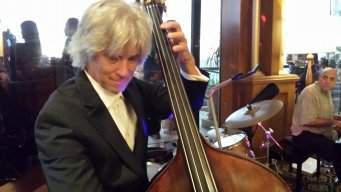
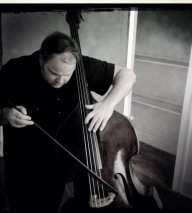
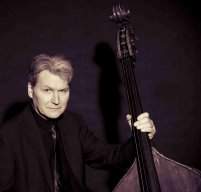
Just put up a new video on right hand pizz technique entitled "Right Hand Pizzicato Technique Perspectives". It features a lot of great players who took the time to share their knowledge with the bass community at large. Each player plays the same chorus of blues at the beginning, then improvises a chorus. After that, they take a few minutes to share some things that they think are important about right hand technique. See the listing at the end of the post for a list of players, but I wanted to make a special shout out to two players that I met online through TB, then later in person at this year's ISB convention: Marco Panascia and Ray Parker. Both were great guys to hang out with up in Ithaca, and I was very happy that they took the time to film segments for this video compilation and send them here so I could edit them in. Long live Talkbass!


Here's the lineup and where each player's segment can be found in the video:

0:00 Title screen and 12 bassists playing in unison
0:58 Spoken introduction
4:02 Rufus Reid
10:45 Lynn Seaton
17:20 David Friesen
21:04 Marco Panascia
27:33 Tyrone Wheeler
32:48 Rich Armandi
38:45 Bob Sinicrope
42:44 Doug Elmore
49:28 Ray Parker
56:42 Emma Dayhuff
1:02:42 Chris Fitzgerald
1:09:46 Episode Finale: 12 bassists, same chorus back to back to back