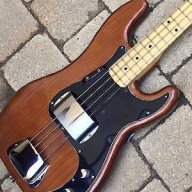
Depending on what you're playing, a good octave pedal can also help you get down to some very low notes without having to detune. My MXR Bass Octave Deluxe will work almost all the way down to low E without losing the note. It handles C easily. But I would test one first to make sure it fits your playing/music style. They won't do everything.

Enjoy the benefits of a premium membership!
Upgrade Account
-
TalkBass has been independent since 1998. Add your voice.
Create a free account to reply to discussions, view embedded media, and browse with fewer display ads.
Join free Log in
Want zero display ads or expanded classifieds tools? Compare plans.
You are using an out of date browser. It may not display this or other websites correctly.
You should upgrade or use an alternative browser.
You should upgrade or use an alternative browser.
New to Bass...
- Thread starter Androxine Vortex
- Start date
More options
Who Replied?
I'd also go w/a 5'er, but if you are worried about slapping, I'd suggest a couple of used 4 string Squier Affinity P or Jazz basses. You can regularly find them in the $100 range. I recently picked up a GREAT Squier P for a friend for $75, which was totally gig worthy. As with any lower end bass, check them out carefully (new OR used), as quality can vary between basses, even of the exact same model. I'm not big on slapping, but see guys slap 5'ers on a fairly regular basis?


I believe the op is talking about the Squier VM Jaguar Full scale as it's going for the price the op mentioned ($199.99). The SS Squier Jag is $179.I don't know what Jaguar you played, but I would stay away from the short scale version. I don't have a lot of experience with SS basses, but I can't imagine they take detuning well.
I agree though, I would stick with the full scale if detuning.

Well, think about it... but there's also this:
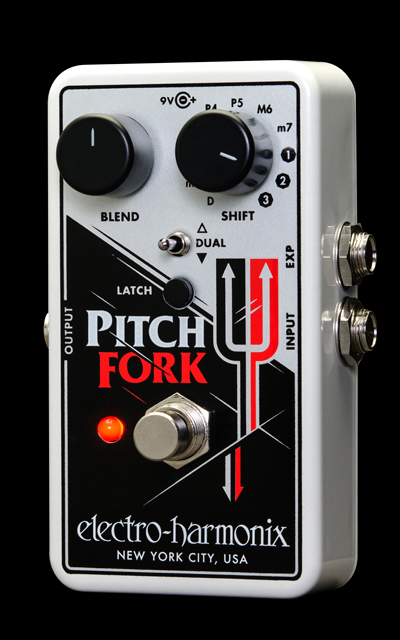
It's a pitch-shifter (if you didn't know that already). But I don't know how low it will go... or how high it will go... but I wan't one cuz I switch between E and Eb alot. I've heard it's pretty good... Check it out!
I've seen a couple of TB members use an Eventide Pitchfactor for the same application. Pitchfactors are expensive though... so I'm intrigued with this. Time for some research.
I'm in the 5-string argument camp. Get a 5, tune it up to C and you'll have some extended high range. Then when you head back to standard E tuning, you'll have the added benefit of a low B string to add some extra grind to that metal you're playing.
So i don't even know if getting a five string would be worth it because even if i can get it down to C if i have to play in half steps it won't work. But if i did get a five string then i would be able to play bands that play in C D and E but what about if they use a drop tuning, not sure how that would work... Arrrrgh this is frustrating! Im going to try to find more info tomorrow on it.
First off - gnarly avatar. One of my favorites.
Second - with practice, you'll be accustomed to using a 5 stringer tuned B-G for all different tunings (you have the extended low range down to B, so you can play with your guitarists down to C. Just imagine it as a "capo" on the first fret across the board. If the guitarist is tunded to D standard, then your "capo" moves up to the 3rd fret, and so forth).
Thridly - A great 5er is any LTD F-series bass. They play great, tighter string spacing, thinner necks, and great features for the price. Alot of metal musicains love LTD. Additionally, the F-series basses has a 35" scale, which makes a world of difference in terms of tone.
As always, YMMV.

Someone may have already said this, but if you insist on de-tuning, I wouldn't do it on a short-scale bass. That jaguar is only 30" scale, I think. That'll be one hella floppy string.
Also, I know all our taste and styles are different (so this may be completely irrelevant for you), but I never found use for detuning bass for any metal other than down-tempo stuff (sludge, doom, stoner, whatever you want to call it). If you do anything faster, that fat, rattling detuned string doesn't sound as punchy and can at times be mushy and indiscernible. Watch Dick Lovgren or any other guys who played with Meshuggah. They spend a lot of time fretting around the middle of the neck. It usually creates a more useable string vibration (in my opinion) and is a lot more solid/punchy, but still relevant, even with the other guys chugging on those 8-string guitars.
Does Steve DiGiorgio mess with alternate tunings? If you try to cover anything on Human I guarantee you'll have an easier time using standard tuning. And you can do it on a 4-string.
Also, I know all our taste and styles are different (so this may be completely irrelevant for you), but I never found use for detuning bass for any metal other than down-tempo stuff (sludge, doom, stoner, whatever you want to call it). If you do anything faster, that fat, rattling detuned string doesn't sound as punchy and can at times be mushy and indiscernible. Watch Dick Lovgren or any other guys who played with Meshuggah. They spend a lot of time fretting around the middle of the neck. It usually creates a more useable string vibration (in my opinion) and is a lot more solid/punchy, but still relevant, even with the other guys chugging on those 8-string guitars.
Does Steve DiGiorgio mess with alternate tunings? If you try to cover anything on Human I guarantee you'll have an easier time using standard tuning. And you can do it on a 4-string.
Last edited:

+1 for an LTD F-series
Realistically, a 5-string would be your best option here, but weather you capo it or tune up is up to you. A capo would be the easiest option of the two, so I'd be inclined to go that route. To tune down to C, you'd need thicker gauge strings, which would screw with your neck a bit, and may need to file the nut down to accommodate heavier strings . I wouldn't worry too much about constant tuning/ detuning, but tuning to standard would put an insane amount of tension on your neck, which will cause it to bow, eventually.
Realistically, a 5-string would be your best option here, but weather you capo it or tune up is up to you. A capo would be the easiest option of the two, so I'd be inclined to go that route. To tune down to C, you'd need thicker gauge strings, which would screw with your neck a bit, and may need to file the nut down to accommodate heavier strings . I wouldn't worry too much about constant tuning/ detuning, but tuning to standard would put an insane amount of tension on your neck, which will cause it to bow, eventually.
Someone may have already said this, but if you insist on de-tuning, I wouldn't do it on a short-scale bass. That jaguar is only 30" scale, I think. That'll be one hella floppy string.
.
I believe the Squier Jag in question is the full scale one. The Squier VM Jag is 34" scale for $199. The Squier Jag SS is the short scale version going for $179 new. Being that the op is referring to the $199 price, it's definitely the full scale active with the bass boost knob.
Is it really that important to tune it to a different pitch? I dont listen to metal but IMO it seems like you just play the notes you want to play. Do you really need your C to be super low? The definition at that pitch isn't very good as is.
Excuse my inexperience with odd tunings, but I don't understand the drive for it.
Excuse my inexperience with odd tunings, but I don't understand the drive for it.
I understand where the op is coming from; he's new to bass, has a background in guitar, and probably certain patterns and combinations of open/fretted notes are comfortable for him to play. I experienced this myself.
Androxine, one problem with changing tunings is that you probably won't adjust your truss rod to accommodate the different tensions. Say you're tuned in E, with the neck adjusted appropriately. If you tune down without adjusting the truss rod, your neck will have less tension from the strings than before, and bow backward to some degree, affecting playability. If you've adjusted the other way around, you deal with a forward bow in the neck.
If you're new to bass, the last thing you need is an instrument that's hard to play.
Personally, I'd be inclined to use one instrument and learn to adapt it without re-tuning. It get complicated when you add variables. I say this from experience, having tried just about every stupid thing you can imagine at one time or another.
Tom
Androxine, one problem with changing tunings is that you probably won't adjust your truss rod to accommodate the different tensions. Say you're tuned in E, with the neck adjusted appropriately. If you tune down without adjusting the truss rod, your neck will have less tension from the strings than before, and bow backward to some degree, affecting playability. If you've adjusted the other way around, you deal with a forward bow in the neck.
If you're new to bass, the last thing you need is an instrument that's hard to play.
Personally, I'd be inclined to use one instrument and learn to adapt it without re-tuning. It get complicated when you add variables. I say this from experience, having tried just about every stupid thing you can imagine at one time or another.
Tom

I would suggest just getting a 5-string. I switched from 4 to 5, also coming over from guitar, and it took a little bit of time, but it finally clicked for me, and I wouldn't go back to 4 string, period.

So i don't even know if getting a five string would be worth it because even if i can get it down to C if i have to play in half steps it won't work. But if i did get a five string then i would be able to play bands that play in C D and E but what about if they use a drop tuning, not sure how that would work... Arrrrgh this is frustrating! Im going to try to find more info tomorrow on it.
Okay, then just get a SIX string.

+1 to all of this; especially the first two points.First off - gnarly avatar. One of my favorites.
Second - with practice, you'll be accustomed to using a 5 stringer tuned B-G for all different tunings (you have the extended low range down to B, so you can play with your guitarists down to C. Just imagine it as a "capo" on the first fret across the board. If the guitarist is tunded to D standard, then your "capo" moves up to the 3rd fret, and so forth).
Thridly - A great 5er is any LTD F-series bass. They play great, tighter string spacing, thinner necks, and great features for the price. Alot of metal musicains love LTD. Additionally, the F-series basses has a 35" scale, which makes a world of difference in terms of tone.
As always, YMMV.
Slapping a 5 just takes a bit a bit more refinement of your technique; particularly left-hand string muting. But if you can slap on an open A with a 4 string bass, you can slap an open E on a 5 string bass. It's pretty much the same thing. If you're already used to using a pick, it may be a natural progression to go with the "double thump" slap style. (Google it; lots of examples.)
A 5 string is going to give you the most versatility working with guitar players that like to drop tune. But don't talk yourself into too narrow a string spacing. That can actually make slapping more difficult. Focus on neck profile and thickness more than width.
-Alan

Just get the 5er. I too came from guitar, and it took very little time to adjust. Just start off playing at the 5th fret and you will be in E, then you can experiment in the lower notes as you go. The hardest part is adapting to the g string in your patterns, but after only about a year now, I can easily go from 5 string bass to guitar without having to think about the pattern difference.
welcome to the low side of town
welcome to the low side of town
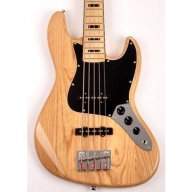
As another guitar player doubling on bass, I'm on the 5 string page - in fact I just got one this week, and I really love it. Goes way down low, really dig that. I can slap it a little, though that's not my forte. What I got was an SX Ursa 2 5 string, $189.00. SX instruments are a smokin' deal - low price, high quality (relatively speaking).
Anyway, a five string might be useful to you, or go with a detuned full scale Fender Jag (the drummer I play with has one and likes it) ... or check out the SX offerings:
Link Removed
Anyway, a five string might be useful to you, or go with a detuned full scale Fender Jag (the drummer I play with has one and likes it) ... or check out the SX offerings:
Link Removed


