We will know tomorrow :-DUse the isolator on the Polytune since it's draw is less than >100 ma. Should still isolate it from the B3n. No?

Enjoy the benefits of a premium membership!
Upgrade Account
-
TalkBass has been independent since 1998. Add your voice.
Create a free account to reply to discussions, view embedded media, and browse with fewer display ads.
Join free Log in
Want zero display ads or expanded classifieds tools? Compare plans.
You are using an out of date browser. It may not display this or other websites correctly.
You should upgrade or use an alternative browser.
You should upgrade or use an alternative browser.
New: Zoom B3n Multi-Effects
- Thread starter CharlieC
- Start date
-
- Tags
- b3n multi-effects zoom
More options
Who Replied?

Yes I currently use round wound strings and keep the action as low as possible without killing the first few frets(they get mild metallic buzz on them though like you describe)
My 5 string has a pickup blend knob that I play with for switching between a fuller sound and a "Fieldy" (KoRn) sound, my 4 string only has one pickup, but it's versatile (if only I knew how to make better use of it).
I really need to stop approaching bass like guitar, that's the thing. The B3n has really ignited my love of bass, I actually feel excited to pick it up rather than thinking "ugh, now I have to write the bass line". Zoom are brilliant.
I don't know for sure, but I've always felt that these types of bass tones have a very physical nature to the playing which contributes to the tone greatly, and it may or may not be the easiest technique to grasp right away, simply in terms of the amount of "aggression" that goes into it.
Speaking for myself, I know I tend to really dig in and play quite aggressively when getting these types of tones. It's hard for me to describe exactly what the techniques are and how to execute them. I don't think guitarists intentionally do this, but it's easy to underestimate the many different nuances of technique that can go into producing certain bass tones.
For example, I'm able to go from old-school vintage bass, to pop rock, to modern metal, using the same preamp tone and altering playing stile (fingers or pick), the pickup combinations, the right hand position of the plucking of the string, palm muting, and tone knobs on the bass to achieve the sound I'm looking for. It literally took me years to develop this technique so that each style of tone produced was appropriate to the musical style.
Nevertheless, we'll see what we can do to get you sorted. I hate to say it, but the short answer is that there is no short answer...at least from my perspective. =)
Use the isolator on the Polytune since it's draw is less than >100 ma. Should still isolate it from the B3n. No?
We will know tomorrow :-D
My only concern about using the Diago to power a pedal like the Polytune is in the following product description.
"The Diago PS09 Noise Isolator quiets your signal chain by isolating your single noisy pedal."
I hope this does not imply that the single noisy digital pedal must reside on the receiving end of the dongle. In other words, I hope isolation is not directional because the B3n should not be placed on the receiving side with its higher-than 110mA draw.
To be continued.

In the "things I believe because I want them to be true and because of stuff I've read" category:My only concern about using the Diago to power a pedal like the Polytune is in the following product description.
"The Diago PS09 Noise Isolator quiets your signal chain by isolating your single noisy pedal."
I hope this does not imply that the single noisy digital pedal must reside on the receiving end of the dongle. In other words, I hope isolation is not directional because the B3n should not be placed on the receiving side with its higher-than 110mA draw.
To be continued.
I think what's going on is these digital pedals each have a clock rate in the KHz or possibly MHz range, and are each inadvertently sending clock voltage spikes back down through their power inputs. The clock rates of the pedals are different and so those spikes beat against each other, just like the throbbing you hear when you tune your bass by plucking harmonics.
Isolating the Polytune will prevent its clock spikes from entering the power channel, leaving only the clock spikes from the B3n. Because the B3n's clock is running at an inaudible frequency and has nothing to beat against, the whine will be silenced.
This is obviously true because, again, this is what I want to be true.


Yes, a pain in the ass Cheif Engineer that I once worked for was usually right in practice (but not approach). The only way to absolutely know if gear is going to play nice together is to hook it up as a system under real-life conditions. Just cause it says that it will work doesn't mean it will. I'm guessing that their is either a transformer or electrical isolation circuit in there that should not be directional but it is only my gut feeling. I was wrong once so I suppose it could happen again.....My only concern about using the Diago to power a pedal like the Polytune is in the following product description.
"The Diago PS09 Noise Isolator quiets your signal chain by isolating your single noisy pedal."
I hope this does not imply that the single noisy digital pedal must reside on the receiving end of the dongle. In other words, I hope isolation is not directional because the B3n should not be placed on the receiving side with its higher-than 110mA draw.
To be continued.

You said throbbing....
Ok, so here's an interesting observation: last night, I was messing with my power bank powered rig, and noticed the dreaded whine. In that rig, only the B3n and G10 are running off the bank. If I used two banks, dead quiet. While my little pedal board has room for two, I'm not thrilled with that. Then, in messing with the wires, I noticed that if I moved the USB to 9V boost thing just so, the whine stopped. Mine are the cheaper ones with the little circuit board built into the USB plug. I went ahead and ordered the one referenced above, from Amazon. Hopefully that solves the issue. If not, I'll not allergic to running two banks. I'll post my findings back on Friday when the new, gooder USB-9V thingy arrives.
... is only my gut feeling. I was wrong once so I suppose it could happen again.....
I thought I was wrong once, but I was mistaken

I thought I was wrong once, but I was mistaken
Correct me if I'm wrong, but - two wrongs don't make a wrong.
.....Right?

But three lefts DO make a right! Those that live in New Jersey know this only too well!Correct me if I'm wrong, but - two wrongs don't make a wrong.
.....Right?
Edit: No one called me on this! It should read three rights make a left since you're not allowed to turn left in Jersey.
Last edited:
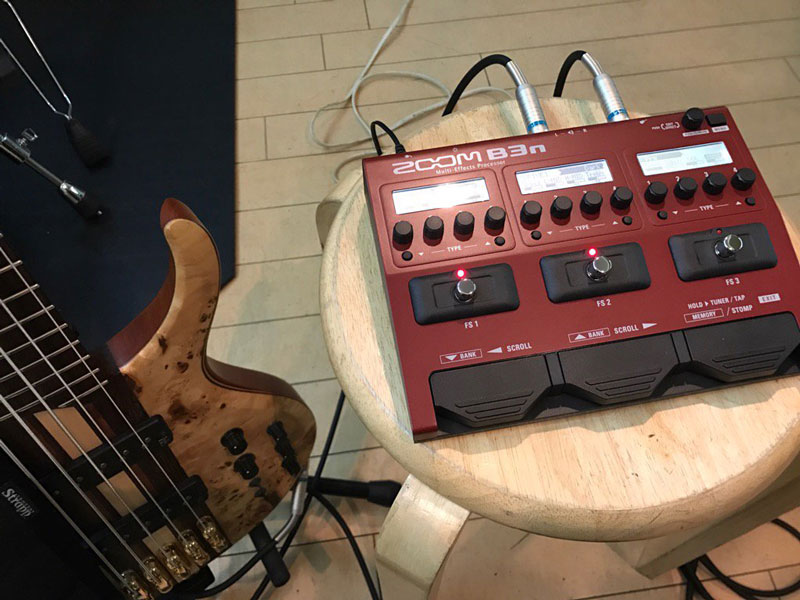
{ Not my picture, but I had to share. }
Here sits the ultimate fly rig!
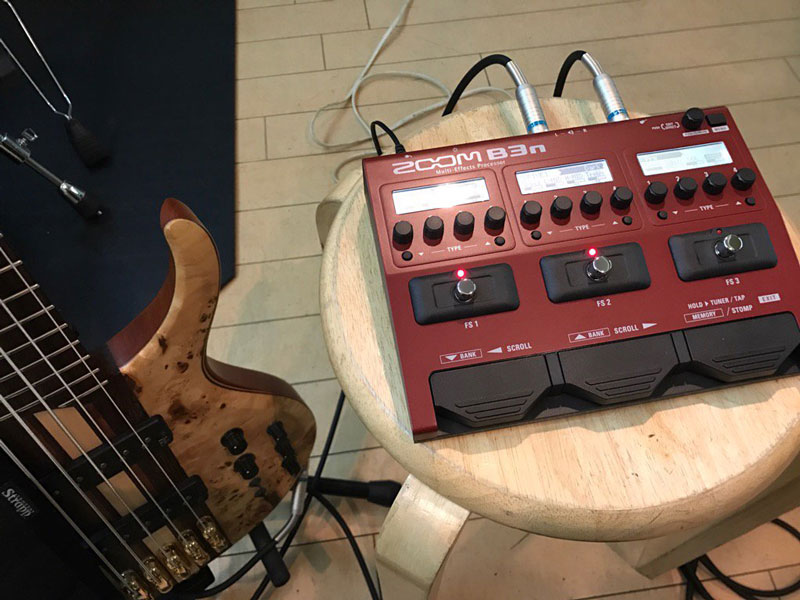
Here sits the ultimate fly rig!
That's a lovely instrument. Any idea what it is?{ Not my picture, but I had to share. }
Here sits the ultimate fly rig!
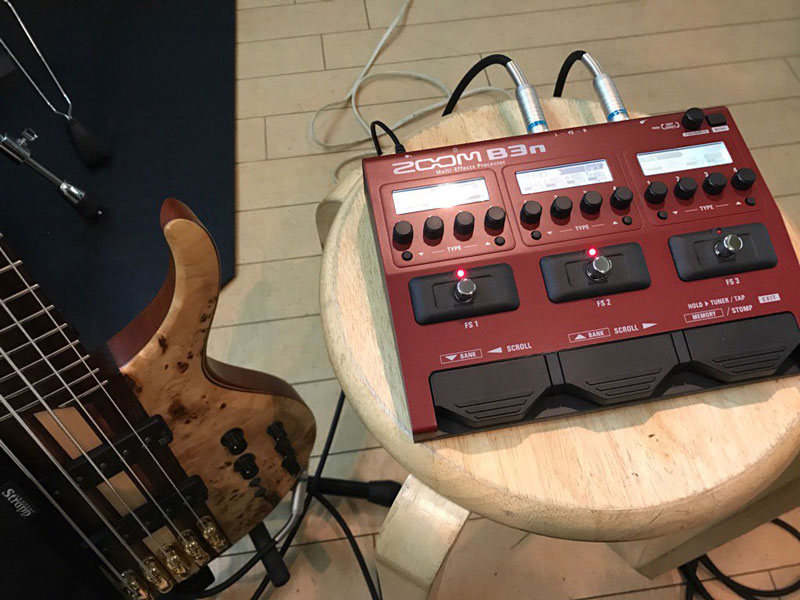

Ibanez BTB premiere I think?That's a lovely instrument. Any idea what it is?
Looks right. Thanks. Wow.Ibanez BTB premiere I think?
Pedal board seems a bit bulky.....{ Not my picture, but I had to share. }
Here sits the ultimate fly rig!

Forget using single pedals on the N, the beauty for me comes in creating a patch around a certain effect. For instance, my Filter patch is; DI5>Ztron>160Comp>BassGEQ>BassPEQ,
I have two curves set up on the BassGEQ, one for finger style, one for Slap, that I can toggle between. The only pedals I could get this kind of control and flexibility with cost as much or more than the N. Love this thing!
J!
I have two curves set up on the BassGEQ, one for finger style, one for Slap, that I can toggle between. The only pedals I could get this kind of control and flexibility with cost as much or more than the N. Love this thing!
J!
The sounds in the B3n are great! But I'm really bad at setting dialling in a decent bass tone, maybe I'm too used to guitar and my ears aren't attuned to it?
Any tips?
With guitar I know to roll back bass when adding gain, to add mids to add chunk and make it cut better, etc, but doing this on bass makes it tinny or muddy, respectively.
I can definitely get more than useable tones but I'm of course looking to build great tones but don't often play bass (or didn't until this unit came along!) so any help with how to set up an amp (model or physical), dirt pedal, cab sim etc would be much appreciated(can pm if it derails the thread)
Here's a slightly driven SVT+CAB tone:
AMPG SVT: BASS 0.0 | MID FREQ 3.0k | MID 9.0 | TREBLE 10.5 ..... GAIN 39 | ULTRA = BOTH | VOL 39 | SOLO ***
SVT 8X10: DYN20 = 32 | DYN 57 = 97 | BOTTOM = 64 | BAL = 100
LMT-76: INPUT 36 | RATIO 20:1 | REL 18 | OUTPUT 36
For a cleaner SVT tone adjust the GAIN to 26, and VOL to 50, and leave the cabinet and limiter to the same settings.
Using the CLEANER SVT settings, here are the two Darkglass drives, either one placed before the AMP model:
DARK OD: GAIN 49 | ATTACK: BOOST | BLEND 40 | VOL 70
DARK PRE: BASS 50 | LO MID 50 | HI MID 50 | TREBLE 50 ..... BLEND 50 | GAIN 50 | VOL 65 | BOOST = LO+HI
--------------------
A couple notes:
- it seems to me that the output level of the SVT 8x10 cab sim is much lower than the other cabinets. Does anyone else find this? It would be great if ZOOM addressed this in a new CAB MODEL update.
- if you find there is too much top end sizzle to these, you may be right. These are just my personal preferences, and my ears aren't what they used to be, so YMMV.
I did some A/B testing by ear, comparing the synths, pitch shifts, and octaves between the B3 and the B3n. Without going into too much detail, I was surprised that the differences between the two were not as stark as night-and-day obvious. I do think that the B3n has cleaner, clearer algorithms tonally, and that the tracking is just slightly better, but almost negligibly so.
As a general statement, the B3n sounds as though it has had a blanket lifted off of it, sonically. The B3 still holds up quite well. Interesting.
I also did an A/B with the SansAmpBDDI models, and I found the B3n much more preferable to the B3 version. Not to say that the B3 BDDI is awful, though. Just pretty different with all settings the same. Again, it's a general clarity, definition thing IMO. YMMV.
As a general statement, the B3n sounds as though it has had a blanket lifted off of it, sonically. The B3 still holds up quite well. Interesting.
I also did an A/B with the SansAmpBDDI models, and I found the B3n much more preferable to the B3 version. Not to say that the B3 BDDI is awful, though. Just pretty different with all settings the same. Again, it's a general clarity, definition thing IMO. YMMV.
Thanks!Here's a slightly driven SVT+CAB tone:
AMPG SVT: BASS 0.0 | MID FREQ 3.0k | MID 9.0 | TREBLE 10.5 ..... GAIN 39 | ULTRA = BOTH | VOL 39 | SOLO ***
SVT 8X10: DYN20 = 32 | DYN 57 = 97 | BOTTOM = 64 | BAL = 100
LMT-76: INPUT 36 | RATIO 20:1 | REL 18 | OUTPUT 36
For a cleaner SVT tone adjust the GAIN to 26, and VOL to 50, and leave the cabinet and limiter to the same settings.
Using the CLEANER SVT settings, here are the two Darkglass drives, either one placed before the AMP model:
DARK OD: GAIN 49 | ATTACK: BOOST | BLEND 40 | VOL 70
DARK PRE: BASS 50 | LO MID 50 | HI MID 50 | TREBLE 50 ..... BLEND 50 | GAIN 50 | VOL 65 | BOOST = LO+HI
--------------------
A couple notes:
- it seems to me that the output level of the SVT 8x10 cab sim is much lower than the other cabinets. Does anyone else find this? It would be great if ZOOM addressed this in a new CAB MODEL update.
- if you find there is too much top end sizzle to these, you may be right. These are just my personal preferences, and my ears aren't what they used to be, so YMMV.
I'll probably get a chance to try those tomorrow or in a couple of hours if I'm not too tired after watching Rogue One
I've just spent a couple of hours with it - following up on some of the things we discussed via PM and I found, setting up really nice high gain tones was much easier on the 5 string with the pick-up balance set just right, and then I could transfer them over to the other bass by lowering the volume on the bass so that the gain is reduced (the B3n cleans up really nicely when lowering the volume, and I didn't know that that was a "thing" on bass!) to get mid-gain tones that sound pretty funky!
I still need to study up on what a lot of the parameters do - but I have found that if I add a cab and don't lower the mix to below 35, or so, it sounds muffled.
Achieving some incredible tones (as far as I can rate bass tones as a relative n00b/ mainly guitar player) with this thing! I've only really set up two patches but it was fun and I've spent ages playing with them and experimenting.
Also - @CharlieC I think I figured out what you meant about the bass amp effects loops ; I noticed that they are "post master volume pot" in the chain and so turning the volume up doesn't raise the output of the effects, it raises the input so it makes sense what you said, that it could distort the effects in the loop (why do they do such a stupid thing? Lol) so I've linked the b3 to the B3n before the amp... To be fair I don't even really need it as the B3n provides enough slots in most cases but it's handy to keep the same comp, delay, verb, drum beat and looper across all patches. My main reason for it really was to have post amp-distortion effects and the possibility to have XLR and USB out that included the amp in the chain.
Edit - @jimfist I noticed a huge difference in tracking myself; pitch shifting quality is better as well as faster (the lag is gone or no longer noticeable) and synths track when I play lots of quick notes rather than having to slow down for it, hold notes longer etc. Latency might be there on a level a computer can detect but I haven't noticed any with the B3n! I definitely could with the B3 and MS60B though. I think they're great too but I always felt like I was fighting them when I used certain effects.


