• TalkBass has been independent since 1998. Add your voice.
    Create a free account to reply to discussions, view embedded media, and browse with fewer display ads.
    Join freeLog in
    Want zero display ads or expanded classifieds tools? Compare plans.

NOT the DEFINITIVE wood does/doesn't matter thread!

Wood?

  • Different woods have different acoustic properties, I can hear the difference.

    Votes: 87 32.6%
  • Different woods have different acoustic properties, but they have no bearing on tone.

    Votes: 33 12.4%
  • All woods sound the same to me.

    Votes: 21 7.9%
  • Fingerboard or neck wood matters most.

    Votes: 39 14.6%
  • Body wood matters most.

    Votes: 16 6.0%
  • Different woods CAN have a HUGE effect on tone.

    Votes: 53 19.9%
  • Different woods DO have a HUGE effect on tone.

    Votes: 21 7.9%
  • Wood doesn't effect tone AT ALL.

    Votes: 24 9.0%
  • I think wood matters, but I don't really care.

    Votes: 81 30.3%

  • Total voters
    267
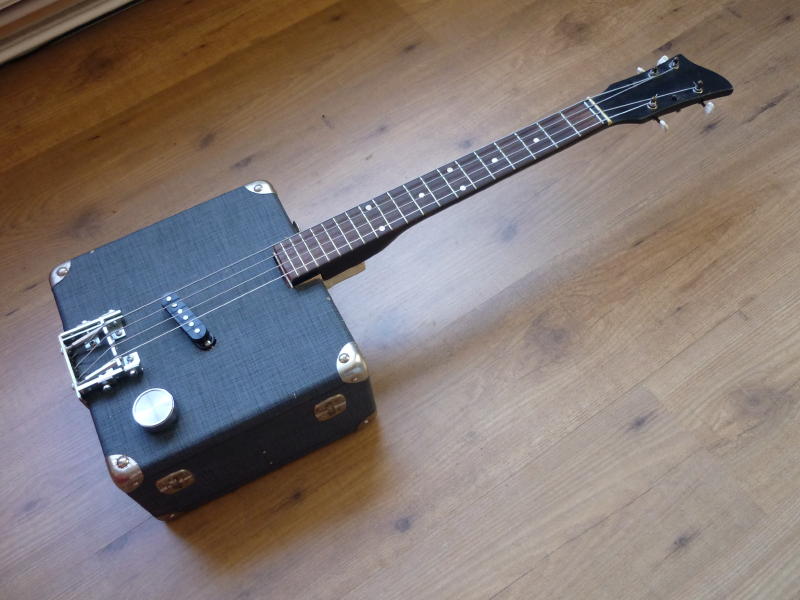
Bass made with old pallets and the cheapest pickup ever. It sounds remarkably good. Quite honky and funky. Due to the lack of contour, it's not the most ergonomic bass though. LOL
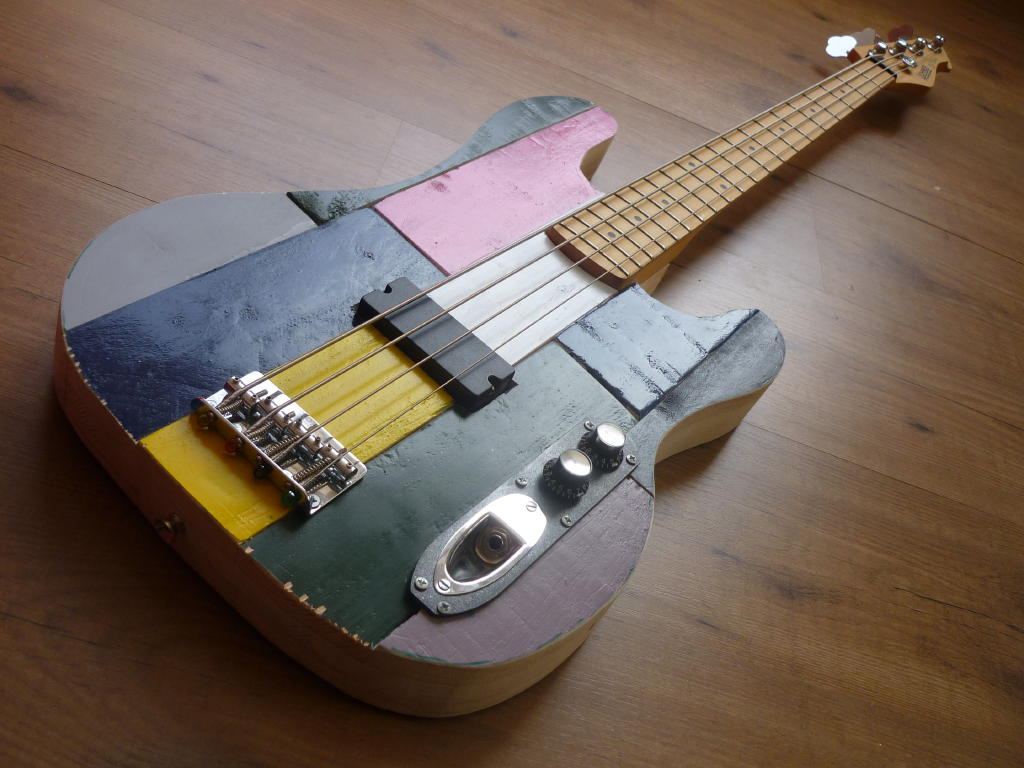
image.jpg

From the same 'luthier' as the suitcase bass (very convenient...you can actually open the suitcase to store effect pedals and stuff).
kof2.jpg
 

Attachments

  • pallets.jpg
    pallets.jpg
    104.7 KB · Views: 15
  • palletstb.jpg
    palletstb.jpg
    43.2 KB · Views: 18
  • Like
Reactions: Uncle Hanky
I voted for "I think wood matters, but I don't really care". The best bass is the one in your hands at a given moment. You can get hung up on perfect-scenario specs, or get on with being a musician. I've spent far too much time doing the former at the cost of the latter.
 
Definitive? Right. Hmm. Unlikely.

The only thing to be said is that nobody has properly studied the effects of wood in an electric instrument to the extent that a definitive conclusion can be made. What people will say in this thread is more than likely based on speculation.

A quick analysis - strings vibrate the body wood, the body wood vibrates, and these vibrations modulate each other. This leads to addition and subtraction at certain frequencies, hence the tone is changed.
How much, you ask? Again, nobody knows for sure, and this is hardly a quantifiable measure without a very detailed study. The effect is very likely to be much more pronounced in acoustic instruments, however.
Quick, yes. Complete, no. How do the vibrations of the wood get to the pickups to affect the tone? I can see piezo pickups having some influence, but the metal string vibrating through the pickup's magnetic field is what creates the signal. There is where I have the problem. I'm not saying the wood doesn't have any effect, but I am saying I have seen no verifiable proof it does.
 
  • Like
Reactions: fuzzychaos
Quick, yes. Complete, no. How do the vibrations of the wood get to the pickups to affect the tone? I can see piezo pickups having some influence, but the metal string vibrating through the pickup's magnetic field is what creates the signal. There is where I have the problem. I'm not saying the wood doesn't have any effect, but I am saying I have seen no verifiable proof it does.
The resonant frequency of the wood will cause certain harmonics to either become accentuated or muted. Those characteristics are carried by the strings.

The part that always confused me, was when I realized that the neck construction had a bigger impact (IMO) than the body wood. I've reconciled that in my head with the idea that the strings are suspended over the neck for a much greater distance than they are the body.

This is pure guessing on my part of course. And as I posted, I can't tell the difference when others are playing, but if you blindfold me, and hand me similar instruments, I can tell you whether the fingerboard is maple, rosewood or ebony.

As an advantage, I've discovered that my favorite combination is rosewood on mahogany. Dark and deep tone.
 
Quick, yes. Complete, no. How do the vibrations of the wood get to the pickups to affect the tone? I can see piezo pickups having some influence, but the metal string vibrating through the pickup's magnetic field is what creates the signal. There is where I have the problem. I'm not saying the wood doesn't have any effect, but I am saying I have seen no verifiable proof it does.
Hollowbody vs semi vs solid body sustain? Posted as a question rather than a statement.
 
I carry tone carrots. They make all the difference. You put them into the strings up at the headstock like where you would store your cigarette. Except that carrots don't burn the headstock and make the bass sound far, far better.

The other thing that makes a difference is removing tort. Get rid of tort and your tone improves by some huge order of magnitude. Beyond that, Squier wood sounds just as good as Fender wood but not as good as Sire wood. It's all about the number of letters.
 
  • Like
Reactions: Uncle Hanky
I recently bought an EUB built by a local jazz bassist. He was not impressed with any of the "affordable" EUB on the market. He went through pups, strings to get closest in that department. Then started on body woods. Same neck, strings, pups. After 11 tries, found a particular CEDAR that hit the response and tone he wanted. No pizzo, just a set of P pups, volumne only. He did the hard work of direct comparison, and it payed off. For this particular application, it was a critical factor. May not be in other applications. I am enjoying learning this EUB to broaden my tool kit.
 
  • Like
Reactions: tfer
I don't know. Interesting, but not on topic. This is about tone.
Different, but not necessarily unrelated. Sustain blocks are sometimes called tone blocks and there are thoughts they alter tone and sustain. Cannot say for tone but I know violin basses with blocks have much more sustain. They might alter tone but I sold my one with a block so cannot do side by side.
 
whatever wood may do or not do for the tone of the instrument: you still have to make decisions about strings, bridge, fingerboard, pickups, yada yada. after all is said and done: now you have to play the instrument and make it sound like you need it to sound. IMO: it doesn't matter. i could play plywood if it was set up correctly for me. maybe i am! :)
 
Bass made with old pallets and the cheapest pickup ever. It sounds remarkably good. Quite honky and funky. Due to the lack of contour, it's not the most ergonomic bass though. LOL

image.jpg

The question is not whether a bass made from pallet wood or crate plywood (I own a 60's bass made from what looks like crate plywood that I love) can be cool. They certainly ARE cool. Who does not love a masonite Longhorn? But the question under discussion is whether or not these trash wood basses sound just like my Modulus. I may be in the minority here, but in my opinion they do not.
 
The question is not whether a bass made from pallet wood or crate plywood (I own a 60's bass made from what looks like crate plywood that I love) can be cool. They certainly ARE cool. Who does not love a masonite Longhorn? But the question under discussion is whether or not these trash wood basses sound just like my Modulus. I may be in the minority here, but in my opinion they do not.

Interesting, if you took the pallet bass to Modulus and had them install the electronics, how close would it be do you think? Assuming they would do that, blah blah. It's hyper-thetical.:)
 
  • Like
Reactions: bassbenj