The XLR out is post EQ/effect. I prefer it last in the chain before my amp because I want all my effects going to the board.
Thanks for the heads up, Jimmy! Have a safe one, brother!

TalkBass has been independent since 1998. Add your voice.
Create a free account to reply to discussions, view embedded media, and browse with fewer display ads.
Join free Log in
Want zero display ads or expanded classifieds tools? Compare plans.
The XLR out is post EQ/effect. I prefer it last in the chain before my amp because I want all my effects going to the board.
Also I believe this pedal can do 9-12v.
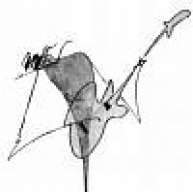
J. Wolf and I were discussing Empress vs Diamond compressor settings in another thread when he noticed the SCR-DI in the pic (below). We got a little sidetracked and I provided a short critique which I've also posted.
View attachment 2853398
"No problem! Wireless to either the Diamond or Empress (..we're in trial mode at the moment), spur line from the wireless to the Peterson tuner (not in the signal path), DigiTech bass chorus, Fdeck HPF, and the Ampeg DI you mentioned. Bought that on a whim to go head-to-head with an existing BDDI. The voicings are somewhat different but I'm having a blast with the Scrambler as it's the newest toy on the board. Extra points for the headphone jack! Here's some addt'l dope / observations:
*It's big, it's heavy, it's sturdy.
*Once you've engaged the Ultra-Lo, you won't want to turn it off as the box sounds anemic without it. It's essentially a pre-shape with a low boost & mid-cut. I leave everything ~12:00 with the exception of the treble which I run at 10:00. Running the HPF infront of the Ampeg provides extra flexibility.
*Ultra-Hi: I can take it or leave it but that's just me. I found that if engaged and the treble attenuated to 9:00, it changes the overall character of the top-end response.
*Scrambler: Solo'd, it leaves a lot to be desired...you have to blend it in with EQ section to make it work. I run both the drive & blend at 9-11:00...anything more and it sucks the life from the Ampeg-esque EQ.
The good news is that it's a quick-learn and easy to dial-in some great tones in a matter of seconds. The EQ and Scrambler sections have independent footswitches which allows one to switch between clean and overdriven presets quickly...can't do that with a conventional BDDI."
Riis
Nice, Riis! Nice clean board, as well! I'm not a huge dirt, fuzz, distortion fan, but not so closed minded I won't try it, if the song warrants it, though.
I appreciate your input, brother... as soon as I get the 3 Musketeers taken care of, I plan on getting some more time with it, later today...
Hope your day is well, mi amigo!

Sure glad they fixed that in the standalone Scrambler pedal!*Scrambler: Solo'd, it leaves a lot to be desired...you have to blend it in with EQ section to make it work. I run both the drive & blend at 9-11:00...anything more and it sucks the life from the Ampeg-esque EQ.
Both the sound tech and you have your own volume controls on your respective gear, so it's fineHow Does it work to use the scrdi live with xlr going to FOH and output goes to the on stage amp? I was thinking spesifically about the levels to both, with Only one vol pot..

Before, so it would go to the board.so you would put it before or after the SCR-DI?
Before, so it would go to the board.
If Ampeg told you to stick your head in a fire, would you?
Personal preference, that's all. I guess they're assuming you're always going to have the Scrambler overdriving. But I've tried it both ways with many different pedals, and I really don't think it makes a difference, so my advice to you would be do the same and see what you think.No I just read that this morning and was wondering what the logic behind it was, and if anybody knew of a reason why a delay might be better after the preamp.
But seriously, this is only the opinion of the person who wrote the copy, and if you use the SCR-DI to go to the board, you are not going to have it in the PA if you put it after the SCR-DI. So what would be the point unless you don't use it to go to the board?
XLR is a better option because of the extremely long cable runs you can have in a typical PA system. With 1/4" you can induce noise and lose high end response in a long cable run, but not with XLR.This is exactly what I was thinking. But then I noticed that mixers and audio interfaces have 1/4 inputs as well. Do bassists not usually use those? Why is XLR the better option? I guess this is outside the scope of the delay before/after question but my SCR-DI is sitting at home and I'm trying to plan out how to use it, I'm a complete newb at pro audio.