

Enjoy the benefits of a premium membership!
Upgrade Account
-
TalkBass has been independent since 1998. Add your voice.
Create a free account to reply to discussions, view embedded media, and browse with fewer display ads.
Join free Log in
Want zero display ads or expanded classifieds tools? Compare plans.
You are using an out of date browser. It may not display this or other websites correctly.
You should upgrade or use an alternative browser.
You should upgrade or use an alternative browser.
NT vs Bolt on
- Thread starter chemojay
- Start date
More options
Who Replied?

Aside from being able to swap necks easily you can also shim them to get some extra adjustment. VERY helpful especially when dealing with old cheap basses and warping necks or bridges that just cant go low enough. If you build a neck through then that neck had better be solid as a rock with graphite or carbon fiber because if it warps or twists you're literally screwed unless you pull away the body wings and get another neck and center of body piece. Yes sustain from a set neck through body is pretty cool but thats probably the only pro. Everything else is a con. Also keep in mind they have to build neck through a bit thicker than bolt on because they know that neck has to be extra stable or its going to be real trouble later on.I went back 10 pages on the forum and couldn't find a NT vs bolt-on thread. Nor is there one in the sticky section. I didn't really find anything with the search here either. What do you think?
Advantages or disadvantages. Personal preference. Favorite?

Let me put it another way:
Do you want this . . . .
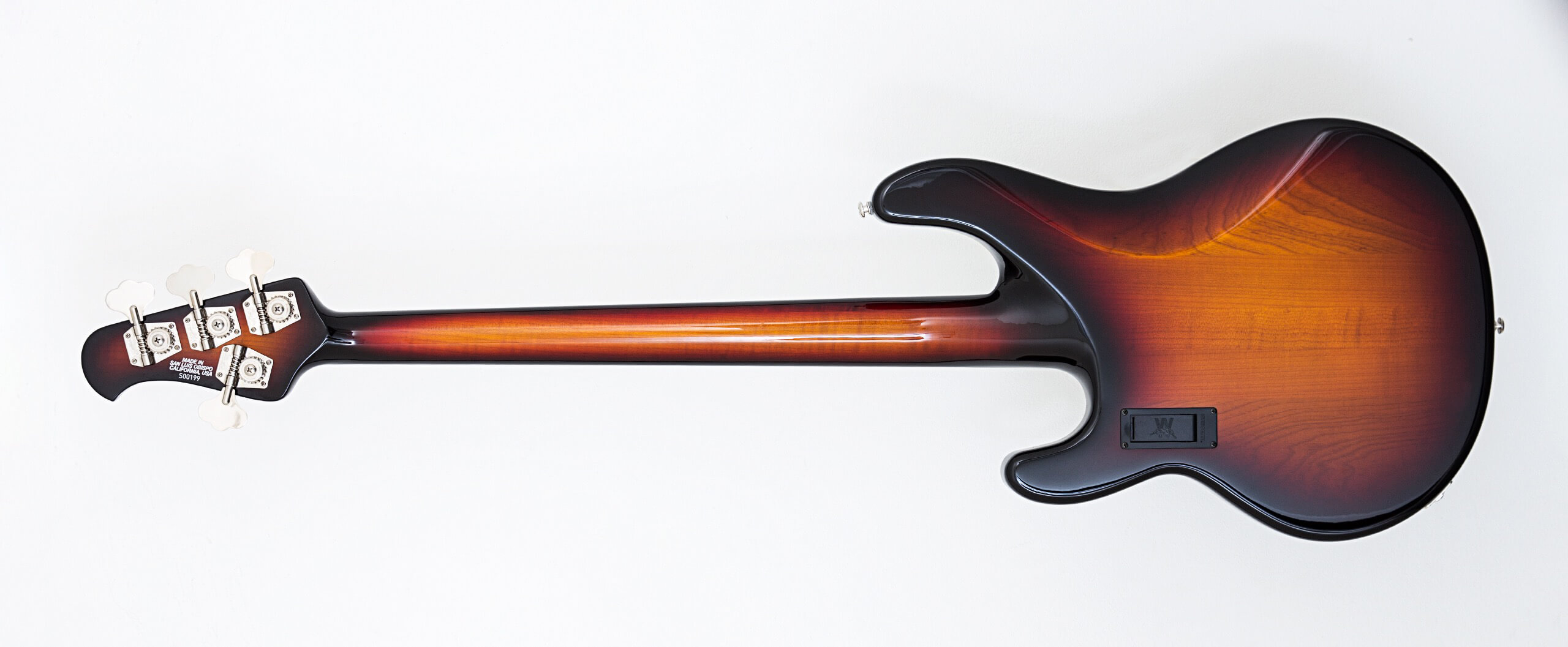
. . . or would you want this . . .
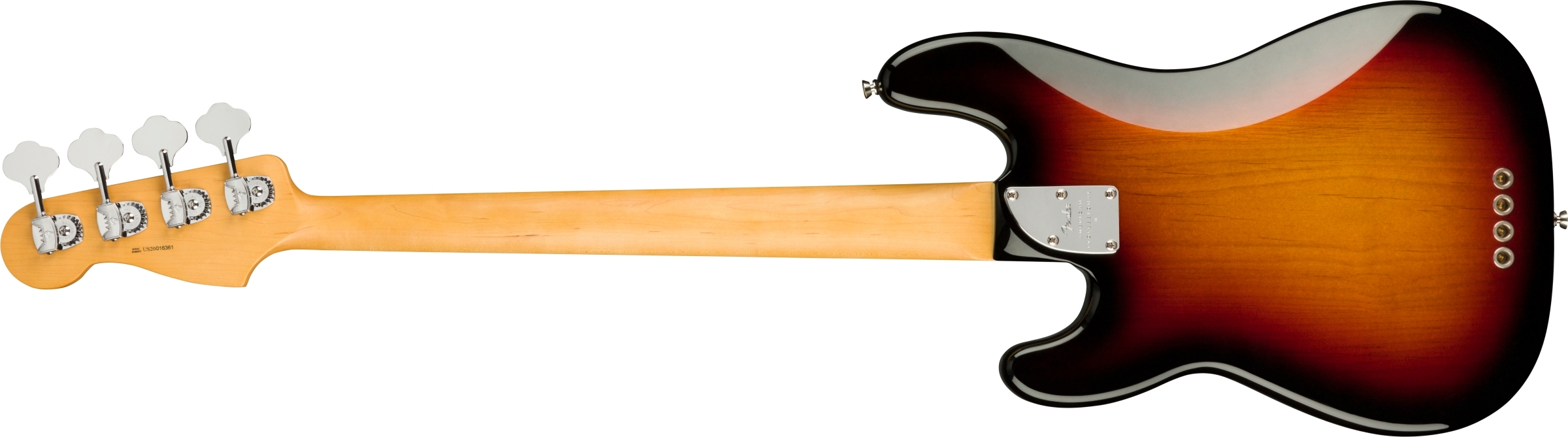
. . . . snagging your fret hand if you need to play up there, or even access around the 12th fret? See the difference in the cutaways?
As I said, I like them both, but if I had to PICK ONE, I prefer NT and 24 frets.
Do you want this . . . .
. . . or would you want this . . .
. . . . snagging your fret hand if you need to play up there, or even access around the 12th fret? See the difference in the cutaways?
As I said, I like them both, but if I had to PICK ONE, I prefer NT and 24 frets.
Last edited:


Sustain, punch, blah blah blah….With closed eyes no one can tell the sound of a NT from a bolt-on if both are well built. Bolt-ons may be easier to build & repair. NT may have a sexier feeling heel.


Some think bolt-on is more punchy and NT has more sustain.
I'm not sure those generalizations are always true though. The two basses with the most sustain in my arsenal are bolt-on. Go figure.
Really the only real difference I can see is neck heel, there's no way for a bolt-on to get as smooth as a NT.
Neither is better IMHO, some of the top builders use bolt-on exclusively, they'd know.
IME, as much as I think NT is sexy, to me, they sound a little compressed compared to my bolt-on basses and have since been moved on.
To be fair, there were other reasons unrelated to neck attachment design...
As I understand it (I'm playing back stuff I have been told but it fits with my experience) …
The difference is as much about the envelope of the note - in particular the attack. The attack of the NT's note is a little more even relative to the part immediately after the attack. On the BO - frequencies drop away faster so the initial attack of the note is "bigger" in relation to the part of the note immediately after.
This is why you hear the NT as "compressed" as compared to the BO's "punchier attack". I that my NT triggers an octaver or synth a little more consistently than my BOs, which could be linked to this more even note envelope.

A couple of years back, I was under the impression that I'm a strict NT guy.
Those basses that I liked, and all my main players, were NT. This was, however, pure chance.
When I look at my humble collection right now, all my basses are Bolt on.
The thing is, it might well be that "A neck through has more sustain, but a bolt on has more punch" as the old myth/truth would have it.
It's hard to compare, though.
Take a luthier that believes in neck through, is specialized in neck through and builds basically nothing else. Have that luthier build two identical basses, one neck through and one bolt on.
Chances are, the neck through is better.
Repeat the same experiment with a luthier that does bolt ons, and most likely the bolt on will be better.
So basically, you get two components with a bolt on.
In a fatal accident, it could be that either neck or body survive and can be separated from the other to be used.
A long way down the line, the truss rod could be maxed out, or the neck warped.
In those scenarios, a bolt on can be fitted with a replacement neck, while a NT is basically gone.
When you're playing high up the neck frequently however, there are not many basses that manage a bolt on connection that gives you any kind of that smoothness a NT can provide.
Those basses that I liked, and all my main players, were NT. This was, however, pure chance.
When I look at my humble collection right now, all my basses are Bolt on.
The thing is, it might well be that "A neck through has more sustain, but a bolt on has more punch" as the old myth/truth would have it.
It's hard to compare, though.
Take a luthier that believes in neck through, is specialized in neck through and builds basically nothing else. Have that luthier build two identical basses, one neck through and one bolt on.
Chances are, the neck through is better.
Repeat the same experiment with a luthier that does bolt ons, and most likely the bolt on will be better.
So basically, you get two components with a bolt on.
In a fatal accident, it could be that either neck or body survive and can be separated from the other to be used.
A long way down the line, the truss rod could be maxed out, or the neck warped.
In those scenarios, a bolt on can be fitted with a replacement neck, while a NT is basically gone.
When you're playing high up the neck frequently however, there are not many basses that manage a bolt on connection that gives you any kind of that smoothness a NT can provide.

Bought a Ken Smith Chuck Rainey model back in the early 90's and was so nice enough to let me visit his shop at that time back in NY.
He sat me down and gave me an incredible education in wood etc
pretty much what he had to say about NT vs Bolt was because of the different grains the Bolt would give you somewhat more punch
the NT would be smoother and to my ears from that point on that's what I heard
I was coming from a Fender PBass which I eventually went back to because it had more punch
He sat me down and gave me an incredible education in wood etc
pretty much what he had to say about NT vs Bolt was because of the different grains the Bolt would give you somewhat more punch
the NT would be smoother and to my ears from that point on that's what I heard
I was coming from a Fender PBass which I eventually went back to because it had more punch


JeezyMcNuggles
Inactive
- Feb 23, 2018
- 14,723
- 20,970
- Disclosures
- I suck, but nobody really notices
I've never fully trusted them though.Set necks are fine too.


The manufacturer didn't make it easy for you to play "mix and match" out of the goodness of their heart. They did it to make the bass cheaper and easier to make...
I couldn't agree more. The ability for owners / players to swap parts is just the serendipitous result of the manufacturing process being done as cost efficiently as possible. Keeping the precision needs of neck building (fretwork, truss rod, headstock, nut) separate from cutting out big chunks of wood for bodies in the pre-CNC / automation days of manufacturing must have been the easiest & definitely would have been most cost efficient if a part had to be scrapped due to defect.

I have both NT and BO. They both play brilliantly

I have 5 Spector NS style basses. 3 are bolt-on and 2 are NT. If I have the same electronics in both, I get pretty much the same tone give or take a little variation in fundamental tone due to the neck pickup placement. The NT's are better balanced, but the NT's are *much* lighter. To be honest, I don't even really hear the difference between a brass nut and a plastic nut. My Rebop has just as much sustain as my NT's. Ultimately, if a bass is constructed well, NT vs bolt on (or set neck) is mostly irrelevant.

I choose whatever technique was used on each bass I like, and currently have examples of all three. in 45+ years of playing, I've never chosen an instrument based on neck attachment or lack of same.
Maybe we need a thread on our favorite color of effect pedal.
Maybe we need a thread on our favorite color of effect pedal.

I think the necks on neck through basses feel rather trapped. At least that what they tell me.


