
Enjoy the benefits of a premium membership!
Upgrade Account
-
TalkBass has been independent since 1998. Add your voice.
Create a free account to reply to discussions, view embedded media, and browse with fewer display ads.
Join free Log in
Want zero display ads or expanded classifieds tools? Compare plans.
You are using an out of date browser. It may not display this or other websites correctly.
You should upgrade or use an alternative browser.
You should upgrade or use an alternative browser.
Obsolete bass amps
- Thread starter DavidEdenAria
- Start date
More options
Who Replied?

What about higher wall volts potentially damaging modern class d amps? There was a time in my small town where i would measure 123 -125 wall volts...lately it seems much better measured with my Fieldpiece SC66 (which i always keep fresh batteries and other meters as well to be sure of measurement accuracy).Keith - it appears as though the protection circuits worked as intended. You are lucky that none of your amps were damaged by faulty power, that's the purpose of the protection circuits. I have seen plenty of conventional amps that have been damaged by power problems as well. I think you are confusing an "amp problem" with a "power problem". Some newer class D amps have additional power supply features that allow the amp to operate at lower voltages than a conventional amp as well, but this is not a universal statement. The global safety regulations (assuming the amp is in fact designed to current safety standards) requires that the amp continue to operate down to 108V, Some (including those I have designed) operate all the way down to 100V guaranteed with almost no loss of power, and with additional loss of performance down to 85V. A conventional amp at 100V would lose approx 40% of rated power (if it continued to operate at all).
Yet this is not true in many cases, certainly not in any of the amps I have designed, but there are plenty of others as well. The only surface mount component is the power module, and in that case it's generally LESS expensive to replace compared with repairing, and certainly not anywhere near the cost of the amp. Everything else is conventional thru hole technology, easily repaired assuming the tech is qualified. Those who can not repair thru-hole PCB amps are simply completely unqualified.
That is good news regarding the power module being less expensive to replace (at least in your designs)..this is partly why i started this thread, i wanted to know what i was getting into....but, the 'qualified tech' issue is concerning either way.
I'm afraid I'd have to say I could care less. I started in the 70's and owned a lot of the 'vintage amps' most people are talking about over my time.
All I mostly remember is how big and heavy they were, and for a long time a 200 or 300 watt (and in my experience, a LOT of manufacturers were being real optimistic about those numbers, to put it politely), and with the weezy cabinets with their speakers we had back then, you could still get run over by guitars and drums without trying real hard: Dial it up to 8 or 9 to try and keep up, they'd break up or worse, drop dead.
Then in the 80's I discover component rigs (rack preamp + commercial power amp), and though now I could keep up cleanly, it's an even bigger, heavier rig that's more expensive all the way around.
All I ever wanted was Big Loud and Clear Tone. That it's now possible with amps, cabinets, and speakers that are far lighter, far more musical, and a lot louder and a lot cleaner in amps and cabinets that are 50% lighter (if not more . . . .) and smaller is like some crazy dream come true. The idea I could have one of Andy's Subway heads with a 215 Subway cabinet, and be out the door for FIFTY POUNDS less than my old Peavey 215 cabinet by itself is a real head-turner.
As such, I remember 'vintage bass amps' as what we had back then, which we did our best with, and am more than happy to leave them back there.
Postscipt: Human beings are indeed, funny. I will admit IF I had a UK-built Trace stack, blacklight front panel and all, sitting in the living room, I wouldn't sell it . . . . . .
All I mostly remember is how big and heavy they were, and for a long time a 200 or 300 watt (and in my experience, a LOT of manufacturers were being real optimistic about those numbers, to put it politely), and with the weezy cabinets with their speakers we had back then, you could still get run over by guitars and drums without trying real hard: Dial it up to 8 or 9 to try and keep up, they'd break up or worse, drop dead.
Then in the 80's I discover component rigs (rack preamp + commercial power amp), and though now I could keep up cleanly, it's an even bigger, heavier rig that's more expensive all the way around.
All I ever wanted was Big Loud and Clear Tone. That it's now possible with amps, cabinets, and speakers that are far lighter, far more musical, and a lot louder and a lot cleaner in amps and cabinets that are 50% lighter (if not more . . . .) and smaller is like some crazy dream come true. The idea I could have one of Andy's Subway heads with a 215 Subway cabinet, and be out the door for FIFTY POUNDS less than my old Peavey 215 cabinet by itself is a real head-turner.
As such, I remember 'vintage bass amps' as what we had back then, which we did our best with, and am more than happy to leave them back there.
Postscipt: Human beings are indeed, funny. I will admit IF I had a UK-built Trace stack, blacklight front panel and all, sitting in the living room, I wouldn't sell it . . . . . .
I mentioned to you before that i built a head box for my Eden Metro...sure its still fairly large and heavy but very manageable but the speaker cabinet is now MUCH easier to move! In regards to your J bass (and P basses etc) those are 'easy basses to amplify' but not the case with my 65 Epiphone Newport with its neck 'mudbucker' which is where the whole EQ section on the Metro really shines, especially the 'enhance' feature.All of those are still viable if they drive the cabs you want to use to the level you need AND you don't mind lugging them around. I have a 1999 Eden WT500/800 that I use as my main amp. It was upgraded to 800-watts from 500-watts thus the "/800" after the 500. It has all the power I need and sounds fabulous. Like channel 2 on your Metro, it has a hybrid preamp meaning it has a tube in the otherwise SS preamp.
That tube in the Eden amps is specifically to generate the warmth of sound that they are known for. It also has a crazy versatile EQ set up - bass and treble Shelving EQ's PLUS three semi-parametrics EQ's. With all that versatility though, I usually run all the EQ flat except for a little boost ~250Hz to give my passive Jazz some nice definition and presence in the mix.
I bought that amp directly from David Nordschow (aka: David Eden) after he sold Eden, left the company, and started DNA. I have two of his DNA cabs and got the DNS-210 last year when I was first accepted into the group of DNA Endorsing Artists. My "old amp" sounds absolutely amazing through either my DNS-410 or my DNS-210. I got the 210 because it can handle all of my indoor venues, especially those couple of small venues that wouldn't let me roll in my DNS-410 because it was "way to big for here".
So I run it bridged at 800-watts into my 8 ohm DNS-210 (handles 700-watts rms) indoors, and will also run it bridged at 800-watts into my DNS-410 (handles 1,400-watts rms). The max I can run the master indoors on the 210 is 10 to 10:30 and the max I can run the master on the 410 is a smidge over 10 o'clock at outdoor festivals. If I turn it above those levels I get told to turn it down. The only disadvantage to my Eden WT500/800 is that it weighs about 36-lbs in its rack.
But you know the Class-D amps are getting better and better. When they first came out they really didn't seem to have any headroom. As soon as you hit their max output they clipped and it sounded bad. Almost seemed like the rms and peak were the same - that's just how it sounded. Now days they seem to have that full +3db headroom that we came to expect with the class A/B amps. I can get (and will) a DNA-800 amp that will put out 800-watts into 4 ohms and it just weighs 4.8-lbs. For an old fart like me, that's a big incentive to get a class-D amp.
And when those class D amps started coming out the maximum power was 500-watts into 4 ohms. That's because virtually all of them used the same power section from the same supplier. Now there are a lot of 800-watt class D amps out and DNA came out with their 1350-watt class D amp back in 2014 and their DNA-800 in 2017.
I actually already have a class-D amp but it's a low powered one. I have an Eden TN-226 (225-watts) that I specifically bought to play at one small venue where we hosted Open Mic Nights 4o to 45-times a year. It weighs 4.7-lbs. I have a shoulder bag for it and carry it over my shoulder in the shoulder bag, grab my Eden EX112 cab by its top handle; grab my bass in the other hand; and load-in/out is just about done.
This little class-D amp has only 2 semi-parametrics plus the treble and bass EQ's compared to the 3 semi-parametrics in my big Eden amp, but it sounds just as good and I do love the portability of it. I just need a more high-powered one, which is why I'd like a DNA-800. There are plenty of 800-watt class D amps now so there is quite a bit of choice. Even though your Metro weighs a ton, it's still a great amp, so not hardly a trash heap. I do think that most options are going to move away from class A/B amps though just because of their weight and the fact that the class-D are now performing similar to the older heavy amps they are trying to replace.
So they're not hardly going on the trash heap but the used prices on them are already dropping and will continue to do so. Good news is that makes some great amps available to folks who otherwise couldn't afford that level of quality and sound while the "working band" segment of musicians moves more and more towards the class D amps because they are so easy to move around.
Other wise i need my 7 band EQ on my board with this bass to achieve a wide array of tones...plus i need the clean power which the Metro and GK 800RB have enough clean power (though the GK has the 'grind' when dimed where the Metro stays cleaner).
I need to review class d designs more thoroughly...i DO need maximum EQ flexibility and a lot of clean power, something Jack Bruce for example did not get with his old Marshall amps and his Gibson EB3 or Felix Pappalardi as well, his Sunn amps had a lot of grind with the old Gibson basses and very limited EQ which made Gibson 'mudbucker' basses 'one trick ponies' so to speak.
Ha, i hear you! Keep in mind, Fender basses have always been easy to amplify and there are tons of Fender types on the market...simple is better for me when it comes to basses but hey, if you stay on top of maintenance, the more complicated basses can deliver many more tones with reliability.Now, let's talk about obsolete basses. I can't believe people are still using those 60 year old tacky P basses. I mean, geez. Ok, grandpa, we get it. You were Abraham Lincoln's history teacher and saw Jesus live with the original lineup. Get with the times and buy a Soundgear, dude. Not some old fashioned hokey 1 pickup bass named after a car part.

I have an Ampeg B2RE that when I pair it with my very efficient RevSound 2X12 cab produces one of the cleanest, roundest bass tones you ever heard. It’s hardly anyone’s favorite Ampeg, plus it weighs a brutal 26 lbs., but it sure works well in this combination. And I think I can manage the total weight of 61 lbs. just fine.
Yes they did! I played them and heard them all the time, in 1969/70. You could get good Fender tone like the studio tones of early Experience Redding etc. without distortion. I had a 1982B, the 100w cab, with a Major and you could play loud with an EB2D without the Jack Bruce breakup. Your word complements is so appropriate. The SB/SL heads and the cabs just worked together. Sure you could put those heads say on a JBL 15" cab but it wasn't a match.I still want a Marshall Super Bass. I couldn't foresee playing in venues where 100 watts with judicious breakup won't be enough (or there will be PA support). Now the problem lies with finding a cabinet that complements the midrange and overdrive profile with speakers that doesn't blow up (Edit: asthe original 1935 cabs allegedly did).
The original Super Lead actually was clearer. It felt like it was missing some very low end but was perfect up the neck. The Super Bass had almost a baked in "bass tone" which colored the whole response. I understand there is a simple cap change in the pre.
My daily bass was a '57 P that I paid $150 for. In those days it was a used bass.
I tried the HW series and besides not handling the frequencies or even actually sounding good or being as well built, they didn't smell right.

Last edited:

- Feb 12, 2006
- 61,031
- 5
- 220,915
- Disclosures
- Development Engineer-Mesa Boogie, Development Engineer-Genzler (pedals), Product Support-Genz Benz
If the amp meets either the 60965 or 62368 safety standards, the operation range is tested over 108V - 132V, so 125V is plenty safe.What about higher wall volts potentially damaging modern class d amps? There was a time in my small town where i would measure 123 -125 wall volts...lately it seems much better measured with my Fieldpiece SC66 (which i always keep fresh batteries and other meters as well to be sure of measurement accuracy).
That is good news regarding the power module being less expensive to replace (at least in your designs)..this is partly why i started this thread, i wanted to know what i was getting into....but, the 'qualified tech' issue is concerning either way.
The module I currently is contains both over-voltage and under-voltage protection, this has improver overall reliability against “external to the amp problem” failures.

I've always meant to grab one of those, sometime. That could be the only combo you'll ever need.I have an Ampeg B2RE that when I pair it with my very efficient RevSound 2X12 cab produces one of the cleanest, roundest bass tones you ever heard. It’s hardly anyone’s favorite Ampeg, plus it weighs a brutal 26 lbs., but it sure works well in this combination. And I think I can manage the total weight of 61 lbs. just fine.


Silvertone/Sears 1428. IIRC this was my first bass amp when I was 13. My parents paid $20 for it.

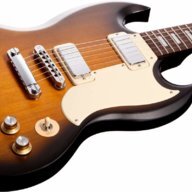
I had that amp, it was really good tbh, never needed fixing and no tubes to mess with but still had the SVT sound and a ton of flexibility with the eq.I have an Ampeg B2RE that when I pair it with my very efficient RevSound 2X12 cab produces one of the cleanest, roundest bass tones you ever heard. It’s hardly anyone’s favorite Ampeg, plus it weighs a brutal 26 lbs., but it sure works well in this combination. And I think I can manage the total weight of 61 lbs. just fine.

No such thing as an obsolete amp. Broken, perhaps, but if you turn it on and it works it ain't obsolete.

If it works, you can get a sound you like, and it can be serviced, it's not obsolete.
I use a QSC GX7 power amp with a tech21 VTBass preamp in a rack along with a dbx compressor, and I am very happy with it at low volumes or loud. 1000 clean watts per side. I play classic rock, motown, blues and rockabilly. I am looking to buy an Ampeg V4 just because ...... .Agreed. 100 percent! If I find a newer, lighter amp that sounds as nice as my current rig? I might change it out. But so far, I am still happy coming home to my rig from trying or rehearsing thru newer offerings.
Weight seems such a factor today. So I mention it. But I grew up and started playing just as solid state or hybrid designs were taking over from the old tube behemoths. SWR, GK, Eden and others were making amps that were advertised as 'light' as compared to SVTs. And, to me, they are still light. Heh. Thassall I meant. I always wanted a rig that when I was tryin stuff out at a store, I would rather come home to my rig. I still like mine vs stuff in the store. But if that changes? Then maybe I will change, too.


