+1 on using post-EQ DI out on your amp. You like the amp's tone and are bypassing it now.
Amp tone on stage (your personal rig) and amp tone through a completely different amp and speakers (FOH) are almost never the same thing.

TalkBass has been independent since 1998. Add your voice.
Create a free account to reply to discussions, view embedded media, and browse with fewer display ads.
Join free Log in
Want zero display ads or expanded classifieds tools? Compare plans.
+1 on using post-EQ DI out on your amp. You like the amp's tone and are bypassing it now.

He just needs to send a pre-EQ DI signal to the board. This way he can have his cake (his tone on stage) and eat it too (an un-EQ'd signal going to the board without unwanted artifacts).
I run my bass through my radial DI into the board
And the OP says he's already using a Radial DI. Maybe that means a JDI at speaker level, but that's a long shot. Doesn't sound like the stage rig factors into the FOH DI chain.
I run my bass through my radial DI into the board
Good point, but there is a simpler solution than having him totally re-configure his stage EQ.
He just needs to send a pre-EQ DI signal to the board. This way he can have his cake (his tone on stage) and eat it too (an un-EQ'd signal going to the board without unwanted artifacts).
EQ'ing an already EQ'ed signal is a challenge many sound engineers would rather avoid, and in this case it will let him more easily diagnose where the problem is.
That might work but if he is not out front listening to how his bass is being eq'd in the mix then sending a pre-signal will have the same effect that he is currently experiencing. I always prefer post eq to the board and then have the sound man tweak it a little so it will sit the mix properly.

The article recommended setting your eq with more mids and highs. It said you will not like the way it sounds when you play alone but it will sound much better in the mix.
^ This, and I can't tell you how many times over the years I've heard the "all-sub-no-definition" tone from a bass guitar via a FOH system, surprisingly, from some pretty legit touring bands and some very good local sound mixers. IMHO, bass guitar is the single most difficult instrument to mix well in PA system, since where you want the tone to be prominent (see above) is pretty much what most people DON'T want to hear from a PA system - accentuate 200-500hz and 800-1.2khz (subjectively, to taste).
I've self-mixed bass on similar K-12 based systems with companion QSC powered 18" subs, and got it to sound pretty good, with clarity and presence in the mix. The key is that my stage rig is a modeler going into a full range PA-type cabinets, and the tone is styled so that it cuts through both the stage and FOH in context. It can definitely sound a bit on the ratty side in isolation, but IME the more stuff going on in a mix, the more difficult it is to make "polite" isolated bass tones cut through - they need a lot of sonic space to do so.
Thus I'd recommend sending whichever DI signal to the FOH and create a tone listening to it via the PA system only to accentuate lo/lo-mid punch and upper mid bite/presence, and see how that behaves with the stage rig at gig volume in full mix context.
JMHO.
Tailor your stage rig so it sounds great out front. Of course, you may not be too keen on it in the stage space you occupy, but this is a viable solution, if you can make it happen OUT FRONT--where it really counts.
Bass -> DI -> Mixer will give you a very dark/bassy tone with a normalled EQ.
Preamps boost your treble and mids. How exactly depends on the preamp.
No. DI-->mixer is one conventional path for live and recorded electric bass. It'll give you "very dark" tone only if something in your chain between bass and FOH cabs is either badly out of spec or else set to shed midrange and treble.
Reminder: the amp's output is the OP's point of reference and objective.
We use a peavey verssaray double 18 for a sub (yeah I know peavey but it's crazy good sounding )
That would be reasonable, but the OP's post #17 observes that he sounds fine in the FOH at other venues where the band runs through the house PAs, so I don't think the problem is skewed expectations about DI'ed FOH sound. The OP has also auditioned the band-rig FOH w/ stage rig muted and DI straight into mixer channel; then he has attempted to EQ, and can't cope his regular FOH tone through the band's self-mixing rig.
Similarly, the Mackie DL series has decent eq. Hard to see the EQ limits of the digital DL32R as the likely root problem.
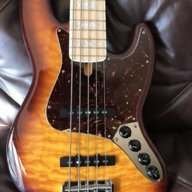

This may have been mentioned already, but despite what the electronic crossover is set at, the real-world acoustical crossover point may be much different depending on the relative gain settings of the subs and mids. If the subs have higher output (real, acoustic output, not as measure by the gain setting on the Driverack) than the tops that actually pushes the acoustical crossover higher and creates mud and incoherence in the overlapped region.Crossover is set at 125hz he looked .. I'm narrowing it down lol
Hopefully this thread helps some fellow bassists out in our quest for great tone out front

who is "he"? an actual soundguy, or somebody mixing from stage?I know he uses the EQ on the driverack vs the board which I totally disagree with but he's stubborn on some things ...
My suggestion is easy. Hire a professional soundman with a good resume to run sound for a gig at this club. Let him start from zero and do his job. Save the presets if the night goes well. It will cost you some money, but will pay for itself many times over down the road. Much better than interweb troubleshooting.........
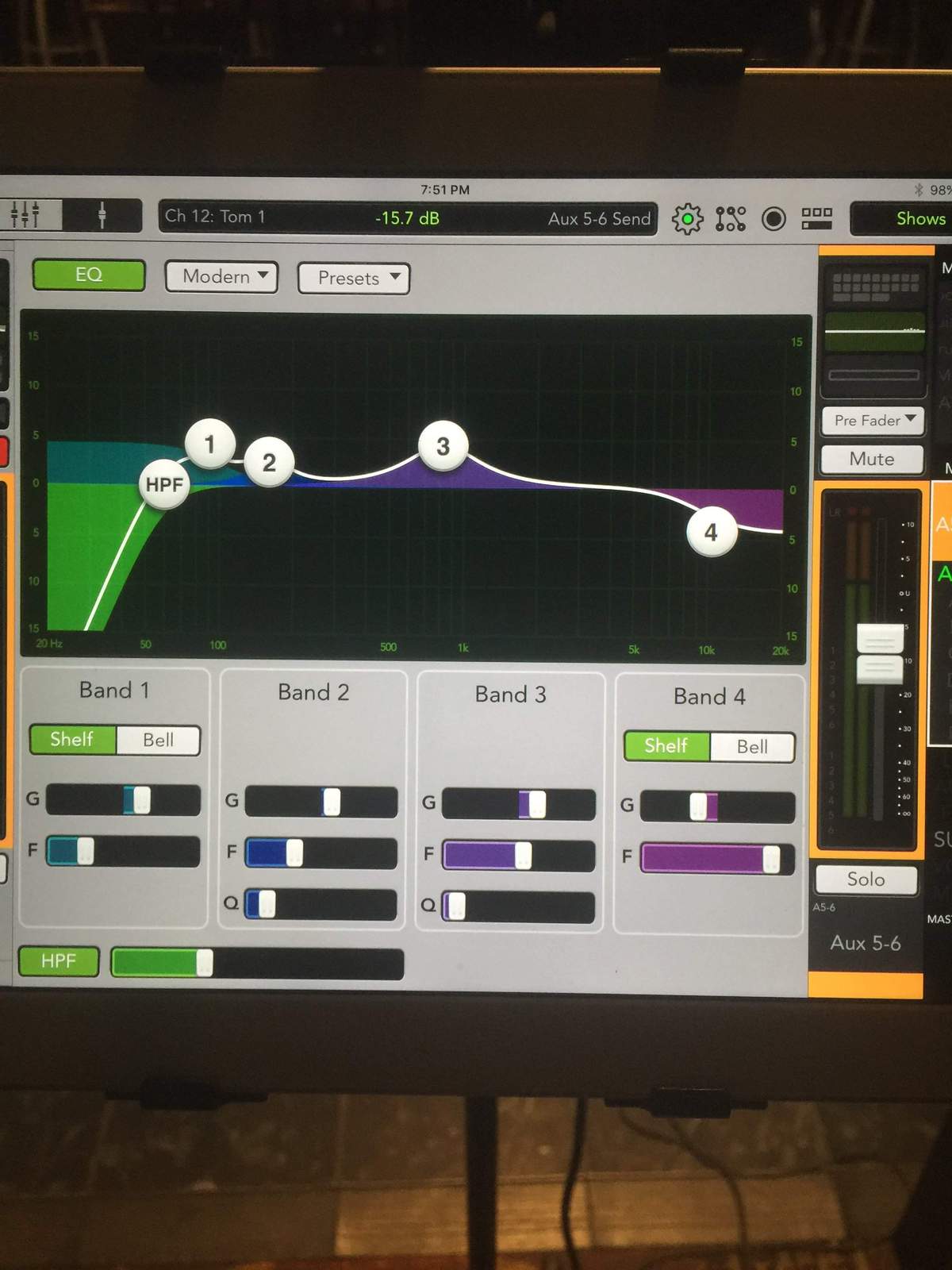
Here's a shot of the bass EQ On the iPad bump in 80hz bump in 160hz bump in 800hz high rolled off a bit