• TalkBass has been independent since 1998. Add your voice.
    Create a free account to reply to discussions, view embedded media, and browse with fewer display ads.
    Join freeLog in
    Want zero display ads or expanded classifieds tools? Compare plans.

Old school Power amplifier for bass

The problem with most "my ears tell me..." statements is that you're not actually "measuring" what you think you are. To truly test one component against another, you have to measure the difference between those two, and have everything else in the system remain static. Meaning the pre amps have to be set the same, and the gain has to be matched, and the output power has to be the same, and you have to do it all double blind so your pre conceived notions dont effect the outcomes.

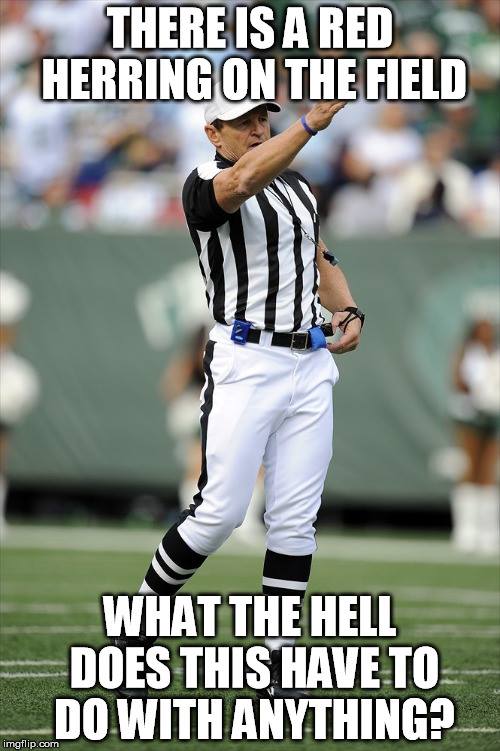
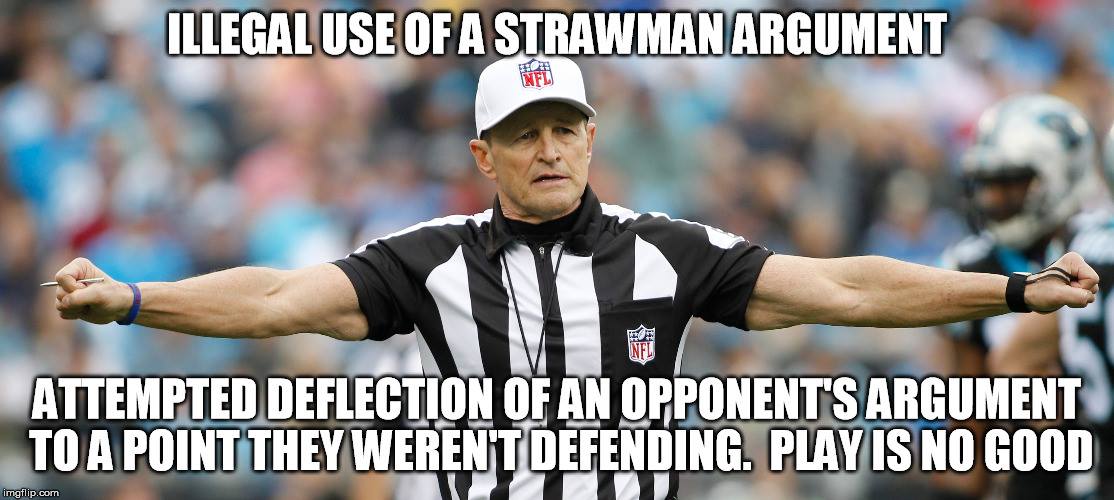
People need to use logical reasoning on these kinds of things, and leave the fallacies at home.
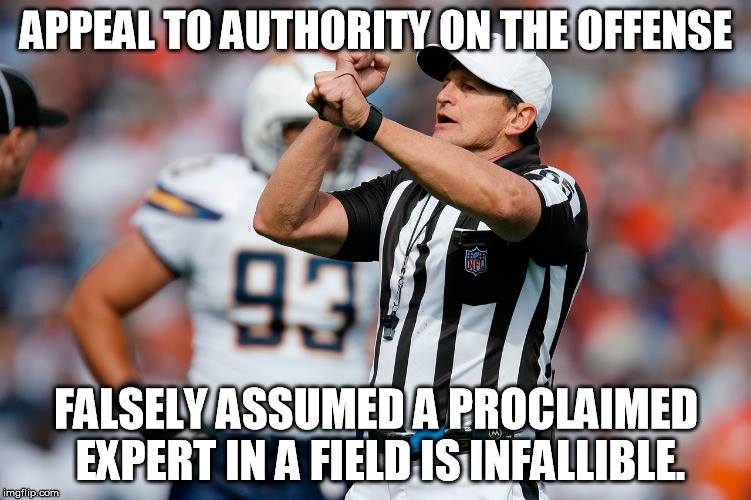
etWSpfj.jpg

K9jNCVe.jpg

npSoC4Q.jpg
 
Are you at AES today? Lot of people here right now saying "my ears tell me..." this and that....
Well there goes Talkbass, in a few simple Memes!, 1/2 of the armchair geniuses tell people to Use Their Ears .. Oh boy... Now what will they do?
As well as some of the threads that you post in on Talkbass. telling people to "use their ears".:)

Then again, Im bet we will see a bunch of people patting each other on the back as usual..:D
The problem with most "my ears tell me..." statements is that you're not actually "measuring" what you think you are. To truly test one component against another, you have to measure the difference between those two, and have everything else in the system remain static. Meaning the pre amps have to be set the same, and the gain has to be matched, and the output power has to be the same, and you have to do it all double blind so your pre conceived notions dont effect the outcomes.

People need to use logical reasoning on these kinds of things, and leave the fallacies at home.
etWSpfj.jpg

K9jNCVe.jpg

npSoC4Q.jpg
 
Last edited:
Are you at AES today? Lot of people here right now saying "my ears tell me..." this and that....
Well there goes Talkbass, in a few simple Memes!, 1/2 of the armchair geniuses tell people to Use Their Ears .. Oh boy... Now what will they do?
As well as some of the threads that you post in on Talkbass. telling people to "use their ears".:)

Then again, Im bet we will see a bunch of people patting each other on the back as usual..:D

It's not possible to measure my sensations, emotions and perceivings, but they exist nonetheless...and are a big part of artistic expression.

More, i've got the golden ear, everyone knows

Are you convinced to be able to measure everything exists? You fool!

Experience and perception are your own. They do not always translate to every other person with the same meaning. The way you attribute some phenomenon to one specific cause is to test it. If you cant measure it reliably, then you have not shown the cause.

People can like what they like, but if you want to make statements of fact, then they need to be backed up with something more than, "this makes my bits tingle better."
 
I do not remember how many times I red this kind of debates on tb....i can't believe I joined this discussion.
sorry man, different ways of thinking maybe.
Peace

If someone says, "I like amp X better than amp Y." I will say, "Cool, what are the highlights/features that you dig?" If someone says, "This amp does X, and this other one can't" I will ask, "How?" People that make statements, but can't/won't justify them in meaningful ways muddy the waters. I also find a high level of irony in the argument of, "Thats my perception, and its personal... Thats my perception so it must be true."
 
The glaring fallacy in all this is that existential subjective experience is immeasurable and therefore useless.

Nothing could be further from the truth.

Consider: there could be no such thing as an equal loudness curve without input from listeners that is by definition entirely subjective.

This in no way obviates the treasure that fine grained and repeated objective measurement brings to all fields of endeavour - including and I argue especially, the fields of audio/acoustics.

The stitch that many are missing is that subjective responses are themselves measurements - and can in many cases be just as validly* accomplished and useful as objective measurements.

*and are just as susceptible to invalidity when poorly done or dishonestly stated - for example if 99 out of a hundred persons can't hear what you alone think you can hear, there is a very good chance you only think you hear it = why only "blind" subjective measurements can be valid for general usage = this is how we know beyond question that coat hangers work just as good as $1,000 a foot magic speaker cables given suppression of fanatical mysticism on the part of the listener.
 
Everyone should knock it down a notch or two and realize that perspective involves nuance. ;) Also no one's personal experience is wrong nor invalid, and all may be explained in some fashion.


We all 'feel' music on different levels and in different ways...yet at the same it's part of the human condition to misattribute our experiences in complex situations based upon our expectations.
 
What I find humorous is when folks attribute something they think they hear to something totally unrelated or in inconsequential to any possible or reasonable mechanism while ignoring far more significant and likely reasons.

For example, the number of folks who attribute the entire sound of a mixing console to the mic preamps, where there are plenty of other, much more influential possibilities. Especially funny where the two consoles share virtually identical preamps ;)

(Edit typo)
 
Last edited:
What I find humorous is when folks attribute something they think they gear to something totally unrelated or in inconsequential to any possible or reasonable mechanism while ignoring far more significant and likely reasons.

For example, the number of folks who attribute the entire sound of a mixing console to the mic preamps, where there are plenty of other, much more influential possibilities. Especially funny where the two consoles share virtually identical preamps ;)

Misattribution based upon lack of understanding a complex situation and/or technical knowledge therein. : )

Happens all the time. And has been going on since the beginning of time.
 
It too has come up in studies also that artifacts that have nothing to do with the efficacy of the item under test, do need to be accounted for so they don't influence the results.

An amp study found one subject could tell they were using a tube amp because the amp had a flaw (ripple IM)
Take that away and suddenly they can't tell.
A placebo that tastes better than the actual medicine may show better results.
An audiophile may claim the vinyl sounds better, but if the vinyl is recorded to a digital medium they can no longer tell. It's because they like the crackle pop wow and flutter - artifacts have nothing to do with the music in first place.
Pepsi challenge, cold pepsi versus warm coke - what do you like best?
Louder sounds better than quieter (Common audio store scam)

Some people might believe they don't need to do any setup for a test. Just use their ears.

Good thing is real engineers at AES understand science. Every one of them presenting a peer reviewed paper is not just relying and personal beliefs.
 
I find some of your post entertaining too..Im not being disrespectful.. Im just saying You've become testy and short lately:)..
You're gonna tell me that an SSL sounds like a NEVE? Really? I did some work with Chris Alge.. he would differ on opinion/

Last week i asked why many Class D amps don't have the same ummmph that many older amps of equal power seem to have. I listed a few examples.. Then I used my old Crown PSA 2 as an example.
With everyone's college degrees and excellent writing skills, no one was able to clarity in specifics how today's amp testing differs from yesteryears testing of amps.. Basically it ended with folks saying its out dated. Many walked away feeling the same that i did , that the watts calculations of todays amps are just pulled from thin air or are PEAK watts... .
Me, Im just a guy that uses tools for work... Many different tools for many situations..

I know that you are familiar with the SM9.2 and streamliner. I Love those amps..I use them often.
So, why is it that a 900 watt Class D Streamliner is not even in the same ballpark as the gut punching 900 watts that the Crown PSA2 delivers? I wish someone could explain that to me so a layman non engineer type could understand..


What I find humorous is when folks attribute something they think they hear to something totally unrelated or in inconsequential to any possible or reasonable mechanism while ignoring far more significant and likely reasons.

For example, the number of folks who attribute the entire sound of a mixing console to the mic preamps, where there are plenty of other, much more influential possibilities. Especially funny where the two consoles share virtually identical preamps ;)

(Edit typo)
 
I find some of your post entertaining too..Im not being disrespectful.. Im just saying You've become testy and short lately:)..
You're gonna tell me that an SSL sounds like a NEVE? Really? I did some work with Chris Alge.. he would differ on opinion

I'm a grumpy old fart (or FOH dude), that entitles me to be grumpy ;)

Actually, I didn't sat that an SSL sounds like a Neve. I said that differences in the perceived sound of different consoles are often attributed to mic pre's whereas there are many much more influential areas where different approaches really show themselves. Often, differences are also due to design or layout defects which contribute to unintentional voicings that ultimately become favored. A great example of this was the Fender tonestack, a horrible eq network with a byproduct that turned out to have a useful influence on the overall tone.

Last week i asked why many Class D amps don't have the same ummmph that many older amps of equal power seem to have. I listed a few examples.. Then I used my old Crown PSA 2 as an example.
With everyone's college degrees and excellent writing skills, no one was able to clarity in specifics how today's amp testing differs from yesteryears testing of amps.. Basically it ended with folks saying its out dated. Many walked away feeling the same that i did , that the watts calculations of todays amps are just pulled from thin air or are PEAK watts... .
Me, Im just a guy that uses tools for work... Many different tools for many situations..

I know that you are familiar with the SM9.2 and streamliner. I Love those amps..I use them often.
So, why is it that a 900 watt Class D Streamliner is not even in the same ballpark as the gut punching 900 watts that the Crown PSA2 delivers? I wish someone could explain that to me so a layman non engineer type could understand..

I did comment on this, and the voicing of the preamp certainly is a major part of the difference. Class D and SMPS technology has been evolving and for MOST folks, the benefits of the technology far outweigh any perceived shortcomings. That's certainly universally true in the pro audio world these days, where class D amps in fact work BETTER for sub applications because they are not crippled by reactive load losses like linear amps are. I also mentioned that there are tricks that can be done with the global feedback networks that can produce a small low frequency bump under reactive load conditions (provided there is adequate stability margin within the basic topology). I know of several manufacturers that have done this, it's a useful benefit from an otherwise detrimental artifact. I can also assure you that many class D amp manufacturers do not use peak power numbers (me included). let's not go down that path because the math is pretty direct.
 
  • Like
Reactions: Bob Lee (QSC)
Dropping names doesn't make anyone right. Nor does them agreeing with you. If they were part of some scientific study, great, cite the paper and I'll read it. Might open my eyes.

I know I've told guitarists and singers a bunch of baloney, and agreed with a bunch of their baloney, just to get on with the job at hand. Sometimes time is too short to explain why someone is wrong and it's just best to say "yes, I agree with you" and let them live in their own little world...


... wait a minute... oh yeah! Now I see what you mean! Makes total sense when you put it like that.
 
  • Like
Reactions: Bob Lee (QSC)
What I find humorous is when folks attribute something they think they hear to something totally unrelated or in inconsequential to any possible or reasonable mechanism while ignoring far more significant and likely reasons....

This fallacy is the foundation of most audio myths IME. Its not that there isn't a difference - its that the source of the difference is so often laid at the feet of a bit player falsely accused.

Louder sounds better than quieter (Common audio store scam)

I have watched a lotta folks scam themselves with this one - no outside help required.
 
Class H is basically class AB with a slightly tweaked power supply circuit to allow for more power with less weight. At least I think it is. @Bob Lee (QSC) could probably give a better description.

Also, just a nitpick, but all power amps are analog. Digital speakers don't exist since our ears don't respond well to ones and zeros. The reason class D is called class D is because that was the next letter available.

Class H is class AB with one or more additional pairs of power supply rail voltages and circuitry to switch between the higher and lower rail voltages as needed. This makes the amp more efficient because power amps usually run well below full power but still need the higher voltages when they're called upon to put out full or close to full power. Running an amp on lower voltages when possible reduces the current draw and the waste heat produced.
 
  • Like
Reactions: cfsporn
All amps have a sound to them.

True. For the majority of power amps that are well designed, that sound is neutral, a highly accurate reproduction of the input signal.

Amps that have no sound are useless and should be serviced or replaced.