
You just reminded me of this old DeWalt radial arm saw I spotted this past summer. Sold before I saw it, which is fine because I'm not in the market for one anyway. Bet it would clean up pretty nice.My grandpa's ~1955 Craftsman Table saw / joiner.
(the joiner needs a little attention after some condensation from a water pipe with all the watering we did this summer....)
I would part with it for the world (unless maybe a 1954/55 P-bass)
My machinist / father-in-law's aluminum clamp he made in 1974.
He gave it to me last week (solicited) when we were going through his machinist tool kit from the 60s.
Amazing stuff in there - 60 year old + Starrett pieces.
I've been looking for something to hold nuts for shaping - this looks perfect!
View attachment 5261278
View attachment 5261280
View attachment 5261281

Enjoy the benefits of a premium membership!
Upgrade Account
-
TalkBass has been independent since 1998. Add your voice.
Create a free account to reply to discussions, view embedded media, and browse with fewer display ads.
Join free Log in
Want zero display ads or expanded classifieds tools? Compare plans.
You are using an out of date browser. It may not display this or other websites correctly.
You should upgrade or use an alternative browser.
You should upgrade or use an alternative browser.
Old tools
- Thread starter ardgedee
- Start date
More options
Who Replied?

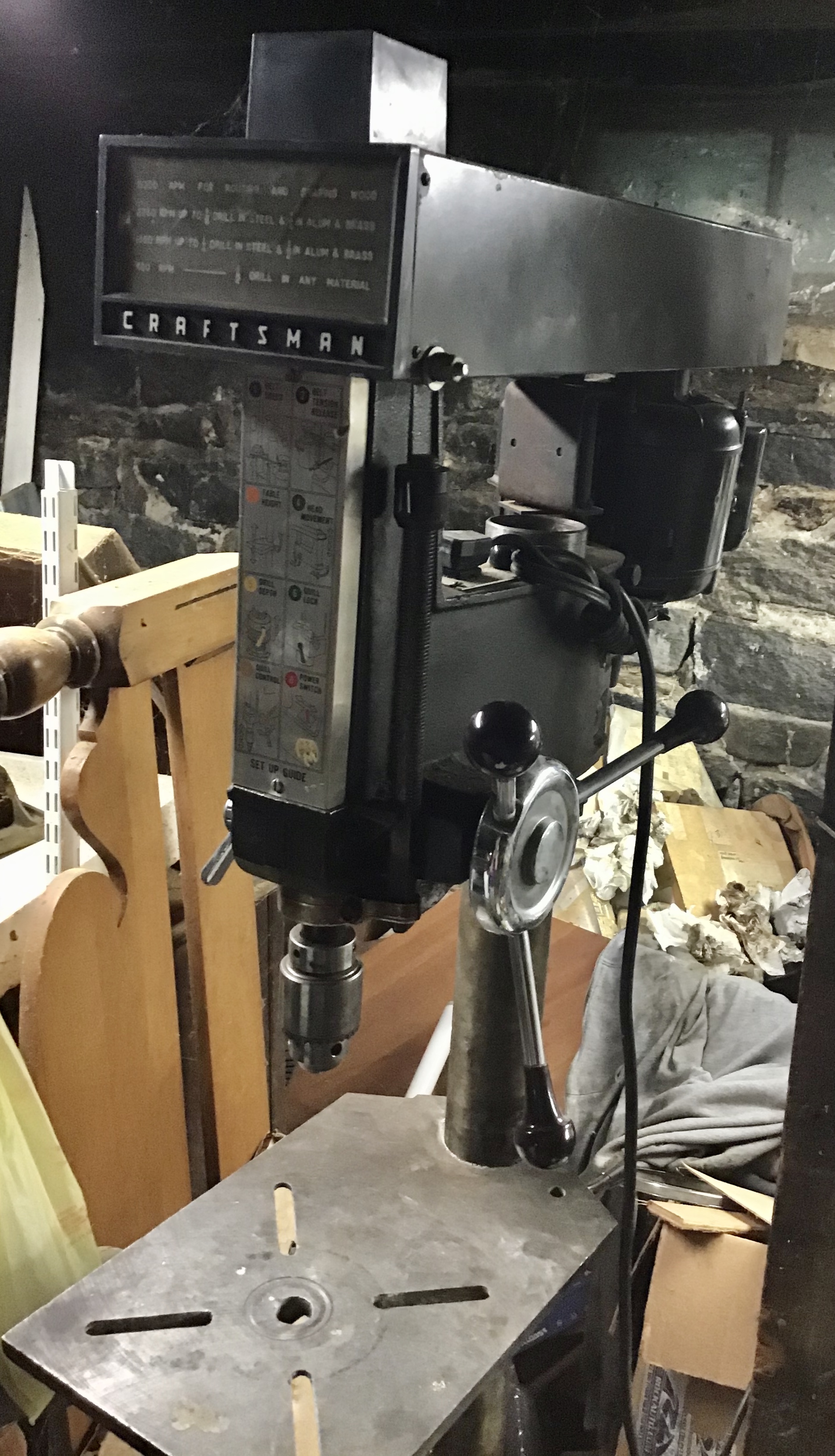
My grandfather’s Craftsman (built by King Seeley) bench top drill press from about 1949:
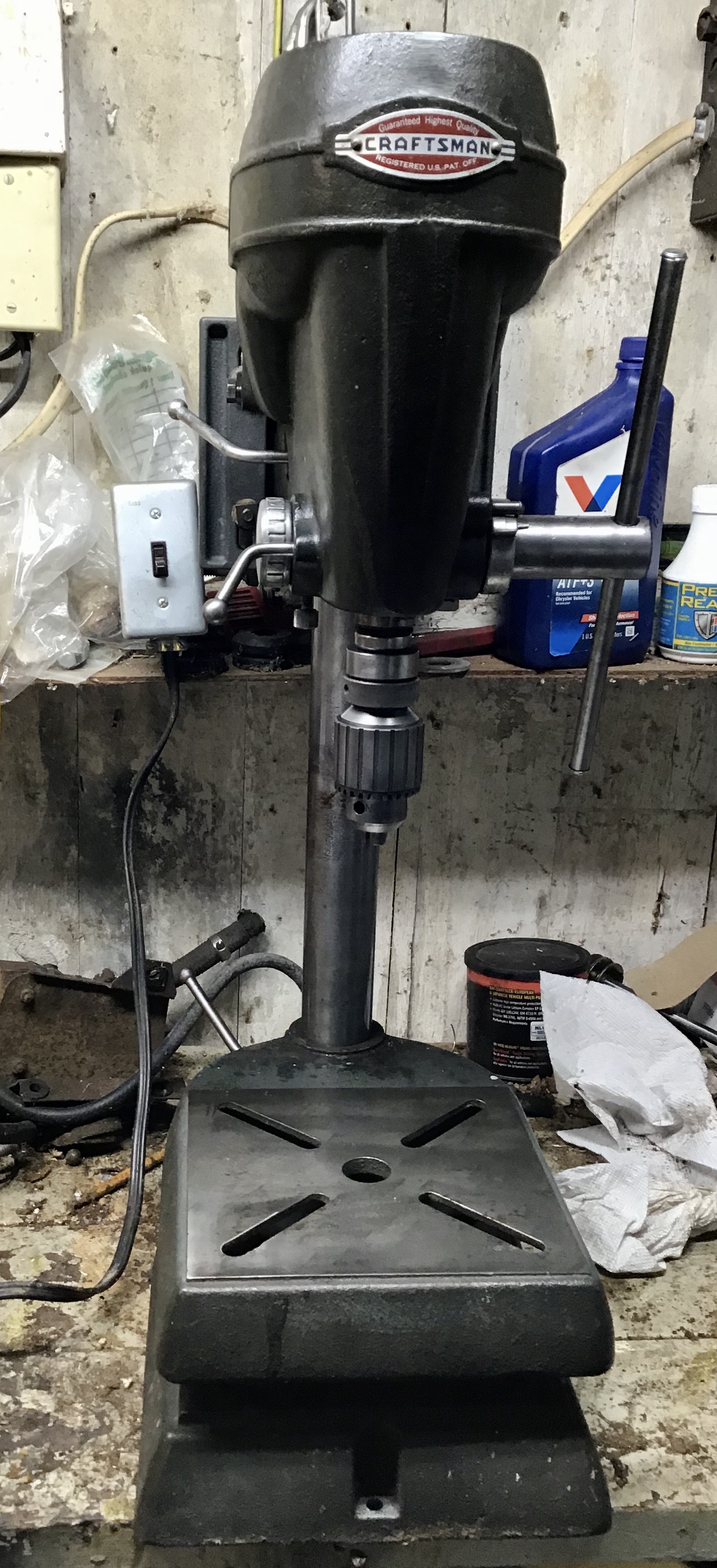
Mid- to late-‘60s Craftsman floor-standing drill press. Dad bought it from a neighbor when they were moving. Funny story about this one: We always struggled to see clearly what we were drilling, trying to get light onto the work surface. After Dad passed, I brought the drill press over here, and downloaded the manual from online. Imagine my surprise when I read a reference to a light socket in the housing. I looked up inside, and sure enough there was a light socket. Empty. We struggled for over forty years, never knowing, and I believe the neighbor had never installed a bulb, either, since it was new.
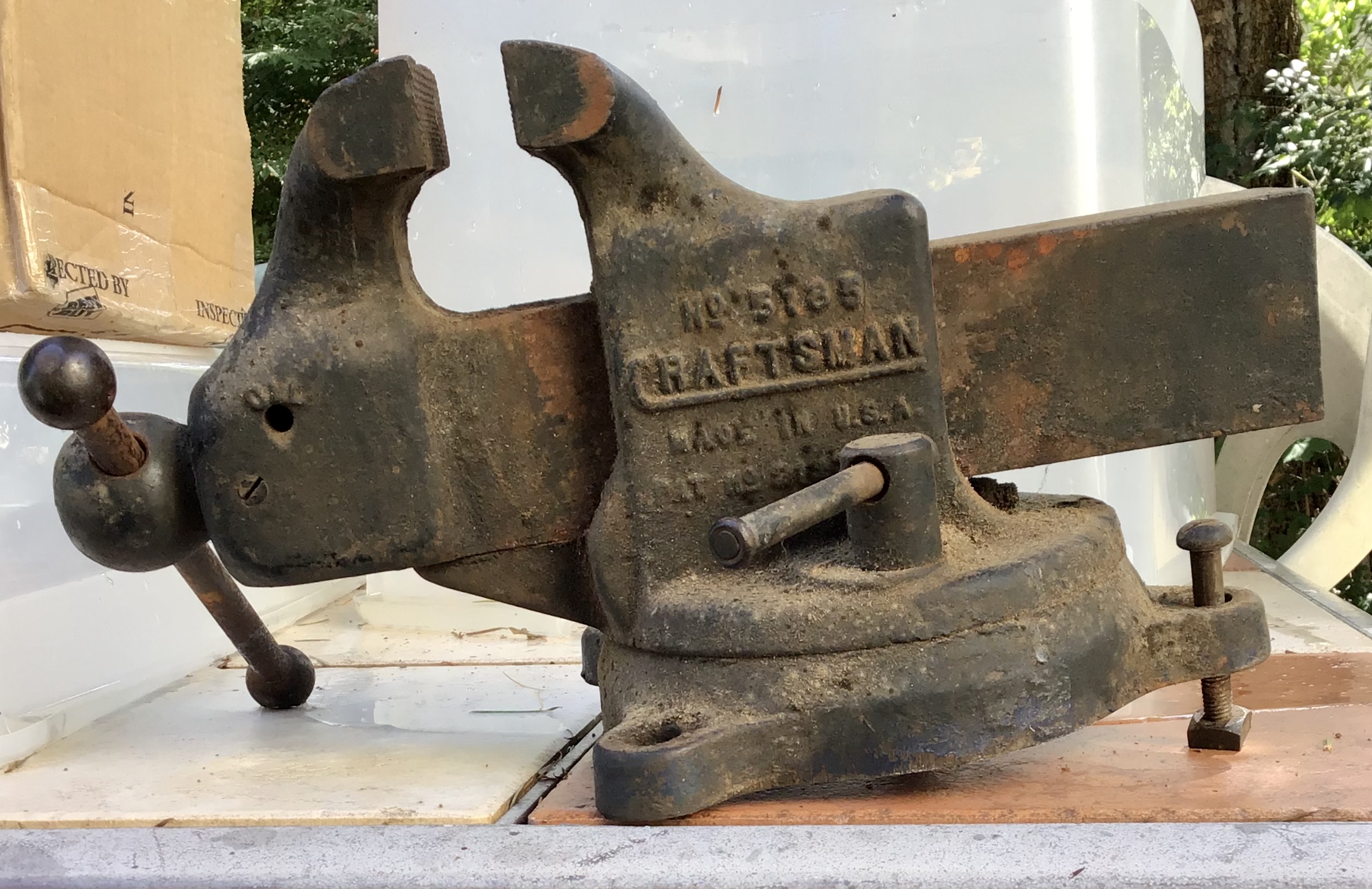
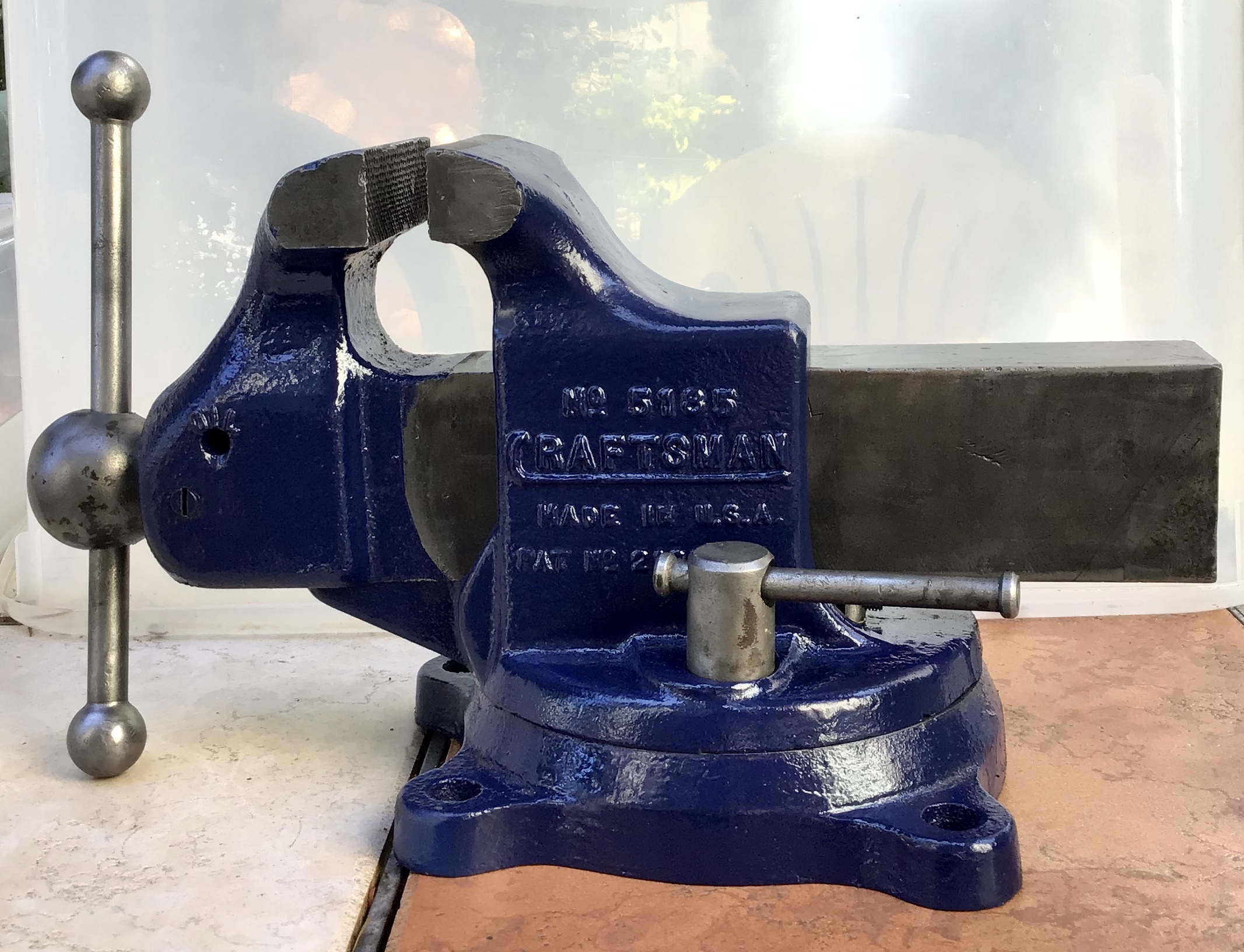
I was tired of the crappy vises I had; last one Dad gave me was a lousy imported one, and the jaw snapped off, revealing crystallized metal. Bought this one, mid-‘40s Craftsman made by Reed, off my partner’s friend, it having been in their barn. Rusted and seized, but it cleaned up really well. I’ve seen that some guys for whatever reason polish their vintage vises up to shine like chrome. This is a user, not a looker, so it’s good enough.
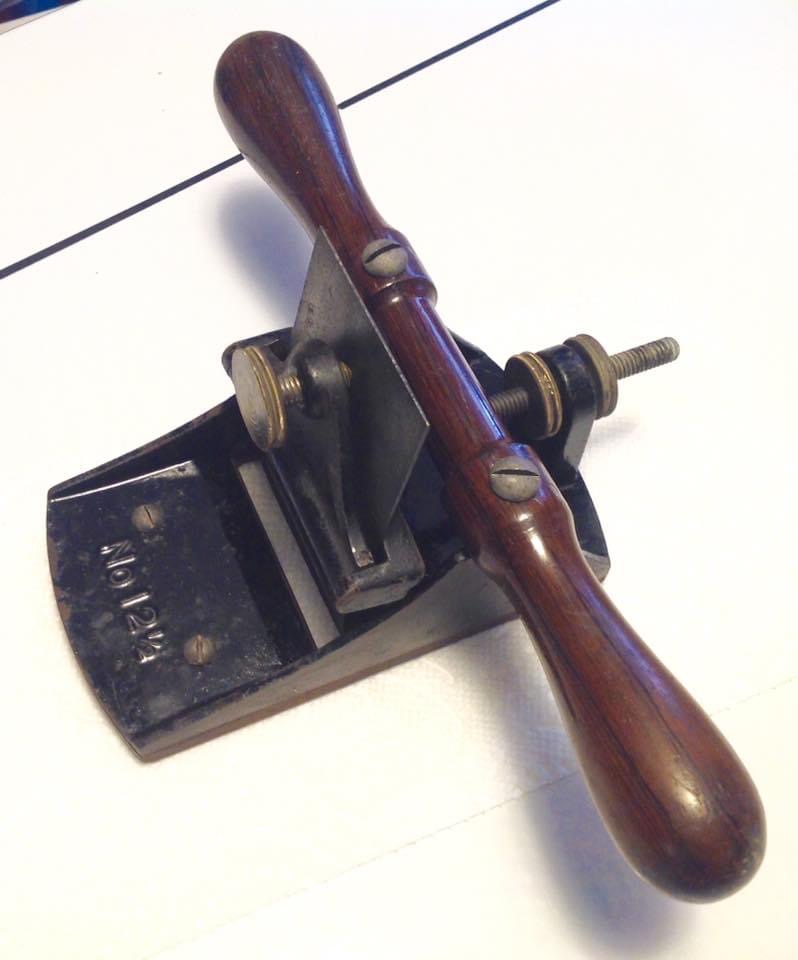
Stanley 12 1/2 veneer plane, probably was my great-grandfather’s. He was a joiner/carpenter. Before and after cleanup. The japanning was in decent shape, so I left it alone; repainting is never quite the same.

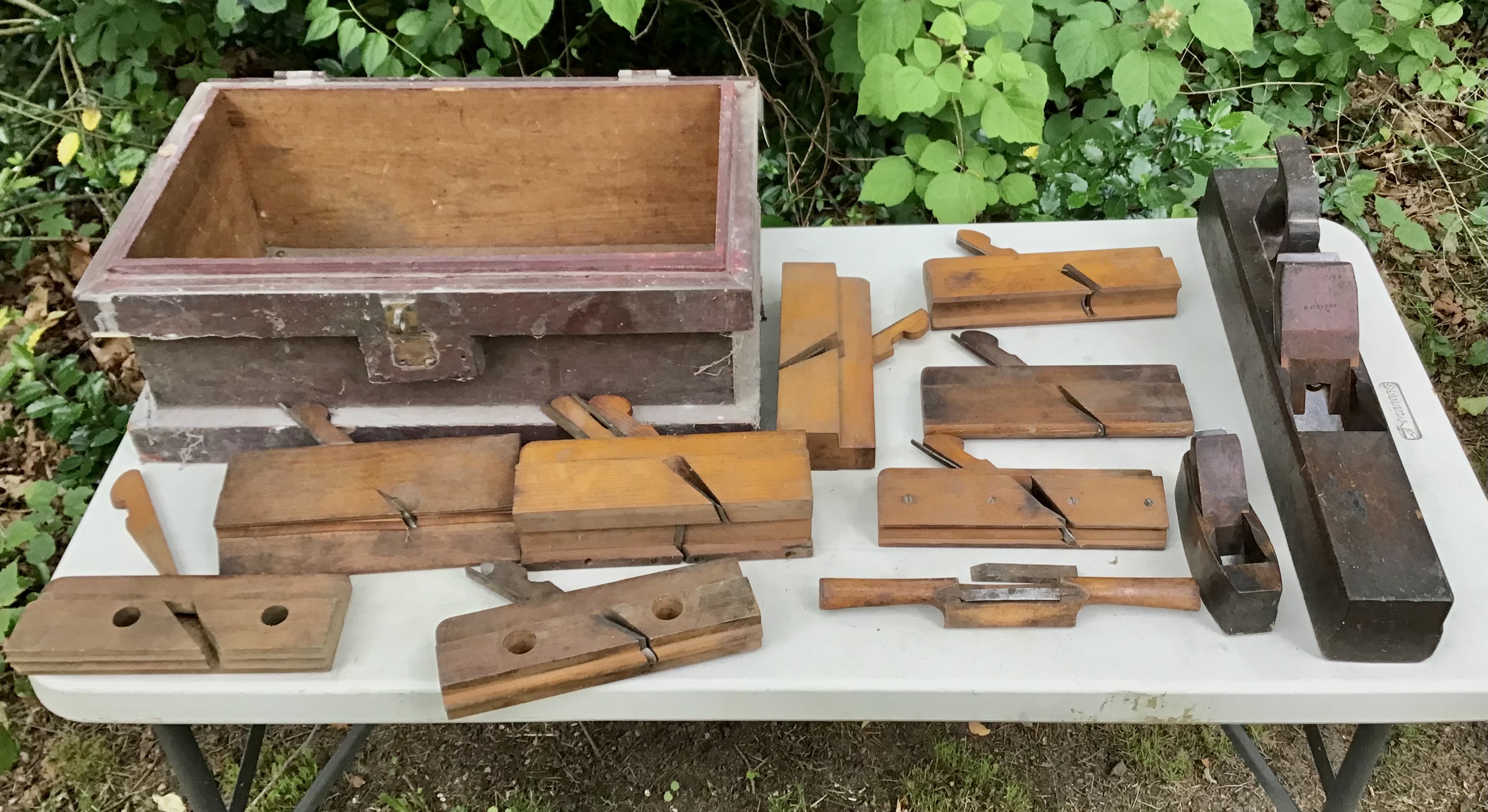
Some of my great-grandfather’s planes and the chest he kept them in. I believe he brought some of them with him when he came here from Scotland in 1905. The large plane on the right was made in Glasgow.
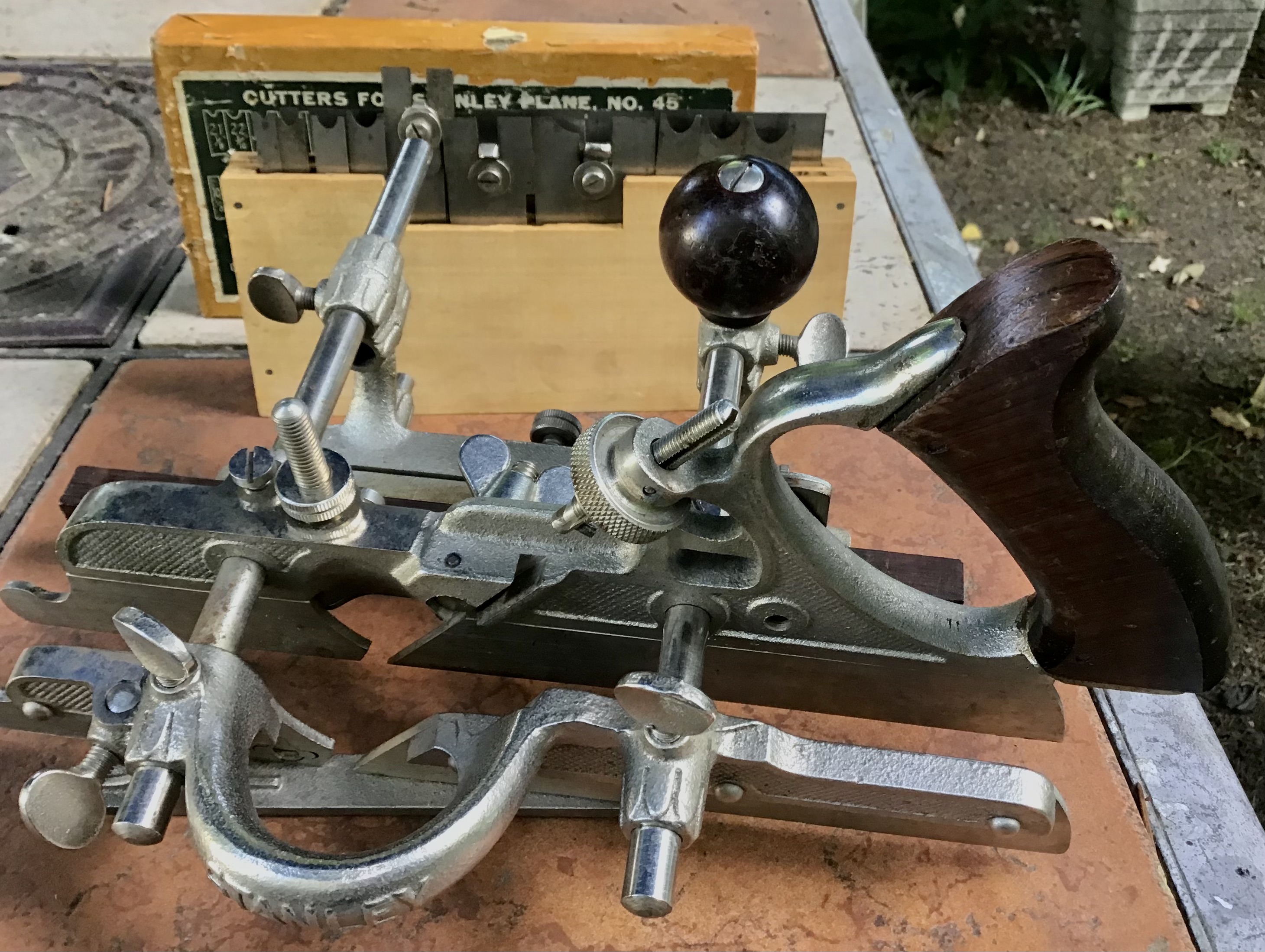
Sold my great-grandfather’s Stanley dado plane. Turned out it was the rarest size and even though it was missing its blade and nickers it brought enough for me to pick up a nice Stanley 45 combination plane with all blades.
Mid- to late-‘60s Craftsman floor-standing drill press. Dad bought it from a neighbor when they were moving. Funny story about this one: We always struggled to see clearly what we were drilling, trying to get light onto the work surface. After Dad passed, I brought the drill press over here, and downloaded the manual from online. Imagine my surprise when I read a reference to a light socket in the housing. I looked up inside, and sure enough there was a light socket. Empty. We struggled for over forty years, never knowing, and I believe the neighbor had never installed a bulb, either, since it was new.
I was tired of the crappy vises I had; last one Dad gave me was a lousy imported one, and the jaw snapped off, revealing crystallized metal. Bought this one, mid-‘40s Craftsman made by Reed, off my partner’s friend, it having been in their barn. Rusted and seized, but it cleaned up really well. I’ve seen that some guys for whatever reason polish their vintage vises up to shine like chrome. This is a user, not a looker, so it’s good enough.
Stanley 12 1/2 veneer plane, probably was my great-grandfather’s. He was a joiner/carpenter. Before and after cleanup. The japanning was in decent shape, so I left it alone; repainting is never quite the same.
Some of my great-grandfather’s planes and the chest he kept them in. I believe he brought some of them with him when he came here from Scotland in 1905. The large plane on the right was made in Glasgow.
Sold my great-grandfather’s Stanley dado plane. Turned out it was the rarest size and even though it was missing its blade and nickers it brought enough for me to pick up a nice Stanley 45 combination plane with all blades.

I used one of those routers at my old workplace. Great little thing!Of course I brought this up 'cause I have questions...
One of the items inherited from my father, a Rockwell 64M router with 64B base. Still looks pretty good. Not sure about the last time it's actually been operated. I have no difficulty believing the wood dust in there is older than I am, Dad curtailed a lot of his woodworking after kids came into the picture. Hopefully all this needs before firing it up is cleaning out the grime. 1/4" spindle and probably not as high powered as modern power tools, but for the amount of work I'll be needing it for it'll probably be good enough.
There are manuals for this floating around, anybody know of one online? The search engines have been useless, they believe I'm only interested in old routers sold on Ebay or documentation for electronics supported by Rockwell International.
View attachment 5260818
Most of the bits are still in decent shape, aside from also needing cleaning. What's a good way to clean tree sap off router bits?
View attachment 5260819
Dad also had an old shiny steel Craftsman router with the power cord cut off. Sometimes he did that when a device was malfunctioning and had to be tossed, but sometimes it only meant something needed a new power cord. Only he knew for sure and I can't ask him now. I didn't take that one too. Maybe I should have but I don't have a reason for keeping two 1/4" spindle routers.

Typically, router manufacturers recommend never to take a bite larger than 1/8” with a router. With big, powerful routers it’s not uncommon for people to push that up to 1/4” (mostly to save time), and in soft woods you can easily get away with that if you’re using a sharp straight bit and, for instance, an old Porter Cable 690.That's more or less the plan anyway. I'm never going to embark on Bruce Johnson's level of production. At the moment I want to square off some raggedy edges on plywood boards that are going to be a worktable, where there's too much wood to sand or rasp away but not enough to saw off. After that I should make a jig or two for a bass. I was expecting that a router-planer would need a beefier machine. Aside from the worktable the timeline for all this is indefinite.
With these 1/4” machines I would NOT recommend that. If anything, I would go in the opposed direction: do more passes doing lighter cuts. As long as you’re not working against the clock take 1/16” cuts. It might seem like an extreme measure but the router motor, the 1/4” chuck, the 1/4” shank and the tool steel bits will all thank you and reward you with safer, cleaner work. The motor and the bits will run cooler and the work is less likely to have burn marks when you’re done.
Erring on the side of conservative, you can get a lot of years of reliable service out of a router like that. The trick is to not make believe it’s more butch than it really is.

A friend of mine gave this router from a cabinet shop he used to work in:

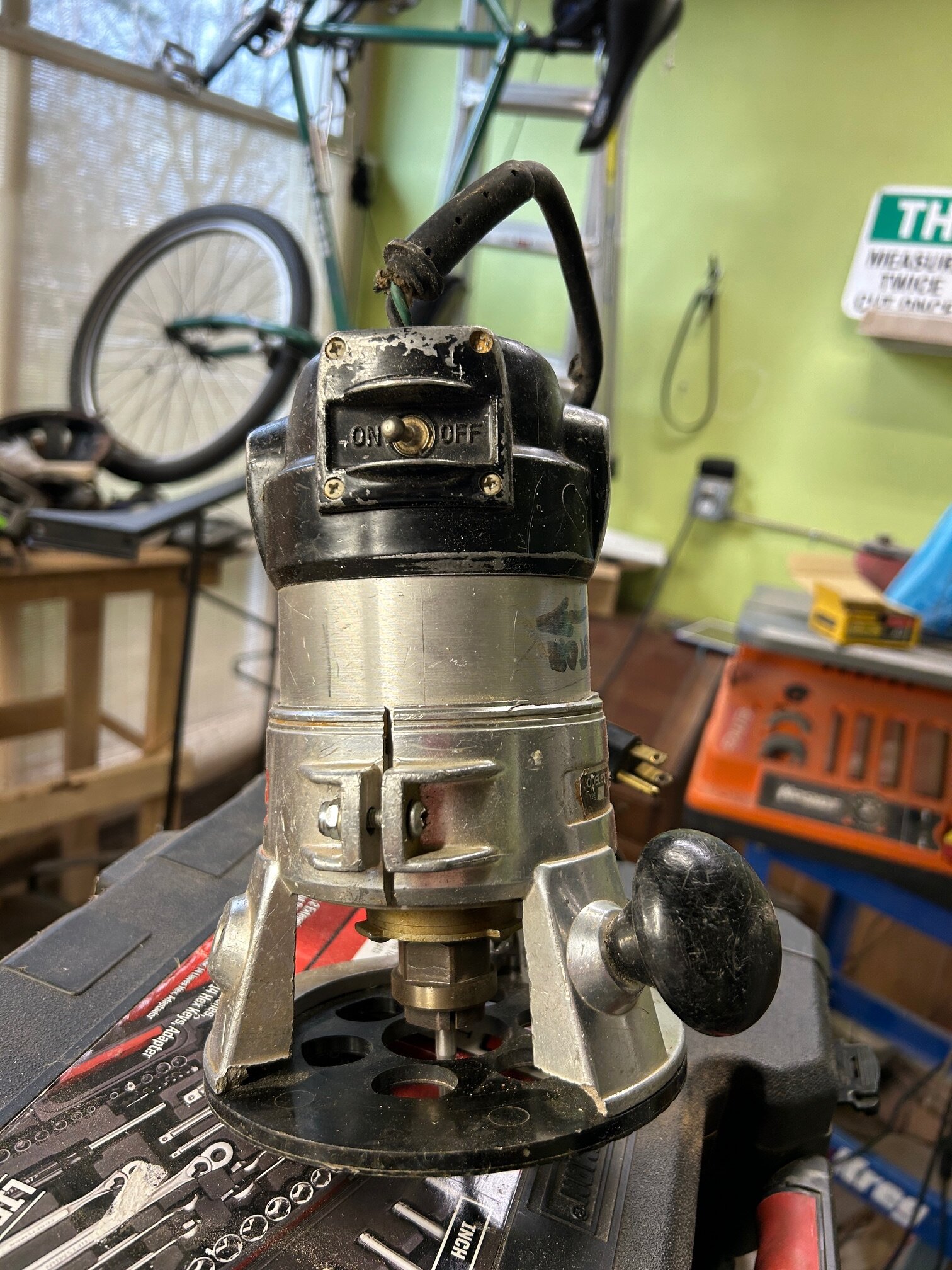
It's definitely destined for a rebuild, as soon as I get a chance to do so. But I've always wanted one of these with the trigger handle. Not that the Bosch Colt or Porter Cable have been too hard to manage, but this would make life a little easier in that respect.
It's definitely destined for a rebuild, as soon as I get a chance to do so. But I've always wanted one of these with the trigger handle. Not that the Bosch Colt or Porter Cable have been too hard to manage, but this would make life a little easier in that respect.
That’s a pretty apt description of my workshop, too. I LOL’ed.My basement looks like a Harbour Freight and a Swap Meet threw up down there with all the inheritance in tools from two dads.

Two grandfathers and a father who worked with their hands plus 35-ish years of scouring flea markets (and ebay), working in the trades myself since the mid ‘80s…. I’m swimming in power and hand woodworking tools, machinist’s tools, electronic test equipment, mechanic’s tools and very little of it wouldn’t be considered antique. I’d post pictures but I’m not even sure where I’d start.

Oh yeah. Planes have a sort of siren call once you get into them. I am fortunately in recovery. But I own several including one I made myself.My son has inherited my tool fascination, first it was wrenches, now it’s planes. He already has WAY too many of both. On the plus side, he’s gotten really good at sharpening planes and chisels to scalpel like state, I get him to sharpen my chisels. Some of the Craftsman stuff from thd 50’s and 60’s was amazing, I still use my Grandfather’s drill press, circa 1948, but the bearings are pretty shot. I just inherited an early 80’s Delta drill press, it’s a tank.
I am unfortunately not. I have too many planes but it doesn’t seem to stop me from buying more.Oh yeah. Planes have a sort of siren call once you get into them. I am fortunately in recovery.
Ah planes... since the topic has been broached:
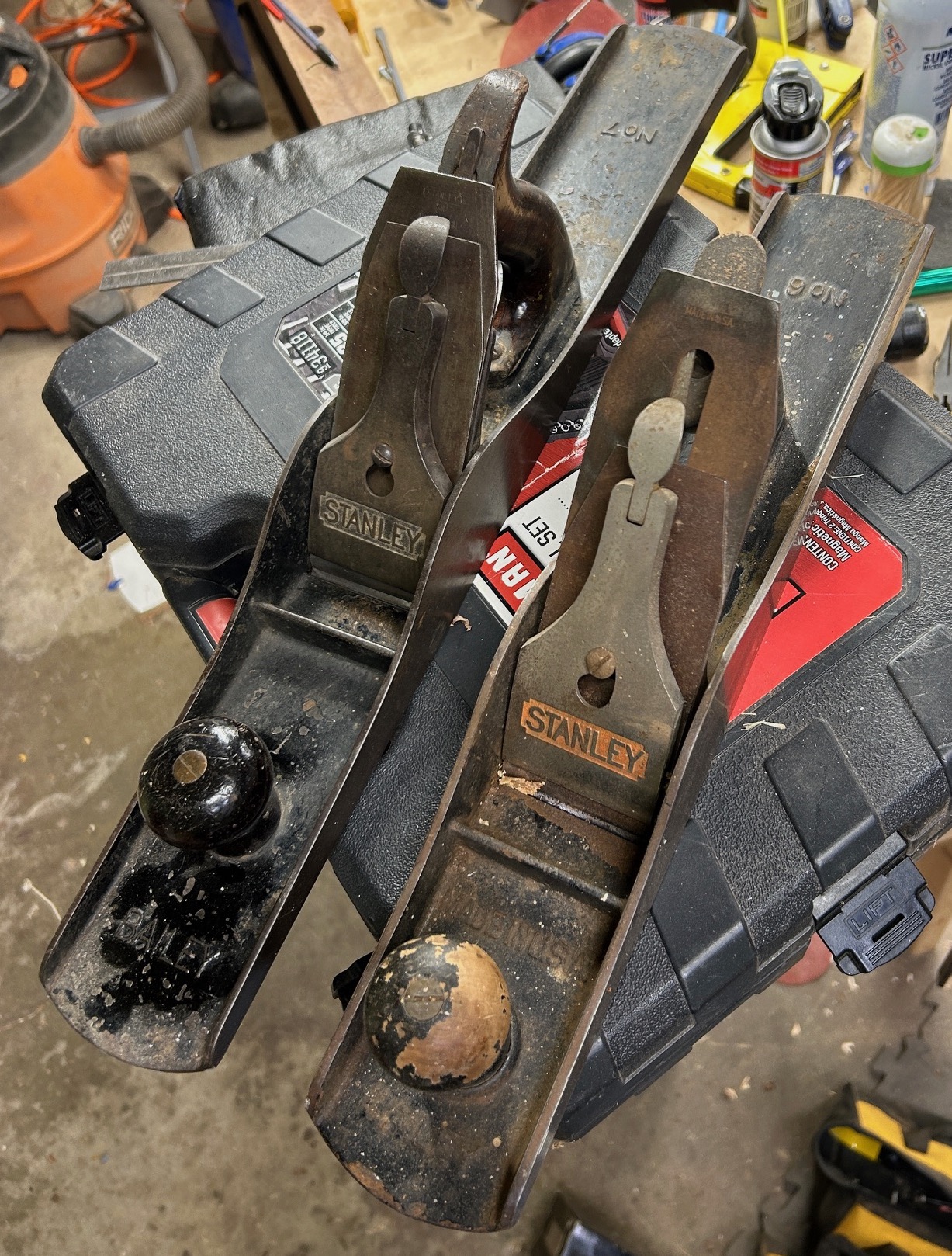
Found the #6 in my inlaw's basement.
My buddy found the #7 at an estate sale, pretty cheap.
Rare that I get to use them, but I always love when I can.
And yeah, they are dusty and crusty looking, but the blades are sharp.
Again... rebuilds when I find some time.
Found the #6 in my inlaw's basement.
My buddy found the #7 at an estate sale, pretty cheap.
Rare that I get to use them, but I always love when I can.
And yeah, they are dusty and crusty looking, but the blades are sharp.
Again... rebuilds when I find some time.

You just reminded me of this old DeWalt radial arm saw I spotted this past summer. Sold before I saw it, which is fine because I'm not in the market for one anyway. Bet it would clean up pretty nice.
View attachment 5261398 View attachment 5261399
I have one of those here in my shop, that was given to me by a Cabinetmaker who moved out. That's the small size Dewalt radial arm saw, with an 8" blade. A strong, high quality well made machine. But I don't need it in my fleet of woodworking machines. The current plan is to make it into a fret slotting saw for my buddy Keith Horne. Put one of the Stew-Mac 6" slotting saw blades on it and add a sliding sled and pinned scale template.
I see these little Dewalts around for sale quite often on Craigslist, for cheap. A nice tool to have.

And I've been doing it wrong this whole time....Ah planes... since the topic has been broached:
View attachment 5261750
Found the #6 in my inlaw's basement.
My buddy found the #7 at an estate sale, pretty cheap.
Rare that I get to use them, but I always love when I can.
And yeah, they are dusty and crusty looking, but the blades are sharp.
Again... rebuilds when I find some time.

And I've been doing it wrong this whole time.... View attachment 5261933
It might be difficult to get a board flat with that. Definitely requires a special jig.
My biggest issue so far is holding the piece while my buddy throttles up. Nerve-wracking is an understatement...It might be difficult to get a board flat with that. Definitely requires a special jig.


I should drag out my dad’s miter knife. I’m sure it was old when he got it. It makes a much more precise and cleaner cut than a miter saw (though you’d still want to make the rough cuts with a saw and trim the piece to size with this). It looks quite like this one (image shamelessly stolen from eBay).
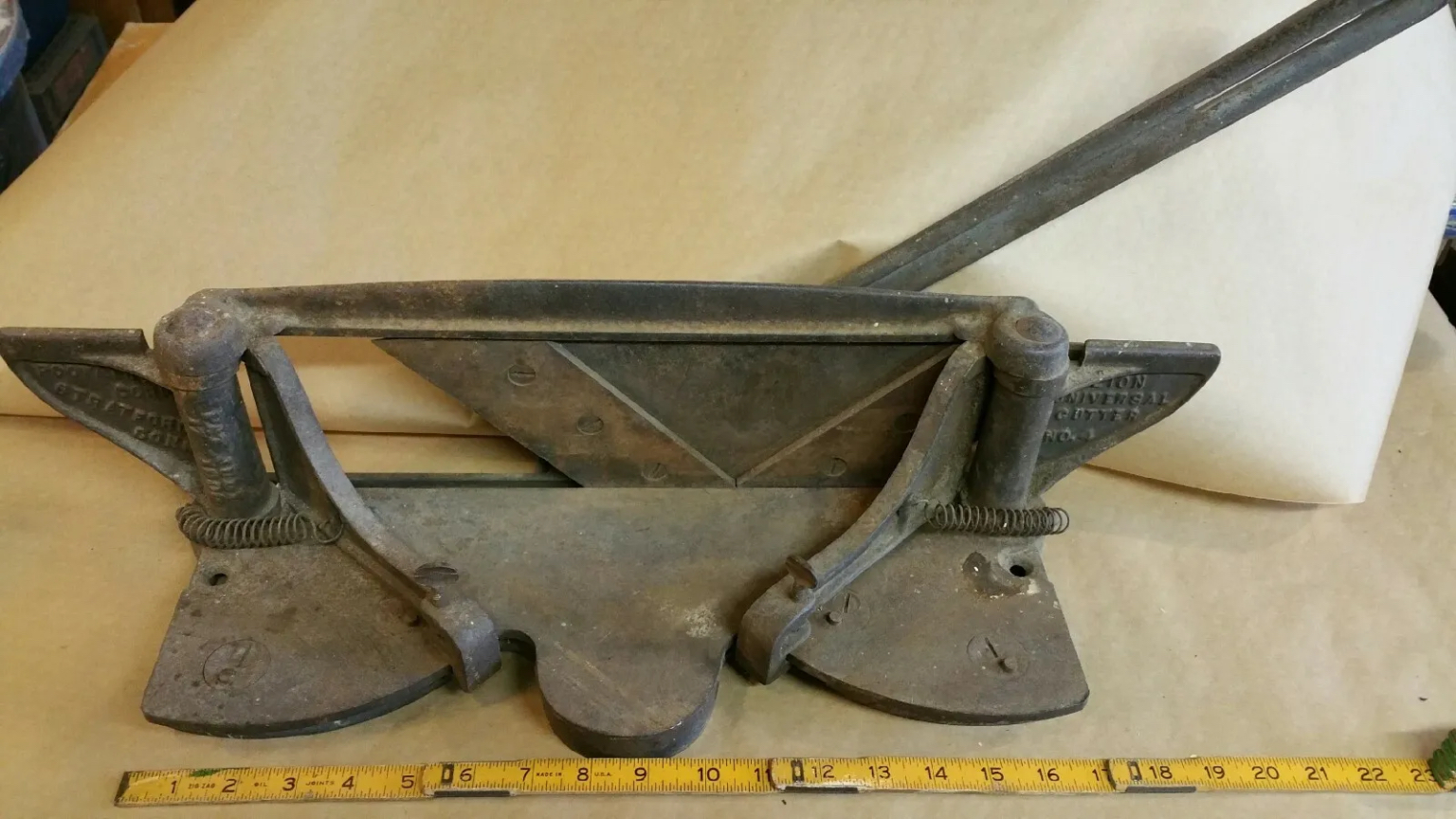
Dad’s includes a tapered aluminum wedge so the miters will be back cut, and a spare set of sharpened knives. I don’t even know where I’d get them sharpened now, if I needed to.
Dad’s includes a tapered aluminum wedge so the miters will be back cut, and a spare set of sharpened knives. I don’t even know where I’d get them sharpened now, if I needed to.
I don’t even know where I’d get them sharpened now, if I needed to.
Hey Bob;
If you ever need those blades sharpened, your local grinding shop should be able to do them. Most cities have a grinding shop, which mostly serves the printing industry. They have the machines to quickly sharpen all sizes of flat blades for paper shears. A big Toolroom Grinder with a magnetic chuck. Sharpening flat blades is actually pretty easy.
If they just need a bit of honing, you can do it yourself with a flat plate and some sheets of 600 to 2000 grit sandpaper. Same technique as sharpening chisels.
Last edited:

A very simple one. One of my grandfather's old screwdrivers that was mangled by being used a few too many times for prying. It now has a second career as an awl.


As the owner of one, (and a foot-powered version (Morso) from the picture-framing world,) I will advise you that that is the tool I consider my fingers most at risk from. If you pick it up wrong when "dragging it out" it will happily take your fingers off. In use it's actually pretty safe, but when moving it, that blade free-floats and it's razor sharp and massive. You might be thinking the handle's out, it's staying put, but it does not work that way, so keep your fingers out of its mouth and pick up only by the bottom plate.I should drag out my dad’s miter knife. I’m sure it was old when he got it. It makes a much more precise and cleaner cut than a miter saw (though you’d still want to make the rough cuts with a saw and trim the piece to size with this).
Lots of good examples here, I love all of those vintage levels featured earlier.
I'd be remiss not to include my Trammel / Beam Compass points. (I have the other screw in point, too.) It's still on the 1/4" by 1" by 48" wood beam that they were attached to.
There's something about tools from a bygone era that are not only functional, but beautiful as well. My parents were antique dealers for something like 40 years and I sometimes absconded with something from their various boxes of random stuff they brought in, these instantly appealed to me.
They also had one of those huge miter shavers as posted above and I think they sold it for something like $5 because nobody knew what it was! "Cigar cutter" was a popular guess.
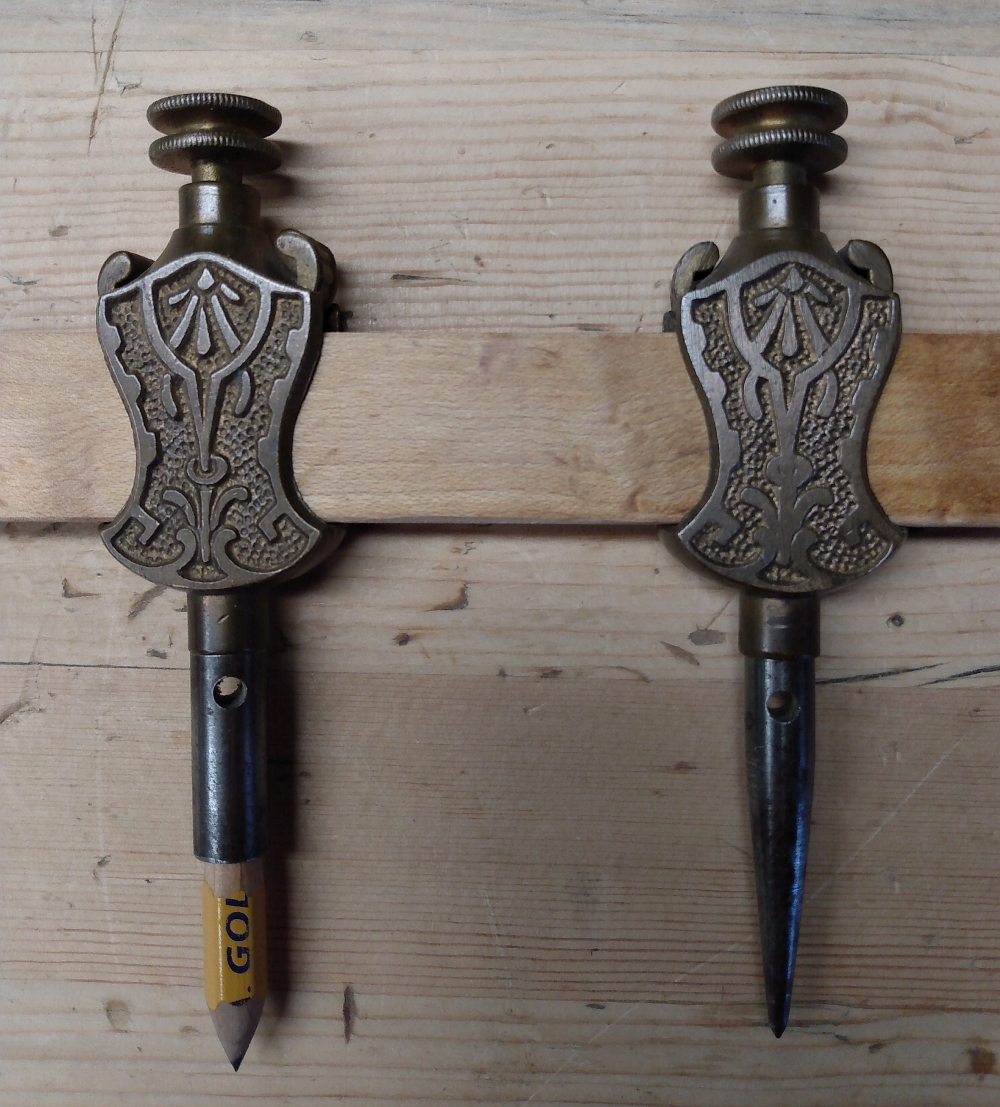
I'd be remiss not to include my Trammel / Beam Compass points. (I have the other screw in point, too.) It's still on the 1/4" by 1" by 48" wood beam that they were attached to.
There's something about tools from a bygone era that are not only functional, but beautiful as well. My parents were antique dealers for something like 40 years and I sometimes absconded with something from their various boxes of random stuff they brought in, these instantly appealed to me.
They also had one of those huge miter shavers as posted above and I think they sold it for something like $5 because nobody knew what it was! "Cigar cutter" was a popular guess.

I've posted this before, but here's my Grandfather's Craftsman benchtop drill press, circa 1948 or so. I remember seeing this in his basement as a kid, and I eventually inherited it from my father. The motor was replaced at some point, but it's otherwise all original. The bearings are pretty much shot on it, and it's got a lot of "wobble" (probably not the right technical term) in the quill. The other problem is the quill-return spring, which is a coil spring with "tails" at each end that gets twisted into tension as you lower the chuck. One of the "tails" snapped off. I ineptly tried heating one end and bending a new tail, which broke off too after about a week of use. I'm sure I ruined the temper on the spring. Parts for these old machines are available for $$$, but that spring seems to be unobtanium. I always assumed there must be a top pulley cover that got lost or broken at some point, but apparently that's how they were made: DON'T stick you hand in the pulleys.


I recently came into possession of an early 80's Delta floor model drillpress, which is better in most respects than the Craftsman, but lacks the simple stop-collar that makes setting depth of travel easy. It has none of the retro-futuristic charm of the old Craftsman, of course. The "machine turned" name badge is particularly cool.
I recently came into possession of an early 80's Delta floor model drillpress, which is better in most respects than the Craftsman, but lacks the simple stop-collar that makes setting depth of travel easy. It has none of the retro-futuristic charm of the old Craftsman, of course. The "machine turned" name badge is particularly cool.
Last edited:
Latest posts
-

-

-
Buying a vintage neck to pair with vintage body... risks/really bad idea?
- Latest: bass player 53
-

-
