If you can find a copy of the Ricordi edition of Cuneo studies, you would find a really valuable set of excersies. The replies you've gotten so far are also really excellent suggestions. (I love this site.) No big surprise that I too would suggest all five volumes of the Streicher method. He had all of us play through every last excersise as he wrote them based on his overview of the entire solo and orchestral Double Bass repertoire.

Enjoy the benefits of a premium membership!
Upgrade Account
-
TalkBass has been independent since 1998. Add your voice.
Create a free account to reply to discussions, view embedded media, and browse with fewer display ads.
Join free Log in
Want zero display ads or expanded classifieds tools? Compare plans.
You are using an out of date browser. It may not display this or other websites correctly.
You should upgrade or use an alternative browser.
You should upgrade or use an alternative browser.
Double Bass Orchestral Technique & Method Studies Thread
- Thread starter KSB - Ken Smith
- Start date
More options
Who Replied?By the way - Robert Zimmerman, grandson of the late and great Oscar recently transcribed Bel Canto Basso - a great set of excresises and studies. Write to [email protected]
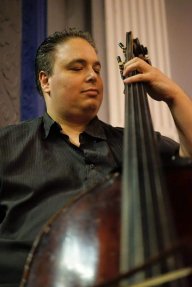
find a copy of the Ricordi edition of Cuneo studies
I could not agree more, although I only know some of his exercises.
---------------------------------------------------------------
Hey KPO, I have seen Moechel exercises and I agree as well. Don't you have to do LH pizz sometimes?
jasonheath
Bass Blogger / Contrabass Conversations host
I did an interview on my podcast Contrabass Conversations recently with former New World Symphony bassist John Grillo were we talked about the various method books out there and their advantages/disadvantages. You can [Invalid or Expired Link Removed]. I thought that John had some great insight into the effectiveness of various methods.

Hey KPO, I have seen Moechel exercises and I agree as well. Don't you have to do LH pizz sometimes?
I don't recall much pizz; I mainly use #s 19 and 21 to activate accurate hand shape and shifting....
What's a good book to use
to help in sight-reading and the
counting of mixed note combinations
and syncopations?
to help in sight-reading and the
counting of mixed note combinations
and syncopations?
Well, this thread is awesome.
A big thanks to everyone who suggested different method books. I just got the MM1 Simandl Etudes and I know it's gonna do great things for my intonation.
Matt
A big thanks to everyone who suggested different method books. I just got the MM1 Simandl Etudes and I know it's gonna do great things for my intonation.
Matt
- Mar 1, 2002
- 4,237
- 52
- 74
- Disclosures
- Owner: Ken Smith Basses, Ltd.
- Mar 1, 2002
- 4,237
- 52
- 74
- Disclosures
- Owner: Ken Smith Basses, Ltd.
Robertson's has them...both Strokin' and Boardwalkin'.
Great, just got off the phone with Aaron and ordered them both. My personal x-mas present to myself I guess...lol

I just got Strokin'. Despite the silly name it is actually a great, sober book full of bow studies. I think it will help give my bow practice more structure.
Lucas Drew is retired and living in Florida - I have performed with him a few times and will try to connect with him and see if he can shed some light on this - be patient as this may take a few weeks...
David R
David R
E
edspyhill01
Guest
Lucas Drew is retired and living in Florida - I have performed with him a few times and will try to connect with him and see if he can shed some light on this - be patient as this may take a few weeks...
David R
Dave,
Thank you. No problem with the wait time.
Ed S.
for the right hand i really like strokin by hal robinson its not very fun but its a good work out
hi
i am a young bassist i just want to know is there a difference in ochestrai technic and solo technic
i am a young bassist i just want to know is there a difference in ochestrai technic and solo technic
hi
i am a young bassist i just want to know is there a difference in ochestrai technic and solo technic
In an ideal world there would be no difference, there would be just technique.
Having said that, and talking in VERY BROAD TERMS, solo playing usually involves the higher register, and a more focused/lyrical sound, while orchestral playing is usually in the lower register with a more resonant and robust sound.
The usual bow strokes, vibrato, phrasing etc...tend to be different as well.
... in VERY BROAD TERMS, solo playing usually involves the higher register, and a more focused/lyrical sound, while orchestral playing is usually in the lower register with a more resonant and robust sound.
Quite right. A very broad, "fundamental" tone is typical and traditionally desirable in orchestra; typically only in Solos do we as bass players try to sound "singing" like the other string instruments.
However, I've always wondered just how powerful a bass section could sound if we all chose to play "Gary-Karr-ish"... I'm certain it would be awesome and Big, even though most bassists cringe at producing a bright, carrying sound.
In my situation in particular, where the Louisville Orchestra regularly plays, there is little "natural" resonance to the hall, and the usual boomy sound-production can work, but is often unremarkable. We recently changed our section set-up to be closer to one-another and to be closer to the wall, and we are getting positive comments from colleagues and listeners.
On many occasions I wish that we could all choose to play with a very concentrated-bow, close to the bridge, as though playing in a "soloistic" fashion - I'm sure we'd turn heads and get twice as many good comments!
That concentrated, close to the bridge sound can be phenomenal. I recall one occasion with the NZ Youth Orchestra where we managed to get the 'cello and bass sections all doing that, in Shostakovitch 10. Awesome is the only word for it. However, it's only appropriate in some of the repertoire.
Kpo, another suggestion to project more sound is to sit the Basses on the other side of the orchestra with "f" holes pointing out into the auditorium, sometimes with the cellos still in front and the 2nds opposing the 1sts. The 2nds will complain because they lose close contact. Conductor by conductor, we often did this in the Sydney Opera House Concert Hall, which has unfriendly bass-end acoustics. Or we sat on the conductor's right, depending on their wishes. The best help to project is obviously a high wall just behind the basses, like the Musikverien (? spelling) Hall in Vienna - oh, I wish!!
We are drifting away from the original thread!
Has anyone seen a copy of Ludwig Hegner's Tutor for the Double Bass, published by Wilhelm Hansen Edition, Denmark, in the 1950's. It was solely 1-2-3-4 fingering, and laid out in a similar fashion to Simandl but not quite as boring from memory.
DP
DP
We are drifting away from the original thread!
Has anyone seen a copy of Ludwig Hegner's Tutor for the Double Bass, published by Wilhelm Hansen Edition, Denmark, in the 1950's. It was solely 1-2-3-4 fingering, and laid out in a similar fashion to Simandl but not quite as boring from memory.
DP
DP


