

Enjoy the benefits of a premium membership!
Upgrade Account
-
TalkBass has been independent since 1998. Add your voice.
Create a free account to reply to discussions, view embedded media, and browse with fewer display ads.
Join free Log in
Want zero display ads or expanded classifieds tools? Compare plans.
You are using an out of date browser. It may not display this or other websites correctly.
You should upgrade or use an alternative browser.
You should upgrade or use an alternative browser.
P vs Reverse P, what’s better?
- Thread starter BassAndReeds
- Start date
More options
Who Replied?
- Apr 18, 2008
- 16,016
- 1
- 31,730
- Disclosures
- I'm highly opinionated and extremely self-assured
Zombie thread.
But normal P is better because reverse P doesn’t cut through the mix.
Yeah right.



What is this 'cut through the mix' stuff?
First, regular vs reverse P, which may sound like night and day when playing solo without a band, isn't that radically different in a mix.
Secondly, isn't the bass supposed to sit in the mix? I can see a guitar needing to cut through the mix, or maybe vocals, but bass?
First, regular vs reverse P, which may sound like night and day when playing solo without a band, isn't that radically different in a mix.
Secondly, isn't the bass supposed to sit in the mix? I can see a guitar needing to cut through the mix, or maybe vocals, but bass?

I'm not trying to "cut through the mix", I'm trying to fill out the mix with fundamentals. My reverse PJ does that more evenly, mostly by compacting the E string and fattening the D.
Listen to the famous solo bass riff on The Chain (Fleetwood Mac). The excessive G note on the E string demonstrates the very problem that reverse P improves. I never needed a HPF until I began playing a 5er with a soapbar neck PU.
My fretless solos evenly from top to bottom using a reverse P EMG. It's more Pino or Tony Levin, than Jaco. So obvious that I'm the weakest link on that bass.
I'm grateful for a steady career as an anonymous sideman. I wish you all at least some of that. However you get it, a good fundamental still rules.
Listen to the famous solo bass riff on The Chain (Fleetwood Mac). The excessive G note on the E string demonstrates the very problem that reverse P improves. I never needed a HPF until I began playing a 5er with a soapbar neck PU.
My fretless solos evenly from top to bottom using a reverse P EMG. It's more Pino or Tony Levin, than Jaco. So obvious that I'm the weakest link on that bass.
I'm grateful for a steady career as an anonymous sideman. I wish you all at least some of that. However you get it, a good fundamental still rules.
If Fender were to offer a reverse option (a true location swap, not just relocating one half), "they'd sell a million of 'em" as the saying goes. Maybe Marketing ran the numbers and decided the sales/profit wouldn't justify the overhead associated with creating new part numbers, bills of material, machinery reprogramming, and so on.

Jazzdogg
Less barking, more wagging!
If Fender were to offer a reverse option (a true location swap, not just relocating one half), "they'd sell a million of 'em" as the saying goes. Maybe Marketing ran the numbers and decided the sales/profit wouldn't justify the overhead associated with creating new part numbers, bills of material, machinery reprogramming, and so on.
I've always wanted to try a reverse-P, but never have. I wonder what market research reveals about demand?
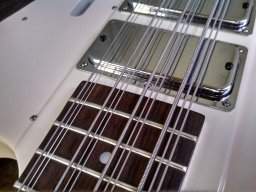
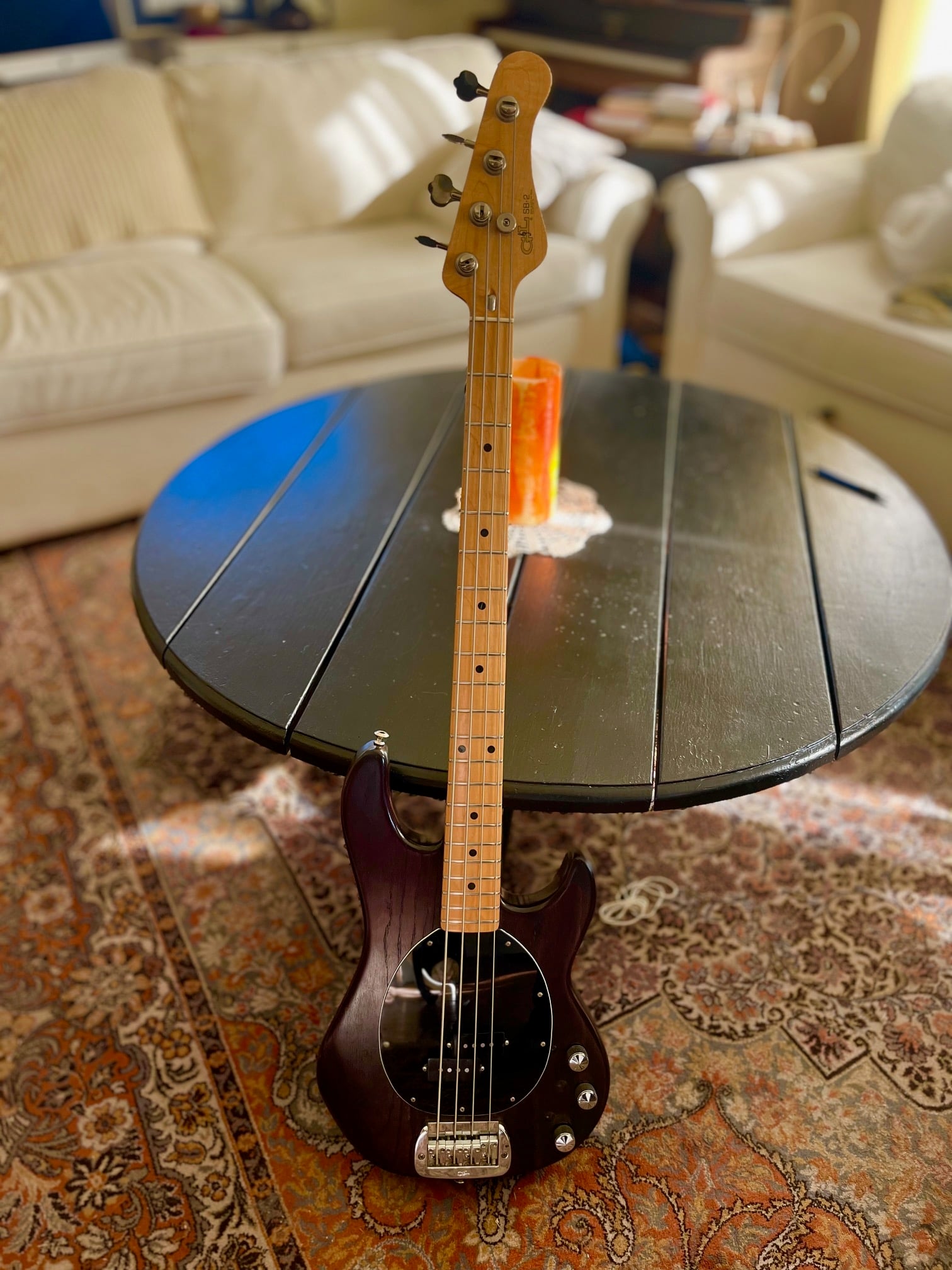
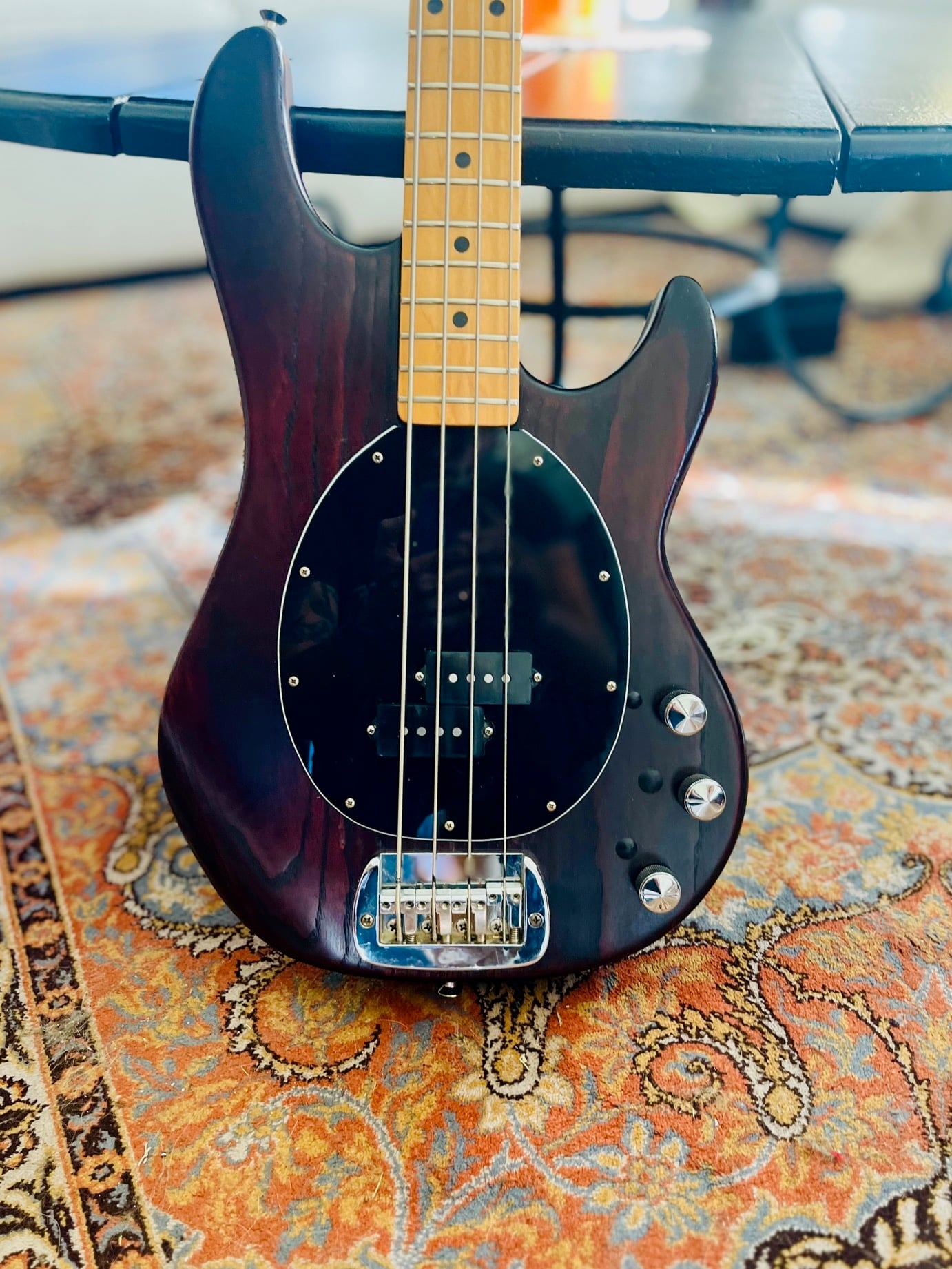
I like the reverse P option. I tried several locations and the best sounding for this 80s G&L instrument was leaving the DG side where it is normally and literally move the EA to the bridge side. Really full sounding but more articulate, not as boomy. Also, I tightened up the spread of the pickup so that each string has a magnet directly under the string. This brings out slightly more top end. Really cool sounding.
Last edited:
- Apr 18, 2008
- 16,016
- 1
- 31,730
- Disclosures
- I'm highly opinionated and extremely self-assured
Leo approved! Prototype photo:I like the reverse P option. I tried several locations and the best sounding for this 80s G&L instrument was leaving the DG side where it is normally and literally move the EA to the bridge side. Really full sounding but more articulate, not as boomy. Also, I tightened up the spread of the pickup so that each string has a magnet directly under the string. This brings out slightly more top end. Really cool sounding. View attachment 7139918View attachment 7139919
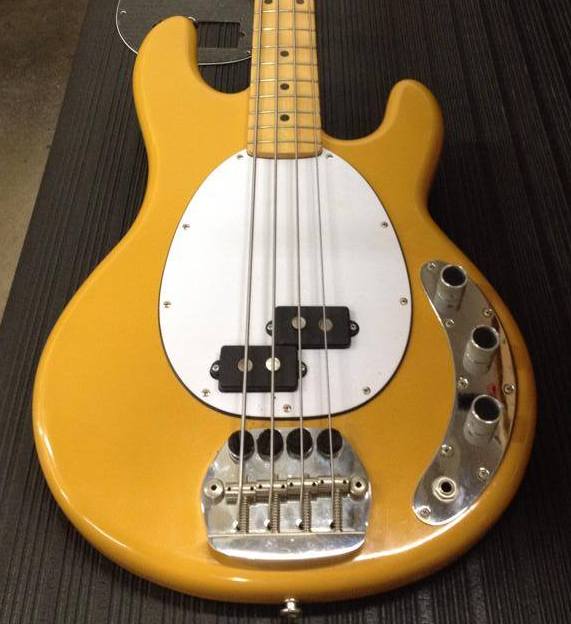
I love this stingray. Can you talk about the history or is there a link somewhere where you talk about it?
- Apr 18, 2008
- 16,016
- 1
- 31,730
- Disclosures
- I'm highly opinionated and extremely self-assured
No. I have heard/read bits about it over the years, and just saved that photo because I love reverse P at the bridge.I love this stingray. Can you talk about the history or is there a link somewhere where you talk about it?
There are a number of other TB threads that also mention it.

Here’s a video about it:I love this stingray. Can you talk about the history or is there a link somewhere where you talk about it?

Jazzdogg
Less barking, more wagging!
I bought a new P-bass in '73 and was never happy with the sound, which I solved several years later by defretting, replacing the p'up with Quarter Pounders, and switching from rounds to flats.All I want to know is how to do you fix the P bass historically weak E string? Every P bass Ive had the E is the weakest string. Does reversing the PU help with this at all?

You get a more balanced tone across the strings with a reverse orientation P pickup, as it will make the low thicker strings slightly brighter sounding and improve definition and articulation of these strings, and the high thinner strings more full and meaty sounding.
Whereas a traditional orientation P pickup will actually emphasis the difference in tone between the thicker low strings and the thinner high strings.
So if your goal is tonal balance across the strings then a reverse orientation P pickup is clearly to be preferred, however if your goal is to sound like a traditional P Bass naturally the traditional orientation of the P pickup is to be preferred,
Whereas a traditional orientation P pickup will actually emphasis the difference in tone between the thicker low strings and the thinner high strings.
So if your goal is tonal balance across the strings then a reverse orientation P pickup is clearly to be preferred, however if your goal is to sound like a traditional P Bass naturally the traditional orientation of the P pickup is to be preferred,
Simply leaving the DG half in place and moving the EA to the bridge side will yield a nasally honky mess of a tone, nothing "P" about it.
Well, that would be entirely a matter of taste wouldn't it, and it is still a P pickup.Simply leaving the DG half in place and moving the EA to the bridge side will yield a nasally honky mess of a tone, nothing "P" about it.
Also are you actually speaking out of experience?
Of course it's a matter of taste, as is ANY discussion of pickup placement and tone is, no argument there.Well, that would be entirely a matter of taste wouldn't it, and it is still a P pickup.
Also are you actually speaking out of experience?
I've two Guild Pilots with rev. P arrangements that are 1/4" towards the neck centerline flipped from a standard P, and I prefer the blend at center with these basses, not the solo P, it's okay but I prefer standard P.
I've no use for, and don't ever want to hear, soloed bridge pickups of any kind. Honky nasally mess, IMHO of course. Moving the EA into MM territory gets you there. Completely neutered P. There's a reason Leo added a preamp to Stingray's, no ball without one.
If you actually like the sound of a P and want a bit more balance, swap on the centerline or move the DG towards the neck, IMHO. "Bridge" location EA will have no huevos.
I'm with you. Soloed bridge almost never happens here, either.Of course it's a matter of taste, as is ANY discussion of pickup placement and tone is, no argument there.
I've two Guild Pilots with rev. P arrangements that are 1/4" towards the neck centerline flipped from a standard P, and I prefer the blend at center with these basses, not the solo P, it's okay but I prefer standard P.
I've no use for, and don't ever want to hear, soloed bridge pickups of any kind. Honky nasally mess, IMHO of course. Moving the EA into MM territory gets you there. Completely neutered P. There's a reason Leo added a preamp to Stingray's, no ball without one.
If you actually like the sound of a P and want a bit more balance, swap on the centerline or move the DG towards the neck, IMHO. "Bridge" location EA will have no huevos.
The only exceptions
1. When looping and I need a tighter tone to have definition within the layers.
2. When I have an active circuit and can boost the bass. This is a cool tone: all the pointed focus of the bridge pickup, all the foundational support of a big tonality.
I like reverse P as a standalone pickup, start mixing it with a bridge pickup and the bridge side coil (the E A in this case) starts to really wonk out and sound phasey.
Don't get me started with a P at the bridge. That bridge side coil really thins out. Leave bridge pickups to the straight line J/MM/TB/Soapbar....


100% agree!If you actually like the sound of a P and want a bit more balance, swap on the centerline or move the DG towards the neck, IMHO.
I modded my P-Bass to reverse P, didn't like the result, and then modded it AGAIN to move the EA coil back to the original position with the DG coil moved toward the neck.
Love it now.


