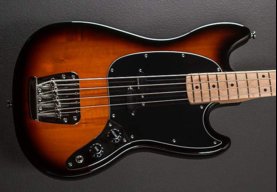
Adam Clayton?? Wow! Who knew? Betterhittheshed tonight then...I clearly have some unexpunging to do.

TalkBass has been independent since 1998. Add your voice.
Create a free account to reply to discussions, view embedded media, and browse with fewer display ads.
Join free Log in
Want zero display ads or expanded classifieds tools? Compare plans.
I've been practicing keeping my thumb on the back of the neck and parallel to my middle finger.

On the inside of your fingers, close to the palm, or on the back of your hand.Hello,
The problem I'm experiencing is a pain in my fretting hand when I extend my fingers and then close my hand into a fist or curl my fingers again. The pain is at the base of my fingers and between the base of my fingers and my knuckle. I did not play yesterday to give my hand a break and the pain still exists about the same today.
I'm a fairly new player to bass - I've been playing roughly 2 months and I've been playing around an hour or two per day. I've been practicing keeping my thumb on the back of the neck and parallel to my middle finger. I believe the pain may have started after doing this and practicing scales. My fingers never had to stretch this much to reach scales on guitar
So I guess what I want to know is, for a new player to bass, I'm assuming there's muscles in your hand that you should expect will be sore after extended practice sessions and of course your finger tips must develop callouses - but what pains should I expect and is there any golden rule to know if a pain is in the wrong spot or lasting too long to where I should be very cautious so as not to cause myself any serious injury?
Thanks,
Skyl3r
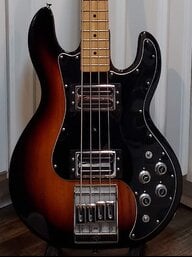
Here's a great example of the fundamental "meat and potatoes" left-hand technique used by most rock bassists. A beginner such as yourself would do well to study this popular technique. Notice how 1) Adam's wrist is straight, 2) his thumb is not awkwardly contorted (we can't see his palm, but it probably doesn't look like a butt), 3) his fingers are close together, and 4) he shifts comfortably, using the whole neck. I also like the way he takes his left hand off the neck when he is playing open strings; this is a great way to keep the blood flowing and avoid cramps.
Doesn't he look so relaxed and confident?

Great point! This illustrates the unnecessary pressure a lot of beginners apply. It's like a "squeezing" action... something that definitely should be avoided. Tendentious can also be associated with this type of technique, as well as cramping.Just to add to what's already been said by JeezyMc: when I started out I found out that I was using my thumb to push the neck to my fingers to help them fret a string instead of pushing the string down to the neck with my finger and keeping my thumb relaxed. That created a lot of tension in my hand and made it cramp.

Wow, thanks for the quick and detailed responses.
I'll probably take another day off of playing today to see if the pain is gone tomorrow.
@Mushroo I'll see if I can get a video running through a scale or something to show what I'm doing. I did notice that when I first started playing and I was not paying attention to posture, I was just holding my hand how I felt comfortable and I did not get pain apart from just developing callouses. I just am not sure if this pain I'm experiencing now is from extended use over the last month or from bad posture over the last week or two.
I'll take your advice and study how some of those bassists do posture.
@seilerbird I did play guitar for a decent amount of time with a teacher, and I'm holding the bass essentially the same way as I'd hold a guitar. I don't really have to look for fretting or anything, so I think where I have the bass itself positioned is likely not the issue. I probably should have mentioned that in my first postThanks though.
@RichardW I'm sure you're rightI've just been hoping to avoid spending the money, but perhaps it'd be worth it to set me off on the right track.
@SteveCS Thanks for the images. I'm unsure if I was doing that, as I wasn't really thinking about it while playing. I'll focus more on what my hand is doing to try to see.
Thanks everyone!
I'll take a look at some of those bassists @Mushroo mentioned and try to adjust my technique to be more comfortable and hopefully pain free.



+1. I have short fingers (There. I admitted it and feel better...). Spanning that extra fret is always a challenge for me. I had a similar problem when my instructor first explained the "ideal" of the perpendicular thumb. My hand hurt. I found that driving my finger pressure from my forearm was far more important than using my thumb to squeeze the neck. Those forearm muscles are the most important to your fretting (i suppose unless you have giant hands).I leave my thumb wherever its comfortable. I don't use it much at all anyway. It's more of a muting finger when I'm playing different ways, than a squeezing point. Almost all of my finger pressure is coming from my forearm. It could simply be that you're squeezing too hard, and straining yourself. You shouldn't have to.
This sounds like stenosing tenosynovitis or trigger finger.@Kipp Harrington well, per what you said about Tendentious, I looked up Tendinitis. Something happened over the weekend two weeks back where I woke up in the middle of the night and my ring finger would not bend with the rest of my fingers (fretting hand). I would try to straighten my fingers and it would stay locked in a curled but not quite clenched position until it would snap open. And when trying to close it, the same thing would happen. It would close to a curled position then snap to closed.
I had slept on my arm funny and thought this had to do with cutting circulation to my hand off - especially when I had full mobility when I woke up that morning.
I found something called "Trigger Finger" while searching that. I don't mean to be an armchair doctor, but the symptoms seem about right and I'm not sure how many other things it could be. The treatment appears to be just don't use it heavily and wait for it to heal. So that's what I'll do.