Hello all,
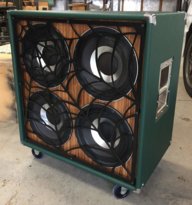
I have a 70s Ampeg V4-B that I've been running with an 8 ohm Ampeg 410HE cab. My longer-term plan was to run 6x10 speakers when needed, but didn't want to deal with a 610 (the gear lives a floor up at my place, plus just like the modular setup idea of a 410 + 210 based on gig, etc).
That said, I understand that running two matched-impedance cabs means each gets half of the amps power, which isn't ideal when running two cabs of different speaker counts.
My plan was to take an Ampeg MC210E cab I have and replace the speakers with two 8 ohm speakers wired in series, for a 16 ohm load. If I'm understanding things correctly, this will result in a 5.33 ohm load (would run the amp on it's 4 ohm switch), and roughly 2/3 of the power will go to the 410, and 1/3 to the 210, which is ideal (each speaker getting basically the same power).
However, I've noticed Ampeg seems to universally advise to "never use two or more cabinets with different impedance ratings. This will create an unbalanced load." My gut is this is to stop people mixing cabs who aren't doing the math (eg, incorrectly assuming an 8 ohm and 16 ohm cab comes out to 12 ohms total and running them out of the 8 ohm output, etc). That said, I don't want to willingly damage my amp either - I also understand the trade-offs of using speakers in a cabinet (MC210E) that aren't designed for it, etc etc, but my main risk concern in this experiment is that of the effects on the amp, not sound (yet).
Anyone have experience running something similar through a V4-B, or other tube amp, and can speak to the results they found?
TIA!
I have a 70s Ampeg V4-B that I've been running with an 8 ohm Ampeg 410HE cab. My longer-term plan was to run 6x10 speakers when needed, but didn't want to deal with a 610 (the gear lives a floor up at my place, plus just like the modular setup idea of a 410 + 210 based on gig, etc).
That said, I understand that running two matched-impedance cabs means each gets half of the amps power, which isn't ideal when running two cabs of different speaker counts.
My plan was to take an Ampeg MC210E cab I have and replace the speakers with two 8 ohm speakers wired in series, for a 16 ohm load. If I'm understanding things correctly, this will result in a 5.33 ohm load (would run the amp on it's 4 ohm switch), and roughly 2/3 of the power will go to the 410, and 1/3 to the 210, which is ideal (each speaker getting basically the same power).
However, I've noticed Ampeg seems to universally advise to "never use two or more cabinets with different impedance ratings. This will create an unbalanced load." My gut is this is to stop people mixing cabs who aren't doing the math (eg, incorrectly assuming an 8 ohm and 16 ohm cab comes out to 12 ohms total and running them out of the 8 ohm output, etc). That said, I don't want to willingly damage my amp either - I also understand the trade-offs of using speakers in a cabinet (MC210E) that aren't designed for it, etc etc, but my main risk concern in this experiment is that of the effects on the amp, not sound (yet).
Anyone have experience running something similar through a V4-B, or other tube amp, and can speak to the results they found?
TIA!