

Enjoy the benefits of a premium membership!
Upgrade Account
-
TalkBass has been independent since 1998. Add your voice.
Create a free account to reply to discussions, view embedded media, and browse with fewer display ads.
Join free Log in
Want zero display ads or expanded classifieds tools? Compare plans.
You are using an out of date browser. It may not display this or other websites correctly.
You should upgrade or use an alternative browser.
You should upgrade or use an alternative browser.
Playing live in F#
- Thread starter Todd Wright
- Start date
More options
Who Replied?
"Don’t mind the naysayers. Low tunings are notoriously unpopular around here"
A=428hz
Tune down from there.
Drop the G string altogether
Adjust nut and bridge positions allowing for the new 3 string spacing.
Hope that helps!
A=428hz
Tune down from there.
Drop the G string altogether
Adjust nut and bridge positions allowing for the new 3 string spacing.
Hope that helps!


Play in Gb major…..don’t understand why this is a complex problem. Isn’t transposing, shifting, something all bassist should know how to do without “downtuning”, “uptuning”, changing strings, buying eighteen different basses………..???????? Weird.
Last edited:
What does an open F# even sound like? That's only 23hZ.
That was gonna be my question... I'd be worried about the mud... I use an HPF to trim all that out.

Ric5
Inactive
- Jan 29, 2008
- 29,772
- 30,452
- Disclosures
- I like 5, 8, 10, and 12 string basses
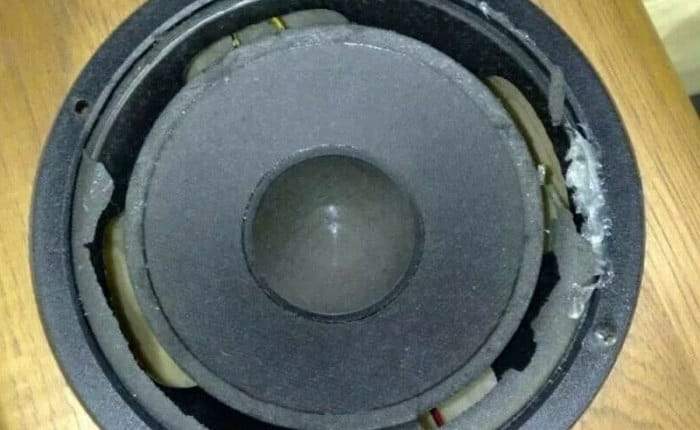
Another thing to think about is that most modern bass amps have a HPF at around 30hz - so they will never reproduce the fundamental for a low F# no matter what. Cabinets attached to an amp without a HPF will look like this at loud stage volumes….
Ric5
Inactive
- Jan 29, 2008
- 29,772
- 30,452
- Disclosures
- I like 5, 8, 10, and 12 string basses

For physics and stability, I'd go for a very long scale for this for sure.
I'd also consider that I'd need some overdrive/distortion/fuzz that had a clean through for the lows (however much those really matter). I just can't see far below 30 Hertz being useful without some serious accentuation of the upper harmonics. You do hear synth bass that goes this low, fundamental wise, but there are a lot of upper harmonics typically. So adding some of that could make this viable.
I'd also consider that I'd need some overdrive/distortion/fuzz that had a clean through for the lows (however much those really matter). I just can't see far below 30 Hertz being useful without some serious accentuation of the upper harmonics. You do hear synth bass that goes this low, fundamental wise, but there are a lot of upper harmonics typically. So adding some of that could make this viable.
If I were going to experiment with those lower notes, my first thought would be to tune everything else up by 2 semitones and then tune a low fifth string down. So basically I'd be creating a higher pitched four string with an added droner low string that I could use for accent notes. Trying to incorporate those lowest notes musically in any meaningful way sounds like a recipe for mud to me, but I don't have a clue, really. That's just my first thought.

That's an interesting idea. If I understand you right, you're saying F#, F#, B, E, A right?If I were going to experiment with those lower notes, my first thought would be to tune everything else up by 2 semitones and then tune a low fifth string down. So basically I'd be creating a higher pitched four string with an added droner low string that I could use for accent notes. Trying to incorporate those lowest notes musically in any meaningful way sounds like a recipe for mud to me, but I don't have a clue, really. That's just my first thought.
Right.That's an interesting idea. If I understand you right, you're saying F#, F#, B, E, A right?

Ditch the pedal. You can convert a 4 string or get a 5 (which would probably get you closer on your own). Best bet is to bring whichever bass you want to get in that tuning and drop it off with a tech who knows what they’re doing. Extra large strings help but they’re not a necessity.
PS. Kalium is unreliable as they come. I do not recommend ordering anything from them.
PS. Kalium is unreliable as they come. I do not recommend ordering anything from them.
Phoning in @Jack Deth, who made a thread last year on subcontrabass tunings (sadly it hasn't gotten any more attention since I subbed back in August  ).
).
This video has a real good comparison of tuning in unison vs. down the octave in context.
Despite all the flak the subcontra register gets, I think it has genuine musical use.
).This video has a real good comparison of tuning in unison vs. down the octave in context.
Despite all the flak the subcontra register gets, I think it has genuine musical use.
The lower tunings are like a vast uncharted wilderness that only has a small handful of routes going into it by others to be used as guideposts. I believe it has many secrets to tell, but is misunderstood by most that choose to peer down into it from atop a well known, comfortable canyon wall.

devnulljp
Supporting Member
F#0 has a frequency of 23.124 Hz. Human range is ~20-20 kHz, so it's right on the cusp of what's possibleAmazing that it took two pages for this stock response to come up.
Sadly, I think the OP means the F# BELOW the open E.
Capo on second fret and an octave pedal, then

Seriously, though - your amp isn't going to be reproducing F# worth a damn, so you are relying on harmonics to create the impression of something very undefined because it is such low frequency without the benefit of being able to feel it like with a big church organ. So I am not sure I see the point.
By the way, get off my lawn.
What does an open F# even sound like? That's only 23hZ.
Sound like? Feel like...
Taurus pedals. And an amp that can handle that.
Not trying to sound like a tool but you can't play the Sousaphone part on a trumpet. Well, you can, it will just sound how you think.
THIS!!!
Thank you, for pointing out the obvious.

Hey, I play in Eb when it’s called for. Nobody cares if a key makes it easier or harder for the bass player.I'm guessing an open F# string would come in handy more often than an open E if the guitars are tuned to F#.


