
Enjoy the benefits of a premium membership!
Upgrade Account
-
TalkBass has been independent since 1998. Add your voice.
Create a free account to reply to discussions, view embedded media, and browse with fewer display ads.
Join free Log in
Want zero display ads or expanded classifieds tools? Compare plans.
You are using an out of date browser. It may not display this or other websites correctly.
You should upgrade or use an alternative browser.
You should upgrade or use an alternative browser.
Double Bass Playing seated under duress (jazz DB content)
- Thread starter HateyMcAmp
- Start date
More options
Who Replied?

Instead of yoga blocks I suggest a classical guitar foot rest stand. It’s cheap, height adjustable and easy to take along.

Yoga block fits in my Mooradian case perfectly. I don't know if yoga blocks are so common for classical players that Mooradian added a yoga block pocket or what, but I was very pleasantly surprised/shocked when my case arrived with a yoga block pocket.
Yoga blocks work great as a foot rest for classical bass players. My experience with a classical guitar foot rest is that it was flimsy and broke. Not sure why you would want to replace the yoga block (kind of a standard tool for classical players, as mentioned by Chris above) with the classical guitar foot rest.
This is the jazz technique forum, and so perhaps many here aren't interested in bowing. Also, I play German, and perhaps the angle of the bass is less of an issue for French bow? Chris alluded to the practice of resting the left foot on a rung of the stool - the yoga block is much better ergonomically than the foot on the rung of the stool. My hips are twisted in an awkward way if I rest a foot on the stool rung - not a problem with the yoga block in front of me with the legs aligned.
If you sit and don't need to mimic the angle of the bass when standing, then both feet on the floor may be fine. If you need your left knee to tilt the bass inwards, a yoga block is ideal, which is why we use them.
I play jazz, classical, and a bunch of other styles of music. I can't have a different setup for each style of music.
Everyone's body is different. To make things more complex, there is no such thing as a normal size or shaped bass.
Yoga blocks work great as a foot rest for classical bass players. My experience with a classical guitar foot rest is that it was flimsy and broke. Not sure why you would want to replace the yoga block (kind of a standard tool for classical players, as mentioned by Chris above) with the classical guitar foot rest.
This is the jazz technique forum, and so perhaps many here aren't interested in bowing. Also, I play German, and perhaps the angle of the bass is less of an issue for French bow? Chris alluded to the practice of resting the left foot on a rung of the stool - the yoga block is much better ergonomically than the foot on the rung of the stool. My hips are twisted in an awkward way if I rest a foot on the stool rung - not a problem with the yoga block in front of me with the legs aligned.
If you sit and don't need to mimic the angle of the bass when standing, then both feet on the floor may be fine. If you need your left knee to tilt the bass inwards, a yoga block is ideal, which is why we use them.
I play jazz, classical, and a bunch of other styles of music. I can't have a different setup for each style of music.
Everyone's body is different. To make things more complex, there is no such thing as a normal size or shaped bass.

Chris, When you say 24 or 29", do you mean from floor to the top of the cushion (or the wood seat)? If a cushion, would you add a bit for compression? Thx.@gerry grable - in my posture video I address the last part of your question here; For me, it's important to have the legs at the same height and the hips symmetrical and relaxed when sitting to avoid back issues. On the rare occasions when I use a bow, I need to move my left leg out of the way to reach the E string, but since I do 99% of my playing without it, the symmetrical seated position demonstrated in the video has been very healthy and sustainable.
All of the classical kids at the university where I teach play seated, and many use yoga blocks to get their legs/hips into a less-uneven alignment than setting one out not he floor and another on a stool rung. It's better than what they did before, but still could cause problems. Sid King, the classical teacher, helps each student find their ideal comfortable position and even keeps a saw in his office so he can adjust the legs of their playing stools to the right height once they find it. I keep both 24" and 29" stools in my office, but always play on a 24" stool when possible. A number of the classical students taking secondary lessons have ended up trying my stool with their endpins all the way in and found that they like the lower center of gravity. Sid has duly sawed their stool legs to that length without giving me too much of a side eye.
I would encourage anyone who plays seated to try sitting on a stool of whatever height lets them put the endpin all the way in, even if it's only an experiment. After having played with both stool heights for years, I have to say it feels really nonsensical to sit up higher and pull the endpin out at this point. Better to be more close to the ground and stable, at least for me. As always, EEMMV, and EEMWCB.


Chris, When you say 24 or 29", do you mean from floor to the top of the cushion (or the wood seat)? If a cushion, would you add a bit for compression? Thx.
Not really sure, but since my backside is less than ample I have pads/cushions on both sizes of stool. The heights I mentioned are just what the stools said when I bought them - I'm sure there is a small amount of variance. What I can tell you is that the shorter stools like the one in the video have the single rung at the same height, and the taller ones from Target etc. have staggered rungs adjacent to each other. I think the single rung height balances the hips and back a lot better, especially as I get older and less "bulletproof".
Despite my earlier post, I may investigate the yoga blocks, I primarily play German and bowing on the E isn't that great. I Just kind of make it happen when I need to.
Yoga block fits in my Mooradian case perfectly. I don't know if yoga blocks are so common for classical players that Mooradian added a yoga block pocket or what, but I was very pleasantly surprised/shocked when my case arrived with a yoga block pocket.
Yoga blocks work great as a foot rest for classical bass players. My experience with a classical guitar foot rest is that it was flimsy and broke. Not sure why you would want to replace the yoga block (kind of a standard tool for classical players, as mentioned by Chris above) with the classical guitar foot rest.
This is the jazz technique forum, and so perhaps many here aren't interested in bowing. Also, I play German, and perhaps the angle of the bass is less of an issue for French bow? Chris alluded to the practice of resting the left foot on a rung of the stool - the yoga block is much better ergonomically than the foot on the rung of the stool. My hips are twisted in an awkward way if I rest a foot on the stool rung - not a problem with the yoga block in front of me with the legs aligned.
If you sit and don't need to mimic the angle of the bass when standing, then both feet on the floor may be fine. If you need your left knee to tilt the bass inwards, a yoga block is ideal, which is why we use them.
I play jazz, classical, and a bunch of other styles of music. I can't have a different setup for each style of music.
Everyone's body is different. To make things more complex, there is no such thing as a normal size or shaped bass.
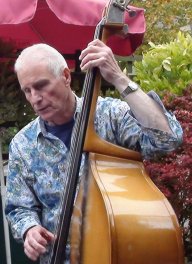
For several years I shunned the idea of sitting. But recent back problems mean that I take an adjustable K&M high stool along to gigs. I don’t use it all the time but it gives me occasional relief during ballads and sometimes those interminable stage announcements.
Also recently I did a rehearsal with an un-amped Kolstein Travel with its endpin retracted. I sat on a convential wooden chair with the bass in a side on cello position. A bit weird and unconventional on a gig perhaps but surprisingly comfortable and easy to play.
Also recently I did a rehearsal with an un-amped Kolstein Travel with its endpin retracted. I sat on a convential wooden chair with the bass in a side on cello position. A bit weird and unconventional on a gig perhaps but surprisingly comfortable and easy to play.
I use one of these stools
Link Removed
I set the seat so it is tilted forward slightly and play with both feet on the floor, which distributes weight nicely and allows good posture. For long gigs/rehearsals/recording sessions this is a big improvement over hard stools.
Previously I used a folding stool from IKEA like this
FRANKLIN Bar stool with backrest, foldable Black/black 63 cm - IKEA
Cheap and easy to transport because it folds flat, but quite painful to use for long periods even if you use a cushion.
No single correct answer for how to approach playing seated IMHO, so definately worth a bit of experimentation to find what works in terms of the angle of the bass and height of your seat. I tie my endpin to the stool to allow full use of armweight for stopping the strings with a luggage strap.
Link Removed
I set the seat so it is tilted forward slightly and play with both feet on the floor, which distributes weight nicely and allows good posture. For long gigs/rehearsals/recording sessions this is a big improvement over hard stools.
Previously I used a folding stool from IKEA like this
FRANKLIN Bar stool with backrest, foldable Black/black 63 cm - IKEA
Cheap and easy to transport because it folds flat, but quite painful to use for long periods even if you use a cushion.
No single correct answer for how to approach playing seated IMHO, so definately worth a bit of experimentation to find what works in terms of the angle of the bass and height of your seat. I tie my endpin to the stool to allow full use of armweight for stopping the strings with a luggage strap.
I'm trying to imagine how you would stop the strings with a luggage strapI use one of these stools
Link Removed
I set the seat so it is tilted forward slightly and play with both feet on the floor, which distributes weight nicely and allows good posture. For long gigs/rehearsals/recording sessions this is a big improvement over hard stools.
Previously I used a folding stool from IKEA like this
FRANKLIN Bar stool with backrest, foldable Black/black 63 cm - IKEA
Cheap and easy to transport because it folds flat, but quite painful to use for long periods even if you use a cushion.
No single correct answer for how to approach playing seated IMHO, so definately worth a bit of experimentation to find what works in terms of the angle of the bass and height of your seat. I tie my endpin to the stool to allow full use of armweight for stopping the strings with a luggage strap.
The luggage strap makes a loop, one end goes round the endpin, the other end of the loop goes round the stool leg/footrest. Back of the bass meets your leg which acts as a fulcrum, when you stop the strings with just arm weight, without the strap you unweight the endpin and the bass slides away from you, so the strap forms the third side of a triangle. Same end result as the endpin anchors that a cellist would use to tether their endpin to their chair leg, just a much lower tech solution.I'm trying to imagine how you would stop the strings with a luggage strap
Kind of like the Xeros anchor, only homemade, right?
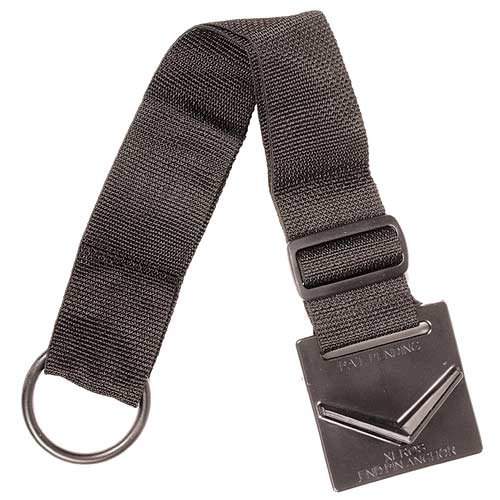
Those are a nice solution.
Those are a nice solution.
I tried a home made version of the that tether, but found it was pretty fiddly to use.
Here is how my low tech solution looks in practice - in some ways it is superior to the cello type anchor IMHO, you can't dislocate the endpin from the loop, and the commercial product linked above wouldn't play nicely with a stool like the K&M which doesn't have chair legs.
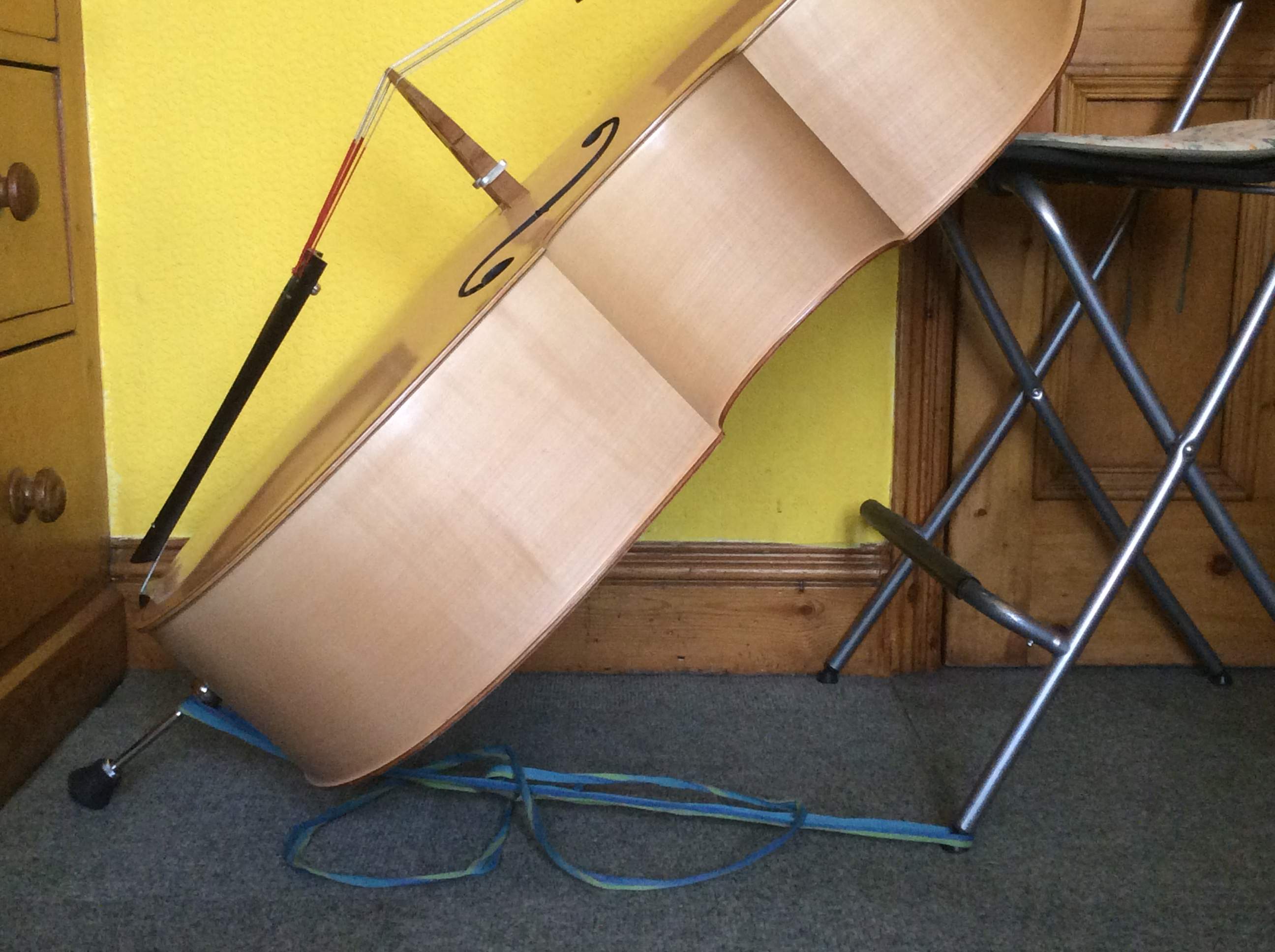
Here is how my low tech solution looks in practice - in some ways it is superior to the cello type anchor IMHO, you can't dislocate the endpin from the loop, and the commercial product linked above wouldn't play nicely with a stool like the K&M which doesn't have chair legs.
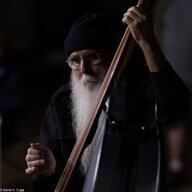
Hmmm, those conceptually look like they might apply some interesting leverage to the end block. I suppose that's been thought out already?
Good observation, but haven’t had an issue in 13 yrs of light use.Hmmm, those conceptually look like they might apply some interesting leverage to the end block. I suppose that's been thought out already?
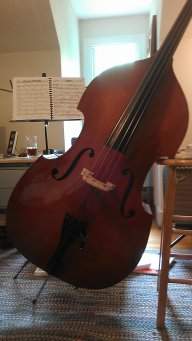
I've been playing seated the last couple of days since i was kind of sore from a gig(whole body, not necessarily my hands). Man, it is just so much easier to me from an intonation and left hand stop standpoint. I was digging the pizz angle too. I really think i only stand due to vanity at this point, and am seriously considering becoming a sitting guy.

I like to stand most of the time, but I do find when I sit down, I can hear more sound coming from the instrument than when I stand. The downside is I don't feel like I can dig in quite the same way while sitting.
Last edited:
I want to thank everyone for this great discussion. It’s given me tons to work with as a prepare to leave for tour this week.
I ditched the stool I posted in the introduction. It just wasn’t comfortable or ergonomic. Also, I looked at photos of myself playing on a gig and was shocked by how collapsed my hands were, so something was clearly off. In the intermediary I’ve tried a bunch of different stools and found, in general, that it really is a different technique. I find it so much easier to play in thumb position seated due to the stable balance point, but I’ve also found pizz very awkward. In addition, the way that I’ve been doing is causing more physical tension and I’m not sure I could really have done this whole three week van tour seated.
So what to do? It seems like it might be time to engage in the age old talkbass tradition of ignoring all of the thoughtsful learned advice provided and come up with a bizzare stopgap. I bought this weird peg leg contraption from amazon called the “iWalk 2.0.” I found that not only do I prefer it to crutches, I also found that I can play bass with it pretty acceptably. From my gig Saturday -
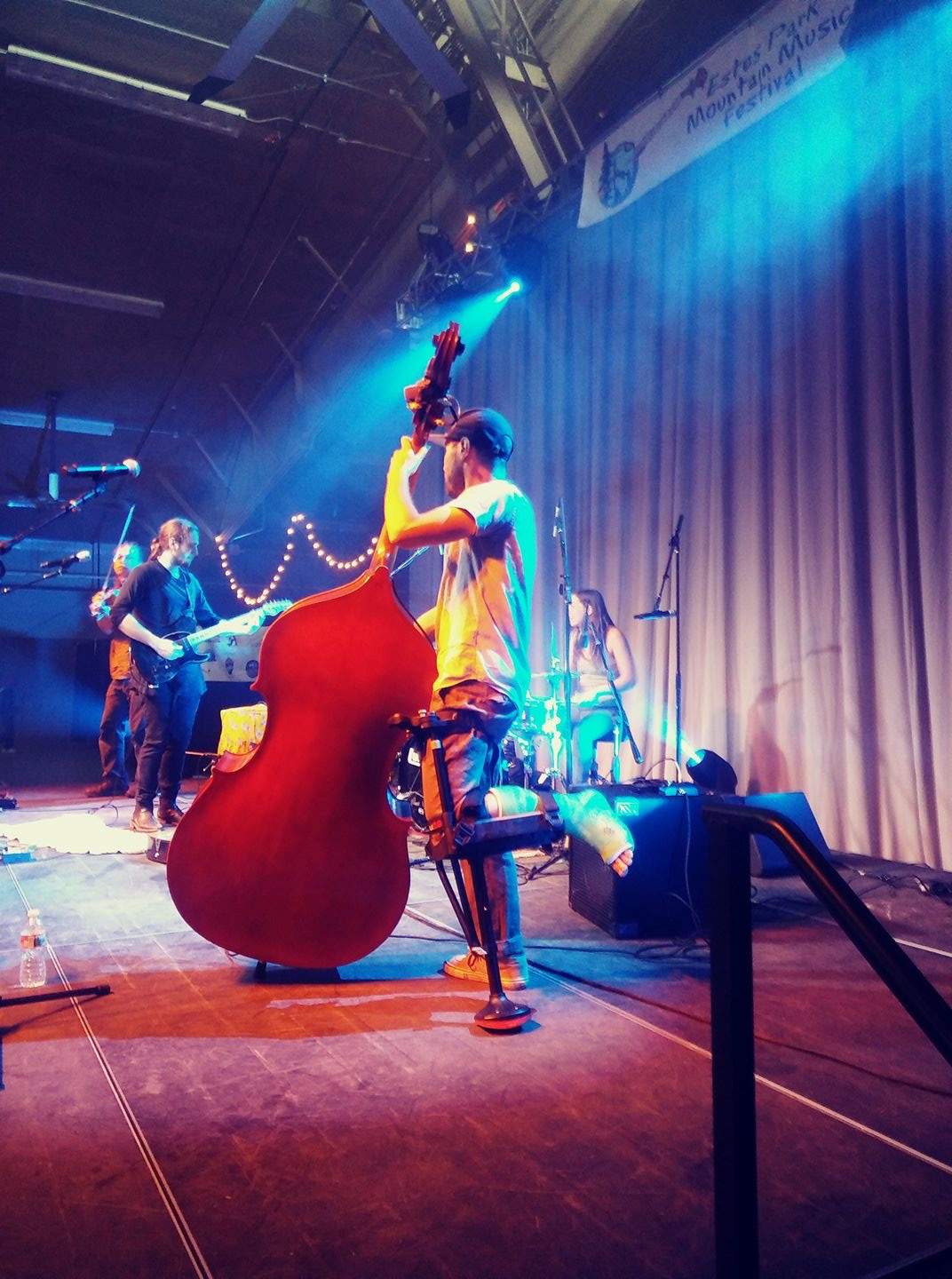
Thumb position is tough because I can’t really compress evenly and the balance point is slightly altered, and I had to put foam on the contact point to avoid buckle-rash, but it’s working better than it really ought to. The right and left hand feel are comfortable otherwise. Not sure I would recommend this as a long term solution, but it’ll get me through the month. Careful out there friends, and please go to the doctor even if you injure yourself doing something pedestrian!
I ditched the stool I posted in the introduction. It just wasn’t comfortable or ergonomic. Also, I looked at photos of myself playing on a gig and was shocked by how collapsed my hands were, so something was clearly off. In the intermediary I’ve tried a bunch of different stools and found, in general, that it really is a different technique. I find it so much easier to play in thumb position seated due to the stable balance point, but I’ve also found pizz very awkward. In addition, the way that I’ve been doing is causing more physical tension and I’m not sure I could really have done this whole three week van tour seated.
So what to do? It seems like it might be time to engage in the age old talkbass tradition of ignoring all of the thoughtsful learned advice provided and come up with a bizzare stopgap. I bought this weird peg leg contraption from amazon called the “iWalk 2.0.” I found that not only do I prefer it to crutches, I also found that I can play bass with it pretty acceptably. From my gig Saturday -
Thumb position is tough because I can’t really compress evenly and the balance point is slightly altered, and I had to put foam on the contact point to avoid buckle-rash, but it’s working better than it really ought to. The right and left hand feel are comfortable otherwise. Not sure I would recommend this as a long term solution, but it’ll get me through the month. Careful out there friends, and please go to the doctor even if you injure yourself doing something pedestrian!

I vaguely remember someone notable saying that they keep the endpin the same height, whether standing or sitting. I decided to try that and find that (with an adjustable seat) it seems to work. Then, if I have a gig, I don't think about the angle of the bass as much. Once I'm comfortable in a chair, it's full speed ahead... Standing or sitting.
Not a bad strategy if you plan to alternate during a gig, but ultimately end pin length is totally dependent on the height of the stool.
I used one of these collapsible stools from KC Strings for many years and found it more comfortable than other stools I tried. [Invalid or Expired Link Removed] Unfortunately it's not cheap and the gig bag is extra.
I want to thank everyone for this great discussion. It’s given me tons to work with as a prepare to leave for tour this week.
I ditched the stool I posted in the introduction. It just wasn’t comfortable or ergonomic. Also, I looked at photos of myself playing on a gig and was shocked by how collapsed my hands were, so something was clearly off. In the intermediary I’ve tried a bunch of different stools and found, in general, that it really is a different technique. I find it so much easier to play in thumb position seated due to the stable balance point, but I’ve also found pizz very awkward. In addition, the way that I’ve been doing is causing more physical tension and I’m not sure I could really have done this whole three week van tour seated.
So what to do? It seems like it might be time to engage in the age old talkbass tradition of ignoring all of the thoughtsful learned advice provided and come up with a bizzare stopgap. I bought this weird peg leg contraption from amazon called the “iWalk 2.0.” I found that not only do I prefer it to crutches, I also found that I can play bass with it pretty acceptably. From my gig Saturday -
View attachment 3018209
Thumb position is tough because I can’t really compress evenly and the balance point is slightly altered, and I had to put foam on the contact point to avoid buckle-rash, but it’s working better than it really ought to. The right and left hand feel are comfortable otherwise. Not sure I would recommend this as a long term solution, but it’ll get me through the month. Careful out there friends, and please go to the doctor even if you injure yourself doing something pedestrian!
Technique is definitely a bit different when you sit. I resisted for years because of this, but ultimately I found it too painful to stand for 2-3 hour long concerts while every else was sitting. After a period of adjustment, I believe sitting may free your technique a bit, but it takes awhile to find the write position, settle in, and feel natural. After that occurs, you may find that it feels weird and limiting to play standing. I know I did.

I always bring my own seat.Not a bad strategy if you plan to alternate during a gig, but ultimately end pin length is totally dependent on the height of the stool.
I used one of these collapsible stools from KC Strings for many years and found it more comfortable than other stools I tried. [Invalid or Expired Link Removed] Unfortunately it's not cheap and the gig bag is extra.
View attachment 3018394View attachment 3018395View attachment 3018396View attachment 3018397


