• TalkBass has been independent since 1998. Add your voice.
    Create a free account to reply to discussions, view embedded media, and browse with fewer display ads.
    Join freeLog in
    Want zero display ads or expanded classifieds tools? Compare plans.

Power amp for PA subs

NICE! I bought two of the new Peavey IPR2 5000s. I use them in a small scale setup and they do fine. I sometimes use 3-4 monitors per side on one of them and it does nice. Did an outdoor show last weekend used one to power subs on one channel, and powered subs combined. For mains, put 3 JBL JRX115s per side and it did just fine. Of course it was x'd over . Had everything pushing to the limit before it gets grumpy, and the amps stayed cool to the touch and it was REALLY hot out there! I have been pleased for 6- months with them. 14 lbs too!
 
Hi.

Some people claim/feel/think/assume that class D and/or SMPS is less capable to perform under a heavy load than class A/B (or G or H) with a conventional iron power supply.

I don't have the solid first hand experience some people do since I'm happily using those dirt cheap "inferior" lead-sleds still :).

From the little experience I have and from the information I've gathered though, some of those claims may be warranted, but IMO 99% of the time because either the no-name manufacturer has lied or the user has bought a too small an amp.

Class D distortion characteristics are IMLE even more noticeable than in other SS classes, so the more pleasantly distorting conventional class amp may sound more powerful than the class D amp of the same power rating.

Not much unlike that ages old tube vs. SS Watt debate :).

Most SMPS designs are also pretty unforgiving, over-tax it and it'll go into protection mode.

Regards
Sam
I've been arguing this same chit since I sold hi-fi in the mid-70's. People will argue infinitum about some of the most subtle stuff while ignoring some critical stuff.

With that said, I've made a complete switch to class D for anything I have to pick up and move more than twice a year. Period.
 
Sounds about right to me. What kind of signal are you seeing on the PLX's channel 1 & 2 LED indicators on the front panel? What's the source signal? Post-crossover? Direct from mixer?

ooops....What are the attenuator settings both channel 1 & 2?

Riis
Signal is post crossover. Crossover point is about 120hz,light on the amp hit red every once in a while.
 
Signal is post crossover. Crossover point is about 120hz,light on the amp hit red every once in a while.

Sounds good so far although the volume (or lack thereof) doesn't jive with the soft-clip witnessed on the power amp. Any way you can trial the set-up with canned tracks and one subwoofer at a time? Or maybe you already have.

Do yourself a favor and throw some Speakons on both ends of the cable...be sure to mark the amp / bridge connection as such.

BTW, there's some type of Speakon configuration switch on the reverse of the LS808. I'm not quite sure what it does. Another dumb question: the 1/4" inputs are wired in parallel as are the Speakon inputs but are the 1/4" and Speakons wired in parallel with each other?

Riis
 
Last edited:
"but are the 1/4" and Speakons wired in parallel with each other"? That's my question. I may get a 1/4 to 1/4 jumper and see what that does.

Easier trial: pull the banana plug from the back of your power amp. Don't change anything else in your current speaker cabling configuration. You should be able to simultaneously touch the banana plugs to the + / - terminals on a 9 volt battery. If the orientation is correct, both 18" drivers should lurch forward. This will at least verify that both are "seeing" power and of the same polarity.

I use banana plug to Speakon all the time. This allows me to change things out quickly should I need to reassign a power amp or, at least, a single channel.

Oh...make sure the power amp's channel 2 attenuator is turned to off. IIRC, bridged mono operation relies solely on the channel 1 attenuator.

Riis
 
Last edited:
There may be better choices out there, but I have had a Crest CA9 'lead sled' amp for almost 20 years and used it in a rig, for powering a stage PA, for parties, for home studio/stereo, and it has never let me down or given me any trouble ever. I have it in a Gator case that has a comfortable handle for transport. It weighs around 55 pounds, which is laughable by today's standard I suppose. It's kind of like the world's heaviest briefcase. But the CA series sound great, are dependable, have quiet fans, and thanks to the current Class D amp invasion, can be had cheap! Like for $400 or less. And I think the fact that Crest still makes the CA series amps, is indicative of their proven design, performance and value. For use in fixed installations in clubs, studios, etc., where you won't need to transport them often, in terms of bang for the buck, these lead sleds still beat the Class D lightweight stuff IMO.

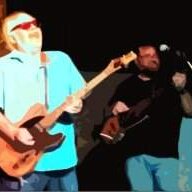
I also gotta weigh-in punintended on the lite vs lead debate. I also own a Stewart World 2.1, which is a very good amp that is spec'd to put out 1800 watts bridged to 4 Ohms, vs the Crest CA9 which is spec'd to put out 2000 watts bridged into 4 Ohms. Truth here is that these are quite a ways apart in terms of useful power, and the Crest beats the Stewart by what seems like a lot more than a 200 watt advantage. Either Stewart is over-embellishing, or Crest is understating, (or both), with their output power spec's. If not, then there really is a difference in performance between lite and lead design amps of similar output power. With respect to power/weight, the Stewart is still 'a contender' at just 17 pounds (approx. 1/3 the weight of a CA9).

CIMG2460_zpsb7261964.jpg
 
Last edited:
There may be better choices out there, but I have had a Crest CA9 'lead sled' amp for almost 20 years and used it in a rig, for powering a stage PA, for parties, for home studio/stereo, and it has never let me down or given me any trouble ever. I have it in a Gator case that has a comfortable handle for transport. It weighs around 55 pounds, which is laughable by today's standard I suppose. It's kind of like the world's heaviest briefcase. But the CA series sound great, are dependable, have quiet fans, and thanks to the current Class D amp invasion, can be had cheap! Like for $400 or less. And I think the fact that Crest still makes the CA series amps, is indicative of their proven design, performance and value. For use in fixed installations in clubs, studios, etc., where you won't need to transport them often, in terms of bang for the buck, these lead sleds still beat the Class D lightweight stuff IMO.

I also gotta weigh-in punintended on the lite vs lead debate. I also own a Stewart World 2.1, which is a very good amp that is spec'd to put out 1800 watts bridged to 4 Ohms, vs the Crest CA9 which is spec'd to put out 2000 watts bridged into 4 Ohms. Truth here is that these are quite a ways apart in terms of useful power, and the Crest beats the Stewart by what seems like a lot more than a 200 watt advantage. Either Stewart is over-embellishing, or Crest is understating, (or both), with their output power spec's. If not, then there really is a difference in performance between lite and lead design amps of similar output power. With respect to power/weight, the Stewart is still 'a contender' at just 17 pounds (approx. 1/3 the weight of a CA9).
I used a Crown MicroteK 1200 as my bass amp in Seattle. It was cheap, sounded great, and weighed a ton. My Crown XLS 1500 weighs 13 lbs. AND it fits into a short case with my BBE and compressors. It also cost just a little more than the beat up microtek used cost. I'm an audiophile when I'm not gigging and noise floor, damping factor and all the usual suspects are a big deal. When I first tried out my XLS it was in a hi-fi setting. I admit I was doing no A/B comparisons, but as I listened to it I thought I might be able to use those things in a home stereo situation.

It's also interesting that the same thing seems to be happening with class D that happened to hi-fi in the 70's. Specifically, the early offerings did have shortcomings in sound quality compared to the industry standard. (tube definitely sounded better than solid state home stereo in the 60's). But solid state kept improving. It looks like this is happening with class D as well.

And did I mention all the operating options like bridging, y input, stereo, various crossover options to use one amp for both subs and mains, or use one amp for subs and one for mains. It's really an amazing package and it's not the only brand that does this.
 
I noticed on the QSC website that the 3102 is the amp they recommend for the LS808 cabs. Mine is the 3002 which I'm guessing is the earlier version. I'm taking the amp,cabinets and cables to a local sound engineer to see what we can figure out. I still think the amp is the problem. We will see!
 
  • Like
Reactions: Zooberwerx
I noticed on the QSC website that the 3102 is the amp they recommend for the LS808 cabs. Mine is the 3002 which I'm guessing is the earlier version. I'm taking the amp,cabinets and cables to a local sound engineer to see what we can figure out. I still think the amp is the problem. We will see!

I'm a firm believer in second opinions. I'll assume you were able to rule out the simple stuff (ROTSS) as discussed in earlier posts?

Riis
 
Ok,the amp works fine. We hooked it up to a pair of OAP full size 18" folding horn subs about 50 feet apart,and it sounded great. Same setup with the Yorkvilles,not great. Put the Yorkvilles side by side and its a different story. Wow. Problem is,I don't know of any club around here where we can set the subs up together up front. So it looks like they may be up for sale. Possibly looking at the B52 or Cerwin Vega folding horn subs,which he said were great cabs. Open for ideas here!
 
Bad that you had problems. I used to use a QSC PLX-3402 for my mains and they kicked big time.

Get the powered version LS801P. Two of those put out more sub than ANY comparable dollar expenditure that I know of. And those that have heard them will say the same thing.
I suggest to sell all the amps and the passive speakers - although there is no reason properly powered that the passive ones shouldn't work. I have gone 100% active speakers. They are all properly processed and a person gets rid of a slew of outboard equipment. The LS801P is KILLER. Yes, better sounding subs do exist and they cost about twice what the LS801P do. Yes, I have owned them. No I currently do not own them as I sold my entire system. Yes, I am getting two more of them to go with two RCF HD32a's.

Disclosure: I am currently in application for becoming a Yorkville Sound/Traynor dealer as well as an RCF dealer. This comes about after months of agonizing over whether a disabled person can do this sort of thing, opening a Pro-Sound and Bass-centric store, and whether the investment will ever pay off. Decided to just go for it and am making initial order next week.
 
  • Like
Reactions: TomB
Well, I didn't read the entire thread and not sure of the entire issue (volume?), but I can tell you that a PLX 3002 isn't even close to being able to power TWO LS808's. One in bridged mode should give enough headroom for ONE!!
Why do I say this? I've run PA's for many yrs, and yes I play bass too.
I have a tri-amp PA. My 3002 powers my 4-ohm 15" mids (1050w per side). I power my 2" 120w HF drivers with a GX3.
Both gain levels are balanced/limited with my DR260.

The LS808 is rated 1400w program, 2400 peak at 8 ohms.
The 3002 produces 625w per side at 8 ohms.
Bridged, the 3002 will give you 2000w at 8-ohms. That's enough to run a single LS808 at program and have enough headroom for peaks.
Rule of thumb for powering passive speakers is an amp that produces 1.5 to 2.25 times the RMS/Program rating of the speaker. So basic/minimum for the LS808 would be 1.5 * 1400 = 2100w. This allows for transients, and headroom.

My subs are 2 LS800P's.. and like Zooberwerx states have the most bang for the buck of any sub out there. Yes, they need a little EQ to get the best out of them - mine are crossed and 95Hz and EQ cut around 55Hz. Sound awesome. Mostly I use only ONE for bar gigs.

If you are selling, buy some LS801P's.. (my $0.02)
 
Well, I didn't read the entire thread and not sure of the entire issue (volume?), but I can tell you that a PLX 3002 isn't even close to being able to power TWO LS808's. One in bridged mode should give enough headroom for ONE!!
Why do I say this? I've run PA's for many yrs, and yes I play bass too.
I have a tri-amp PA. My 3002 powers my 4-ohm 15" mids (1050w per side). I power my 2" 120w HF drivers with a GX3.
Both gain levels are balanced/limited with my DR260.

The LS808 is rated 1400w program, 2400 peak at 8 ohms.
The 3002 produces 625w per side at 8 ohms.
Bridged, the 3002 will give you 2000w at 8-ohms. That's enough to run a single LS808 at program and have enough headroom for peaks.
Rule of thumb for powering passive speakers is an amp that produces 1.5 to 2.25 times the RMS/Program rating of the speaker. So basic/minimum for the LS808 would be 1.5 * 1400 = 2100w. This allows for transients, and headroom.

My subs are 2 LS800P's.. and like Zooberwerx states have the most bang for the buck of any sub out there. Yes, they need a little EQ to get the best out of them - mine are crossed and 95Hz and EQ cut around 55Hz. Sound awesome. Mostly I use only ONE for bar gigs.

If you are selling, buy some LS801P's.. (my $0.02)

I'm using the el-cheapo Performance series but, as I understand, both are sporting upgraded 18" drivers and somebody had the smarts to retrofit Speakons to the back panel. Here's a stock photo:


YorkvilleSub-1.jpg


As mentioned, the best you'll see per enclosure is ~1400 watts tops (bridged mono into a daisy-chained 4 ohm load) which is pretty much the programme rating. OTOH, this may be adequate...it all depends on the venue. I do like the comments regarding the overall improvement when the subs are centered & clustered. It does make a difference but, given the size of the cabs and spatial constraints, it's quite acceptable to cluster to either stage left or right. Don't separate the pair!

Riis