• TalkBass has been independent since 1998. Add your voice.
    Create a free account to reply to discussions, view embedded media, and browse with fewer display ads.
    Join freeLog in
    Want zero display ads or expanded classifieds tools? Compare plans.

Radial JDI confirmation

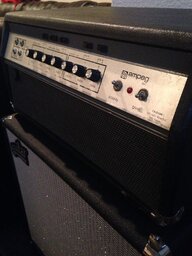
Picking up a vintage V4B again after using modern amps with DI’s. Looking at a speaker level DI. I understand the JDI is capable of that, but the manual seems to suggest running the JDI off a second speaker out on the cab. The cab I plan to use only has one 1/4 input, so I want to confirm I can run it between the head and cab. I have used a Countryman 10 like that and it worked.

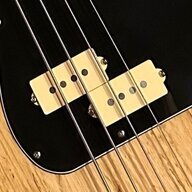
Another plan is to run it with an active Stingray at church and use the pre as my tone shaper. I’m sure that is exactly what the JDI is used for. Any issues running a standard passive P though without a pre? Or would it be better to run a pre with a passive bass in that scenario?
 
Picking up a vintage V4B again after using modern amps with DI’s. Looking at a speaker level DI. I understand the JDI is capable of that, but the manual seems to suggest running the JDI off a second speaker out on the cab. The cab I plan to use only has one 1/4 input, so I want to confirm I can run it between the head and cab. I have used a Countryman 10 like that and it worked.

Another plan is to run it with an active Stingray at church and use the pre as my tone shaper. I’m sure that is exactly what the JDI is used for. Any issues running a standard passive P though without a pre? Or would it be better to run a pre with a passive bass in that scenario?
Yes, you can use it with a V4b between head and cab. Also, I don’t buy into the active/passive dichotomy with basses and DI’s. I’ve run passive with passive a ton of times and it’s fine.
 
Could you use the “extension speaker” output on the vintage V4B for that purpose, or would there be issues? Is it an equivalent (parallel) output? Asking because I’ve never actually used that output for anything - I’ve always used a single cab.
 
  • Like
Reactions: JimmyM
Could you use the “extension speaker” output on the vintage V4B for that purpose, or would there be issues? Is it an equivalent (parallel) output? Asking because I’ve never actually used that output for anything - I’ve always used a single cab.
That’s a good question. I can’t remember if old ones have an impedance switch or if the impedance switches depending on whether you plug into one or two outs. I think it should be OK if you have a switch but please don’t quote me on that.
 
That’s a good question. I can’t remember if old ones have an impedance switch or if the impedance switches depending on whether you plug into one or two outs. I think it should be OK if you have a switch but please don’t quote me on that.
Ah! Yes, my mid-70’s has an impedance selector. It does include a 2 ohm setting. But I would expect that “ext” output to be the same electrically as the main output. I think Radial is suggesting using the cab’s extra jack, which OP doesn’t have. I’m curious how that differs from the “speaker out” since it’s all parallel wiring, no?
 
Last edited:
Picking up a vintage V4B again after using modern amps with DI’s. Looking at a speaker level DI. I understand the JDI is capable of that, but the manual seems to suggest running the JDI off a second speaker out on the cab. The cab I plan to use only has one 1/4 input, so I want to confirm I can run it between the head and cab. I have used a Countryman 10 like that and it worked.

Radial specifically warn against this in the FAQs for the Radial JDI:

"Can I connect the JDI between the head and cabinet instead of using the speaker parallel jack?


No. This is not advised as the signal traces in the JDI are not suitable for high levels. You can however use the parallel speaker output from the amp so long as a speaker is connected."


You should also be aware that the rather rudimentary speaker simulation in the JDI is meant to roughly emulate the frequency response of a 12" GUITAR speaker, which may not be the voicing you want on your bass.


If you want a DI box that is designed to work safely between the head and cab you could check out the Radial JDX48 instead.

Another plan is to run it with an active Stingray at church and use the pre as my tone shaper. I’m sure that is exactly what the JDI is used for. Any issues running a standard passive P though without a pre? Or would it be better to run a pre with a passive bass in that scenario?

A passive bass directly into a passive DI (even a really good one like the JDI) will give you a considerably lower output signal than an active DI and will require more gain at the mixer. There's also the (at least theoretical) issues of pickup loading and tonal degradation with long cable runs. Whether this will actually be a problem will depend on the length of the cables and the quality of a PA/mixer/micpreamps. It often works great, but personally I prefer using active DIs for live gigs. It's a much safer choice that will ALWAYS work (unless there's no phantom power of course, but that usually also means there's no PA, in which case you won't need a DI box at all...).
 
You should also be aware that the rather rudimentary speaker simulation in the JDI is meant to roughly emulate the frequency response of a 12" GUITAR speaker, which may not be the voicing you want on your bass.
This.

I have asked Radial directly about this and they did not recommend me using JDI as a speaker-level DI for bass.
 
Picking up a vintage V4B again after using modern amps with DI’s. Looking at a speaker level DI. I understand the JDI is capable of that, but the manual seems to suggest running the JDI off a second speaker out on the cab. The cab I plan to use only has one 1/4 input, so I want to confirm I can run it between the head and cab. I have used a Countryman 10 like that and it worked.

Another plan is to run it with an active Stingray at church and use the pre as my tone shaper. I’m sure that is exactly what the JDI is used for. Any issues running a standard passive P though without a pre? Or would it be better to run a pre with a passive bass in that scenario?

Another option might be to get a newer version of the V4B instead of a vintage V4B. The newer/current version has a balanced/DI XLR output.

But I totally understand that this isn't really what you asked about, and I have no idea if the DI output is any good. The closest I've tested is probably the DI out on my V4BH (the discontinued model that's more like a 100w SVT than an actual V4) which was rather poor sounding.
 
don't get an active DI, if you are ditching the modern amp, you don't want an active DI, it's the modern sound. the passive DI will have a transformer that will give you a little coloration, like a good tube amp would (nothing close, but the parallel exists). passive DI with passive has been happening forever and is the sound of so many hits and records you love. Motown had the Wolfbox, Sigma Sound in Philly had/has their Sigma DI, and on and on.

The passive bass needs active DI is an invention by the music companies to get you to buy more poopie, its bunk. Also its a lot easier to have a bass, tuner, passive di all in your case/gig bag when you go to the studio instead of hauling power supplies for active di and stuff.
 
  • Like
Reactions: JimmyM
Also, I don’t buy into the active/passive dichotomy with basses and DI’s. I’ve run passive with passive a ton of times and it’s fine.
Yep, same here. I only use passive basses and never go to a gig or session w/o my JDI. Other flavor of the week units i've had like the REDDI are gone, but my JDI has been in my kit 20 years. Sounds killer, foolproof, bombproof.
 
don't get an active DI, if you are ditching the modern amp, you don't want an active DI, it's the modern sound. the passive DI will have a transformer that will give you a little coloration, like a good tube amp would (nothing close, but the parallel exists). passive DI with passive has been happening forever and is the sound of so many hits and records you love. Motown had the Wolfbox, Sigma Sound in Philly had/has their Sigma DI, and on and on.

The passive bass needs active DI is an invention by the music companies to get you to buy more poopie, its bunk. Also its a lot easier to have a bass, tuner, passive di all in your case/gig bag when you go to the studio instead of hauling power supplies for active di and stuff.

The JDI might give you a TINY bit of coloration but it's really designed to have a flat frequency response. From the manual:

"The JDI is very unique in that it does not color or alter the sound in any way. This ensures that natural tone and harmonic balance is retained, bringing out the very essence of the instrument."

To be fair, this might not be entirely the case. I personally think there is a very slight coloration of the tone with the JDI, and a pleasant one at that. But the JDI is most definitely not designed to color the signal and give you a "vintage" tone. In fact, many active DIs (that can also have transformers btw, or even tubes) can give you far more "vintage" coloration than the JDI and also offer potential benefits with passive basses in some situations. To make a blanket statement about active DIs having a "modern sound" is quite simply wrong.

It's also wrong that you will need to "haul power supplies" for active DIs (tube DIs excepted). An active DI will usually not take up any more space than a passive DI, and with the exception of tube DIs it will be powered by phantom power, which is available everywhere there is a PA/mixer/micpre/audio interface.

My point is, any tonal coloration isn't necessarily about active vs passive, but about what the DI box in question is actually designed to do. Some DI boxes are transparent, some are colored. And althogh the JDI may not fall into the ultra-transparent category, it won't really give you a colored, "vintage" tone either.

Even with something like the Motown Wolfbox any coloration would be pretty much negilgible compared to coloration from the rest of the recording chain they used (tube gear, tape recorder). This coloration wasn't a deliberate choice of course, but a result of the technical limitations of the recording gear that was available at the time. In retrospect these technical limitations actually provided a sound that, at least in SOME ways and for SOME styles of music, can be perceived as more desirable than the ultra-precise recordings we can make with digital gear today. But the fact that they used a passive DI box had practically nothing to do with it.

FWIW I find that the cheaper Radial ProDI is slightly more colored than the JDI, with a slightly "warmer" tone. The ProDI might actually be a better choice than the JDI if more coloration is desirable from a passive DI. But it's a very subtle difference. Ultra-cheap passive DIs from other manufacturers can have even more coloration, but usually not in a good way (IMO).

Don't get me wrong, I absolutely agree that you don't NEED an active DI with a passive bass. You may even prefer the tone you get with one specific passive DI. But active DIs definitely have some advantages with passive basses, in SOME situations. And any vintage/modern tonal coloration will depend on what the DI box in question is designed to deliver, not whether it is active or passive.
 
every studio i've ever recorded at had a Radial JDI regardless of the bass. Never has an engineer said "oh passive bass, let me get you the active DI". They didn't even own them. they say "Radial JDI, it always sounds good, enjoy". and it has. I use my own Passive DI i built ala the Motown Wolfbox but it's the same principle. I frequent some music production forums (gearspace formerly gearslutz, and tapeop) and i have never seen anyone recommend anything other than passive DI for bass or synth (or anything for that matter!). I honestly believe the active DI concept only exists in the bass world. why would you want to have another thing that could go wrong in your signal chain (battery dies, power supply unplugs, etc.)?

sorry to keep beating this dead horse, but IMO the active DI is a solution in need of a problem.
 
don't get an active DI, if you are ditching the modern amp, you don't want an active DI, it's the modern sound. the passive DI will have a transformer that will give you a little coloration, like a good tube amp would (nothing close, but the parallel exists). passive DI with passive has been happening forever and is the sound of so many hits and records you love. Motown had the Wolfbox, Sigma Sound in Philly had/has their Sigma DI, and on and on.

The passive bass needs active DI is an invention by the music companies to get you to buy more poopie, its bunk. Also its a lot easier to have a bass, tuner, passive di all in your case/gig bag when you go to the studio instead of hauling power supplies for active di and stuff.

every studio i've ever recorded at had a Radial JDI regardless of the bass. Never has an engineer said "oh passive bass, let me get you the active DI". They didn't even own them. they say "Radial JDI, it always sounds good, enjoy". and it has. I use my own Passive DI i built ala the Motown Wolfbox but it's the same principle. I frequent some music production forums (gearspace formerly gearslutz, and tapeop) and i have never seen anyone recommend anything other than passive DI for bass or synth (or anything for that matter!). I honestly believe the active DI concept only exists in the bass world. why would you want to have another thing that could go wrong in your signal chain (battery dies, power supply unplugs, etc.)?

sorry to keep beating this dead horse, but IMO the active DI is a solution in need of a problem.
Opinions vary on passive vs active DI IME both have their fans and detractors and certainly their purpose. That is the same reasoning that studios will have a selection of microphones instead of only a SM57 that works on practically everything anyway. I will always have a passive DI but there are occasions that I will choose to use or suggest an active DI for the sound and performance. I do agree that if you're gonna have only one DI then a passive DI makes sense and the JDI is clutch [I have 2].
 
  • Like
Reactions: Motown971
Opinions vary on passive vs active DI IME both have their fans and detractors and certainly their purpose. That is the same reasoning that studios will have a selection of microphones instead of only a SM57 that works on practically everything anyway. I will always have a passive DI but there are occasions that I will choose to use or suggest an active DI for the sound and performance. I do agree that if you're gonna have only one DI then a passive DI makes sense and the JDI is clutch [I have 2].

Which is best depends on your needs and expectations.

Some passive basses won't work well with a passive DI. Most passive basses are fine, however both the pickup characteristics and length of cable runs influence results with passive DIs.

An active DI can work with an active or passive basses. J48 is active and uses 220K input impedance, which Radial feels is optimum to load passive pickups. Active basses are less sensitive to loading, meaning 220K is most likely fine.

Unbuffered piezo pickups require a high input impedance for proper loading, so neither the JDI or J48 is optimum. Countryman DIs have 10Meg input impedance, which will work well with a piezo. However if you run the Thru connection from the DI to an amp, the pickup sees the impedance of the amp in parallel with the impedance of the DI. If the impedance of the amp is 1M then the pickup sees 909K. If the impedance of the amp is 220K the pickup sees 215K.

Radial makes a J48 variant called the PZDI. The PZDI input impedance can be switched between 220K, 1M, and 10M. Also the Thru can be toggled between a parallel connection, like a regular DI, and buffered. When set to buffered, the Thru can be connected to an amp without loading the pickup. I own a PZDI and I prefer the 1M setting with my active Yamaha TRB6. 1M seem slightly more focused and sweet. The difference is very, very subtle; IMHO not enough to worry about. However, you might prefer one of the other impedance settings.

During the middle part of my career I used mostly Countryman Type 85 or a BSS AR116. Both of these are active. Our audio techs felt the BSS added a little something special to the tone of bass over the Type 85. Towards the end of my career I used mostly JDI or J48. I didn't worry about it one way or the other. During the entire period my #1 was a Yamaha TRB6P

I own a Radial JDI Duplex and PZDI. I also own some BSS AR116s. As an audio tech, I personally think the JDI Duplex is really great for synth. To my ears it seems to take away some of the plasticky digital quality, so piano patches sound a bit more natural. I prefer providing an active DI for bass because results are more consistent.
 
every studio i've ever recorded at had a Radial JDI regardless of the bass. Never has an engineer said "oh passive bass, let me get you the active DI". They didn't even own them. they say "Radial JDI, it always sounds good, enjoy". and it has. I use my own Passive DI i built ala the Motown Wolfbox but it's the same principle. I frequent some music production forums (gearspace formerly gearslutz, and tapeop) and i have never seen anyone recommend anything other than passive DI for bass or synth (or anything for that matter!). I honestly believe the active DI concept only exists in the bass world. why would you want to have another thing that could go wrong in your signal chain (battery dies, power supply unplugs, etc.)?

sorry to keep beating this dead horse, but IMO the active DI is a solution in need of a problem.

Absolutely, I agree with MOST of what you're saying here. I've used the Radial JDI for recording passive basses myself, lots of times. It sounds great! In fact, I usually like it better than the active Radial J48 for this purpose. But I also usually don't like the JDI quite as much for passive basses as some other active DIs, such as the RNDI or the Zod.

But in a recording studio you will rarely, if ever, encounter the situations that may potentially cause problems with a passive bass into a passive DI. Playing gigs in places with long cable runs and poor quality micpres/mixers is a different matter entirely. THAT is where an active DI will always be a much safer choice, even though passive DIs will nearly always work fine. NEARLY always. Not always.

An active DI is most definitely not a solution in need of a problem. Active DIs solve a very real problem that can occur with passive basses under certain circumstances. Apart from that it's really just a matter of finding a DI that you like. My personaly favorites are the ZOD, the RNDI and the JDI. Probably in that order. If I want ultra-transparent I reach for the Radial JDV. That thing is insane, but I usually find it TOO transparent for bass guitar, to the point of sounding a bit sterile.

In any case, I would personally follow Radial's advice on what the OP originally asked about and NOT use the JDI between the amp/speaker. Radial is a company that make top quality products without any of the dubious claims and hyped up marketing BS that's so common with many other manufacturers of musical equipment. If Radial say something like this about one of their own product, I believe they do it for credible, technical reasons, and not to sell you the LESS expensive JDX that is actually specifically designed for this purpose.
 
  • Love
Reactions: Wasnex